Mushrooms, oyster, raw
Whole food · Vegetables and Vegetable Products

Photo: Wikipedia
Oyster mushrooms are a delicate, fan-shaped fungus with a velvety, pale-grey cap and a subtle, savory flavor reminiscent of oysters. Their texture is tender yet meaty when cooked, offering a satisfying bite. Nutritionally, they are a low-calorie powerhouse, providing over 3 grams of protein and essential fiber per 100 grams.
💚 Why it's loved
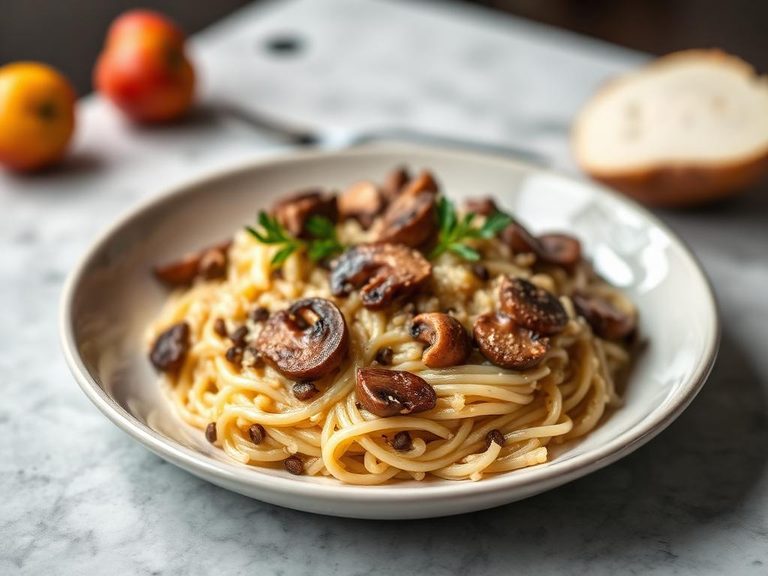
People love oyster mushrooms for their unique, umami-rich flavor that adds depth to dishes without overpowering other ingredients. Their versatile, meat-like texture makes them a beloved staple in vegetarian cooking and a favorite for adding substance to stir-fries, soups, and pastas.
⚠️ Watch-outs & how to enjoy it better
Raw oyster mushrooms have a slightly bitter taste and a tough texture that some find unpalatable, and they can cause mild digestive discomfort in sensitive individuals if not cooked properly. To counteract this, always cook them thoroughly—sautéing or roasting softens the texture and mellows the flavor. If concerned about bitterness, a quick blanch before sautéing can help.
Key benefits
- Excellent source of dietary fiber (2.3g per 100g)
- High in protein for a vegetable (3.31g per 100g)
- Very low in fat and calories
- Contains antioxidants like ergothioneine
- Provides B vitamins and minerals like potassium
🍽️ Popular dishes
🌍 Where it's eaten
💡 Did you know?
Oyster mushrooms are one of the few known carnivorous fungi—their mycelium can trap and digest microscopic nematodes (roundworms) to obtain nitrogen in nutrient-poor environments.
Full nutrition (scales with serving)
| Water | 89.2 g |
| Energy | 33.0 kcal |
| Energy | 139 kj |
| Protein | 3.3 g |
| Total lipid (fat) | 0.41 g |
| Ash | 1.0 g |
| Carbohydrate, by difference | 6.1 g |
| Fiber, total dietary | 2.3 g |
| Total Sugars | 1.1 g |
| Sucrose | 0.00 g |
| Glucose | 1.1 g |
| Fructose | 0.00 g |
| Lactose | 0.00 g |
| Maltose | 0.00 g |
| Galactose | 0.00 g |
| Starch | 0.00 g |
| Calcium, Ca | 3.0 mg |
| Iron, Fe | 1.3 mg |
| Magnesium, Mg | 18.0 mg |
| Phosphorus, P | 120 mg |
| Potassium, K | 420 mg |
| Sodium, Na | 18.0 mg |
| Zinc, Zn | 0.77 mg |
| Copper, Cu | 0.24 mg |
| Manganese, Mn | 0.11 mg |
| Selenium, Se | 2.6 ug |
| Vitamin C, total ascorbic acid | 0.00 mg |
| Thiamin | 0.13 mg |
| Riboflavin | 0.35 mg |
| Niacin | 5.0 mg |
| Pantothenic acid | 1.3 mg |
| Vitamin B-6 | 0.11 mg |
| Folate, total | 38.0 ug |
| Folic acid | 0.00 ug |
| Folate, food | 38.0 ug |
| Folate, DFE | 38.0 ug |
| Choline, total | 48.7 mg |
| Betaine | 12.1 mg |
| Vitamin B-12 | 0.00 ug |
| Vitamin A, RAE | 2.0 ug |
| Retinol | 0.00 ug |
| Carotene, beta | 29.0 ug |
| Carotene, alpha | 0.00 ug |
| Cryptoxanthin, beta | 0.00 ug |
| Vitamin A, IU | 48.0 iu |
| Lycopene | 0.00 ug |
| Lutein + zeaxanthin | 0.00 ug |
| Vitamin E (alpha-tocopherol) | 0.00 mg |
| Tocopherol, beta | 0.00 mg |
| Tocopherol, gamma | 0.00 mg |
| Tocopherol, delta | 0.00 mg |
| Tocotrienol, alpha | 0.03 mg |
| Tocotrienol, beta | 0.00 mg |
| Tocotrienol, gamma | 0.00 mg |
| Tocotrienol, delta | 0.00 mg |
| Vitamin D (D2 + D3), International Units | 29.0 iu |
| Vitamin D (D2 + D3) | 0.70 ug |
| Vitamin D2 (ergocalciferol) | 0.70 ug |
| Vitamin D3 (cholecalciferol) | 0.00 ug |
| Vitamin K (phylloquinone) | 0.00 ug |
| Vitamin K (Dihydrophylloquinone) | 0.00 ug |
| Vitamin K (Menaquinone-4) | 0.00 ug |
| Alcohol, ethyl | 0.00 g |
| Caffeine | 0.00 mg |
| Theobromine | 0.00 mg |
Fat & fatty acid profile (per 100g)
| Fatty acids, total saturated | 0.06 g |
| SFA 4:0 | 0.00 g |
| SFA 6:0 | 0.00 g |
| SFA 8:0 | 0.00 g |
| SFA 10:0 | 0.00 g |
| SFA 12:0 | 0.00 g |
| SFA 14:0 | 0.00 g |
| SFA 15:0 | 0.00 g |
| SFA 16:0 | 0.06 g |
| SFA 17:0 | 0.00 g |
| SFA 18:0 | 0.00 g |
| SFA 20:0 | 0.00 g |
| SFA 22:0 | 0.00 g |
| SFA 24:0 | 0.00 g |
| Fatty acids, total monounsaturated | 0.03 g |
| MUFA 14:1 | 0.00 g |
| MUFA 15:1 | 0.00 g |
| MUFA 16:1 | 0.00 g |
| MUFA 17:1 | 0.00 g |
| MUFA 18:1 | 0.03 g |
| MUFA 20:1 | 0.00 g |
| MUFA 22:1 | 0.00 g |
| MUFA 24:1 c | 0.00 g |
| Fatty acids, total polyunsaturated | 0.12 g |
| PUFA 18:2 | 0.12 g |
| PUFA 18:3 | 0.00 g |
| PUFA 18:4 | 0.00 g |
| PUFA 20:2 n-6 c,c | 0.00 g |
| PUFA 20:3 | 0.00 g |
| PUFA 20:4 | 0.00 g |
| PUFA 20:5 n-3 (EPA) | 0.00 g |
| PUFA 21:5 | 0.00 g |
| PUFA 22:4 | 0.00 g |
| PUFA 22:5 n-3 (DPA) | 0.00 g |
| PUFA 22:6 n-3 (DHA) | 0.00 g |
| Fatty acids, total trans | 0.00 g |
| Cholesterol | 0.00 mg |
| Stigmasterol | 0.00 mg |
| Campesterol | 1.0 mg |
| Beta-sitosterol | 0.00 mg |
Amino acid profile (per 100g)
| Tryptophan | 0.04 g |
| Threonine | 0.14 g |
| Isoleucine | 0.11 g |
| Leucine | 0.17 g |
| Lysine | 0.13 g |
| Methionine | 0.04 g |
| Cystine | 0.03 g |
| Phenylalanine | 0.11 g |
| Tyrosine | 0.08 g |
| Valine | 0.20 g |
| Arginine | 0.18 g |
| Histidine | 0.07 g |
| Alanine | 0.24 g |
| Aspartic acid | 0.29 g |
| Glutamic acid | 0.63 g |
| Glycine | 0.13 g |
| Proline | 0.04 g |
| Serine | 0.13 g |
FAQ
Can I eat oyster mushrooms raw?
While not toxic, raw oyster mushrooms have a tough texture and slightly bitter flavor. Cooking is highly recommended to improve taste, texture, and digestibility.
How do I store fresh oyster mushrooms?
Store them in a paper bag in the refrigerator's crisper drawer. Avoid plastic bags, as they trap moisture and can make the mushrooms slimy. Use within 3-5 days.
What's the best way to cook oyster mushrooms for maximum flavor?
Sautéing in a hot pan with a little oil until golden brown and slightly crispy at the edges is ideal. This method concentrates their savory, umami flavor.