

Restaurant, Latino, black bean soup
Whole food · Restaurant Foods
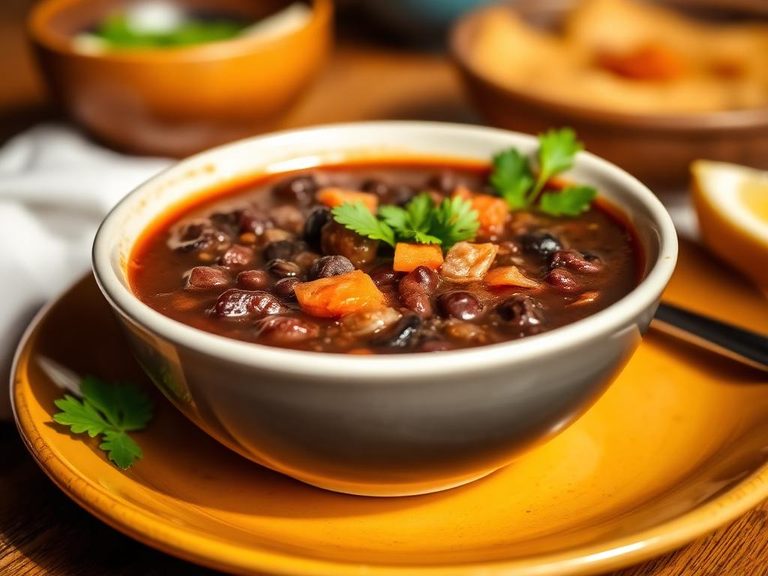
A hearty, velvety soup made from simmered black beans, often blended to a thick, creamy consistency with a deep, earthy flavor and subtle smoky undertones. It's a nutritional powerhouse, delivering an impressive 4.9 grams of fiber and 5.1 grams of protein per 100g, all for just 103 calories. The texture is typically smooth with a satisfying, rustic body.
Calorie split: 20% protein · 58% carbs · 23% fat
↓ Full nutrition💚 Why it's loved
People love it for its deeply comforting, savory flavor and velvety texture that feels both wholesome and indulgent. It's a beloved staple in Latin American cuisine, often served as a main course or a starter, embodying a rich cultural tradition of simple, flavorful, and nourishing food.
⚠️ Watch-outs & how to enjoy it better
Some may experience digestive discomfort or gas from the high fiber and oligosaccharides in beans. To mitigate this, introduce it gradually into your diet, ensure beans are cooked thoroughly, and consider rinsing canned beans. It can also be high in sodium if heavily salted, so look for low-sodium versions or make it from scratch to control salt content.
Key benefits
- Excellent source of dietary fiber (4.9g/100g)
- Good plant-based protein source (5.1g/100g)
- Low in fat (2.57g/100g)
- Naturally low in sugar (0.89g/100g)
- Rich in micronutrients like iron, magnesium, and folate
🍽️ Popular dishes
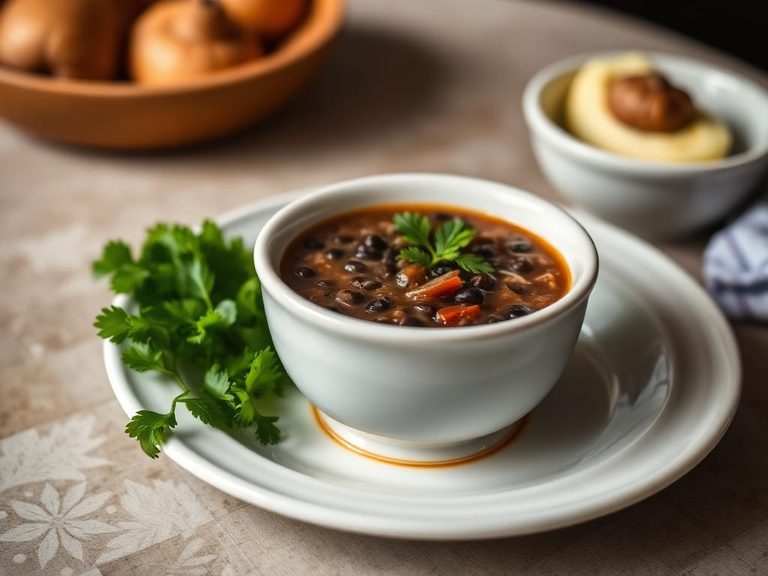
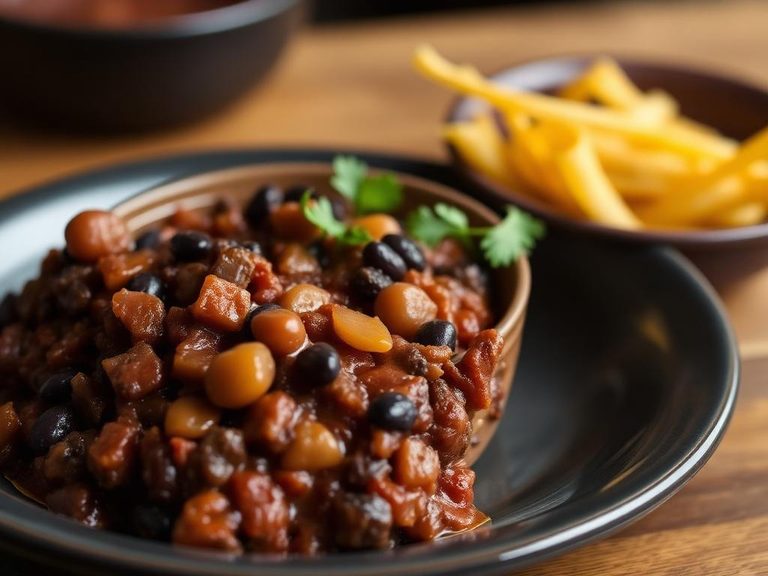
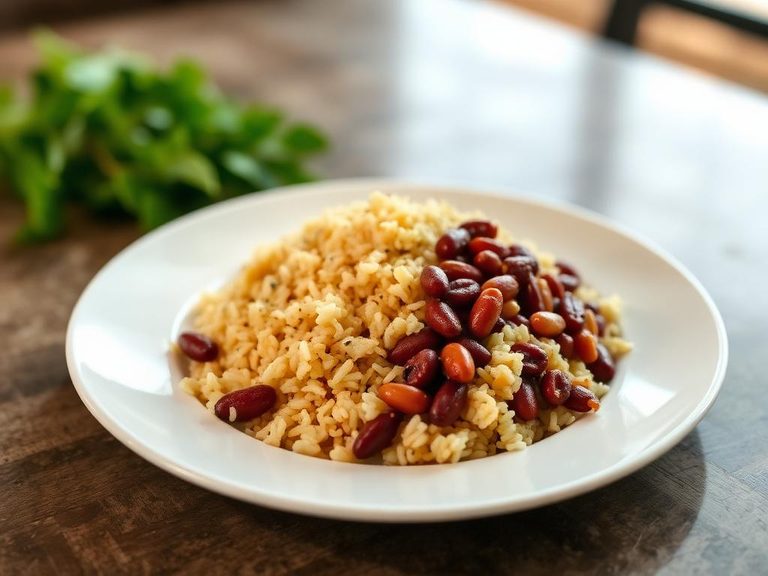
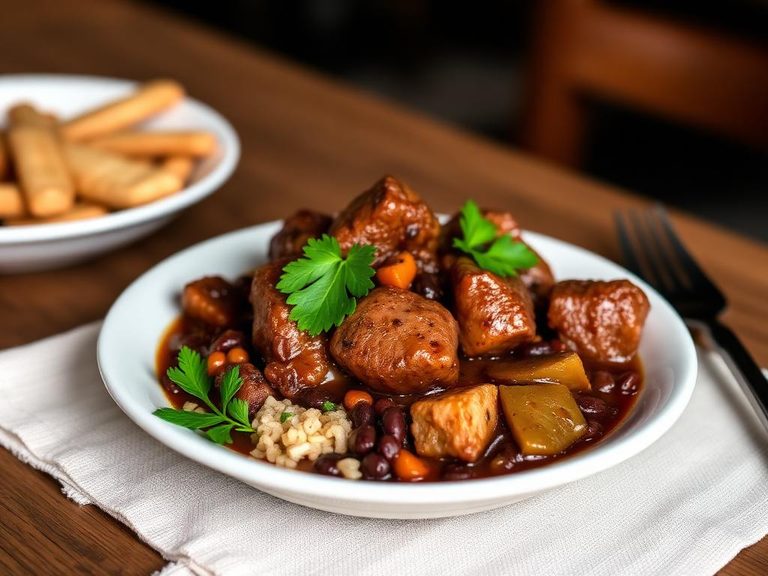
🌍 Where it's eaten
💡 Did you know?
The dark pigment in black beans, called anthocyanin, is the same powerful antioxidant found in blueberries and red wine.
Full nutrition (USDA data · scales with serving)
| Water | 75.9 g |
| Energy | 103 kcal |
| Energy | 430 kj |
| Protein | 5.1 g |
| Total lipid (fat) | 2.6 g |
| Ash | 1.6 g |
| Carbohydrate, by difference | 14.8 g |
| Fiber, total dietary | 4.9 g |
| Total Sugars | 0.89 g |
| Sucrose | 0.54 g |
| Glucose | 0.00 g |
| Fructose | 0.35 g |
| Lactose | 0.00 g |
| Maltose | 0.00 g |
| Galactose | 0.00 g |
| Starch | 7.9 g |
| Calcium, Ca | 42.0 mg |
| Iron, Fe | 1.8 mg |
| Magnesium, Mg | 41.0 mg |
| Phosphorus, P | 109 mg |
| Potassium, K | 340 mg |
| Sodium, Na | 311 mg |
| Zinc, Zn | 0.67 mg |
| Copper, Cu | 0.16 mg |
| Manganese, Mn | 0.33 mg |
| Selenium, Se | 9.1 ug |
| Thiamin | 0.06 mg |
| Riboflavin | 0.03 mg |
| Niacin | 0.68 mg |
| Pantothenic acid | 0.17 mg |
| Vitamin B-6 | 0.10 mg |
| Choline, total | 35.2 mg |
| Betaine | 0.50 mg |
| Vitamin B-12 | 0.00 ug |
| Vitamin A, RAE | 1.0 ug |
| Retinol | 1.0 ug |
| Vitamin A, IU | 2.0 iu |
| Vitamin E (alpha-tocopherol) | 0.07 mg |
| Tocopherol, beta | 0.01 mg |
| Tocopherol, gamma | 1.8 mg |
| Tocopherol, delta | 0.14 mg |
| Tocotrienol, alpha | 0.01 mg |
| Tocotrienol, beta | 0.00 mg |
| Tocotrienol, gamma | 0.01 mg |
| Tocotrienol, delta | 0.00 mg |
| Vitamin K (phylloquinone) | 6.0 ug |
| Vitamin K (Menaquinone-4) | 0.40 ug |
Fat & fatty acid profile (per 100g)
| Fatty acids, total saturated | 0.54 g |
| SFA 4:0 | 0.01 g |
| SFA 6:0 | 0.00 g |
| SFA 8:0 | 0.00 g |
| SFA 10:0 | 0.01 g |
| SFA 12:0 | 0.01 g |
| SFA 14:0 | 0.02 g |
| SFA 15:0 | 0.00 g |
| SFA 16:0 | 0.35 g |
| SFA 17:0 | 0.01 g |
| SFA 18:0 | 0.11 g |
| SFA 20:0 | 0.01 g |
| SFA 22:0 | 0.01 g |
| SFA 24:0 | 0.01 g |
| Fatty acids, total monounsaturated | 1.0 g |
| MUFA 14:1 | 0.00 g |
| MUFA 15:1 | 0.00 g |
| MUFA 16:1 | 0.02 g |
| MUFA 16:1 c | 0.02 g |
| MUFA 17:1 | 0.00 g |
| MUFA 18:1 | 1.00 g |
| MUFA 18:1 c | 0.99 g |
| MUFA 20:1 | 0.01 g |
| MUFA 22:1 | 0.00 g |
| MUFA 22:1 c | 0.00 g |
| MUFA 24:1 c | 0.00 g |
| Fatty acids, total polyunsaturated | 0.79 g |
| PUFA 18:2 | 0.56 g |
| PUFA 18:2 n-6 c,c | 0.55 g |
| PUFA 18:2 CLAs | 0.00 g |
| PUFA 18:3 | 0.22 g |
| PUFA 18:3 n-3 c,c,c (ALA) | 0.22 g |
| PUFA 18:3 n-6 c,c,c | 0.00 g |
| PUFA 18:4 | 0.00 g |
| PUFA 20:2 n-6 c,c | 0.00 g |
| PUFA 20:3 | 0.00 g |
| PUFA 20:3 n-3 | 0.00 g |
| PUFA 20:3 n-6 | 0.00 g |
| PUFA 20:4 | 0.01 g |
| PUFA 20:5 n-3 (EPA) | 0.00 g |
| PUFA 22:4 | 0.00 g |
| PUFA 22:5 n-3 (DPA) | 0.00 g |
| PUFA 22:6 n-3 (DHA) | 0.00 g |
| Fatty acids, total trans | 0.02 g |
| Fatty acids, total trans-monoenoic | 0.01 g |
| TFA 16:1 t | 0.00 g |
| TFA 18:1 t | 0.01 g |
| TFA 22:1 t | 0.00 g |
| TFA 18:2 t not further defined | 0.01 g |
| Fatty acids, total trans-polyenoic | 0.01 g |
| Cholesterol | 1.0 mg |
Amino acid profile (per 100g)
| Tryptophan | 0.04 g |
| Threonine | 0.17 g |
| Isoleucine | 0.16 g |
| Leucine | 0.32 g |
| Lysine | 0.27 g |
| Methionine | 0.10 g |
| Cystine | 0.04 g |
| Phenylalanine | 0.16 g |
| Tyrosine | 0.13 g |
| Valine | 0.20 g |
| Arginine | 0.35 g |
| Histidine | 0.09 g |
| Alanine | 0.35 g |
| Aspartic acid | 0.38 g |
| Glutamic acid | 0.72 g |
| Glycine | 0.58 g |
| Proline | 0.36 g |
| Serine | 0.20 g |
FAQ
Is black bean soup gluten-free?
The soup itself is naturally gluten-free, but it's important to check for cross-contamination or added ingredients like thickeners or flavorings that might contain gluten if you have a sensitivity.
Can I freeze black bean soup?
Yes, it freezes exceptionally well. Let it cool completely, store in airtight containers or freezer bags, and it will keep for up to 3 months. The texture may become slightly thicker upon thawing.
How can I make it creamier without adding dairy?
Blend a portion of the soup until smooth and stir it back into the pot. You can also add a peeled potato or a handful of raw cashews during cooking, which will blend into a creamy base.
Nutrient density (calculated · NRF9.3)
Nutrient Rich Foods index: beneficial nutrients (protein, fiber, vitamins, minerals) minus saturated fat, added sugar & sodium, per 100 kcal.
NRF9.3 index — Fulgoni, Keast & Drewnowski, 2009. Computed from USDA nutrients.
Weight-loss friendliness (composite index)
Energy density 1.03 kcal/g · 20% calories from protein · 4.9 g fiber · 0.9 g sugar per 100 g.
Composite of energy density (Rolls et al., 1999), protein & fiber satiety, minus sugar. A calculated heuristic — ranks satiety-per-calorie, not a clinical measure.
Dietary load (calculated from USDA values)
Potential renal acid load. Positive = acid-forming, negative = alkaline-forming.
Sodium-to-potassium ratio: 0.91 (lower is better — aim for ≤ 1)
Sodium:potassium per WHO potassium guidance. Computed from USDA nutrients.