

Turkey, skin, from retail parts, from dark meat, cooked, roasted
Whole food · Poultry Products

Photo: Wikipedia
This is the rich, flavorful dark meat of the turkey, specifically the skin-on portion from the leg or thigh, roasted to a deep golden brown. Its texture is succulent and tender with a distinct chew from the skin, offering a robust, savory flavor that is far more intense than the breast. Nutritionally, it is a high-fat, high-protein food, providing a significant calorie boost primarily from the rendered fat in the skin.
Calorie split: 24% protein · 0% carbs · 76% fat
↓ Full nutrition💚 Why it's loved
People adore it for its deep, savory flavor and juicy, tender texture that stands up well to roasting and braising. Its versatility makes it a staple in comfort food dishes, from holiday feasts to hearty weeknight meals, where it delivers a satisfying, rich mouthfeel.
⚠️ Watch-outs & how to enjoy it better
The high fat content, especially from the skin, makes it a calorie-dense choice that may not suit low-fat diets. To balance this, pair it with fiber-rich vegetables like roasted Brussels sprouts or steamed broccoli to add volume and nutrients without excess calories, and practice portion control by using the skin as a flavor accent rather than the main event.
Key benefits
- Excellent source of complete protein for muscle maintenance.
- Rich in iron and zinc, minerals crucial for immune function and energy.
- Provides B vitamins, particularly niacin (B3) and B6, for metabolism.
- The skin contains collagen, which supports skin and joint health.
🍽️ Popular dishes

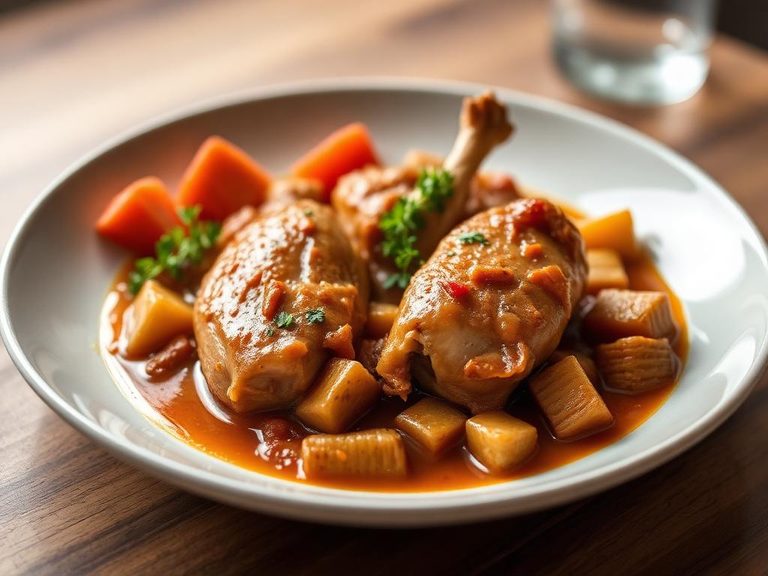


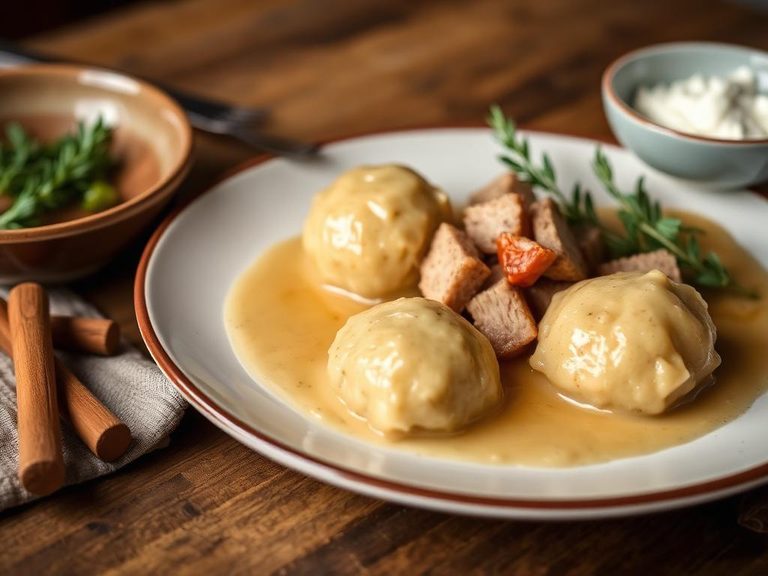
🌍 Where it's eaten
💡 Did you know?
The dark meat of turkey contains more myoglobin, a protein that stores oxygen in muscle cells, which is why it has a darker color and richer flavor compared to the white breast meat.
Full nutrition (USDA data · scales with serving)
| Water | 39.4 g |
| Energy | 414 kcal |
| Energy | 1730 kj |
| Protein | 24.6 g |
| Total lipid (fat) | 35.0 g |
| Ash | 1.1 g |
| Carbohydrate, by difference | 0.00 g |
| Fiber, total dietary | 0.00 g |
| Total Sugars | 0.00 g |
| Calcium, Ca | 6.0 mg |
| Iron, Fe | 1.6 mg |
| Magnesium, Mg | 24.0 mg |
| Phosphorus, P | 230 mg |
| Potassium, K | 225 mg |
| Sodium, Na | 106 mg |
| Zinc, Zn | 1.6 mg |
| Copper, Cu | 0.06 mg |
| Manganese, Mn | 0.01 mg |
| Selenium, Se | 20.2 ug |
| Vitamin C, total ascorbic acid | 0.00 mg |
| Thiamin | 0.05 mg |
| Riboflavin | 0.23 mg |
| Niacin | 5.4 mg |
| Pantothenic acid | 0.98 mg |
| Vitamin B-6 | 0.29 mg |
| Folate, total | 8.0 ug |
| Folate, food | 8.0 ug |
| Choline, total | 75.8 mg |
| Betaine | 3.9 mg |
| Vitamin B-12 | 1.9 ug |
| Vitamin B-12, added | 0.00 ug |
| Vitamin A, RAE | 59.0 ug |
| Retinol | 59.0 ug |
| Carotene, beta | 0.00 ug |
| Carotene, alpha | 0.00 ug |
| Cryptoxanthin, beta | 0.00 ug |
| Vitamin A, IU | 198 iu |
| Lycopene | 0.00 ug |
| Lutein + zeaxanthin | 7.0 ug |
| Vitamin E (alpha-tocopherol) | 0.13 mg |
| Vitamin E, added | 0.00 mg |
| Vitamin D (D2 + D3), International Units | 31.0 iu |
| Vitamin D (D2 + D3) | 0.80 ug |
| Vitamin D3 (cholecalciferol) | 0.80 ug |
| Vitamin K (phylloquinone) | 0.00 ug |
| Alcohol, ethyl | 0.00 g |
| Caffeine | 0.00 mg |
| Theobromine | 0.00 mg |
Fat & fatty acid profile (per 100g)
| Fatty acids, total saturated | 10.2 g |
| SFA 4:0 | 0.00 g |
| SFA 6:0 | 0.00 g |
| SFA 8:0 | 0.00 g |
| SFA 10:0 | 0.02 g |
| SFA 12:0 | 0.10 g |
| SFA 14:0 | 0.36 g |
| SFA 15:0 | 0.05 g |
| SFA 16:0 | 7.2 g |
| SFA 17:0 | 0.09 g |
| SFA 18:0 | 2.3 g |
| SFA 20:0 | 0.04 g |
| SFA 22:0 | 0.02 g |
| SFA 24:0 | 0.01 g |
| Fatty acids, total monounsaturated | 13.7 g |
| MUFA 14:1 | 0.07 g |
| MUFA 15:1 | 0.00 g |
| MUFA 16:1 | 1.5 g |
| MUFA 16:1 c | 1.5 g |
| MUFA 17:1 | 0.06 g |
| MUFA 18:1 | 11.9 g |
| MUFA 18:1 c | 11.6 g |
| MUFA 20:1 | 0.18 g |
| MUFA 22:1 | 0.02 g |
| MUFA 22:1 c | 0.01 g |
| MUFA 24:1 c | 0.01 g |
| Fatty acids, total polyunsaturated | 10.8 g |
| PUFA 18:2 | 9.8 g |
| PUFA 18:2 n-6 c,c | 9.6 g |
| PUFA 18:2 CLAs | 0.08 g |
| PUFA 18:3 | 0.69 g |
| PUFA 18:3 n-3 c,c,c (ALA) | 0.67 g |
| PUFA 18:3 n-6 c,c,c | 0.02 g |
| PUFA 18:4 | 0.00 g |
| PUFA 20:2 n-6 c,c | 0.06 g |
| PUFA 20:3 | 0.03 g |
| PUFA 20:3 n-3 | 0.01 g |
| PUFA 20:3 n-6 | 0.02 g |
| PUFA 20:4 | 0.17 g |
| PUFA 20:5 n-3 (EPA) | 0.01 g |
| PUFA 22:4 | 0.04 g |
| PUFA 22:5 n-3 (DPA) | 0.03 g |
| PUFA 22:6 n-3 (DHA) | 0.01 g |
| Fatty acids, total trans | 0.46 g |
| Fatty acids, total trans-monoenoic | 0.36 g |
| TFA 16:1 t | 0.03 g |
| TFA 18:1 t | 0.32 g |
| TFA 22:1 t | 0.02 g |
| TFA 18:2 t not further defined | 0.10 g |
| Fatty acids, total trans-polyenoic | 0.10 g |
| Cholesterol | 139 mg |
Amino acid profile (per 100g)
| Tryptophan | 0.09 g |
| Threonine | 0.59 g |
| Isoleucine | 0.44 g |
| Leucine | 1.0 g |
| Lysine | 1.3 g |
| Methionine | 0.33 g |
| Cystine | 0.15 g |
| Phenylalanine | 0.58 g |
| Tyrosine | 0.38 g |
| Valine | 0.61 g |
| Arginine | 1.5 g |
| Histidine | 0.33 g |
| Alanine | 1.6 g |
| Aspartic acid | 1.4 g |
| Glutamic acid | 2.3 g |
| Glycine | 3.5 g |
| Proline | 2.3 g |
| Serine | 0.71 g |
FAQ
Is turkey skin healthy to eat?
Turkey skin is high in fat and calories, but it also contains collagen and some nutrients. It's best enjoyed in moderation as part of a balanced diet, especially if you're watching your fat intake.
How does the nutrition differ from turkey breast?
Dark meat with skin has significantly more fat and calories than skinless breast meat, but it also offers more iron and zinc. The breast is leaner and higher in protein per calorie.
What's the best way to cook it for flavor?
Roasting or braising are ideal methods to render the fat and develop a crispy skin while keeping the meat tender. Slow cooking can also enhance its rich flavor and texture.
Nutrient density (calculated · NRF9.3)
Nutrient Rich Foods index: beneficial nutrients (protein, fiber, vitamins, minerals) minus saturated fat, added sugar & sodium, per 100 kcal.
NRF9.3 index — Fulgoni, Keast & Drewnowski, 2009. Computed from USDA nutrients.
Weight-loss friendliness (composite index)
Energy density 4.14 kcal/g · 24% calories from protein · 0.0 g fiber · 0.0 g sugar per 100 g.
Composite of energy density (Rolls et al., 1999), protein & fiber satiety, minus sugar. A calculated heuristic — ranks satiety-per-calorie, not a clinical measure.
Dietary load (calculated from USDA values)
Potential renal acid load. Positive = acid-forming, negative = alkaline-forming.
Sodium-to-potassium ratio: 0.47 (lower is better — aim for ≤ 1)
Sodium:potassium per WHO potassium guidance. Computed from USDA nutrients.