

Pork loin, fresh, backribs, bone-in, cooked-roasted, lean only
Whole food · Pork Products

Photo: Wikipedia
Pork loin backribs are the meaty, bone-in ribs cut from the loin section, prized for their tender, lean meat and rich, savory flavor. When roasted, the exterior develops a satisfying caramelized crust while the interior remains juicy and succulent. This preparation delivers a high-protein, zero-carb meal with a significant portion of its calories coming from healthy fats.
Calorie split: 38% protein · 0% carbs · 62% fat
↓ Full nutrition💚 Why it's loved
People adore roasted pork loin backribs for their deep, savory umami flavor and the satisfying contrast between the tender meat and the flavorful bone. They are a versatile centerpiece, easily seasoned with dry rubs or glazes, and hold a special place in barbecue culture and family feasts.
⚠️ Watch-outs & how to enjoy it better
While lean, the fat content is notable, and overconsumption can be high in calories. Those monitoring saturated fat intake or following a strict low-fat diet should exercise portion control. To counteract, pair with a large portion of non-starchy vegetables (like roasted broccoli or a vinegar-based slaw) to add fiber and volume, promoting satiety with fewer calories.
Key benefits
- Excellent source of complete, high-quality protein
- Rich in B vitamins, especially thiamine (B1) and niacin (B3)
- Provides essential minerals like selenium, phosphorus, and zinc
- Zero carbohydrates, suitable for low-carb and ketogenic diets
- Lean cut offers a good balance of protein and fat
🍽️ Popular dishes
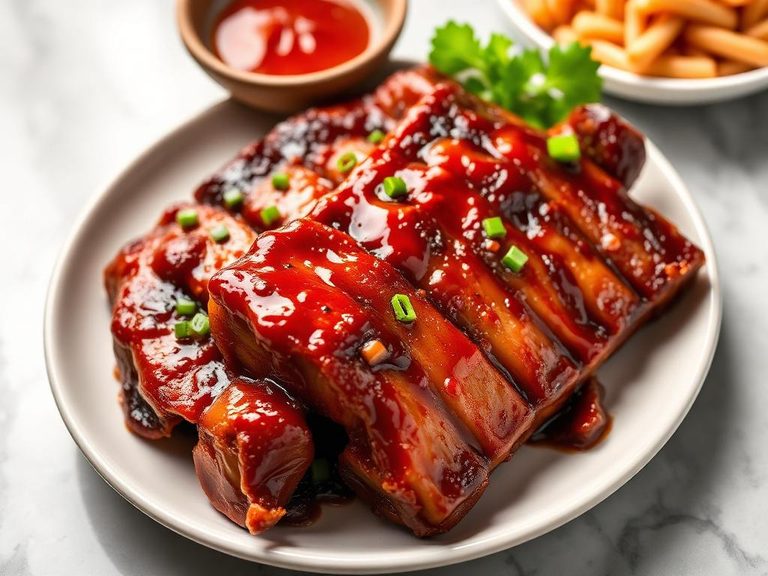
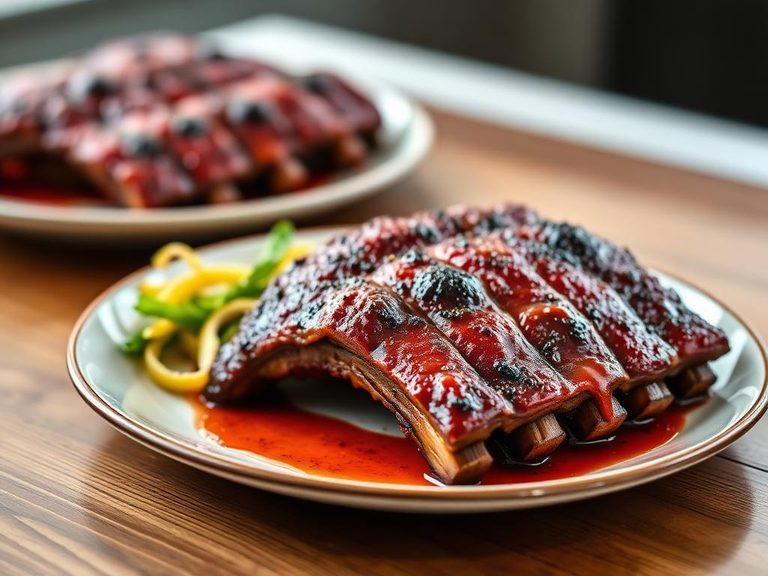
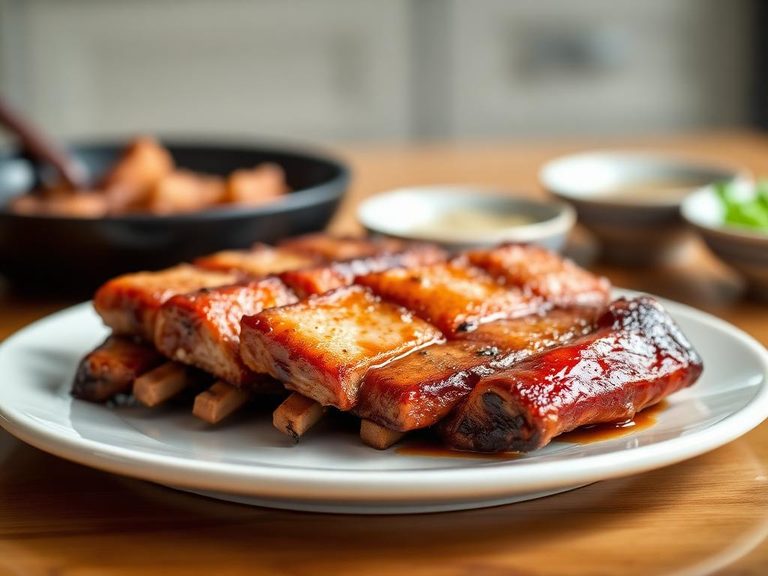
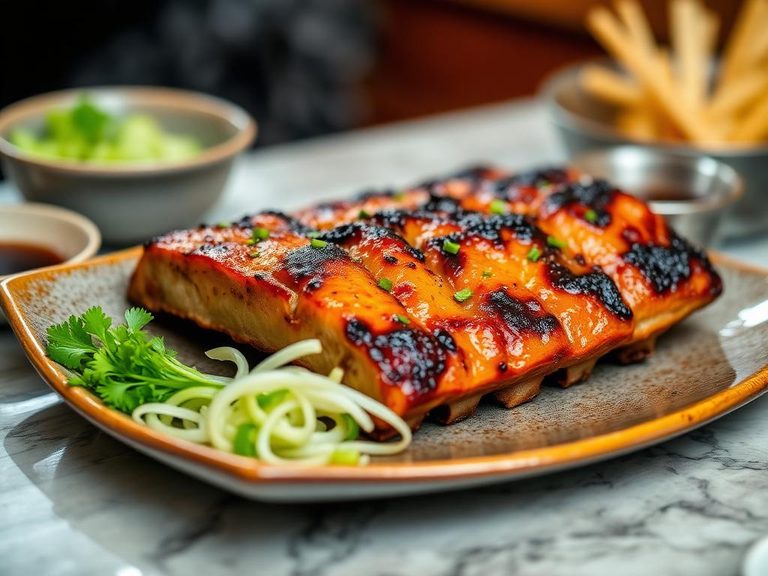
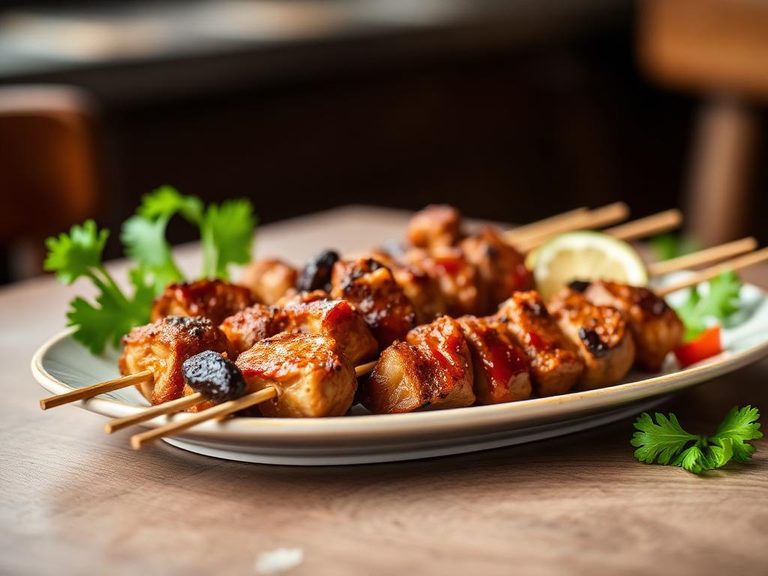
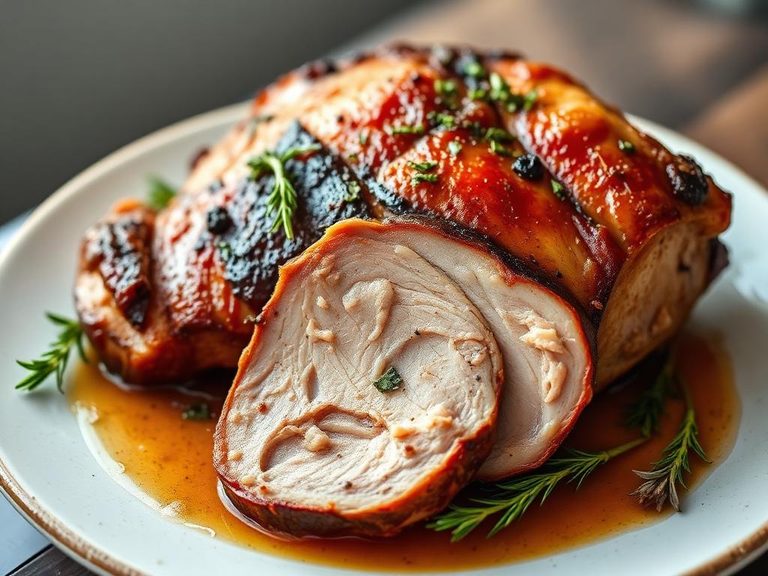
🌍 Where it's eaten
💡 Did you know?
The 'backribs' come from the rib section attached to the loin, which is the same primal cut that gives us pork chops and tenderloin, making them one of the most tender rib cuts available.
Full nutrition (USDA data · scales with serving)
| Water | 57.6 g |
| Energy | 255 kcal |
| Energy | 1069 kj |
| Protein | 24.1 g |
| Total lipid (fat) | 17.6 g |
| Ash | 1.1 g |
| Carbohydrate, by difference | 0.00 g |
| Fiber, total dietary | 0.00 g |
| Total Sugars | 0.00 g |
| Calcium, Ca | 44.0 mg |
| Iron, Fe | 0.96 mg |
| Magnesium, Mg | 17.0 mg |
| Phosphorus, P | 171 mg |
| Potassium, K | 249 mg |
| Sodium, Na | 98.0 mg |
| Zinc, Zn | 3.2 mg |
| Copper, Cu | 0.11 mg |
| Manganese, Mn | 0.01 mg |
| Selenium, Se | 33.7 ug |
| Vitamin C, total ascorbic acid | 0.00 mg |
| Thiamin | 0.48 mg |
| Riboflavin | 0.35 mg |
| Niacin | 7.9 mg |
| Pantothenic acid | 1.3 mg |
| Vitamin B-6 | 0.43 mg |
| Folate, total | 0.00 ug |
| Folic acid | 0.00 ug |
| Folate, food | 0.00 ug |
| Folate, DFE | 0.00 ug |
| Choline, total | 83.0 mg |
| Betaine | 3.2 mg |
| Vitamin B-12 | 0.75 ug |
| Vitamin B-12, added | 0.00 ug |
| Vitamin A, RAE | 4.0 ug |
| Retinol | 4.0 ug |
| Carotene, beta | 0.00 ug |
| Carotene, alpha | 0.00 ug |
| Cryptoxanthin, beta | 0.00 ug |
| Vitamin A, IU | 15.0 iu |
| Lycopene | 0.00 ug |
| Lutein + zeaxanthin | 0.00 ug |
| Vitamin E (alpha-tocopherol) | 0.27 mg |
| Vitamin E, added | 0.00 mg |
| Vitamin D (D2 + D3), International Units | 46.0 iu |
| Vitamin D (D2 + D3) | 1.2 ug |
| Vitamin D3 (cholecalciferol) | 1.2 ug |
| Vitamin K (phylloquinone) | 0.00 ug |
| Vitamin K (Dihydrophylloquinone) | 0.00 ug |
| Alcohol, ethyl | 0.00 g |
| Caffeine | 0.00 mg |
| Theobromine | 0.00 mg |
Fat & fatty acid profile (per 100g)
| Fatty acids, total saturated | 6.2 g |
| SFA 4:0 | 0.00 g |
| SFA 6:0 | 0.00 g |
| SFA 8:0 | 0.00 g |
| SFA 10:0 | 0.02 g |
| SFA 12:0 | 0.01 g |
| SFA 14:0 | 0.23 g |
| SFA 15:0 | 0.01 g |
| SFA 16:0 | 3.8 g |
| SFA 17:0 | 0.06 g |
| SFA 18:0 | 2.0 g |
| SFA 20:0 | 0.03 g |
| SFA 22:0 | 0.00 g |
| SFA 24:0 | 0.00 g |
| Fatty acids, total monounsaturated | 7.6 g |
| MUFA 14:1 | 0.00 g |
| MUFA 15:1 | 0.00 g |
| MUFA 16:1 | 0.38 g |
| MUFA 17:1 | 0.00 g |
| MUFA 18:1 | 7.1 g |
| MUFA 18:1 c | 7.0 g |
| MUFA 20:1 | 0.12 g |
| MUFA 22:1 | 0.00 g |
| MUFA 22:1 c | 0.00 g |
| Fatty acids, total polyunsaturated | 2.8 g |
| PUFA 18:2 | 2.5 g |
| PUFA 18:2 n-6 c,c | 2.4 g |
| PUFA 18:3 | 0.12 g |
| PUFA 18:3 n-3 c,c,c (ALA) | 0.10 g |
| PUFA 18:3 n-6 c,c,c | 0.00 g |
| PUFA 18:3i | 0.01 g |
| PUFA 18:4 | 0.00 g |
| PUFA 20:2 n-6 c,c | 0.10 g |
| PUFA 20:3 | 0.01 g |
| PUFA 20:4 | 0.08 g |
| PUFA 20:5 n-3 (EPA) | 0.00 g |
| PUFA 22:5 n-3 (DPA) | 0.01 g |
| PUFA 22:6 n-3 (DHA) | 0.00 g |
| Fatty acids, total trans | 0.16 g |
| Fatty acids, total trans-monoenoic | 0.12 g |
| TFA 18:1 t | 0.12 g |
| TFA 18:2 t not further defined | 0.03 g |
| Fatty acids, total trans-polyenoic | 0.04 g |
| Cholesterol | 84.0 mg |
Amino acid profile (per 100g)
| Tryptophan | 0.29 g |
| Threonine | 1.1 g |
| Isoleucine | 1.1 g |
| Leucine | 2.0 g |
| Lysine | 2.1 g |
| Methionine | 0.66 g |
| Cystine | 0.27 g |
| Phenylalanine | 1.0 g |
| Tyrosine | 0.96 g |
| Valine | 1.2 g |
| Arginine | 1.6 g |
| Histidine | 0.98 g |
| Alanine | 1.4 g |
| Aspartic acid | 2.3 g |
| Glutamic acid | 3.7 g |
| Glycine | 1.1 g |
| Proline | 0.98 g |
| Serine | 1.0 g |
| Hydroxyproline | 0.08 g |
FAQ
What's the difference between baby back ribs and spare ribs?
Baby back ribs (loin backribs) are shorter, curved, and come from high on the pig's back near the loin. They are leaner, more tender, and cook faster than spare ribs, which are larger, flatter, and come from the belly side, containing more meat, fat, and connective tissue.
How do I know when roasted pork ribs are done?
For tender, pull-off-the-bone meat, roast until the internal temperature reaches 195-205°F (90-96°C). At this point, the collagen has broken down into gelatin. For a more tender, chewable bite, aim for 145-160°F (63-71°C), but the meat will be firmer.
Can I eat the bone?
The bone itself is not typically eaten, but it is crucial for flavor and moisture during cooking. Many cooks believe meat cooked on the bone has superior taste. The small amount of marrow and connective tissue near the bone adds richness to the meat and any pan drippings or sauce.
Nutrient density (calculated · NRF9.3)
Nutrient Rich Foods index: beneficial nutrients (protein, fiber, vitamins, minerals) minus saturated fat, added sugar & sodium, per 100 kcal.
NRF9.3 index — Fulgoni, Keast & Drewnowski, 2009. Computed from USDA nutrients.
Weight-loss friendliness (composite index)
Energy density 2.55 kcal/g · 38% calories from protein · 0.0 g fiber · 0.0 g sugar per 100 g.
Composite of energy density (Rolls et al., 1999), protein & fiber satiety, minus sugar. A calculated heuristic — ranks satiety-per-calorie, not a clinical measure.
Dietary load (calculated from USDA values)
Potential renal acid load. Positive = acid-forming, negative = alkaline-forming.
Sodium-to-potassium ratio: 0.39 (lower is better — aim for ≤ 1)
Sodium:potassium per WHO potassium guidance. Computed from USDA nutrients.