

Pork, ground, 72% lean / 28% fat, cooked, pan-broiled
Whole food · Pork Products
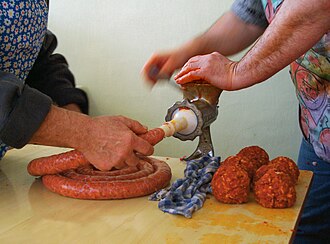
Photo: Wikipedia
This is ground pork cooked in its own fat via pan-broiling, yielding a richly savory, crumbly texture with a deep, caramelized flavor. Nutritionally, it's a dense source of protein and energy, with over 31 grams of fat per 100g serving.
Calorie split: 24% protein · 1% carbs · 75% fat
↓ Full nutrition💚 Why it's loved
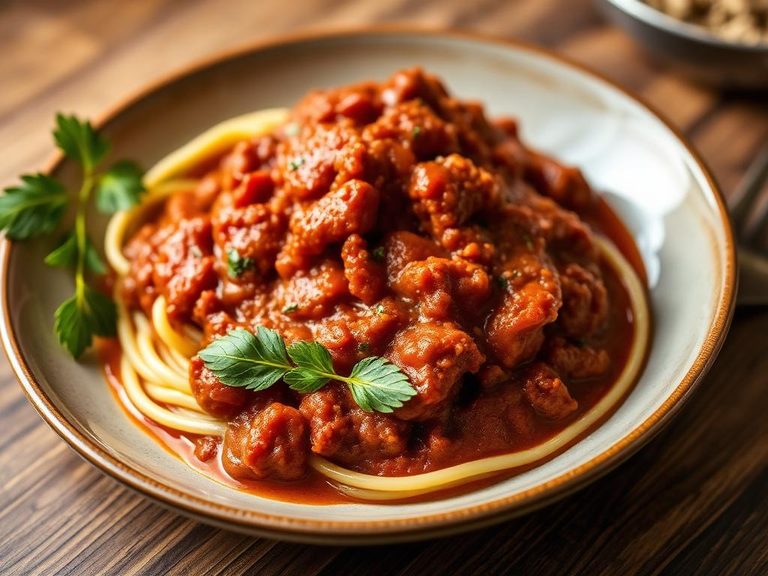
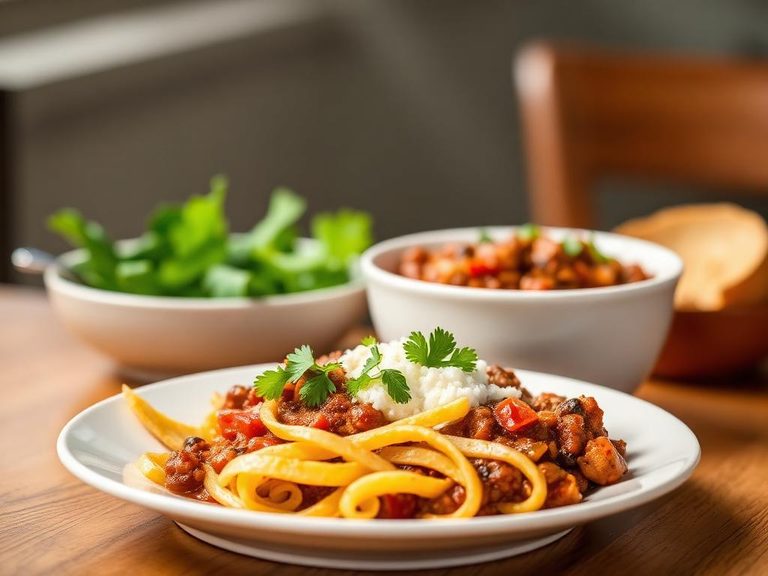
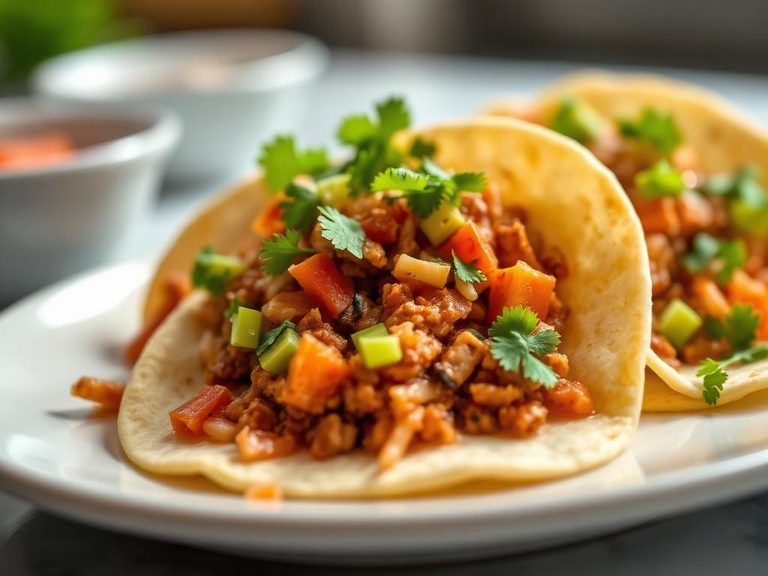
People love it for its robust, savory flavor that forms the flavorful base of countless dishes, from tacos to meat sauces. Its versatility and ability to absorb seasonings make it a global kitchen staple.
⚠️ Watch-outs & how to enjoy it better
The high saturated fat content means it should be consumed in moderation, especially by those monitoring heart health. To counteract, drain excess fat after cooking and pair it with high-fiber vegetables like broccoli or leafy greens to balance the meal.
Key benefits
- High-quality complete protein source
- Rich in B vitamins, especially B12 and niacin
- Provides essential minerals like zinc and selenium
- Calorie-dense, useful for energy needs
🍽️ Popular dishes
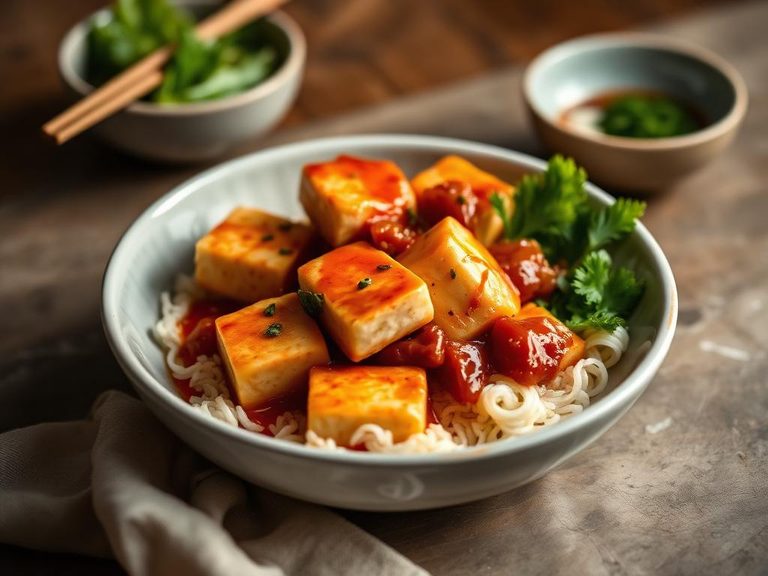
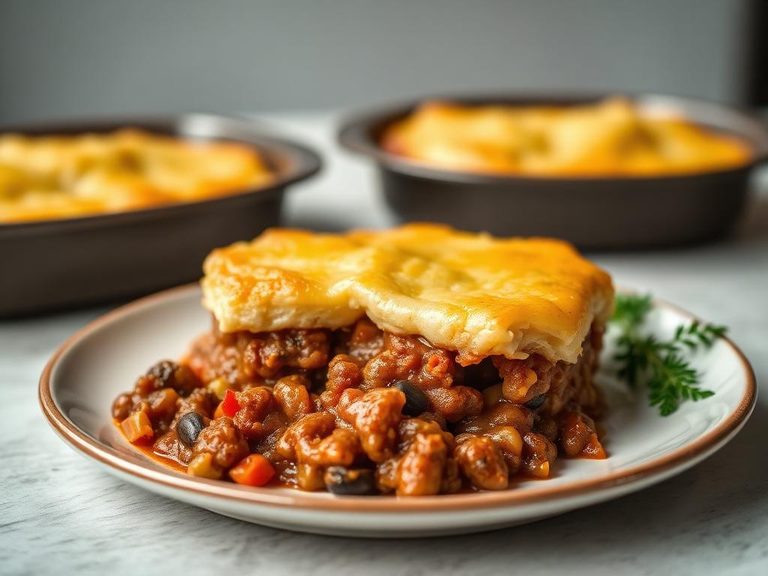
🌍 Where it's eaten
💡 Did you know?
The term 'hamburger' doesn't refer to ham, but to the German city of Hamburg, where minced beef patties were popularized before being adapted with pork in many cuisines.
Full nutrition (USDA data · scales with serving)
| Water | 43.9 g |
| Energy | 377 kcal |
| Energy | 1579 kj |
| Protein | 22.6 g |
| Total lipid (fat) | 31.4 g |
| Ash | 1.1 g |
| Carbohydrate, by difference | 1.1 g |
| Fiber, total dietary | 0.00 g |
| Total Sugars | 0.00 g |
| Calcium, Ca | 20.0 mg |
| Iron, Fe | 1.2 mg |
| Magnesium, Mg | 18.0 mg |
| Phosphorus, P | 181 mg |
| Potassium, K | 275 mg |
| Sodium, Na | 91.0 mg |
| Zinc, Zn | 2.5 mg |
| Copper, Cu | 0.04 mg |
| Manganese, Mn | 0.01 mg |
| Selenium, Se | 37.9 ug |
| Vitamin C, total ascorbic acid | 0.00 mg |
| Thiamin | 0.27 mg |
| Riboflavin | 0.49 mg |
| Niacin | 6.9 mg |
| Pantothenic acid | 0.81 mg |
| Vitamin B-6 | 0.44 mg |
| Folate, total | 4.0 ug |
| Folic acid | 0.00 ug |
| Folate, food | 4.0 ug |
| Folate, DFE | 4.0 ug |
| Choline, total | 76.1 mg |
| Betaine | 5.4 mg |
| Vitamin B-12 | 1.1 ug |
| Vitamin B-12, added | 0.00 ug |
| Vitamin A, RAE | 0.00 ug |
| Retinol | 0.00 ug |
| Carotene, beta | 0.00 ug |
| Carotene, alpha | 0.00 ug |
| Cryptoxanthin, beta | 0.00 ug |
| Vitamin A, IU | 0.00 iu |
| Lycopene | 0.00 ug |
| Lutein + zeaxanthin | 0.00 ug |
| Vitamin E (alpha-tocopherol) | 0.47 mg |
| Vitamin E, added | 0.00 mg |
| Tocopherol, beta | 0.00 mg |
| Tocopherol, gamma | 0.04 mg |
| Tocopherol, delta | 0.00 mg |
| Vitamin D (D2 + D3), International Units | 32.0 iu |
| Vitamin D (D2 + D3) | 0.80 ug |
| Vitamin D3 (cholecalciferol) | 0.80 ug |
| Vitamin K (phylloquinone) | 0.00 ug |
| Vitamin K (Dihydrophylloquinone) | 0.00 ug |
| Alcohol, ethyl | 0.00 g |
| Caffeine | 0.00 mg |
| Theobromine | 0.00 mg |
Fat & fatty acid profile (per 100g)
| Fatty acids, total saturated | 10.8 g |
| SFA 4:0 | 0.00 g |
| SFA 6:0 | 0.00 g |
| SFA 8:0 | 0.00 g |
| SFA 10:0 | 0.02 g |
| SFA 12:0 | 0.02 g |
| SFA 14:0 | 0.40 g |
| SFA 15:0 | 0.02 g |
| SFA 16:0 | 6.7 g |
| SFA 17:0 | 0.10 g |
| SFA 18:0 | 3.4 g |
| SFA 20:0 | 0.06 g |
| SFA 22:0 | 0.00 g |
| SFA 24:0 | 0.00 g |
| Fatty acids, total monounsaturated | 14.4 g |
| MUFA 14:1 | 0.00 g |
| MUFA 15:1 | 0.00 g |
| MUFA 16:1 | 0.69 g |
| MUFA 17:1 | 0.00 g |
| MUFA 18:1 | 13.5 g |
| MUFA 18:1 c | 13.3 g |
| MUFA 20:1 | 0.28 g |
| MUFA 22:1 | 0.00 g |
| MUFA 22:1 c | 0.00 g |
| Fatty acids, total polyunsaturated | 4.2 g |
| PUFA 18:2 | 3.8 g |
| PUFA 18:2 n-6 c,c | 3.7 g |
| PUFA 18:3 | 0.20 g |
| PUFA 18:3 n-3 c,c,c (ALA) | 0.20 g |
| PUFA 18:3 n-6 c,c,c | 0.00 g |
| PUFA 20:2 n-6 c,c | 0.17 g |
| PUFA 20:3 | 0.03 g |
| PUFA 20:4 | 0.12 g |
| PUFA 20:5 n-3 (EPA) | 0.01 g |
| PUFA 22:5 n-3 (DPA) | 0.03 g |
| PUFA 22:6 n-3 (DHA) | 0.01 g |
| Fatty acids, total trans | 0.23 g |
| Fatty acids, total trans-monoenoic | 0.16 g |
| TFA 18:1 t | 0.16 g |
| TFA 18:2 t,t | 0.04 g |
| Fatty acids, total trans-polyenoic | 0.04 g |
| Cholesterol | 99.0 mg |
Amino acid profile (per 100g)
| Tryptophan | 0.29 g |
| Threonine | 0.96 g |
| Isoleucine | 1.0 g |
| Leucine | 1.8 g |
| Lysine | 1.9 g |
| Methionine | 0.60 g |
| Cystine | 0.26 g |
| Phenylalanine | 0.96 g |
| Tyrosine | 0.96 g |
| Valine | 1.1 g |
| Arginine | 1.5 g |
| Histidine | 0.89 g |
| Alanine | 1.3 g |
| Aspartic acid | 2.0 g |
| Glutamic acid | 3.3 g |
| Glycine | 1.3 g |
| Proline | 1.1 g |
| Serine | 0.91 g |
| Hydroxyproline | 0.21 g |
FAQ
What does '72% lean' mean?
It means the raw meat is 72% muscle tissue (protein) and 28% fat by weight. Cooking renders out much of this fat, changing the final nutritional profile.
Is pan-broiling different from pan-frying?
Yes. Pan-broiling uses high heat with little to no added fat, allowing the meat to cook in its own rendered fat. Pan-frying typically uses added oil or butter.
How can I make it healthier?
Drain the cooked meat thoroughly on paper towels, and mix it with finely chopped mushrooms or lentils to reduce the overall fat and calorie content per serving while adding fiber.
Nutrient density (calculated · NRF9.3)
Nutrient Rich Foods index: beneficial nutrients (protein, fiber, vitamins, minerals) minus saturated fat, added sugar & sodium, per 100 kcal.
NRF9.3 index — Fulgoni, Keast & Drewnowski, 2009. Computed from USDA nutrients.
Weight-loss friendliness (composite index)
Energy density 3.77 kcal/g · 24% calories from protein · 0.0 g fiber · 0.0 g sugar per 100 g.
Composite of energy density (Rolls et al., 1999), protein & fiber satiety, minus sugar. A calculated heuristic — ranks satiety-per-calorie, not a clinical measure.
Dietary load (calculated from USDA values)
Potential renal acid load. Positive = acid-forming, negative = alkaline-forming.
Sodium-to-potassium ratio: 0.33 (lower is better — aim for ≤ 1)
Sodium:potassium per WHO potassium guidance. Computed from USDA nutrients.