

Pork, fresh, loin, sirloin (roasts), boneless, separable lean and fat, cooked, roasted
Whole food · Pork Products

Photo: Wikipedia
This is a lean, boneless cut from the sirloin section of the pork loin, roasted to a tender, juicy finish. It offers a clean, mild pork flavor with a fine, uniform texture that holds up well to slicing. Nutritionally, it's a powerhouse of high-quality protein with minimal fat and zero carbohydrates.
Calorie split: 64% protein · 0% carbs · 36% fat
↓ Full nutrition💚 Why it's loved
People love it for its versatile, mild flavor that absorbs marinades and seasonings beautifully, making it a reliable centerpiece for both simple weeknight meals and elegant roasts. Its lean profile and easy slicing also make it a practical choice for meal prep and leftovers.
⚠️ Watch-outs & how to enjoy it better
As a very lean cut, it can dry out if overcooked, leading to a tough texture. To counteract this, use a meat thermometer to pull it at 145°F (63°C), let it rest before slicing, and consider brining or marinating to add moisture and flavor.
Key benefits
- Excellent source of complete protein for muscle maintenance.
- Very low in carbohydrates, suitable for low-carb diets.
- Provides B vitamins like thiamine and niacin for energy metabolism.
- Contains minerals such as selenium and phosphorus.
🍽️ Popular dishes
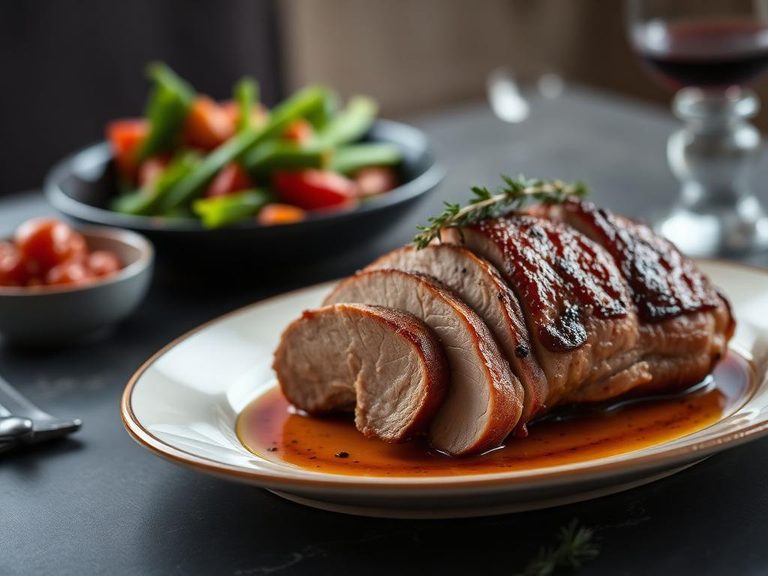
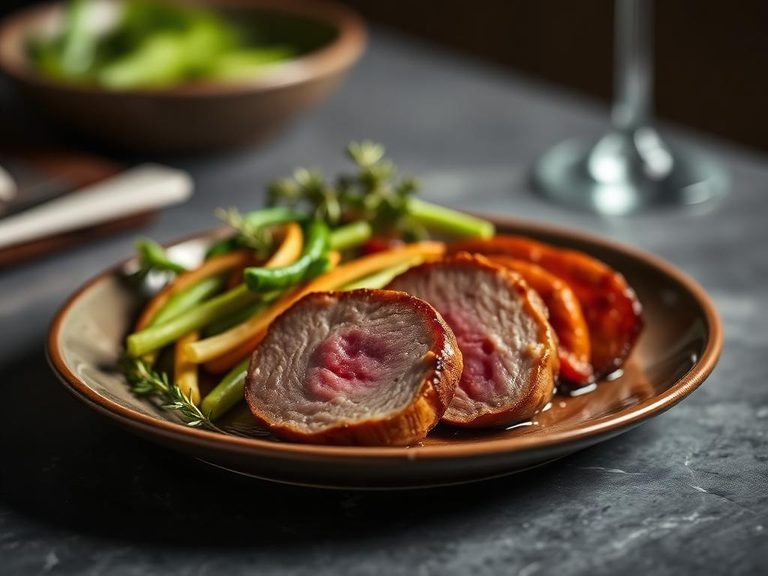
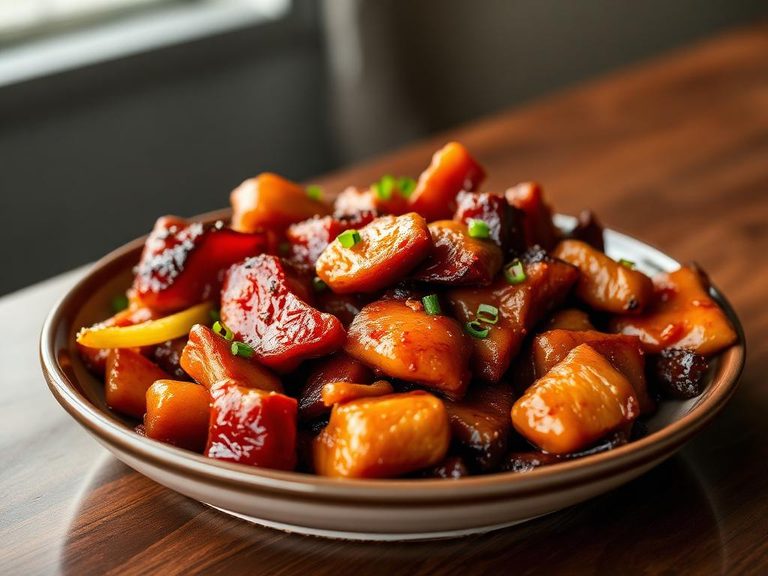
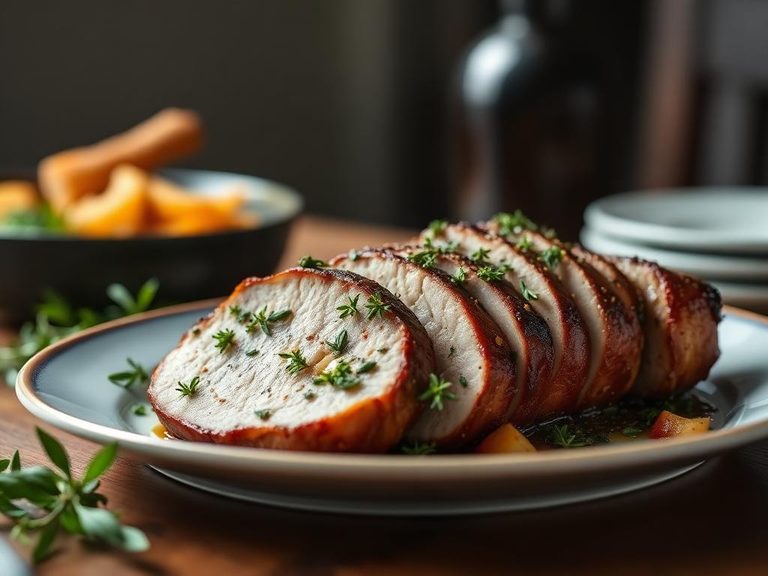
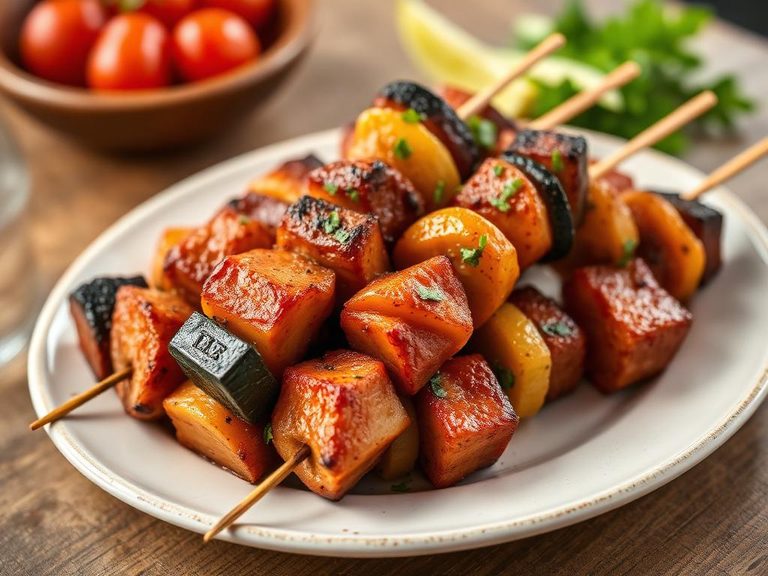
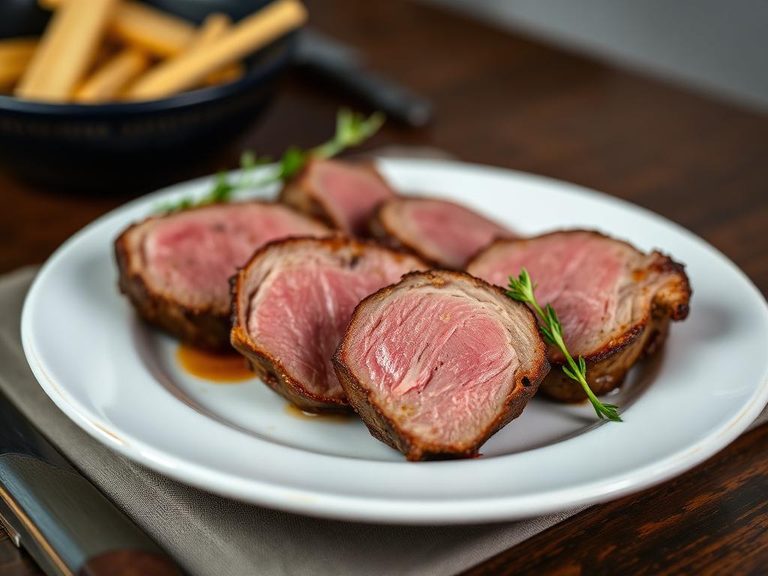
🌍 Where it's eaten
💡 Did you know?
The sirloin cut from the pork loin is anatomically equivalent to the beef sirloin, but because pigs are smaller, the entire pork sirloin is often sold as one boneless roast, unlike the larger beef version which is typically portioned into steaks.
Full nutrition (USDA data · scales with serving)
| Water | 62.8 g |
| Energy | 192 kcal |
| Energy | 805 kj |
| Protein | 29.6 g |
| Total lipid (fat) | 7.3 g |
| Ash | 1.4 g |
| Carbohydrate, by difference | 0.00 g |
| Fiber, total dietary | 0.00 g |
| Total Sugars | 0.00 g |
| Calcium, Ca | 13.0 mg |
| Iron, Fe | 0.66 mg |
| Magnesium, Mg | 27.0 mg |
| Phosphorus, P | 304 mg |
| Potassium, K | 398 mg |
| Sodium, Na | 66.0 mg |
| Zinc, Zn | 2.2 mg |
| Copper, Cu | 0.11 mg |
| Manganese, Mn | 0.02 mg |
| Selenium, Se | 44.7 ug |
| Vitamin C, total ascorbic acid | 0.00 mg |
| Thiamin | 0.70 mg |
| Riboflavin | 0.33 mg |
| Niacin | 8.1 mg |
| Pantothenic acid | 1.6 mg |
| Vitamin B-6 | 0.53 mg |
| Folate, total | 0.00 ug |
| Folic acid | 0.00 ug |
| Folate, food | 0.00 ug |
| Folate, DFE | 0.00 ug |
| Choline, total | 96.9 mg |
| Betaine | 3.8 mg |
| Vitamin B-12 | 0.93 ug |
| Vitamin B-12, added | 0.00 ug |
| Vitamin A, RAE | 2.0 ug |
| Retinol | 2.0 ug |
| Carotene, beta | 0.00 ug |
| Carotene, alpha | 0.00 ug |
| Cryptoxanthin, beta | 0.00 ug |
| Vitamin A, IU | 7.0 iu |
| Lycopene | 0.00 ug |
| Lutein + zeaxanthin | 0.00 ug |
| Vitamin E (alpha-tocopherol) | 0.20 mg |
| Vitamin E, added | 0.00 mg |
| Vitamin D (D2 + D3), International Units | 25.0 iu |
| Vitamin D (D2 + D3) | 0.60 ug |
| Vitamin D3 (cholecalciferol) | 0.60 ug |
| Vitamin K (phylloquinone) | 0.00 ug |
| Vitamin K (Dihydrophylloquinone) | 0.00 ug |
| Alcohol, ethyl | 0.00 g |
| Caffeine | 0.00 mg |
| Theobromine | 0.00 mg |
Fat & fatty acid profile (per 100g)
| Fatty acids, total saturated | 2.5 g |
| SFA 4:0 | 0.00 g |
| SFA 6:0 | 0.00 g |
| SFA 8:0 | 0.00 g |
| SFA 10:0 | 0.00 g |
| SFA 12:0 | 0.00 g |
| SFA 14:0 | 0.10 g |
| SFA 15:0 | 0.00 g |
| SFA 16:0 | 1.6 g |
| SFA 17:0 | 0.02 g |
| SFA 18:0 | 0.81 g |
| SFA 20:0 | 0.01 g |
| SFA 22:0 | 0.00 g |
| SFA 24:0 | 0.00 g |
| Fatty acids, total monounsaturated | 3.1 g |
| MUFA 14:1 | 0.00 g |
| MUFA 15:1 | 0.00 g |
| MUFA 16:1 | 0.17 g |
| MUFA 17:1 | 0.00 g |
| MUFA 18:1 | 2.8 g |
| MUFA 18:1 c | 2.8 g |
| MUFA 20:1 | 0.05 g |
| MUFA 22:1 | 0.00 g |
| MUFA 22:1 c | 0.00 g |
| Fatty acids, total polyunsaturated | 1.2 g |
| PUFA 18:2 | 1.0 g |
| PUFA 18:2 n-6 c,c | 1.0 g |
| PUFA 18:3 | 0.04 g |
| PUFA 18:3 n-3 c,c,c (ALA) | 0.04 g |
| PUFA 18:3 n-6 c,c,c | 0.00 g |
| PUFA 18:3i | 0.00 g |
| PUFA 18:4 | 0.00 g |
| PUFA 20:2 n-6 c,c | 0.04 g |
| PUFA 20:3 | 0.00 g |
| PUFA 20:4 | 0.07 g |
| PUFA 20:5 n-3 (EPA) | 0.00 g |
| PUFA 22:5 n-3 (DPA) | 0.01 g |
| PUFA 22:6 n-3 (DHA) | 0.00 g |
| Fatty acids, total trans | 0.04 g |
| Fatty acids, total trans-monoenoic | 0.04 g |
| TFA 18:1 t | 0.04 g |
| TFA 18:2 t not further defined | 0.00 g |
| Fatty acids, total trans-polyenoic | 0.00 g |
| Cholesterol | 84.0 mg |
Amino acid profile (per 100g)
| Tryptophan | 0.35 g |
| Threonine | 1.3 g |
| Isoleucine | 1.4 g |
| Leucine | 2.4 g |
| Lysine | 2.6 g |
| Methionine | 0.81 g |
| Cystine | 0.33 g |
| Phenylalanine | 1.2 g |
| Tyrosine | 1.2 g |
| Valine | 1.5 g |
| Arginine | 1.9 g |
| Histidine | 1.2 g |
| Alanine | 1.7 g |
| Aspartic acid | 2.8 g |
| Glutamic acid | 4.5 g |
| Glycine | 1.3 g |
| Proline | 1.2 g |
| Serine | 1.2 g |
| Hydroxyproline | 0.10 g |
FAQ
What's the difference between pork loin and pork tenderloin?
Pork loin is a larger, wider cut from the back, while pork tenderloin is a smaller, very lean muscle from beneath the loin. Tenderloin cooks faster and is more tender, but loin has a slightly richer flavor and is better for roasting whole.
How do I prevent a roasted pork loin from drying out?
Brine it beforehand, sear all sides before roasting, use a meat thermometer to avoid overcooking (aim for 145°F internal temp), and let it rest for 10-15 minutes after cooking to allow juices to redistribute.
Is this a good cut for grilling?
Yes, but it's best when marinated or brined first to add moisture. Grill over medium heat and use a thermometer to avoid overcooking, as the lean meat can go from juicy to dry quickly.
Nutrient density (calculated · NRF9.3)
Nutrient Rich Foods index: beneficial nutrients (protein, fiber, vitamins, minerals) minus saturated fat, added sugar & sodium, per 100 kcal.
NRF9.3 index — Fulgoni, Keast & Drewnowski, 2009. Computed from USDA nutrients.
Weight-loss friendliness (composite index)
Energy density 1.92 kcal/g · 62% calories from protein · 0.0 g fiber · 0.0 g sugar per 100 g.
Composite of energy density (Rolls et al., 1999), protein & fiber satiety, minus sugar. A calculated heuristic — ranks satiety-per-calorie, not a clinical measure.
Dietary load (calculated from USDA values)
Potential renal acid load. Positive = acid-forming, negative = alkaline-forming.
Sodium-to-potassium ratio: 0.17 (lower is better — aim for ≤ 1)
Sodium:potassium per WHO potassium guidance. Computed from USDA nutrients.