

Pork, cured, ham -- water added, shank, bone-in, separable lean and fat, unheated
Whole food · Pork Products
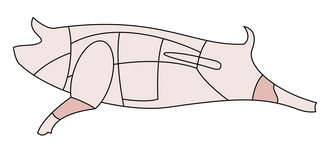
Photo: Wikipedia
This is a wet-cured ham shank, a flavorful cut from the lower leg of the pig, prized for its rich, salty-savory taste and tender, fibrous texture when cooked. With a solid protein punch and minimal carbs, it's a hearty, satisfying choice. Its preparation involves brining or injecting with a water-based cure, which adds moisture and a distinct, preserved pork flavor.
Calorie split: 40% protein · 2% carbs · 59% fat
↓ Full nutrition💚 Why it's loved
People love it for its deep, umami-rich pork flavor that forms the backbone of comforting soups, stews, and bean dishes. Its versatility allows it to be the star ingredient or a powerful flavor enhancer, deeply rooted in culinary traditions worldwide.
⚠️ Watch-outs & how to enjoy it better
The curing process makes it high in sodium, which can be a concern for those monitoring salt intake. To counteract this, rinse the ham before cooking, use it to flavor cooking liquids (like beans or greens) and then use only a portion of the meat, or pair it with fresh, potassium-rich vegetables like spinach or potatoes to help balance electrolytes.
Key benefits
- High-quality protein source for muscle maintenance.
- Provides essential minerals like zinc and selenium.
- Low in carbohydrates, suitable for low-carb diets.
- Offers a concentrated, savory flavor base for dishes.
🍽️ Popular dishes
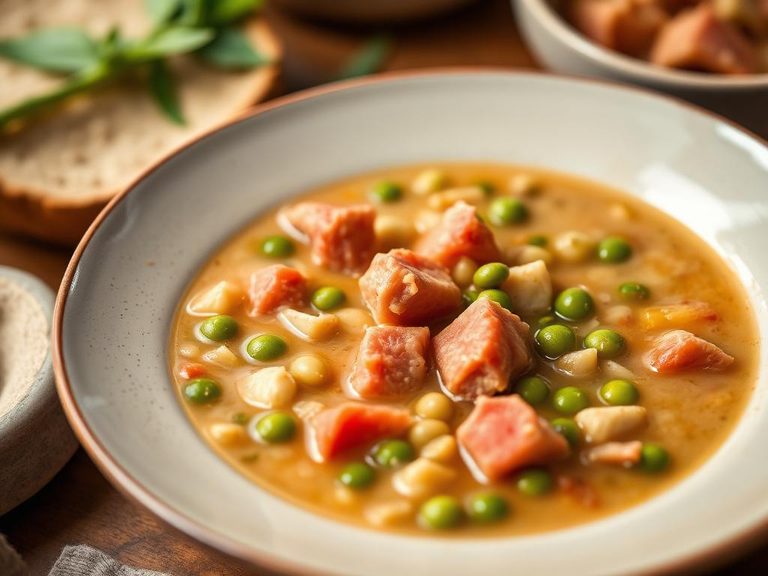

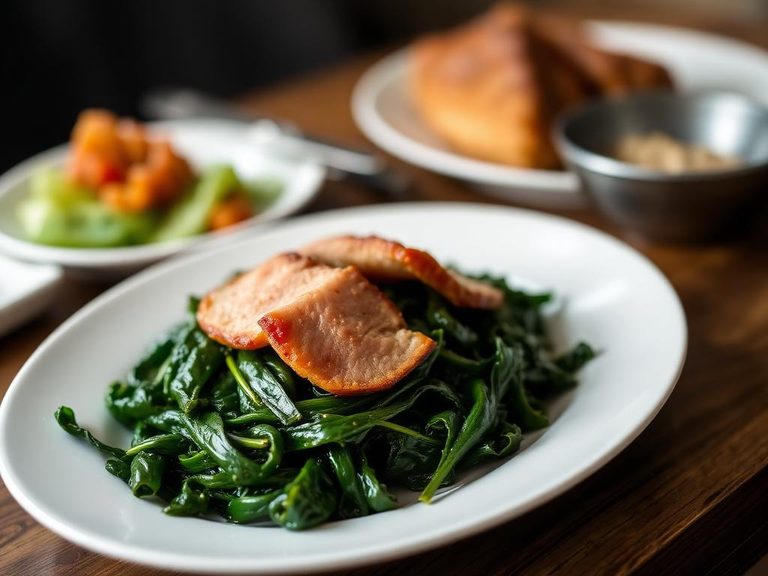
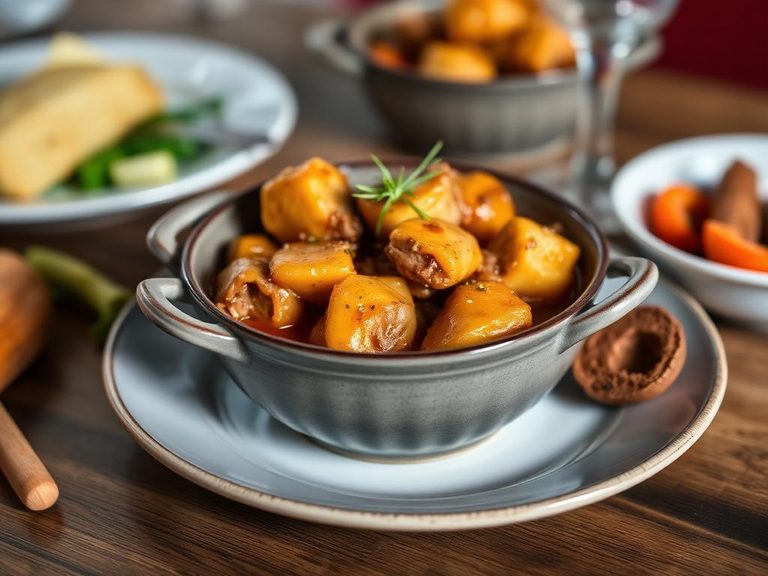
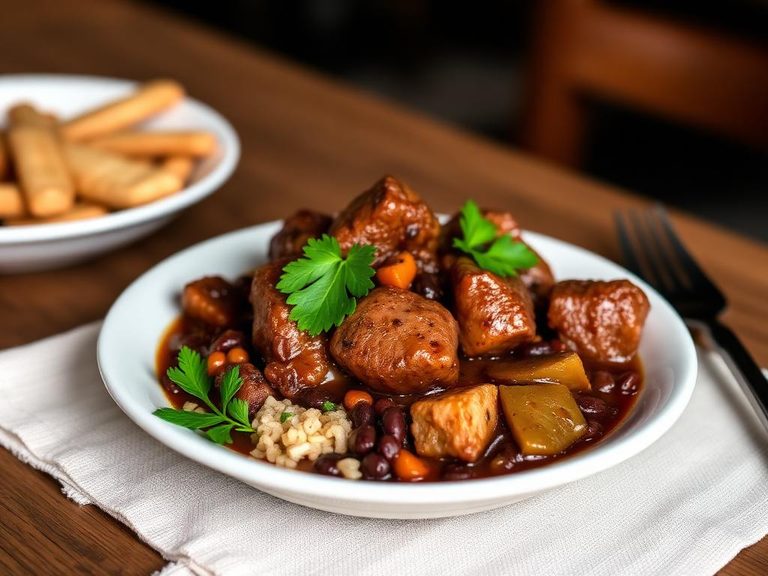
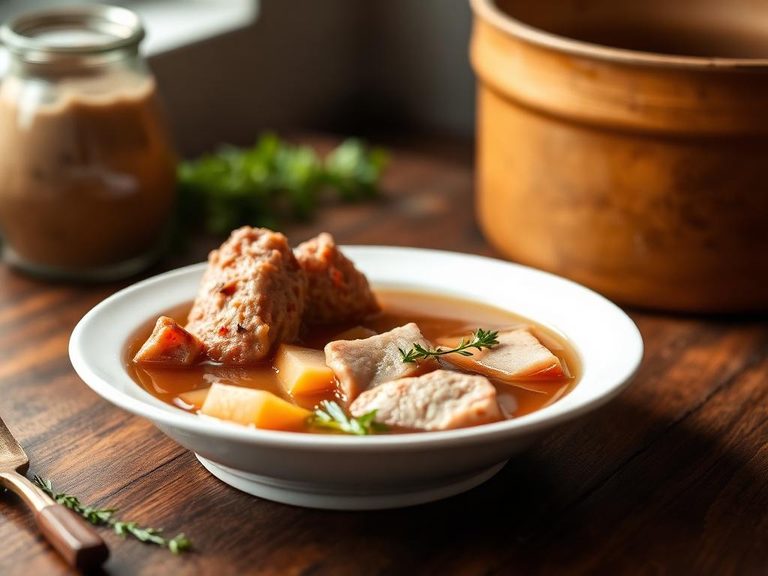
🌍 Where it's eaten
💡 Did you know?
The 'water added' label indicates the ham was plumped with a brine solution, a common practice in commercial curing to increase weight and ensure consistent moisture, resulting in a juicier final product.
Full nutrition (USDA data · scales with serving)
| Water | 69.2 g |
| Energy | 167 kcal |
| Energy | 699 kj |
| Protein | 16.6 g |
| Total lipid (fat) | 11.0 g |
| Ash | 2.9 g |
| Carbohydrate, by difference | 0.66 g |
| Fiber, total dietary | 0.00 g |
| Total Sugars | 0.66 g |
| Sucrose | 0.45 g |
| Glucose | 0.17 g |
| Fructose | 0.04 g |
| Lactose | 0.00 g |
| Maltose | 0.00 g |
| Galactose | 0.00 g |
| Calcium, Ca | 7.0 mg |
| Iron, Fe | 0.72 mg |
| Magnesium, Mg | 17.0 mg |
| Phosphorus, P | 214 mg |
| Potassium, K | 219 mg |
| Sodium, Na | 964 mg |
| Zinc, Zn | 1.8 mg |
| Copper, Cu | 0.10 mg |
| Manganese, Mn | 0.02 mg |
| Selenium, Se | 35.7 ug |
| Vitamin C, total ascorbic acid | 0.00 mg |
| Thiamin | 0.31 mg |
| Riboflavin | 0.18 mg |
| Niacin | 3.4 mg |
| Pantothenic acid | 0.44 mg |
| Vitamin B-6 | 0.23 mg |
| Folate, total | 1.0 ug |
| Folic acid | 0.00 ug |
| Folate, food | 1.0 ug |
| Folate, DFE | 1.0 ug |
| Choline, total | 68.6 mg |
| Betaine | 2.3 mg |
| Vitamin B-12 | 0.31 ug |
| Vitamin B-12, added | 0.00 ug |
| Vitamin A, RAE | 9.0 ug |
| Retinol | 9.0 ug |
| Carotene, beta | 0.00 ug |
| Carotene, alpha | 0.00 ug |
| Cryptoxanthin, beta | 0.00 ug |
| Vitamin A, IU | 32.0 iu |
| Lycopene | 0.00 ug |
| Lutein + zeaxanthin | 0.00 ug |
| Vitamin E (alpha-tocopherol) | 0.32 mg |
| Vitamin E, added | 0.00 mg |
| Tocopherol, beta | 0.01 mg |
| Tocopherol, gamma | 0.08 mg |
| Tocopherol, delta | 0.00 mg |
| Tocotrienol, alpha | 0.03 mg |
| Tocotrienol, beta | 0.00 mg |
| Tocotrienol, gamma | 0.02 mg |
| Tocotrienol, delta | 0.00 mg |
| Vitamin K (phylloquinone) | 0.00 ug |
| Vitamin K (Dihydrophylloquinone) | 0.00 ug |
| Vitamin K (Menaquinone-4) | 0.00 ug |
| Alcohol, ethyl | 0.00 g |
| Caffeine | 0.00 mg |
| Theobromine | 0.00 mg |
Fat & fatty acid profile (per 100g)
| Fatty acids, total saturated | 3.6 g |
| SFA 4:0 | 0.00 g |
| SFA 6:0 | 0.00 g |
| SFA 8:0 | 0.00 g |
| SFA 10:0 | 0.00 g |
| SFA 12:0 | 0.00 g |
| SFA 14:0 | 0.13 g |
| SFA 15:0 | 0.00 g |
| SFA 16:0 | 2.3 g |
| SFA 17:0 | 0.03 g |
| SFA 18:0 | 1.1 g |
| SFA 20:0 | 0.02 g |
| SFA 22:0 | 0.01 g |
| Fatty acids, total monounsaturated | 5.0 g |
| MUFA 14:1 | 0.00 g |
| MUFA 15:1 | 0.00 g |
| MUFA 16:1 | 0.24 g |
| MUFA 17:1 | 0.00 g |
| MUFA 18:1 | 4.7 g |
| MUFA 20:1 | 0.08 g |
| MUFA 22:1 | 0.00 g |
| Fatty acids, total polyunsaturated | 1.5 g |
| PUFA 18:2 | 1.3 g |
| PUFA 18:3 | 0.06 g |
| PUFA 18:4 | 0.00 g |
| PUFA 20:2 n-6 c,c | 0.06 g |
| PUFA 20:3 | 0.00 g |
| PUFA 20:4 | 0.04 g |
| PUFA 20:5 n-3 (EPA) | 0.00 g |
| PUFA 22:5 n-3 (DPA) | 0.00 g |
| PUFA 22:6 n-3 (DHA) | 0.00 g |
| Fatty acids, total trans | 0.08 g |
| Cholesterol | 52.0 mg |
Amino acid profile (per 100g)
| Tryptophan | 0.15 g |
| Threonine | 0.74 g |
| Isoleucine | 0.74 g |
| Leucine | 1.3 g |
| Lysine | 1.4 g |
| Methionine | 0.39 g |
| Cystine | 0.19 g |
| Phenylalanine | 0.66 g |
| Tyrosine | 0.53 g |
| Valine | 0.84 g |
| Arginine | 1.1 g |
| Histidine | 0.73 g |
| Alanine | 0.98 g |
| Aspartic acid | 1.4 g |
| Glutamic acid | 2.4 g |
| Glycine | 0.90 g |
| Proline | 0.72 g |
| Serine | 0.65 g |
| Hydroxyproline | 0.13 g |
FAQ
How is this different from a fresh ham shank?
A fresh ham shank is unprocessed and unseasoned. This 'cured' version has been treated with salt, sugar, and often sodium nitrite/nitrate for preservation, flavor, and color, giving it a distinct salty taste and pink hue.
Do I need to cook this before eating?
While cured, it is typically sold raw and uncooked ('unheated'). It requires thorough cooking, usually by simmering or braising for several hours, to become tender and safe to eat.
Can I use the cooking liquid?
Absolutely. The liquid becomes a rich, flavorful broth perfect for soups, cooking beans, or braising greens. Just remember it will be very salty, so taste and adjust seasoning accordingly.
Nutrient density (calculated · NRF9.3)
Nutrient Rich Foods index: beneficial nutrients (protein, fiber, vitamins, minerals) minus saturated fat, added sugar & sodium, per 100 kcal.
NRF9.3 index — Fulgoni, Keast & Drewnowski, 2009. Computed from USDA nutrients.
Weight-loss friendliness (composite index)
Energy density 1.67 kcal/g · 40% calories from protein · 0.0 g fiber · 0.7 g sugar per 100 g.
Composite of energy density (Rolls et al., 1999), protein & fiber satiety, minus sugar. A calculated heuristic — ranks satiety-per-calorie, not a clinical measure.
Dietary load (calculated from USDA values)
Potential renal acid load. Positive = acid-forming, negative = alkaline-forming.
Sodium-to-potassium ratio: 4.40 (lower is better — aim for ≤ 1)
Sodium:potassium per WHO potassium guidance. Computed from USDA nutrients.