

Ham Stock or Broth
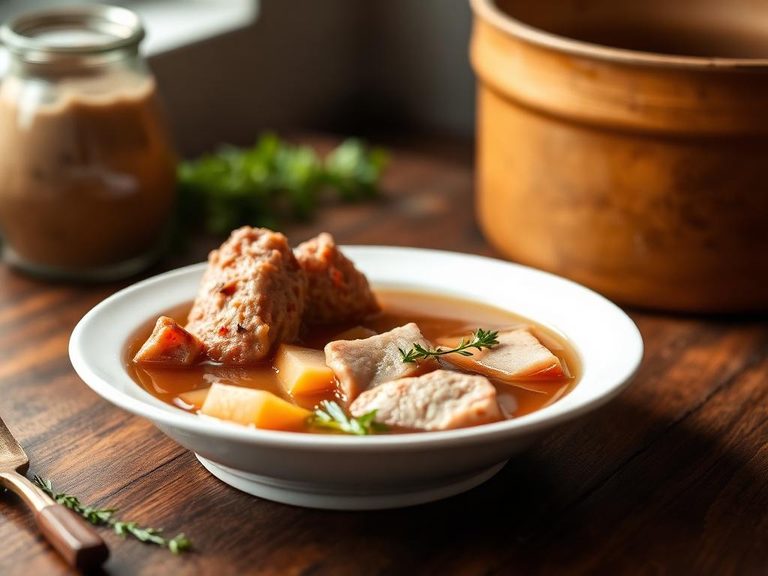
Ham stock, or broth, is a savory liquid made by simmering ham bones, often with leftover meat, along with aromatic vegetables like onions, carrots, and celery, and sometimes herbs. It's a foundational ingredient in American and European cuisines, particularly in Southern U.S. cooking, where it's used as a flavorful base for soups, stews, beans, and rice dishes.
🍽️ Nutrition at a glance
Ham broth is generally low in carbohydrates and fat but provides a good amount of protein and minerals like sodium, potassium, and phosphorus from the bones and meat. A typical one-cup serving contains roughly 40-70 calories, depending on the specific recipe and fat content.
Nutrition breakdown
| Calories | 12 kcal |
| Protein | 1.5 g |
| Carbs | 0.5 g |
| Fat | 0.3 g |
| Fiber | 0 g |
| Sugar | 0.2 g |
| Sodium | 480 mg |
| Sodium | 480 mg |
| Potassium | 80 mg |
| Phosphorus | 20 mg |
| Magnesium | 4 mg |
| Zinc | 0.2 mg |
| Niacin (B3) | 0.3 mg |
| Vitamin B6 | 0.02 mg |
| Iron | 0.1 mg |
Per 1 cup (240 g) · estimated, varies by recipe
💡 What's interesting
Culturally, ham stock is a classic example of 'waste-not, want-not' cooking, transforming a leftover bone into a rich, flavorful foundation for other meals. Nutritionally, the slow simmering process extracts collagen and minerals from the bones, which can contribute to joint health and provide electrolytes.
🍽️ Related dishes





AI estimate may be inaccurate · Terms