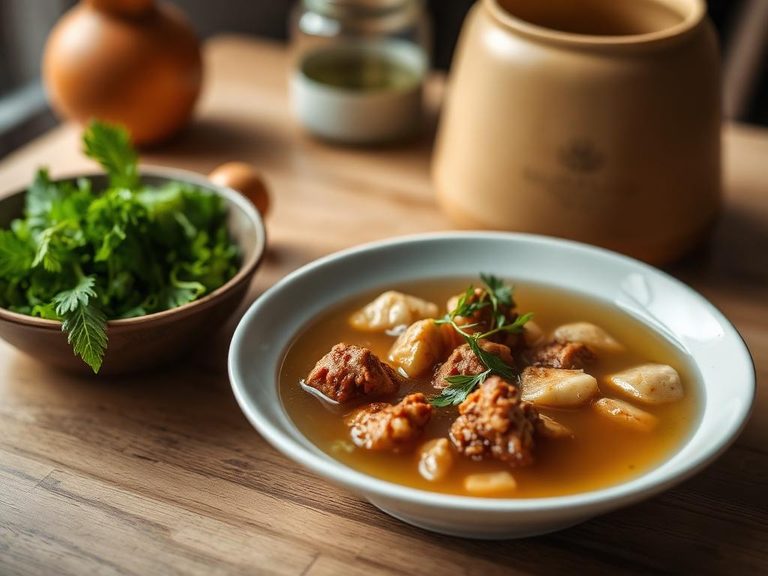
Chicken Neck Stock or Bone Broth

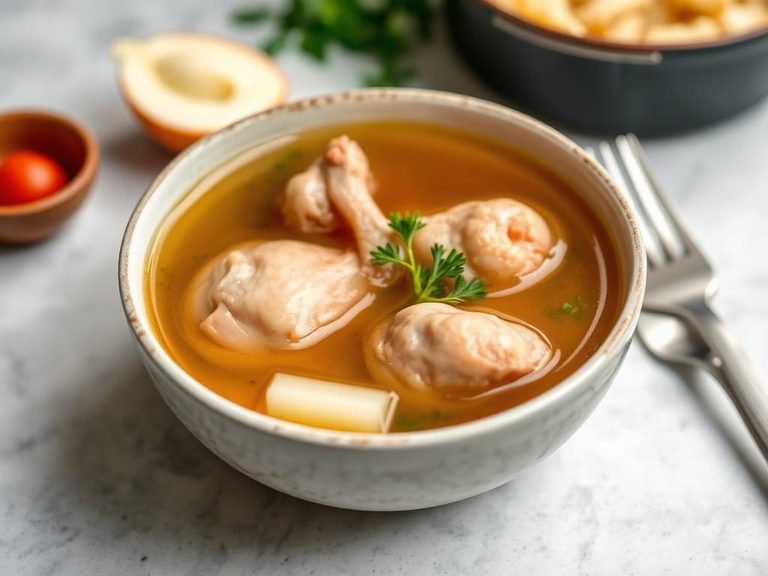
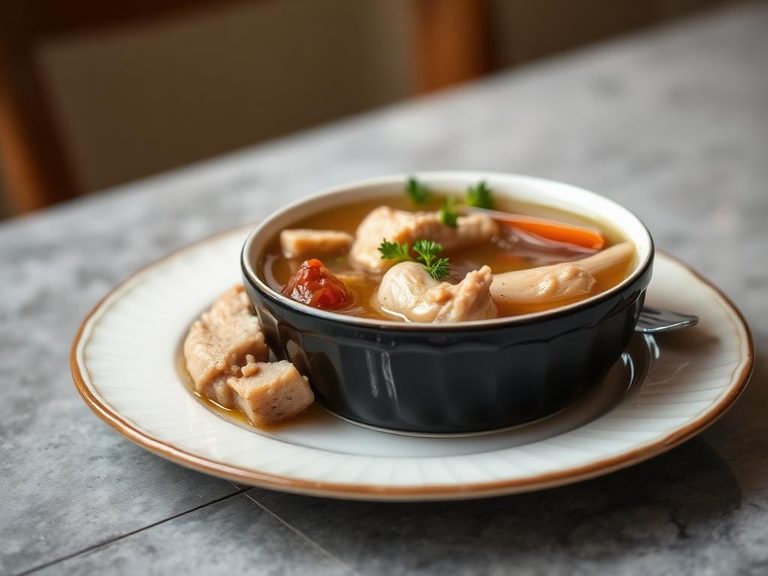
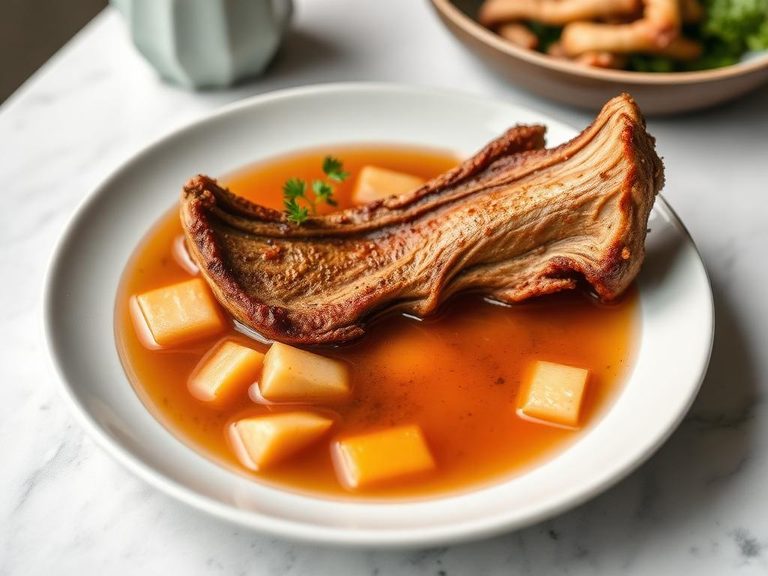
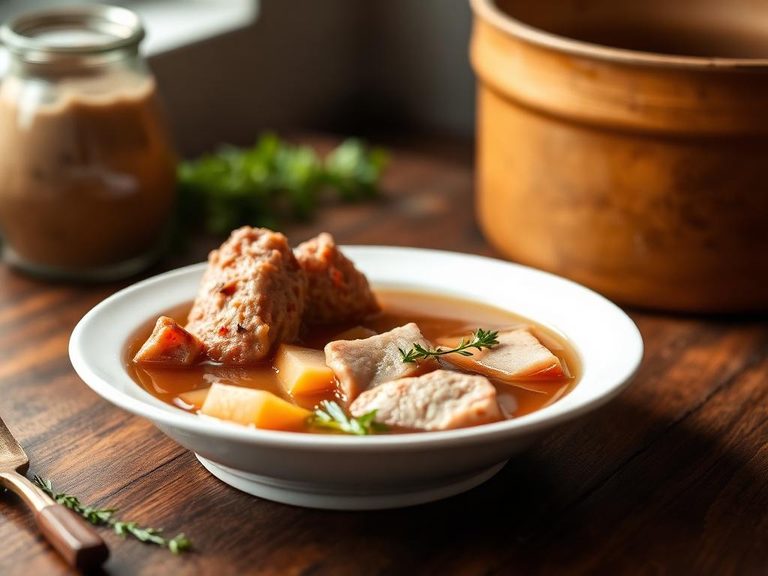
Chicken neck stock, often referred to as bone broth, is a rich, savory liquid made by simmering chicken necks (and sometimes other bones, feet, or carcasses) with water and aromatic vegetables like onions, carrots, and celery, along with herbs such as parsley, thyme, and bay leaves. It is a foundational ingredient in kitchens worldwide, particularly in East Asian, European, and American cuisines, used as a base for soups, stews, and sauces. The long, slow cooking process extracts collagen, minerals, and deep flavor from the bones, resulting in a nourishing and versatile broth.
🍽️ Nutrition at a glance
Chicken neck stock is very low in carbohydrates and fat, especially when chilled and degreased, but is a good source of protein, primarily from collagen and gelatin. It provides essential minerals like calcium, magnesium, and phosphorus, and a typical 1-cup serving contains roughly 30-50 calories.
Nutrition breakdown
| Calories | 40 kcal |
| Protein | 7 g |
| Carbs | 1 g |
| Fat | 1.5 g |
| Fiber | 0 g |
| Sugar | 0.5 g |
| Sodium | 480 mg |
| Calcium | 15 mg |
| Magnesium | 8 mg |
| Phosphorus | 65 mg |
| Potassium | 120 mg |
| Selenium | 2.5 mcg |
| Niacin (B3) | 1.2 mg |
| Riboflavin (B2) | 0.1 mg |
| Glycine | 500 mg |
Per 1 cup (240 g) · estimated, varies by recipe
💡 What's interesting
What makes bone broth culturally and nutritionally unique is its traditional role as a 'waste-not' culinary staple, transforming often-discarded parts into a flavorful foundation. Nutritionally, the gelatin formed when cooled is prized for potentially supporting gut health and joint function, though these benefits are often discussed in folk nutrition rather than strict medical terms.