

Celery, cooked, boiled, drained, with salt
Whole food · Vegetables and Vegetable Products
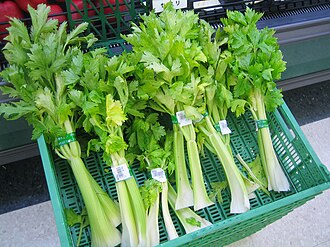
Photo: Wikipedia
Boiled celery transforms from a crisp, watery stalk into a tender, savory, and subtly sweet vegetable with a melt-in-your-mouth texture. Its mild, herbaceous flavor becomes more concentrated and savory when cooked, making it a comforting base for soups and stews. Nutritionally, it's a very low-calorie, high-fiber addition that provides a satisfying bulk with minimal energy impact.
Calorie split: 16% protein · 77% carbs · 7% fat
↓ Full nutrition💚 Why it's loved
People love cooked celery for its ability to provide a soft, savory texture and deep umami background note to dishes without overpowering other flavors. It's a beloved, humble staple in comfort food, valued for its reliability and ability to meld seamlessly into complex recipes.
⚠️ Watch-outs & how to enjoy it better
The primary downside is the added sodium from salting the cooking water, which can be a concern for those monitoring salt intake. To counteract this, you can boil celery in unsalted water and season the final dish to taste, or use a low-sodium broth. Its high oxalate content may also be a consideration for individuals prone to kidney stones.
Key benefits
- Extremely low-calorie volume food for weight management
- Good source of insoluble dietary fiber for digestive health
- Provides natural electrolytes like sodium and potassium
- Contains antioxidant flavonoids like apigenin
- Versatile flavor base that enhances savory dishes
🍽️ Popular dishes
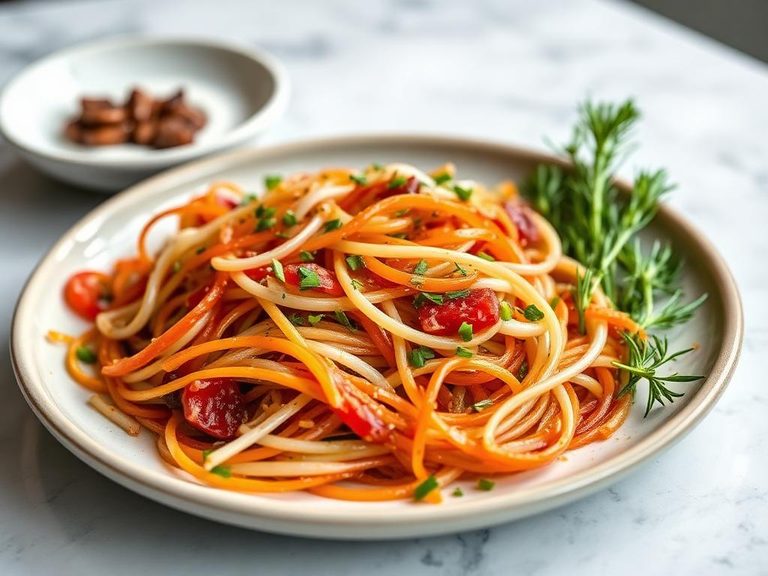

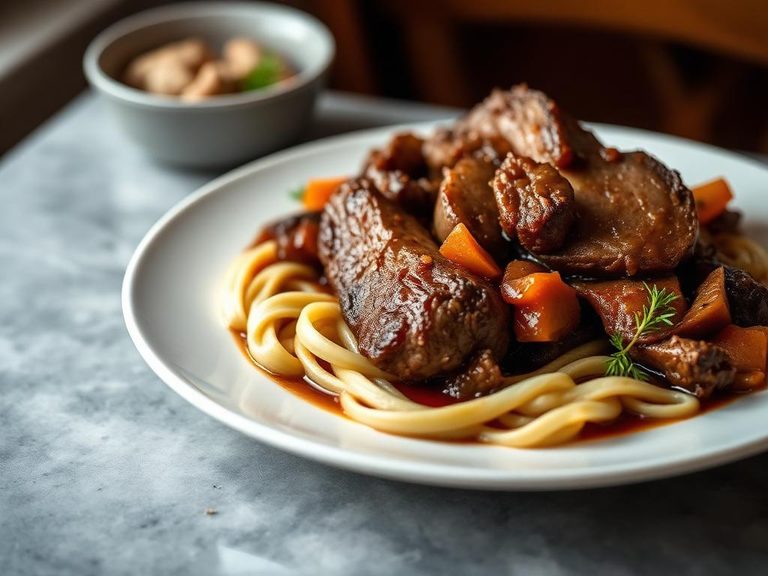
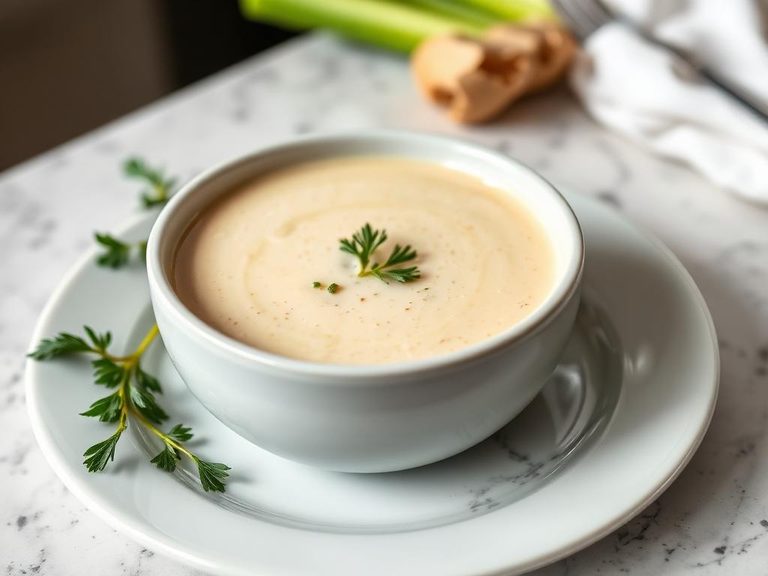
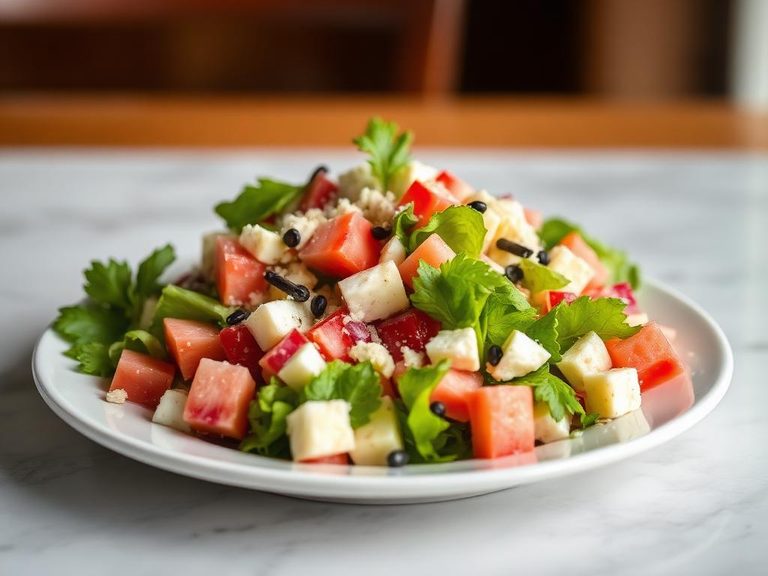
🌍 Where it's eaten
💡 Did you know?
Celery is a member of the Apiaceae family, making it a close relative of carrots, parsley, and fennel, and its seeds are a potent spice used in pickling and seasoning.
Full nutrition (USDA data · scales with serving)
| Water | 94.1 g |
| Energy | 18.0 kcal |
| Energy | 74.0 kj |
| Protein | 0.83 g |
| Total lipid (fat) | 0.16 g |
| Ash | 0.90 g |
| Carbohydrate, by difference | 4.0 g |
| Fiber, total dietary | 1.6 g |
| Total Sugars | 2.4 g |
| Sucrose | 0.14 g |
| Glucose | 0.71 g |
| Fructose | 0.66 g |
| Lactose | 0.00 g |
| Maltose | 0.00 g |
| Galactose | 0.85 g |
| Calcium, Ca | 42.0 mg |
| Iron, Fe | 0.42 mg |
| Magnesium, Mg | 12.0 mg |
| Phosphorus, P | 25.0 mg |
| Potassium, K | 284 mg |
| Sodium, Na | 327 mg |
| Zinc, Zn | 0.14 mg |
| Copper, Cu | 0.04 mg |
| Manganese, Mn | 0.11 mg |
| Selenium, Se | 1.0 ug |
| Vitamin C, total ascorbic acid | 6.1 mg |
| Thiamin | 0.04 mg |
| Riboflavin | 0.05 mg |
| Niacin | 0.32 mg |
| Pantothenic acid | 0.20 mg |
| Vitamin B-6 | 0.09 mg |
| Folate, total | 22.0 ug |
| Folic acid | 0.00 ug |
| Folate, food | 22.0 ug |
| Folate, DFE | 22.0 ug |
| Choline, total | 7.9 mg |
| Vitamin B-12 | 0.00 ug |
| Vitamin B-12, added | 0.00 ug |
| Vitamin A, RAE | 26.0 ug |
| Retinol | 0.00 ug |
| Carotene, beta | 313 ug |
| Carotene, alpha | 0.00 ug |
| Cryptoxanthin, beta | 0.00 ug |
| Vitamin A, IU | 521 iu |
| Lycopene | 0.00 ug |
| Lutein + zeaxanthin | 329 ug |
| Vitamin E (alpha-tocopherol) | 0.35 mg |
| Vitamin E, added | 0.00 mg |
| Tocopherol, beta | 0.00 mg |
| Tocopherol, gamma | 0.00 mg |
| Tocopherol, delta | 0.00 mg |
| Vitamin D (D2 + D3), International Units | 0.00 iu |
| Vitamin D (D2 + D3) | 0.00 ug |
| Vitamin K (phylloquinone) | 37.8 ug |
Fat & fatty acid profile (per 100g)
| Fatty acids, total saturated | 0.04 g |
| SFA 14:0 | 0.00 g |
| SFA 16:0 | 0.04 g |
| SFA 18:0 | 0.00 g |
| Fatty acids, total monounsaturated | 0.03 g |
| MUFA 16:1 | 0.00 g |
| MUFA 18:1 | 0.03 g |
| Fatty acids, total polyunsaturated | 0.07 g |
| PUFA 18:2 | 0.07 g |
| Fatty acids, total trans | 0.00 g |
| Cholesterol | 0.00 mg |
| Phytosterols | 7.0 mg |
Amino acid profile (per 100g)
| Tryptophan | 0.01 g |
| Threonine | 0.02 g |
| Isoleucine | 0.03 g |
| Leucine | 0.04 g |
| Lysine | 0.03 g |
| Methionine | 0.01 g |
| Cystine | 0.01 g |
| Phenylalanine | 0.02 g |
| Tyrosine | 0.01 g |
| Valine | 0.03 g |
| Arginine | 0.02 g |
| Histidine | 0.01 g |
| Alanine | 0.03 g |
| Aspartic acid | 0.14 g |
| Glutamic acid | 0.11 g |
| Glycine | 0.03 g |
| Proline | 0.02 g |
| Serine | 0.02 g |
FAQ
Does boiling celery make it lose nutrients?
Like most vegetables, boiling can cause some water-soluble vitamins (like vitamin C and some B vitamins) to leach into the cooking water. However, it retains its fiber, minerals, and many heat-stable antioxidants. Using the cooking water in soups or sauces can help recapture some lost nutrients.
How do I keep boiled celery from getting mushy?
To maintain some texture, cook celery in larger pieces and for a shorter time, just until it's tender-crisp. Add it later in the cooking process for soups or stews. For a very soft texture, as in a purée, cook it longer with sufficient liquid.
Is the sodium content from boiling with salt very high?
It depends entirely on how much salt you add. A typical home cook might use 1-2 teaspoons of salt per quart of water. This would add roughly 230-460mg of sodium per serving of celery. You can easily control this by salting lightly or using no-salt-added methods.
Nutrient density (calculated · NRF9.3)
Nutrient Rich Foods index: beneficial nutrients (protein, fiber, vitamins, minerals) minus saturated fat, added sugar & sodium, per 100 kcal.
NRF9.3 index — Fulgoni, Keast & Drewnowski, 2009. Computed from USDA nutrients.
Weight-loss friendliness (composite index)
Energy density 0.18 kcal/g · 18% calories from protein · 1.6 g fiber · 2.4 g sugar per 100 g.
Composite of energy density (Rolls et al., 1999), protein & fiber satiety, minus sugar. A calculated heuristic — ranks satiety-per-calorie, not a clinical measure.
Dietary load (calculated from USDA values)
Potential renal acid load. Positive = acid-forming, negative = alkaline-forming.
Sodium-to-potassium ratio: 1.15 (lower is better — aim for ≤ 1)
Sodium:potassium per WHO potassium guidance. Computed from USDA nutrients.