

Soup, ramen noodles, water added
Common food
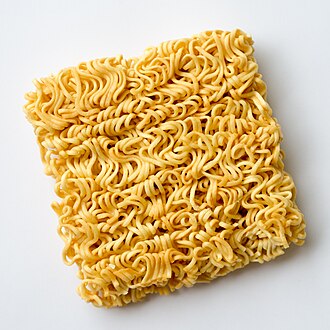
Photo: Wikipedia
This is the dehydrated, instant form of ramen noodles, a staple of quick meals and dorm-room cuisine. The noodles are typically thin, curly, and springy, with a mild wheat flavor that acts as a blank canvas for savory broths. Nutritionally, it's a very low-calorie, high-carb base, providing quick energy but minimal protein or fiber on its own.
Calorie split: 9% protein · 55% carbs · 36% fat
↓ Full nutrition💚 Why it's loved
People love it for its unparalleled convenience and comforting, nostalgic flavor that can be ready in minutes. It's a beloved canvas for creativity, allowing cooks to elevate it with fresh vegetables, proteins, and sauces into a satisfying meal.
⚠️ Watch-outs & how to enjoy it better
The primary concern is the very high sodium content in the included seasoning packet, which can contribute to water retention and elevated blood pressure. The refined carbs can also cause a rapid blood sugar spike, and it often contains common allergens like wheat and soy. To counteract, use only a fraction of the seasoning packet or make your own broth, and always pair the noodles with a significant protein (egg, tofu, chicken) and fiber-rich vegetables to slow digestion and balance the meal.
Key benefits
- Extremely low calorie density (66 kcal per 100g dry)
- Provides quick-release carbohydrates for immediate energy
- Extremely affordable and shelf-stable
- Long shelf life, ideal for emergency food storage
- Versatile base for countless flavor customizations
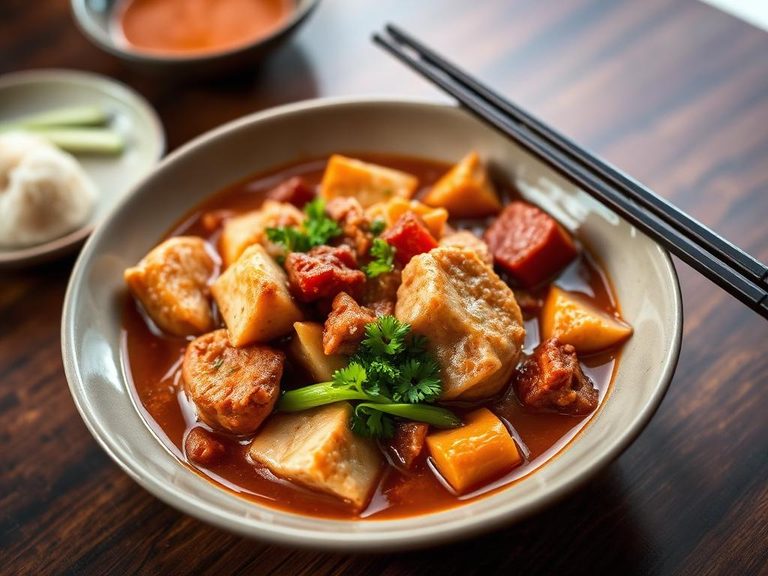
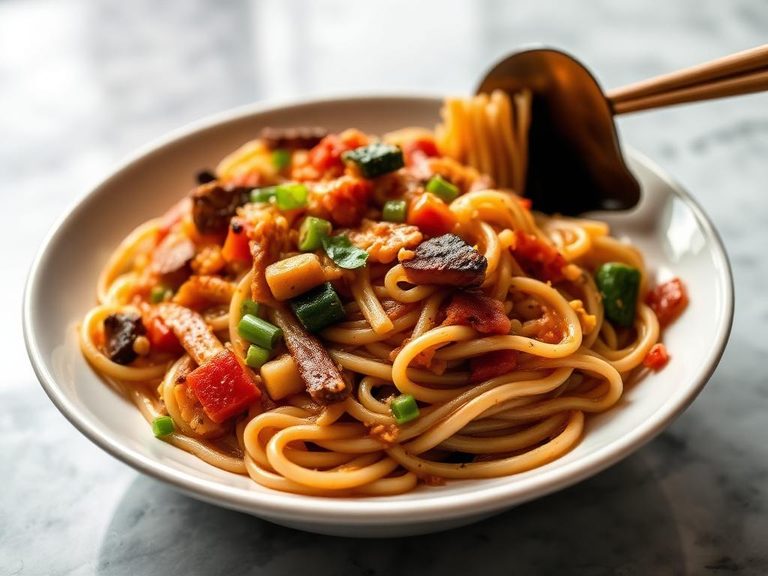
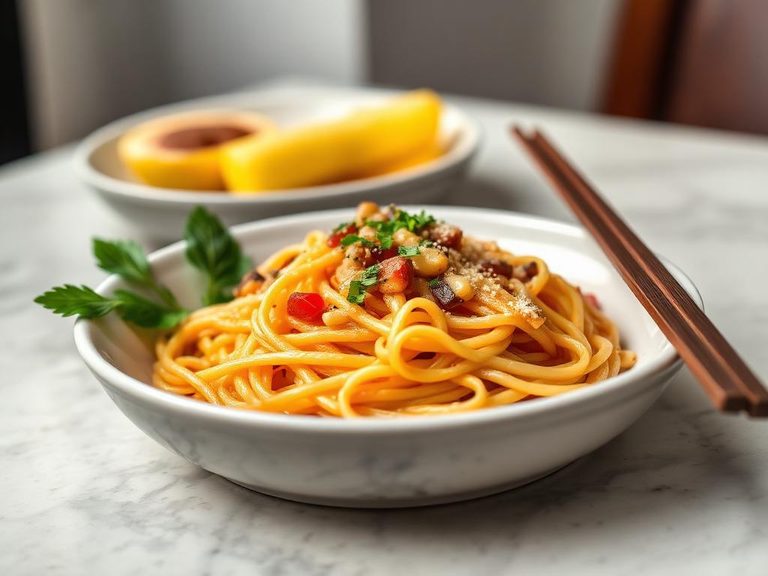
🍽️ Popular dishes
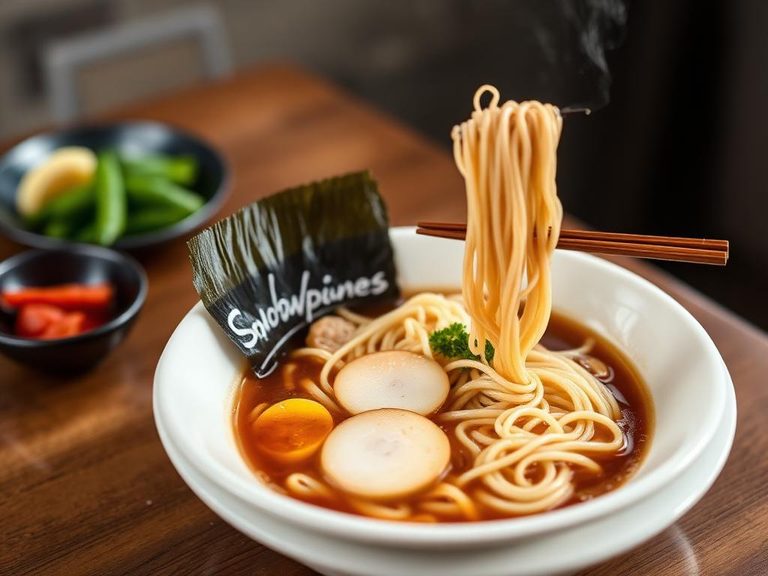
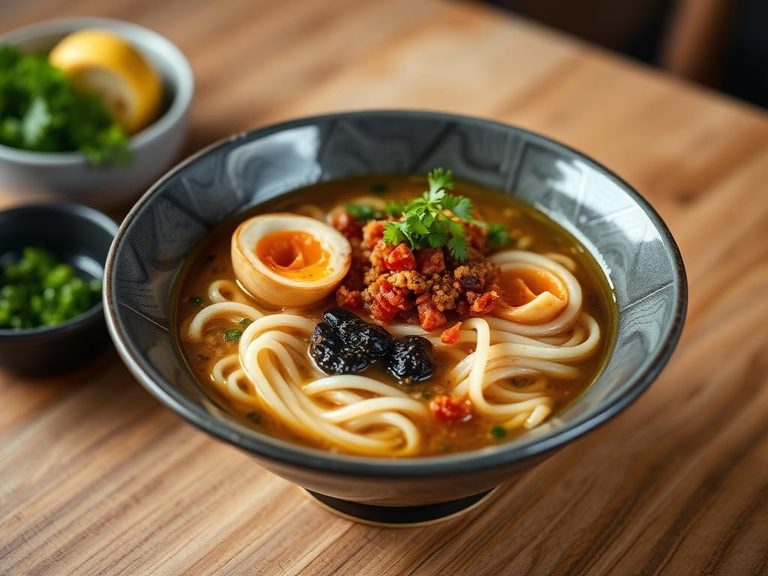
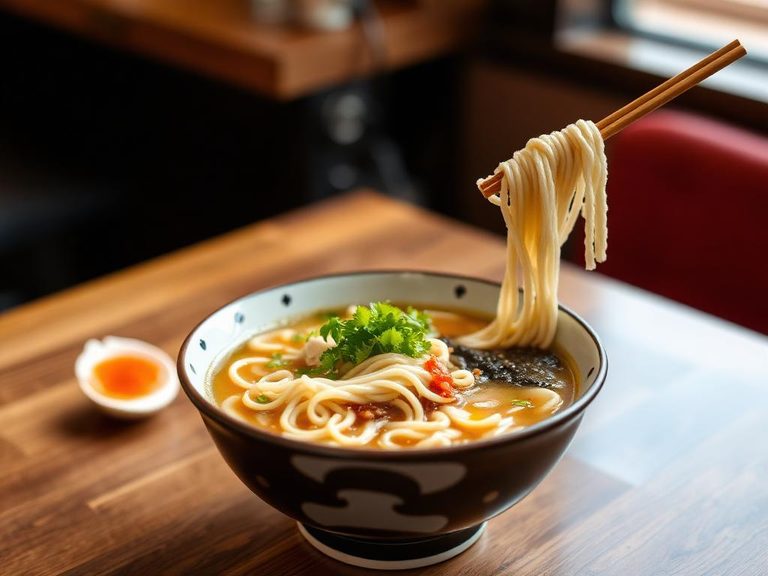
🌍 Where it's eaten
💡 Did you know?
The world's first instant ramen, 'Chikin Ramen,' was invented in 1958 by Momofuku Ando after he observed people queuing for fresh ramen on cold nights, inspiring him to create a just-add-water version.
Full nutrition (USDA data · scales with serving)
| Water | 85.9 g |
| Energy | 66.0 kcal |
| Protein | 1.5 g |
| Total lipid (fat) | 2.6 g |
| Carbohydrate, by difference | 9.0 g |
| Fiber, total dietary | 0.40 g |
| Total Sugars | 0.30 g |
| Calcium, Ca | 6.0 mg |
| Iron, Fe | 0.62 mg |
| Magnesium, Mg | 5.0 mg |
| Phosphorus, P | 17.0 mg |
| Potassium, K | 27.0 mg |
| Sodium, Na | 282 mg |
| Zinc, Zn | 0.10 mg |
| Copper, Cu | 0.03 mg |
| Selenium, Se | 3.5 ug |
| Vitamin C, total ascorbic acid | 0.00 mg |
| Thiamin | 0.07 mg |
| Riboflavin | 0.04 mg |
| Niacin | 0.81 mg |
| Vitamin B-6 | 0.01 mg |
| Folate, total | 17.0 ug |
| Folic acid | 10.0 ug |
| Folate, food | 7.0 ug |
| Folate, DFE | 25.0 ug |
| Choline, total | 0.80 mg |
| Vitamin B-12 | 0.04 ug |
| Vitamin B-12, added | 0.00 ug |
| Vitamin A, RAE | 0.00 ug |
| Retinol | 0.00 ug |
| Carotene, beta | 1.0 ug |
| Carotene, alpha | 0.00 ug |
| Cryptoxanthin, beta | 0.00 ug |
| Lycopene | 0.00 ug |
| Lutein + zeaxanthin | 3.0 ug |
| Vitamin E (alpha-tocopherol) | 0.37 mg |
| Vitamin E, added | 0.00 mg |
| Vitamin D (D2 + D3) | 0.00 ug |
| Vitamin K (phylloquinone) | 1.3 ug |
| Alcohol, ethyl | 0.00 g |
| Caffeine | 0.00 mg |
| Theobromine | 0.00 mg |
Fat & fatty acid profile (per 100g)
| Fatty acids, total saturated | 1.2 g |
| SFA 4:0 | 0.00 g |
| SFA 6:0 | 0.00 g |
| SFA 8:0 | 0.00 g |
| SFA 10:0 | 0.00 g |
| SFA 12:0 | 0.01 g |
| SFA 14:0 | 0.03 g |
| SFA 16:0 | 1.1 g |
| SFA 18:0 | 0.11 g |
| Fatty acids, total monounsaturated | 0.92 g |
| MUFA 16:1 | 0.00 g |
| MUFA 18:1 | 0.91 g |
| MUFA 20:1 | 0.01 g |
| MUFA 22:1 | 0.00 g |
| Fatty acids, total polyunsaturated | 0.33 g |
| PUFA 18:2 | 0.32 g |
| PUFA 18:3 | 0.01 g |
| PUFA 18:4 | 0.00 g |
| PUFA 20:4 | 0.00 g |
| PUFA 20:5 n-3 (EPA) | 0.00 g |
| PUFA 22:5 n-3 (DPA) | 0.00 g |
| PUFA 22:6 n-3 (DHA) | 0.00 g |
| Cholesterol | 0.00 mg |
Amino acid profile (per 100g)
Estimated from Restaurant, Latino, black bean soup — USDA does not publish this profile for Soup.
| Tryptophan | 0.04 g |
| Threonine | 0.17 g |
| Isoleucine | 0.16 g |
| Leucine | 0.32 g |
| Lysine | 0.27 g |
| Methionine | 0.10 g |
| Cystine | 0.04 g |
| Phenylalanine | 0.16 g |
| Tyrosine | 0.13 g |
| Valine | 0.20 g |
| Arginine | 0.35 g |
| Histidine | 0.09 g |
| Alanine | 0.35 g |
| Aspartic acid | 0.38 g |
| Glutamic acid | 0.72 g |
| Glycine | 0.58 g |
| Proline | 0.36 g |
| Serine | 0.20 g |
FAQ
Is instant ramen really that unhealthy?
The noodles themselves are a low-calorie, low-fat carbohydrate source. The primary health concern is the extremely high sodium and potential additives in the seasoning packet. The nutritional profile can be dramatically improved by using less seasoning, draining the broth, and adding nutrient-dense toppings.
What's the best way to add protein and fiber to instant ramen?
Stir in a beaten egg during the last minute of cooking, top with leftover shredded chicken or tofu, and load it with fresh spinach, sliced mushrooms, corn, or bean sprouts. Adding a side of steamed vegetables is another excellent strategy.
Can I use the noodles for dishes other than soup?
Absolutely. Drain the cooked noodles and use them in stir-fries, cold noodle salads, or even as a crunchy topping (crushed dry) for casseroles or salads. They are a versatile pasta substitute.
Nutrient density (calculated · NRF9.3)
Nutrient Rich Foods index: beneficial nutrients (protein, fiber, vitamins, minerals) minus saturated fat, added sugar & sodium, per 100 kcal.
NRF9.3 index — Fulgoni, Keast & Drewnowski, 2009. Computed from USDA nutrients.
Weight-loss friendliness (composite index)
Energy density 0.66 kcal/g · 9% calories from protein · 0.4 g fiber · 0.3 g sugar per 100 g.
Composite of energy density (Rolls et al., 1999), protein & fiber satiety, minus sugar. A calculated heuristic — ranks satiety-per-calorie, not a clinical measure.
Dietary load (calculated from USDA values)
Potential renal acid load. Positive = acid-forming, negative = alkaline-forming.
Sodium-to-potassium ratio: 10.44 (lower is better — aim for ≤ 1)
Sodium:potassium per WHO potassium guidance. Computed from USDA nutrients.