

Miso Ramen
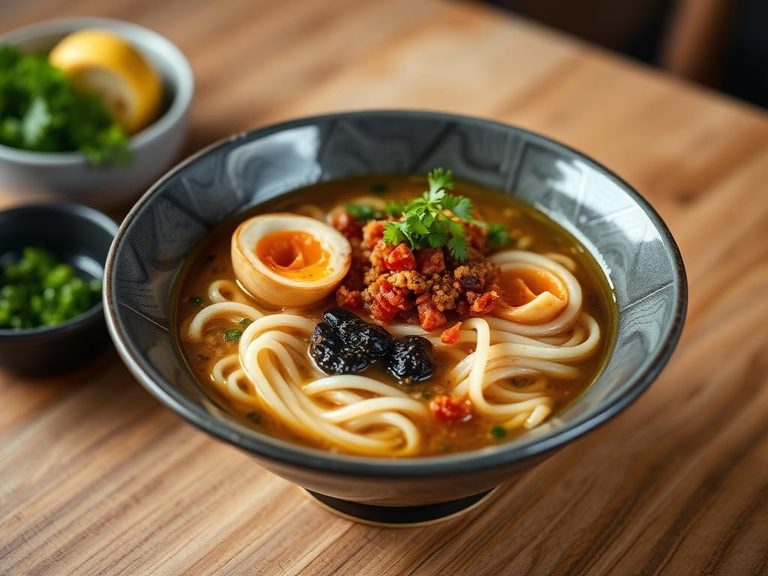
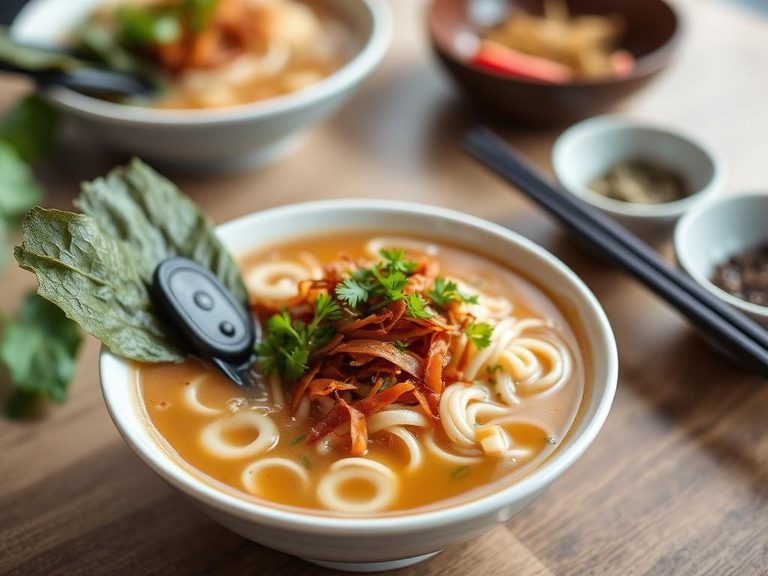
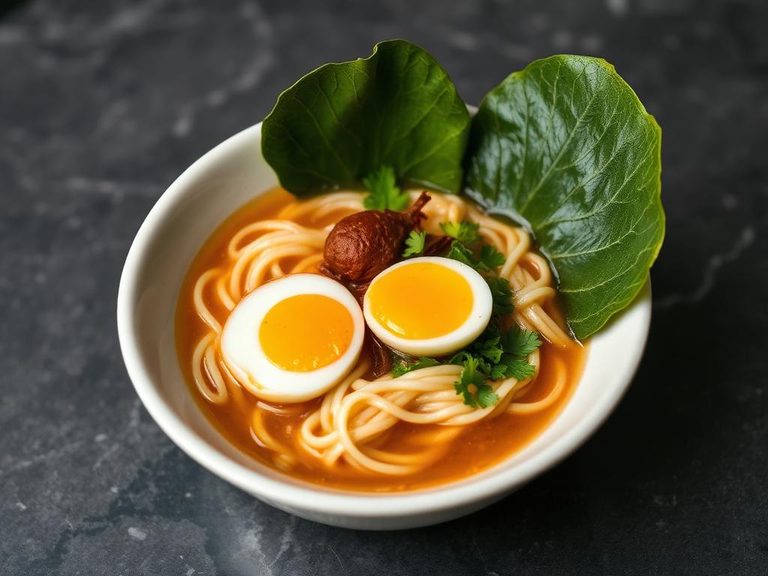
Miso ramen is a savory Japanese noodle soup featuring a rich, fermented soybean paste (miso) broth, typically served with wheat noodles and topped with ingredients like chashu pork, corn, butter, and green onions. It originated in Sapporo, Hokkaido, in the 1950s, where the hearty, warming broth was developed to suit the colder climate. The dish is known for its deep umami flavor and customizable toppings.
🍳 View the full Miso Ramen recipe →
🍽️ Nutrition at a glance
A typical serving of miso ramen is moderately high in carbohydrates from the noodles and provides a good amount of protein from the broth and toppings, with fat content varying based on ingredients like pork or butter. It offers key nutrients such as B vitamins, minerals from the miso and vegetables, and around 500-800 calories per serving, depending on portion size and additions.
Nutrition breakdown
| Calories | 550 kcal |
| Protein | 25 g |
| Carbs | 65 g |
| Fat | 20 g |
| Fiber | 5 g |
| Sugar | 6 g |
| Sodium | 1800 mg |
| Potassium | 600 mg |
| Phosphorus | 350 mg |
| Iron | 4 mg |
| Calcium | 100 mg |
| Vitamin B1 (Thiamin) | 0.5 mg |
| Vitamin B2 (Riboflavin) | 0.7 mg |
| Niacin (B3) | 10 mg |
| Folate | 150 mcg |
Per 1 bowl (600 g) · estimated, varies by recipe
💡 What's interesting
Culturally, miso ramen is a symbol of regional pride in Hokkaido, where it's often enjoyed as a comforting, everyday meal. Nutritionally, the fermented miso paste adds probiotics and antioxidants, making it a flavorful way to incorporate beneficial compounds into a hearty dish.
🍽️ Related dishes
AI estimate may be inaccurate · Terms