

Ramen Noodle Soup with Egg
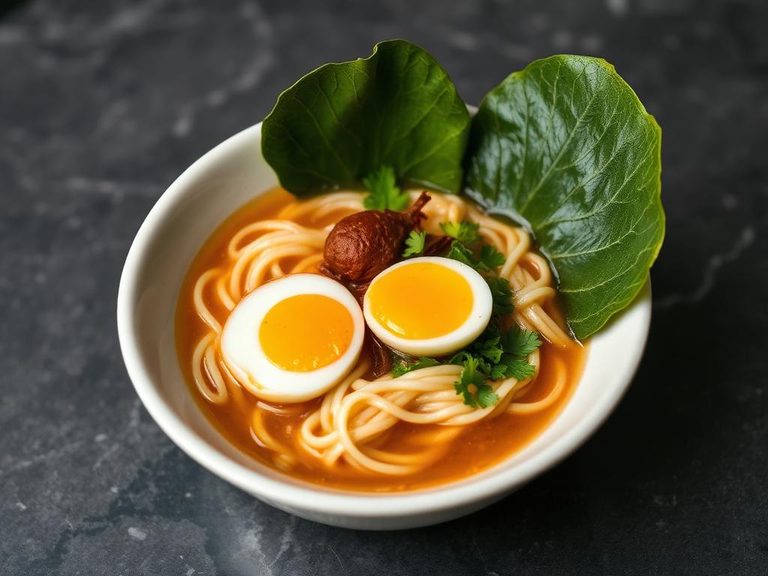
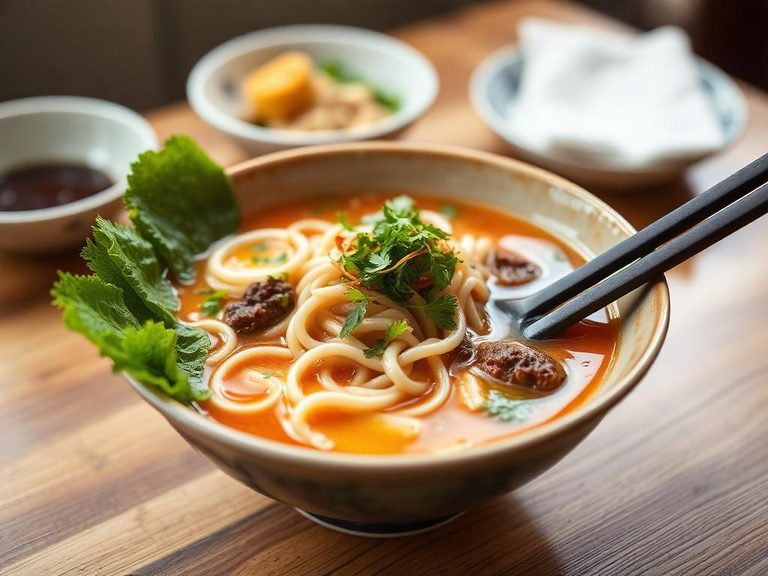
Ramen Noodle Soup with Egg is a beloved Japanese dish featuring springy wheat noodles in a rich, savory broth, often topped with a soft-boiled egg that has a creamy, jammy yolk. Common variations include broth types like soy sauce (shoyu), miso, or pork bone (tonkotsu), with toppings such as chashu pork, green onions, and seaweed. It originated in Japan and has become a global comfort food, celebrated for its deep flavors and customizable nature.
🍳 View the full Ramen Noodle Soup with Egg recipe →
🍽️ Nutrition at a glance
This dish is typically high in carbohydrates from the noodles and moderate in protein from the egg and any added meats, while the broth can contribute significant fat, especially in richer styles like tonkotsu. A standard serving generally provides key nutrients like B vitamins, iron, and sodium, with a calorie range of 400 to 700 depending on the broth and toppings.
Nutrition breakdown
| Calories | 550 kcal |
| Protein | 22 g |
| Carbs | 65 g |
| Fat | 22 g |
| Fiber | 4 g |
| Sugar | 5 g |
| Sodium | 1800 mg |
| Potassium | 450 mg |
| Iron | 4 mg |
| Calcium | 80 mg |
| Vitamin A | 150 µg RAE |
| Vitamin B12 | 1.2 µg |
| Folate | 120 µg |
| Niacin (B3) | 8 mg |
| Selenium | 30 µg |
Per 1 bowl (600 g) · estimated, varies by recipe
💡 What's interesting
Culturally, ramen has evolved from a Chinese-influenced import into a symbol of Japanese culinary innovation, with regional styles and even dedicated ramen museums. Nutritionally, the soft-boiled egg not only adds a luxurious texture but also boosts the dish's protein and healthy fats, making it a more balanced meal compared to plain noodle soups.
🍽️ Related dishes



AI estimate may be inaccurate · Terms