

Ramen noodle seasoning
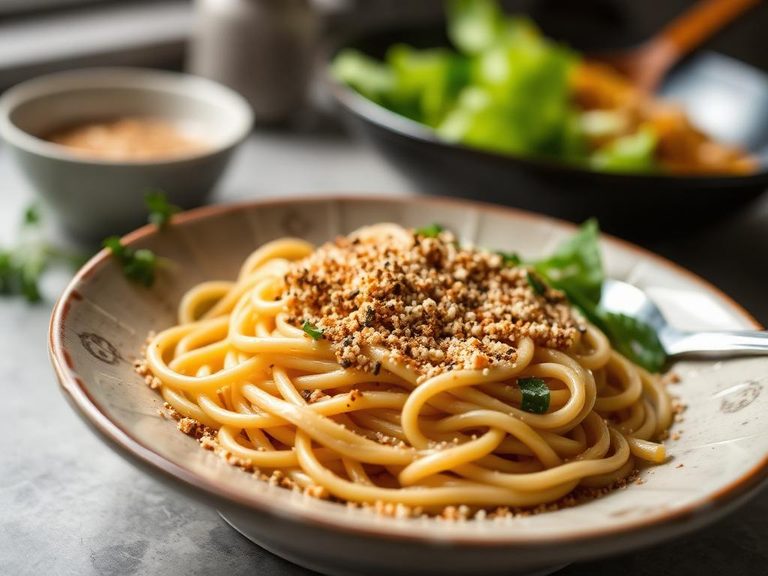
Ramen noodle seasoning is a concentrated flavor base, often sold as a paste, powder, or oil, designed to be mixed with hot water to create the soup broth for instant or homemade ramen. Its typical ingredients include salt, MSG, sugar, dried seaweed (like kombu), dried fish or shellfish, soy sauce, and various spices. It originates from Japan, where it was developed to make the popular noodle dish quick and convenient to prepare at home.
🍳 View the full Ramen noodle seasoning recipe →
🍽️ Nutrition at a glance
Ramen seasoning is extremely high in sodium and typically contains some carbohydrates from sugar and starches, but is very low in protein and fat. A single serving provides a significant portion of the daily recommended sodium intake, along with small amounts of minerals like iron and potassium from its seaweed or meat extracts.
Nutrition breakdown
| Calories | 30 kcal |
| Protein | 1 g |
| Carbs | 5 g |
| Fat | 0.5 g |
| Fiber | 0 g |
| Sugar | 2 g |
| Sodium | 1800 mg |
| Sodium | 1800 mg |
| Iron | 1.5 mg |
| Potassium | 120 mg |
| Vitamin B1 (Thiamine) | 0.2 mg |
| Vitamin B2 (Riboflavin) | 0.2 mg |
| Niacin | 2 mg |
| Vitamin B6 | 0.1 mg |
| Folate | 15 mcg |
Per 1 packet (approx. 10 g) · estimated, varies by recipe
💡 What's interesting
Culturally, ramen seasoning represents the post-war Japanese innovation of instant food, transforming a complex, slow-cooked dish into a 3-minute meal. Nutritionally, its high sodium content is its most defining characteristic, which is why it's often advised to use only a portion of the packet.
🍽️ Related dishes
AI estimate may be inaccurate · Terms