

Noodles, egg, dry, unenriched
Whole food · Cereal Grains and Pasta

Photo: Wikipedia
Dry, unenriched egg noodles are thin, pale-yellow ribbons or strands that, when cooked, transform into a tender, slightly chewy pasta with a subtle, savory richness from the egg. They are a carbohydrate-dense staple, providing a quick source of energy with a modest protein content. Their neutral flavor makes them a perfect canvas for absorbing broths, sauces, and seasonings.
Calorie split: 15% protein · 75% carbs · 10% fat
↓ Full nutrition💚 Why it's loved
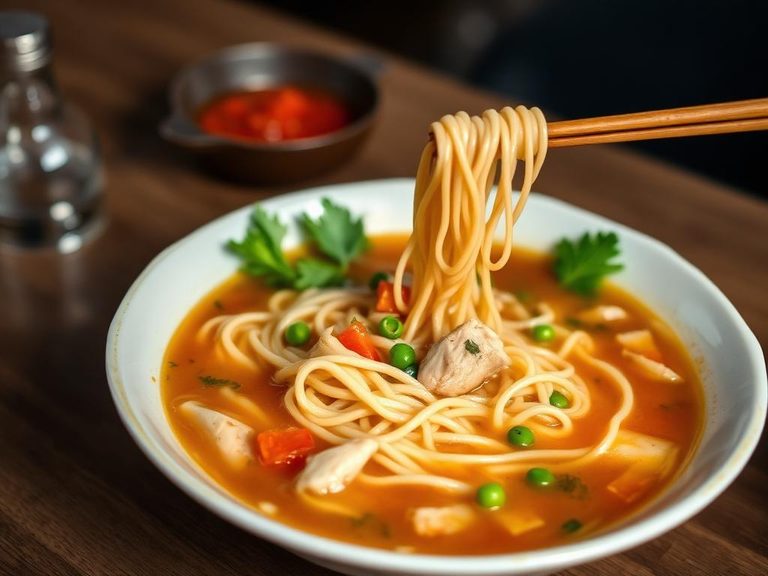
People love them for their comforting, familiar texture and remarkable versatility, acting as a neutral base that soaks up the flavors of rich broths, savory sauces, and bold seasonings. They are a cornerstone of countless comfort foods, from simple chicken noodle soup to complex stir-fries, making them a cultural staple in many households.
⚠️ Watch-outs & how to enjoy it better
As a refined carbohydrate, they can cause rapid blood sugar spikes, making portion control important for those managing blood glucose. They are also a common gluten-containing wheat product, which is a major allergen. To counteract blood sugar impact, pair them with protein (like chicken or egg) and non-starchy vegetables, and consider using a smaller portion as a base for a larger, vegetable-rich dish.
Key benefits
- Quick-cooking and shelf-stable pantry staple.
- Provides a good source of energy from complex carbohydrates.
- Contains a moderate amount of protein from egg content.
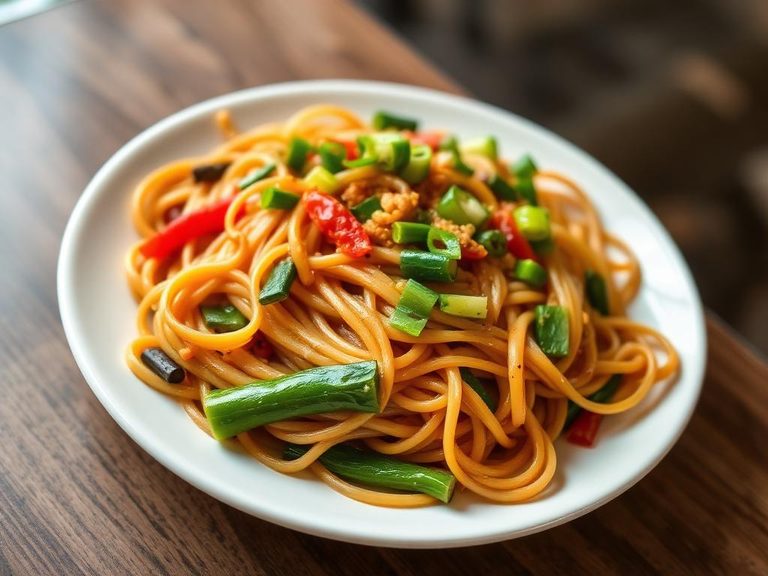
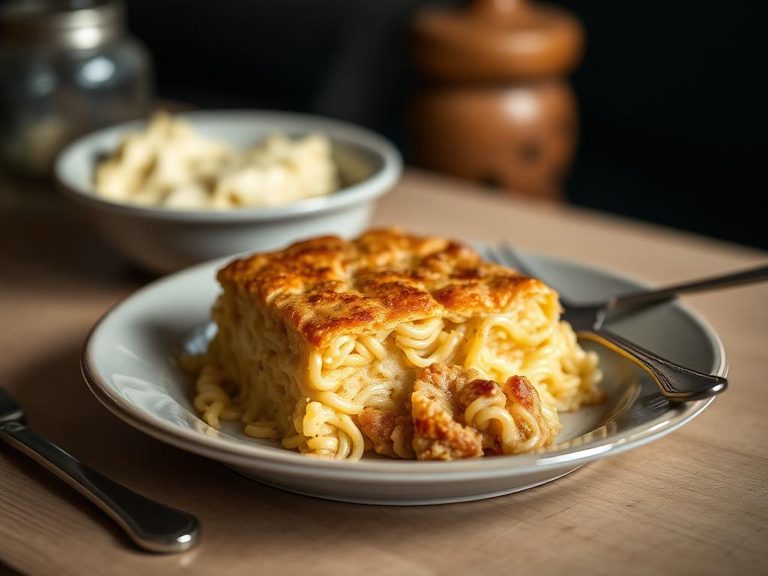
- Versatile base for soups, stir-fries, and casseroles.
- Light texture pairs well with a wide variety of flavors.
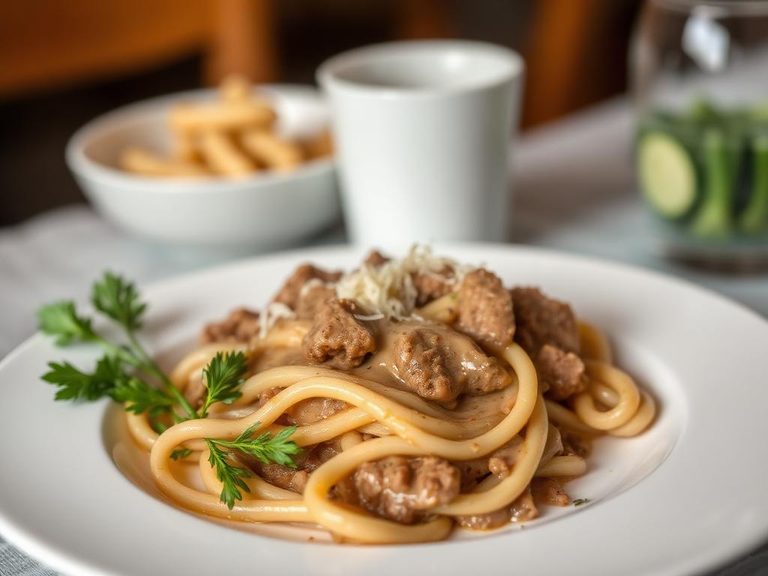
🍽️ Popular dishes
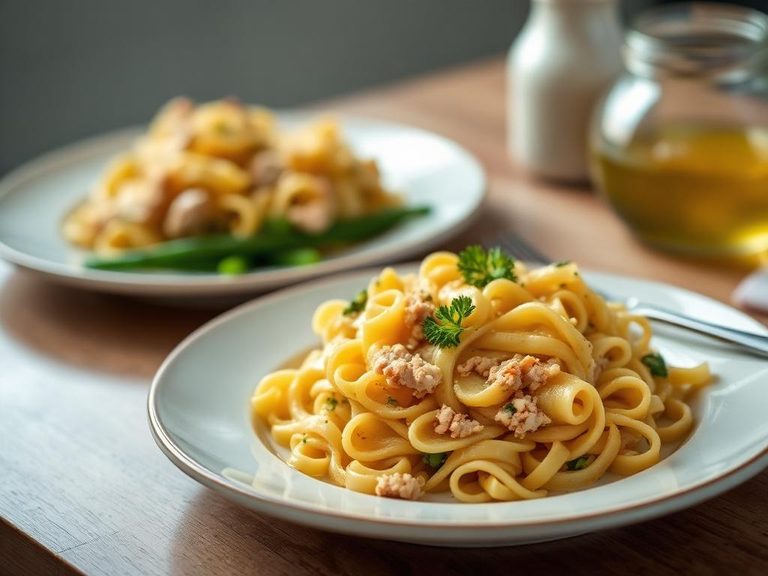
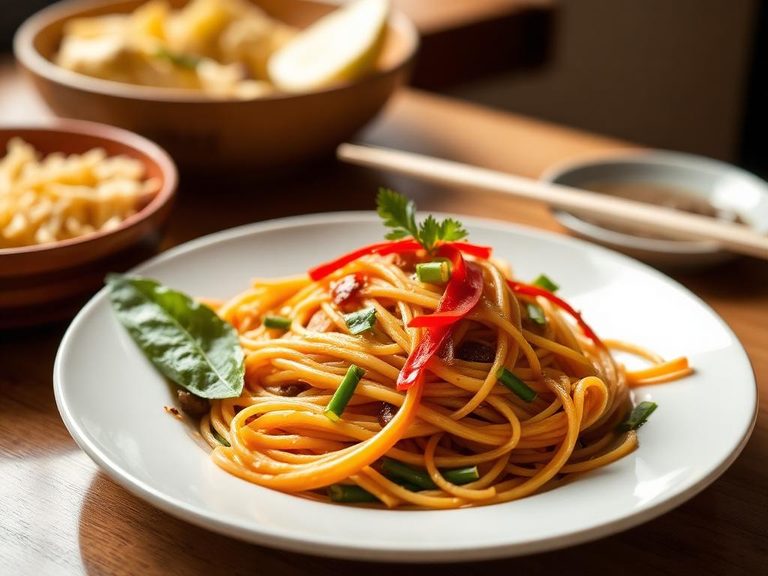
🌍 Where it's eaten
💡 Did you know?
The classic 'ramen' noodle is a type of alkaline egg noodle; the alkaline mineral water (kansui) gives it its distinctive yellow color, springy texture, and ability to resist getting mushy in hot broth.
Full nutrition (USDA data · scales with serving)
| Water | 9.0 g |
| Energy | 384 kcal |
| Energy | 1609 kj |
| Protein | 14.2 g |
| Total lipid (fat) | 4.4 g |
| Ash | 1.1 g |
| Carbohydrate, by difference | 71.3 g |
| Fiber, total dietary | 3.3 g |
| Total Sugars | 1.9 g |
| Sucrose | 0.26 g |
| Glucose | 0.10 g |
| Fructose | 0.00 g |
| Lactose | 0.00 g |
| Maltose | 1.5 g |
| Galactose | 0.00 g |
| Calcium, Ca | 35.0 mg |
| Iron, Fe | 1.9 mg |
| Magnesium, Mg | 58.0 mg |
| Phosphorus, P | 241 mg |
| Potassium, K | 244 mg |
| Sodium, Na | 21.0 mg |
| Zinc, Zn | 1.9 mg |
| Copper, Cu | 0.30 mg |
| Manganese, Mn | 0.85 mg |
| Selenium, Se | 78.8 ug |
| Vitamin C, total ascorbic acid | 0.00 mg |
| Thiamin | 0.17 mg |
| Riboflavin | 0.09 mg |
| Niacin | 2.1 mg |
| Pantothenic acid | 0.91 mg |
| Vitamin B-6 | 0.22 mg |
| Folate, total | 29.0 ug |
| Folic acid | 0.00 ug |
| Folate, food | 29.0 ug |
| Folate, DFE | 29.0 ug |
| Choline, total | 78.7 mg |
| Betaine | 132 mg |
| Vitamin B-12 | 0.29 ug |
| Vitamin B-12, added | 0.00 ug |
| Vitamin A, RAE | 17.0 ug |
| Retinol | 17.0 ug |
| Carotene, beta | 2.0 ug |
| Carotene, alpha | 0.00 ug |
| Cryptoxanthin, beta | 1.0 ug |
| Vitamin A, IU | 62.0 iu |
| Lycopene | 0.00 ug |
| Lutein + zeaxanthin | 110 ug |
| Vitamin E (alpha-tocopherol) | 0.37 mg |
| Vitamin E, added | 0.00 mg |
| Tocopherol, beta | 0.06 mg |
| Tocopherol, gamma | 1.4 mg |
| Tocopherol, delta | 0.01 mg |
| Tocotrienol, alpha | 0.23 mg |
| Tocotrienol, beta | 0.00 mg |
| Tocotrienol, gamma | 0.00 mg |
| Tocotrienol, delta | 0.00 mg |
| Vitamin D (D2 + D3), International Units | 11.0 iu |
| Vitamin D (D2 + D3) | 0.30 ug |
| Vitamin K (phylloquinone) | 0.50 ug |
| Vitamin K (Dihydrophylloquinone) | 0.00 ug |
| Alcohol, ethyl | 0.00 g |
| Caffeine | 0.00 mg |
| Theobromine | 0.00 mg |
Fat & fatty acid profile (per 100g)
| Fatty acids, total saturated | 1.2 g |
| SFA 4:0 | 0.00 g |
| SFA 6:0 | 0.00 g |
| SFA 8:0 | 0.00 g |
| SFA 10:0 | 0.00 g |
| SFA 12:0 | 0.00 g |
| SFA 14:0 | 0.01 g |
| SFA 15:0 | 0.00 g |
| SFA 16:0 | 0.94 g |
| SFA 17:0 | 0.01 g |
| SFA 18:0 | 0.23 g |
| SFA 20:0 | 0.00 g |
| SFA 22:0 | 0.00 g |
| Fatty acids, total monounsaturated | 1.3 g |
| MUFA 14:1 | 0.00 g |
| MUFA 15:1 | 0.00 g |
| MUFA 16:1 | 0.07 g |
| MUFA 17:1 | 0.00 g |
| MUFA 18:1 | 1.2 g |
| MUFA 20:1 | 0.02 g |
| MUFA 22:1 | 0.00 g |
| Fatty acids, total polyunsaturated | 1.3 g |
| PUFA 18:2 | 1.2 g |
| PUFA 18:3 | 0.06 g |
| PUFA 18:3 n-3 c,c,c (ALA) | 0.06 g |
| PUFA 18:3 n-6 c,c,c | 0.00 g |
| PUFA 18:4 | 0.00 g |
| PUFA 20:2 n-6 c,c | 0.01 g |
| PUFA 20:3 | 0.00 g |
| PUFA 20:4 | 0.04 g |
| PUFA 20:5 n-3 (EPA) | 0.00 g |
| PUFA 22:5 n-3 (DPA) | 0.00 g |
| PUFA 22:6 n-3 (DHA) | 0.00 g |
| Fatty acids, total trans | 0.06 g |
| Cholesterol | 84.0 mg |
Amino acid profile (per 100g)
| Tryptophan | 0.13 g |
| Threonine | 0.43 g |
| Isoleucine | 0.59 g |
| Leucine | 1.1 g |
| Lysine | 0.43 g |
| Methionine | 0.27 g |
| Cystine | 0.30 g |
| Phenylalanine | 0.75 g |
| Tyrosine | 0.29 g |
| Valine | 0.69 g |
| Arginine | 0.60 g |
| Histidine | 0.38 g |
| Alanine | 0.52 g |
| Aspartic acid | 0.76 g |
| Glutamic acid | 4.6 g |
| Glycine | 0.50 g |
| Proline | 1.5 g |
| Serine | 0.80 g |
FAQ
What's the difference between egg noodles and regular pasta?
Egg noodles contain a higher proportion of egg (or egg yolk) in their dough compared to most dried pastas, which gives them a richer flavor, more tender texture, and characteristic yellow color. They are typically made with soft wheat flour, while many pastas use durum wheat semolina.
Why are they called 'unenriched'?
It means the refined wheat flour used to make them has not had synthetic vitamins and minerals (like iron, B vitamins, and folic acid) added back in after processing, which is a common practice for many commercial flours and pastas.
How do I prevent them from getting mushy?
Cook them in plenty of rapidly boiling, well-salted water, stir gently to prevent sticking, and check for doneness 1-2 minutes before the package time suggests. For soups, you can cook them separately and add them to individual bowls to prevent them from absorbing all the broth and becoming swollen.
Nutrient density (calculated · NRF9.3)
Nutrient Rich Foods index: beneficial nutrients (protein, fiber, vitamins, minerals) minus saturated fat, added sugar & sodium, per 100 kcal.
NRF9.3 index — Fulgoni, Keast & Drewnowski, 2009. Computed from USDA nutrients.
Weight-loss friendliness (composite index)
Energy density 3.84 kcal/g · 15% calories from protein · 3.3 g fiber · 1.9 g sugar per 100 g.
Composite of energy density (Rolls et al., 1999), protein & fiber satiety, minus sugar. A calculated heuristic — ranks satiety-per-calorie, not a clinical measure.
Dietary load (calculated from USDA values)
Potential renal acid load. Positive = acid-forming, negative = alkaline-forming.
Sodium-to-potassium ratio: 0.09 (lower is better — aim for ≤ 1)
Sodium:potassium per WHO potassium guidance. Computed from USDA nutrients.