

Pad Thai
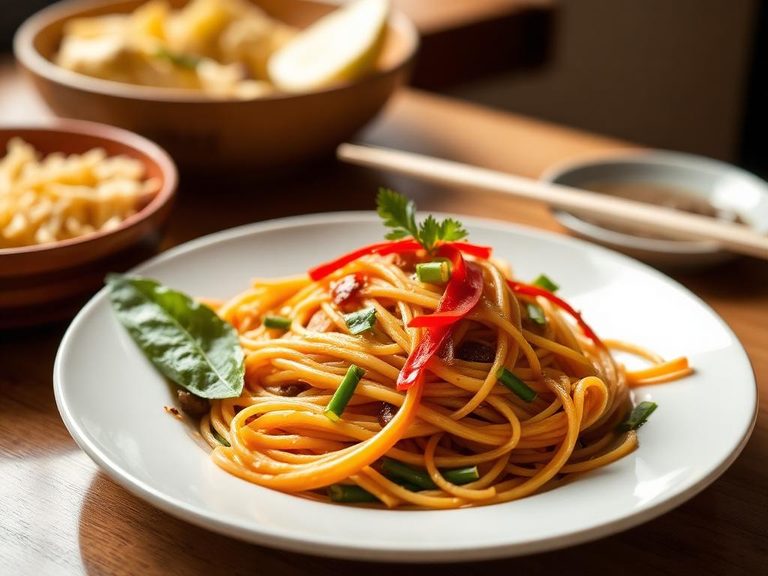
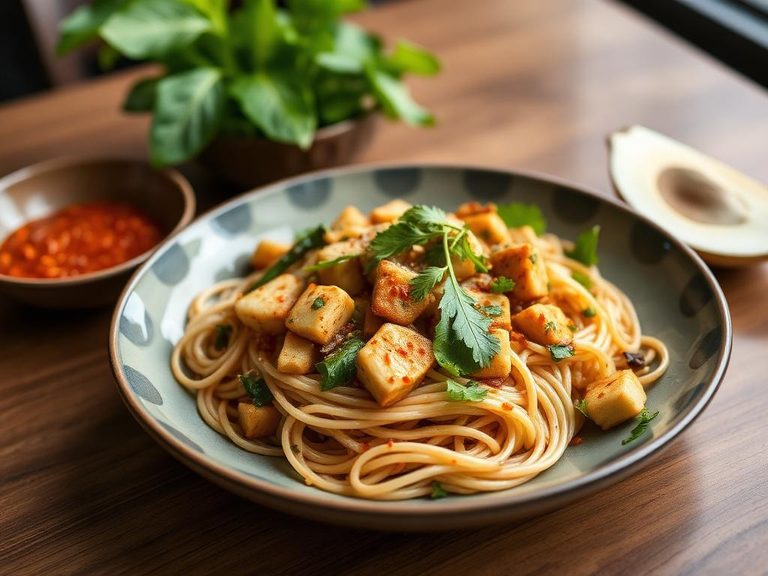
Pad Thai is Thailand's iconic stir-fried noodle dish, featuring thin rice noodles tossed with a tangy-sweet sauce, eggs, tofu or shrimp, bean sprouts, and crushed peanuts. It's a beloved street food staple that balances savory, sweet, sour, and umami flavors in one vibrant plate.
🍳 View the full Pad Thai recipe →
🍽️ Nutrition at a glance
A typical serving is moderately high in carbohydrates from the rice noodles, with a decent amount of protein from eggs and tofu or shrimp, and a moderate amount of fat from the cooking oil and peanuts. It generally provides around 350-500 calories per serving, along with key nutrients like iron, manganese, and B vitamins.
Nutrition breakdown
| Calories | 350 kcal |
| Protein | 15 g |
| Carbs | 45 g |
| Fat | 12 g |
| Fiber | 3 g |
| Sugar | 8 g |
| Sodium | 850 mg |
| Potassium | 350 mg |
| Iron | 2.5 mg |
| Calcium | 80 mg |
| Vitamin A | 120 mcg RAE |
| Vitamin C | 15 mg |
| Magnesium | 45 mg |
| Phosphorus | 180 mg |
| Zinc | 2.0 mg |
Per 1 serving (approximately 240 g) · estimated, varies by recipe
💡 What's interesting
Pad Thai was popularized in the 1930s-40s as part of a nation-building campaign by Thailand's prime minister to promote a national dish and reduce rice consumption. Its signature balance of flavors comes from tamarind paste, fish sauce, and palm sugar, making it a masterful example of Thai culinary harmony.
🍽️ Related dishes
AI estimate may be inaccurate · Terms