

Rice noodles, cooked
Whole food · Cereal Grains and Pasta
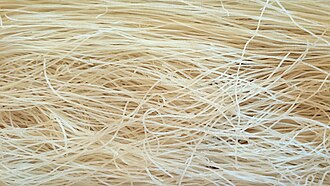
Photo: Wikipedia
Rice noodles are delicate, translucent strands made from rice flour and water, prized for their silky, slippery texture and neutral flavor that beautifully absorbs surrounding sauces. With a light, clean taste and a satisfyingly soft yet slightly chewy bite, they are a cornerstone of Asian cuisine. Nutritionally, they are a low-fat, low-protein carbohydrate source, providing quick energy with minimal calories.
Calorie split: 7% protein · 91% carbs · 2% fat
↓ Full nutrition💚 Why it's loved
People love rice noodles for their incredible versatility and ability to soak up flavors, acting as a perfect canvas for everything from spicy broths to savory stir-fries. Their light, non-heavy texture makes them a comforting choice for both hot and cold dishes across many cultures.
⚠️ Watch-outs & how to enjoy it better
As a high-glycemic, low-fiber carbohydrate, rice noodles can cause rapid blood sugar spikes, making them less ideal for individuals managing diabetes or insulin resistance. To counteract this, pair them with protein (like chicken or tofu) and healthy fats (like peanuts or sesame oil) to slow digestion, and practice portion control by mixing them with plenty of non-starchy vegetables.
Key benefits
- Naturally gluten-free, making it suitable for those with celiac disease or gluten sensitivity.
- Low in fat and cholesterol-free, supporting heart-healthy dietary patterns.
- Provides quick, easily digestible energy from carbohydrates.
- Versatile base that pairs well with a wide variety of proteins and vegetables.
🍽️ Popular dishes
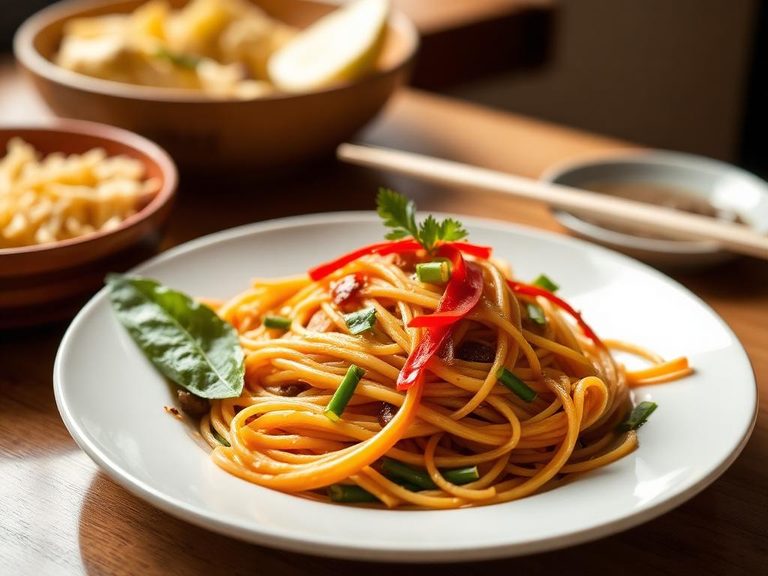
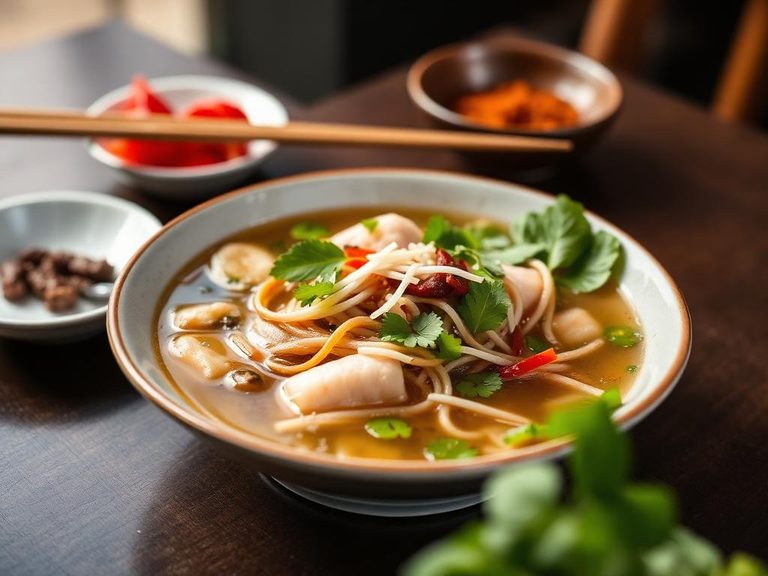
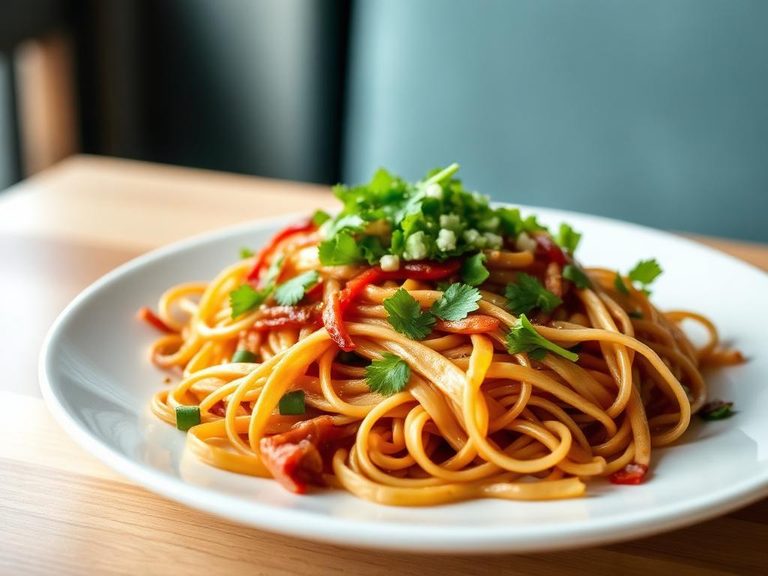
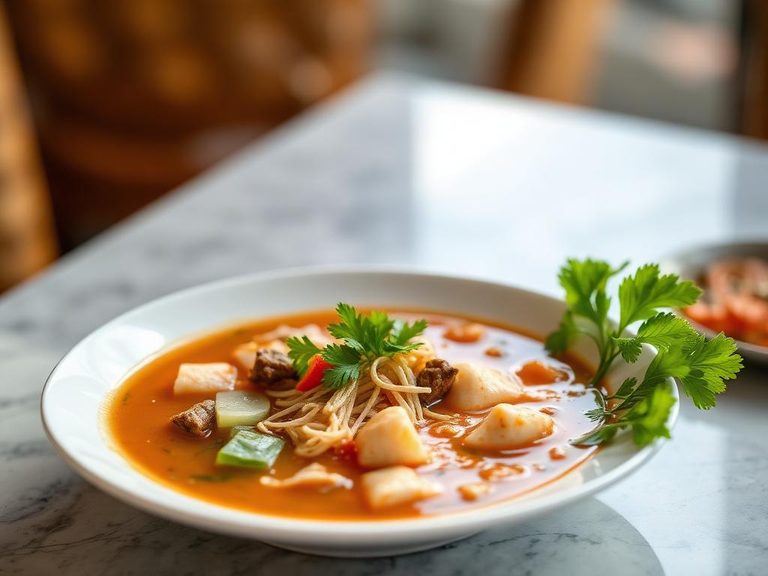
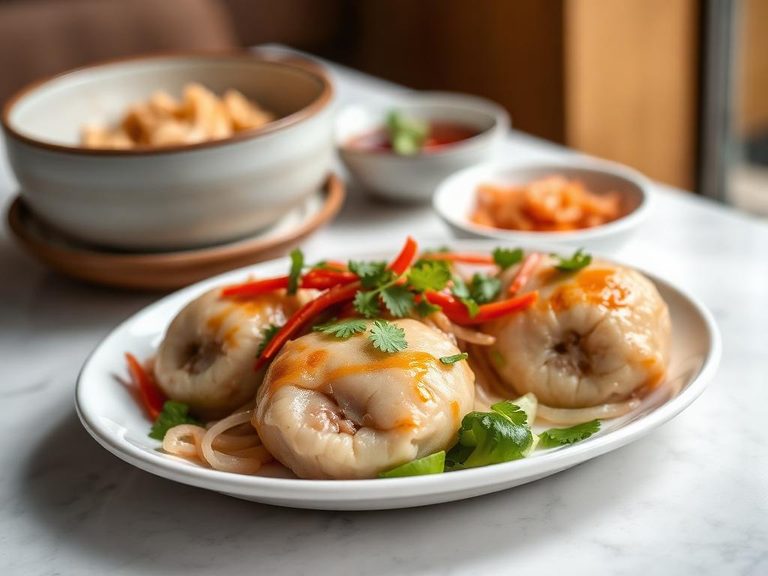
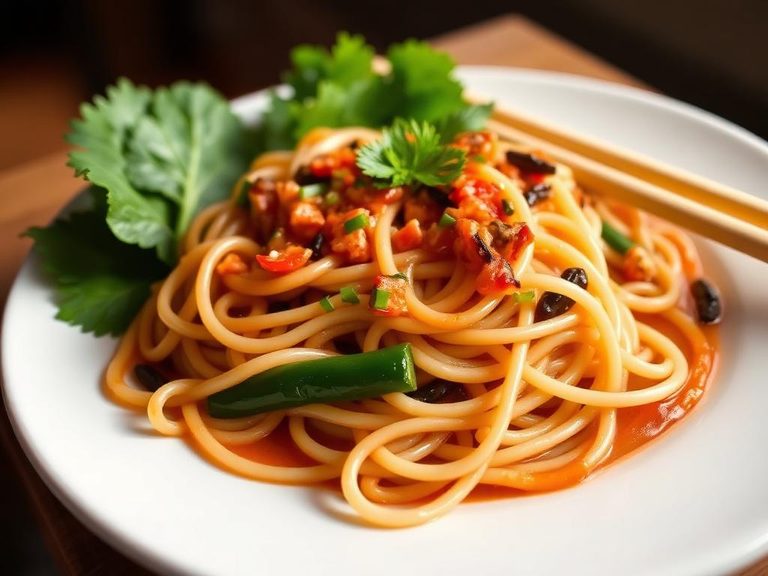
🌍 Where it's eaten
💡 Did you know?
The most famous rice noodle, 'fensi' (vermicelli), was historically used in China not just for food, but also as a writing material for calligraphy and painting due to its thin, flexible, and absorbent nature.
Full nutrition (USDA data · scales with serving)
| Water | 73.8 g |
| Energy | 108 kcal |
| Energy | 454 kj |
| Protein | 1.8 g |
| Total lipid (fat) | 0.20 g |
| Ash | 0.18 g |
| Carbohydrate, by difference | 24.0 g |
| Fiber, total dietary | 1.0 g |
| Total Sugars | 0.03 g |
| Calcium, Ca | 4.0 mg |
| Iron, Fe | 0.14 mg |
| Magnesium, Mg | 3.0 mg |
| Phosphorus, P | 20.0 mg |
| Potassium, K | 4.0 mg |
| Sodium, Na | 19.0 mg |
| Zinc, Zn | 0.25 mg |
| Copper, Cu | 0.04 mg |
| Manganese, Mn | 0.11 mg |
| Selenium, Se | 4.5 ug |
| Vitamin C, total ascorbic acid | 0.00 mg |
| Thiamin | 0.02 mg |
| Riboflavin | 0.00 mg |
| Niacin | 0.07 mg |
| Pantothenic acid | 0.01 mg |
| Vitamin B-6 | 0.01 mg |
| Folate, total | 1.0 ug |
| Folic acid | 0.00 ug |
| Folate, food | 1.0 ug |
| Folate, DFE | 1.0 ug |
| Choline, total | 1.6 mg |
| Vitamin B-12 | 0.00 ug |
| Vitamin B-12, added | 0.00 ug |
| Vitamin A, RAE | 0.00 ug |
| Retinol | 0.00 ug |
| Carotene, beta | 0.00 ug |
| Carotene, alpha | 0.00 ug |
| Cryptoxanthin, beta | 0.00 ug |
| Vitamin A, IU | 0.00 iu |
| Lycopene | 0.00 ug |
| Lutein + zeaxanthin | 0.00 ug |
| Vitamin E (alpha-tocopherol) | 0.03 mg |
| Vitamin E, added | 0.00 mg |
| Vitamin D (D2 + D3), International Units | 0.00 iu |
| Vitamin D (D2 + D3) | 0.00 ug |
| Vitamin K (phylloquinone) | 0.00 ug |
| Alcohol, ethyl | 0.00 g |
| Caffeine | 0.00 mg |
| Theobromine | 0.00 mg |
Fat & fatty acid profile (per 100g)
| Fatty acids, total saturated | 0.02 g |
| SFA 4:0 | 0.00 g |
| SFA 6:0 | 0.00 g |
| SFA 8:0 | 0.00 g |
| SFA 10:0 | 0.00 g |
| SFA 12:0 | 0.00 g |
| SFA 14:0 | 0.00 g |
| SFA 16:0 | 0.02 g |
| SFA 18:0 | 0.00 g |
| Fatty acids, total monounsaturated | 0.03 g |
| MUFA 16:1 | 0.00 g |
| MUFA 18:1 | 0.03 g |
| MUFA 20:1 | 0.00 g |
| MUFA 22:1 | 0.00 g |
| Fatty acids, total polyunsaturated | 0.02 g |
| PUFA 18:2 | 0.02 g |
| PUFA 18:3 | 0.00 g |
| PUFA 18:4 | 0.00 g |
| PUFA 20:4 | 0.00 g |
| PUFA 20:5 n-3 (EPA) | 0.00 g |
| PUFA 22:5 n-3 (DPA) | 0.00 g |
| PUFA 22:6 n-3 (DHA) | 0.00 g |
| Cholesterol | 0.00 mg |
Amino acid profile (per 100g)
| Tryptophan | 0.02 g |
| Threonine | 0.06 g |
| Isoleucine | 0.07 g |
| Leucine | 0.15 g |
| Lysine | 0.06 g |
| Methionine | 0.04 g |
| Cystine | 0.03 g |
| Phenylalanine | 0.10 g |
| Tyrosine | 0.09 g |
| Valine | 0.10 g |
| Arginine | 0.15 g |
| Histidine | 0.04 g |
| Alanine | 0.10 g |
| Aspartic acid | 0.17 g |
| Glutamic acid | 0.33 g |
| Glycine | 0.08 g |
| Proline | 0.08 g |
| Serine | 0.09 g |
FAQ
How do you prevent rice noodles from sticking together?
After cooking, rinse them thoroughly under cold water to remove excess starch, then toss with a small amount of oil (like sesame or vegetable oil) to keep them separate.
Are rice noodles gluten-free?
Yes, traditional rice noodles made from just rice flour and water are naturally gluten-free, but always check labels for potential cross-contamination if you have celiac disease.
What is the difference between rice noodles and rice sticks?
They are essentially the same thing; 'rice sticks' is another term for flat rice noodles, often used in stir-fries, while 'rice noodles' can refer to various shapes like vermicelli or wide flat noodles.
Nutrient density (calculated · NRF9.3)
Nutrient Rich Foods index: beneficial nutrients (protein, fiber, vitamins, minerals) minus saturated fat, added sugar & sodium, per 100 kcal.
NRF9.3 index — Fulgoni, Keast & Drewnowski, 2009. Computed from USDA nutrients.
Weight-loss friendliness (composite index)
Energy density 1.08 kcal/g · 7% calories from protein · 1.0 g fiber · 0.0 g sugar per 100 g.
Composite of energy density (Rolls et al., 1999), protein & fiber satiety, minus sugar. A calculated heuristic — ranks satiety-per-calorie, not a clinical measure.
Dietary load (calculated from USDA values)
Potential renal acid load. Positive = acid-forming, negative = alkaline-forming.
Sodium-to-potassium ratio: 4.75 (lower is better — aim for ≤ 1)
Sodium:potassium per WHO potassium guidance. Computed from USDA nutrients.