

Fish, whitefish, dried (Alaska Native)
Whole food · American Indian/Alaska Native Foods

Photo: Wikipedia
Dried Alaska whitefish is a nutrient-dense, shelf-stable staple of Indigenous Arctic cuisine, traditionally air-dried or smoked until it achieves a firm, chewy, and intensely savory texture. With an extraordinary 62g of protein per 100g and zero carbohydrates, it serves as a powerful, lightweight fuel source for cold climates. Its flavor is deeply concentrated, often described as smoky, salty, and umami-rich, making it a potent ingredient even in small amounts.
Calorie split: 67% protein · 0% carbs · 33% fat
↓ Full nutrition💚 Why it's loved
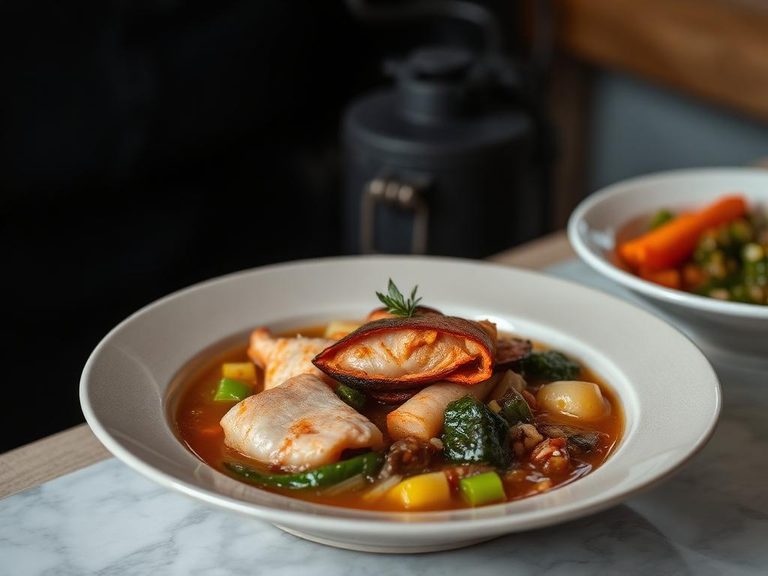
People cherish it for its profound, smoky flavor and remarkable versatility—it can be eaten as a standalone snack, rehydrated in soups, or flaked into dishes for an umami boost. It holds deep cultural significance in Alaska Native communities as a traditional, sustainable food that connects generations to the land and sea.
⚠️ Watch-outs & how to enjoy it better
Its intense saltiness and extremely tough, chewy texture can be challenging for those unaccustomed to it, and it may be too high in sodium for individuals with hypertension. To mitigate this, always rehydrate or soak the fish in fresh water for several hours before cooking, and pair it with unsalted, starchy vegetables like potatoes or wild rice to balance the salt and soften the texture.
Key benefits
- Extremely high in protein for muscle maintenance and satiety
- Zero carbohydrates and sugars, ideal for low-carb or ketogenic diets
- Naturally preserved through drying, requiring no refrigeration
- Rich in essential minerals like phosphorus and selenium
- Provides a long-lasting, concentrated energy source
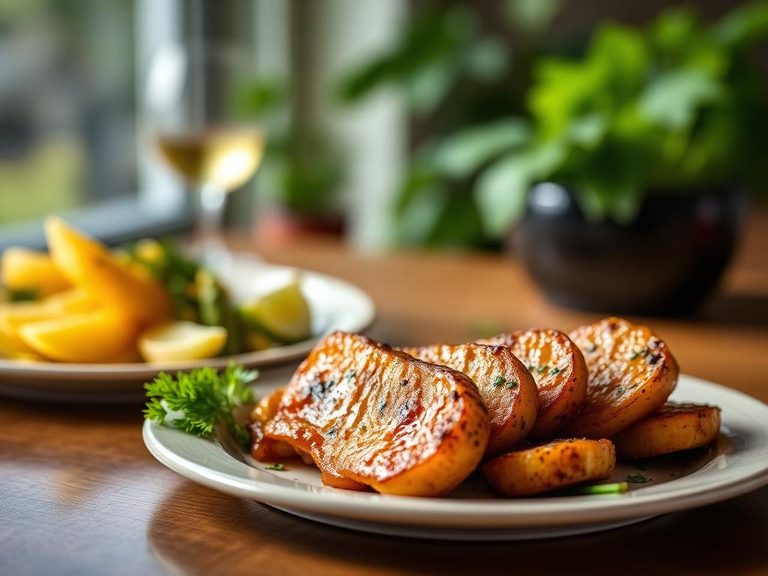
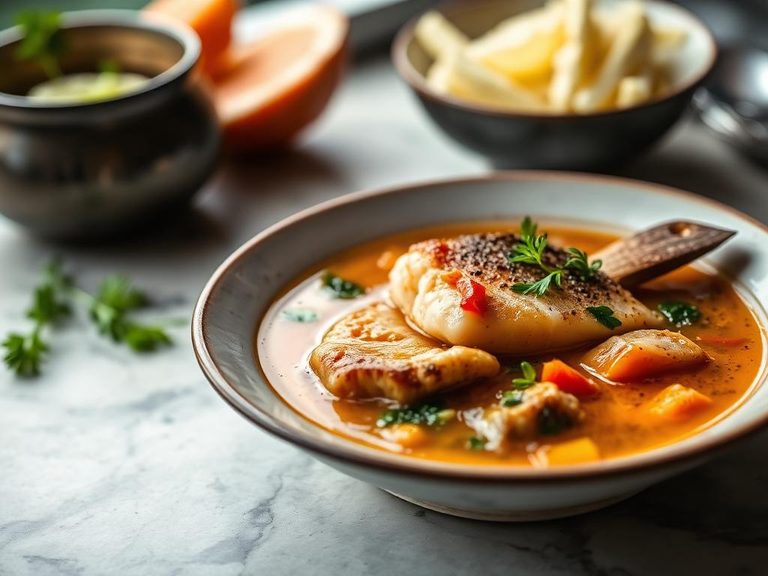
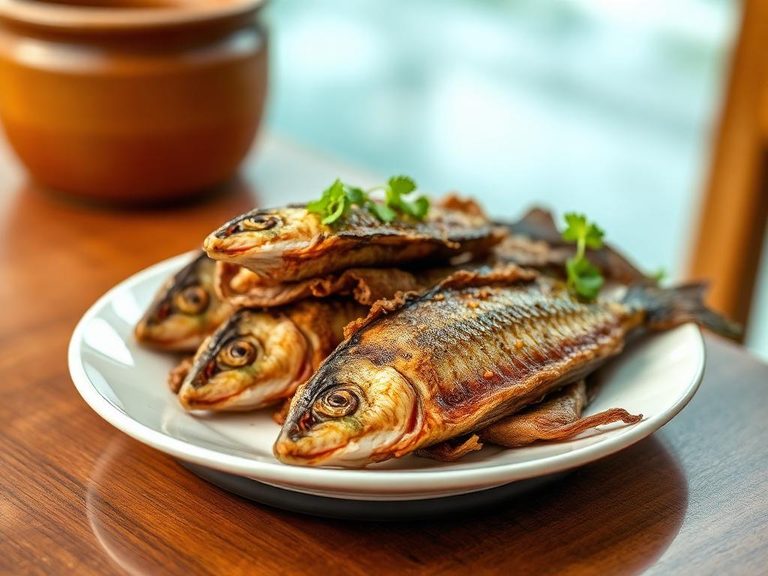
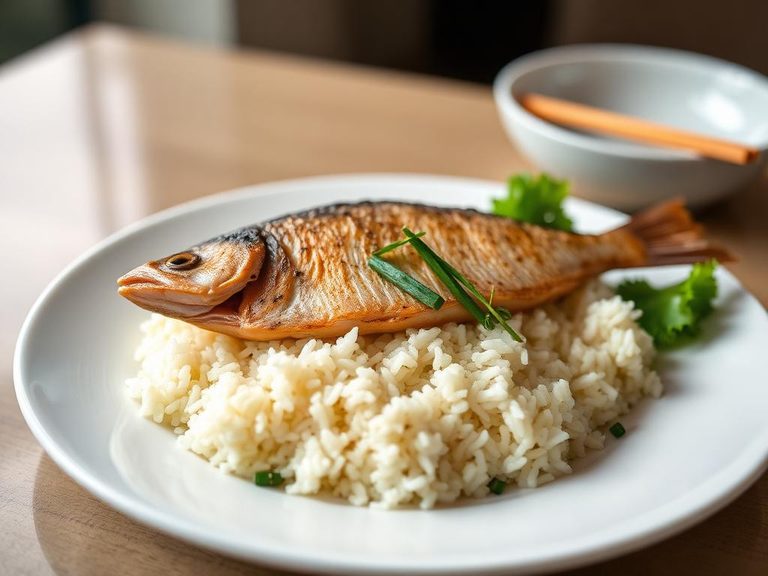
🍽️ Popular dishes
🌍 Where it's eaten
💡 Did you know?
Drying fish was a critical survival technology in the Arctic, as the cold, dry air could preserve fish for years without spoilage, providing a vital food source during long, harsh winters.
Full nutrition (USDA data · scales with serving)
| Water | 20.6 g |
| Energy | 371 kcal |
| Energy | 1551 kj |
| Protein | 62.4 g |
| Total lipid (fat) | 13.4 g |
| Ash | 5.6 g |
| Carbohydrate, by difference | 0.00 g |
| Fiber, total dietary | 0.00 g |
| Total Sugars | 0.00 g |
| Sucrose | 0.00 g |
| Glucose | 0.00 g |
| Fructose | 0.00 g |
| Lactose | 0.00 g |
| Maltose | 0.00 g |
| Galactose | 0.00 g |
| Starch | 0.00 g |
| Calcium, Ca | 810 mg |
| Iron, Fe | 4.1 mg |
| Magnesium, Mg | 85.0 mg |
| Phosphorus, P | 1040 mg |
| Potassium, K | 1080 mg |
| Sodium, Na | 200 mg |
| Zinc, Zn | 5.0 mg |
| Copper, Cu | 0.18 mg |
| Manganese, Mn | 0.23 mg |
| Selenium, Se | 113 ug |
| Vitamin C, total ascorbic acid | 0.00 mg |
| Thiamin | 0.05 mg |
| Riboflavin | 0.44 mg |
| Niacin | 11.2 mg |
| Pantothenic acid | 2.6 mg |
| Vitamin B-6 | 0.36 mg |
| Folate, total | 11.0 ug |
| Folic acid | 0.00 ug |
| Folate, food | 11.0 ug |
| Folate, DFE | 11.0 ug |
| Choline, total | 206 mg |
| Betaine | 88.3 mg |
| Vitamin B-12 | 18.4 ug |
| Vitamin B-12, added | 0.00 ug |
| Vitamin A, RAE | 39.0 ug |
| Retinol | 39.0 ug |
| Carotene, beta | 0.00 ug |
| Carotene, alpha | 0.00 ug |
| Cryptoxanthin, beta | 0.00 ug |
| Vitamin A, IU | 131 iu |
| Lycopene | 0.00 ug |
| Lutein + zeaxanthin | 0.00 ug |
| Vitamin E (alpha-tocopherol) | 0.66 mg |
| Vitamin E, added | 0.00 mg |
| Tocopherol, beta | 0.00 mg |
| Tocopherol, gamma | 0.00 mg |
| Tocopherol, delta | 0.00 mg |
| Tocotrienol, alpha | 0.00 mg |
| Tocotrienol, beta | 0.00 mg |
| Tocotrienol, gamma | 0.00 mg |
| Tocotrienol, delta | 0.00 mg |
| Vitamin K (phylloquinone) | 1.3 ug |
| Vitamin K (Dihydrophylloquinone) | 0.00 ug |
| Vitamin K (Menaquinone-4) | 0.50 ug |
| Alcohol, ethyl | 0.00 g |
| Caffeine | 0.00 mg |
| Theobromine | 0.00 mg |
Fat & fatty acid profile (per 100g)
| Fatty acids, total saturated | 2.9 g |
| SFA 8:0 | 0.00 g |
| SFA 10:0 | 0.00 g |
| SFA 12:0 | 0.06 g |
| SFA 14:0 | 0.32 g |
| SFA 15:0 | 0.09 g |
| SFA 16:0 | 1.9 g |
| SFA 17:0 | 0.08 g |
| SFA 18:0 | 0.40 g |
| SFA 20:0 | 0.00 g |
| SFA 22:0 | 0.00 g |
| SFA 24:0 | 0.00 g |
| Fatty acids, total monounsaturated | 4.4 g |
| MUFA 14:1 | 0.01 g |
| MUFA 15:1 | 0.02 g |
| MUFA 16:1 | 1.4 g |
| MUFA 17:1 | 0.00 g |
| MUFA 18:1 | 2.5 g |
| MUFA 20:1 | 0.39 g |
| MUFA 22:1 | 0.07 g |
| MUFA 24:1 c | 0.02 g |
| Fatty acids, total polyunsaturated | 2.2 g |
| PUFA 18:2 | 0.26 g |
| PUFA 18:3 | 0.28 g |
| PUFA 18:4 | 0.06 g |
| PUFA 20:2 n-6 c,c | 0.05 g |
| PUFA 20:3 | 0.05 g |
| PUFA 20:4 | 0.17 g |
| PUFA 20:5 n-3 (EPA) | 0.42 g |
| PUFA 21:5 | 0.01 g |
| PUFA 22:4 | 0.03 g |
| PUFA 22:5 n-3 (DPA) | 0.18 g |
| PUFA 22:6 n-3 (DHA) | 0.65 g |
| Cholesterol | 266 mg |
Amino acid profile (per 100g)
| Tryptophan | 0.58 g |
| Threonine | 2.5 g |
| Isoleucine | 2.3 g |
| Leucine | 4.1 g |
| Lysine | 4.8 g |
| Methionine | 1.7 g |
| Cystine | 0.50 g |
| Phenylalanine | 2.3 g |
| Tyrosine | 1.7 g |
| Valine | 2.6 g |
| Arginine | 3.6 g |
| Histidine | 1.3 g |
| Alanine | 3.8 g |
| Aspartic acid | 5.7 g |
| Glutamic acid | 8.1 g |
| Glycine | 4.4 g |
| Proline | 3.0 g |
| Serine | 2.3 g |
FAQ
How do you prepare dried Alaska whitefish?
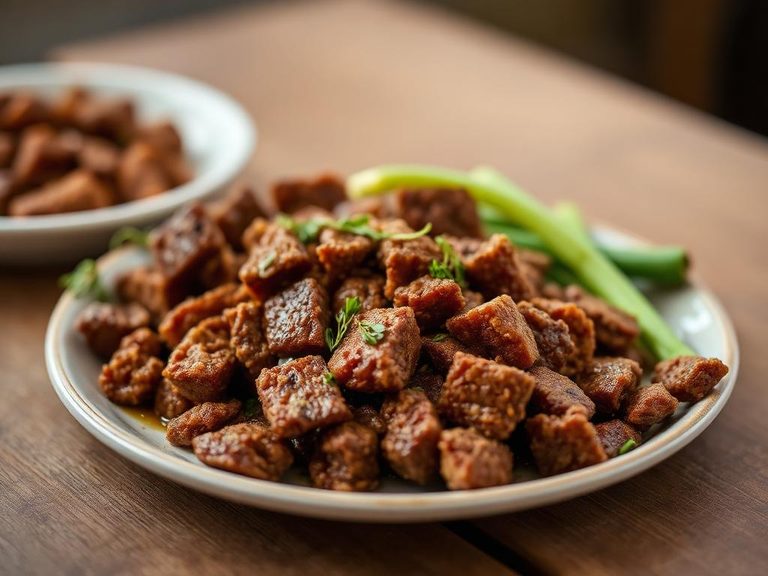
It is often rehydrated by soaking in water or broth for several hours, then used in soups, stews, or fried until crispy. It can also be eaten as a chewy snack after softening.
Is dried whitefish high in sodium?
Yes, traditional drying methods often involve salt, making it high in sodium. Soaking before cooking can help reduce salt content.
Can I substitute dried whitefish in recipes?
It can be replaced with other dried fish like cod or herring, but the unique smoky, chewy texture of Alaska whitefish is distinct and hard to replicate.
Nutrient density (calculated · NRF9.3)
Nutrient Rich Foods index: beneficial nutrients (protein, fiber, vitamins, minerals) minus saturated fat, added sugar & sodium, per 100 kcal.
NRF9.3 index — Fulgoni, Keast & Drewnowski, 2009. Computed from USDA nutrients.
Weight-loss friendliness (composite index)
Energy density 3.71 kcal/g · 67% calories from protein · 0.0 g fiber · 0.0 g sugar per 100 g.
Composite of energy density (Rolls et al., 1999), protein & fiber satiety, minus sugar. A calculated heuristic — ranks satiety-per-calorie, not a clinical measure.
Dietary load (calculated from USDA values)
Potential renal acid load. Positive = acid-forming, negative = alkaline-forming.
Sodium-to-potassium ratio: 0.19 (lower is better — aim for ≤ 1)
Sodium:potassium per WHO potassium guidance. Computed from USDA nutrients.