

Chicken, broilers or fryers, drumstick, meat only, cooked, braised
Whole food · Poultry Products
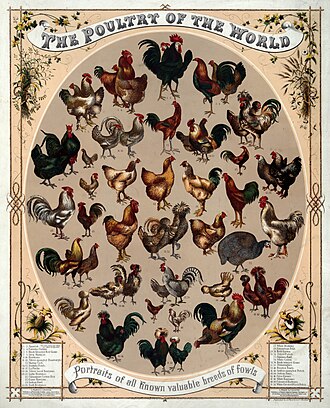
Photo: Wikipedia
This is the lean, tender meat from a chicken drumstick, cooked by simmering in liquid until it's succulent and easily pulls from the bone. It has a mild, savory flavor and a soft, juicy texture with a satisfying, slightly firmer bite than breast meat. Nutritionally, it's a protein powerhouse with virtually no carbohydrates, making it a staple for high-protein, low-carb diets.
Calorie split: 64% protein · 0% carbs · 36% fat
↓ Full nutrition💚 Why it's loved
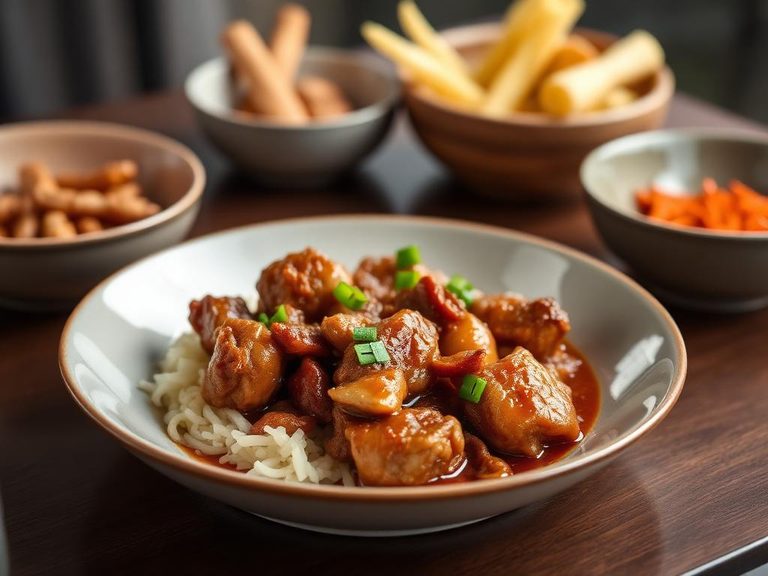
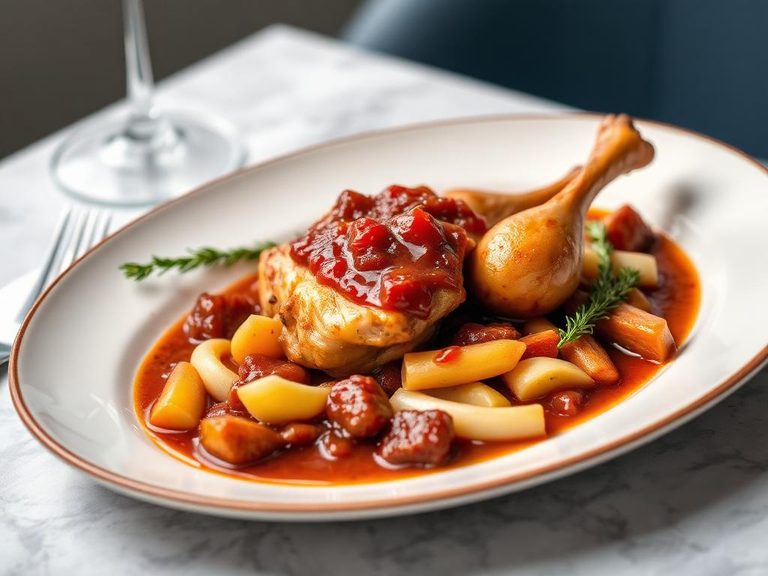
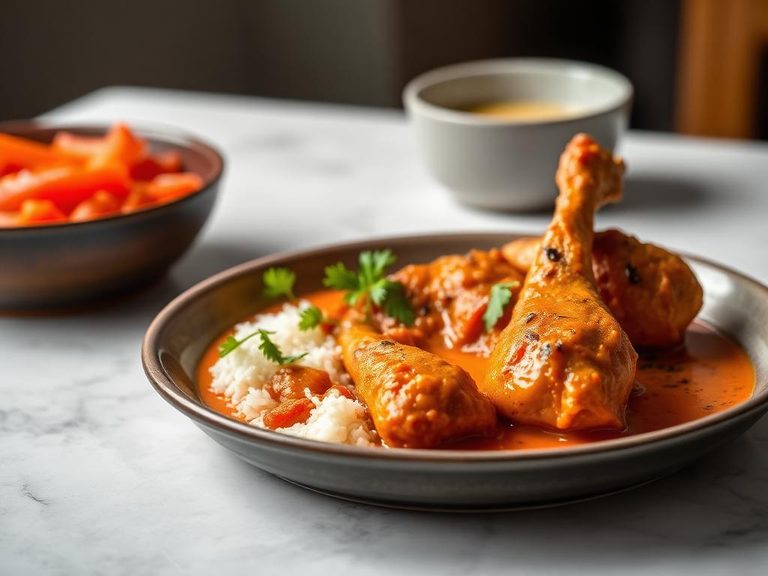
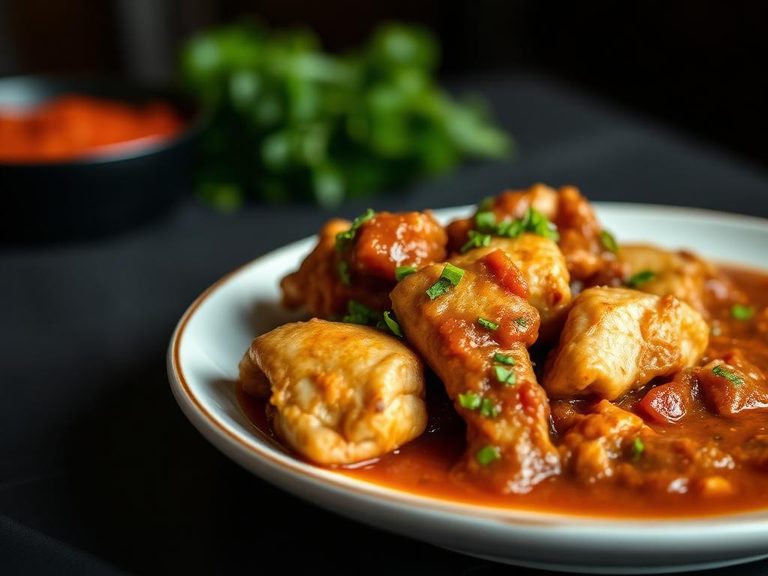
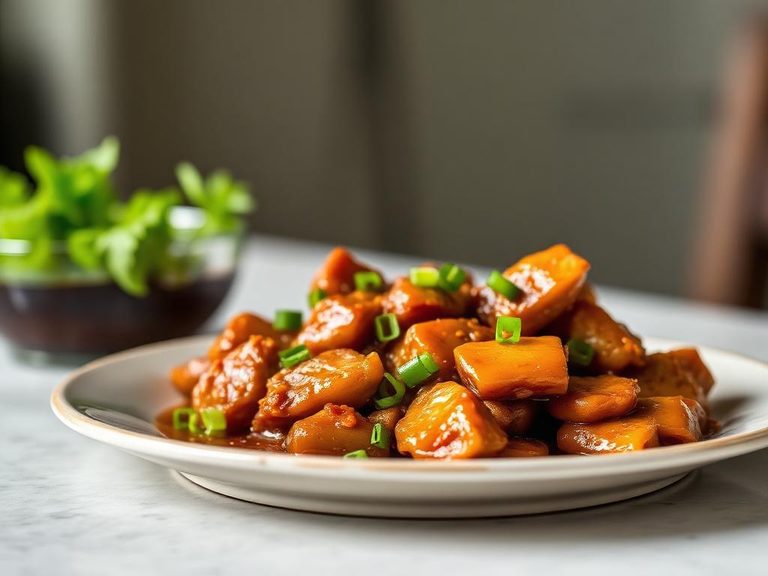
People love it for its perfect balance of rich, savory flavor and tender, juicy texture that's more forgiving and flavorful than chicken breast. It's incredibly versatile, serving as the star in comforting stews, flavorful curries, or simply seasoned and baked.
⚠️ Watch-outs & how to enjoy it better
The primary downside is the skin, which, if eaten, significantly increases the fat and calorie content. Those monitoring sodium intake should be cautious, as braising often involves salty broths or sauces. Tip: To reduce sodium, use low-sodium broth and season with herbs, garlic, and citrus. To manage fat, simply remove the skin before or after cooking.
Key benefits
- Excellent source of complete protein for muscle maintenance and repair.
- Naturally very low in carbohydrates and sugars.
- Provides essential minerals like selenium and phosphorus.
- A good source of B vitamins, particularly niacin (B3).
- Braising helps retain moisture and can yield a flavorful cooking liquid.
🍽️ Popular dishes
🌍 Where it's eaten
💡 Did you know?
The drumstick is named for its resemblance to a percussion mallet, and its meat contains more connective tissue than the breast, which breaks down during braising to create natural gelatin and a richer mouthfeel.
Full nutrition (USDA data · scales with serving)
| Water | 69.9 g |
| Energy (Atwater General Factors) | 149 kcal |
| Energy (Atwater Specific Factors) | 156 kcal |
| Energy | 156 kcal |
| Energy | 652 kj |
| Nitrogen | 3.8 g |
| Protein | 23.9 g |
| Total lipid (fat) | 6.0 g |
| Total fat (NLEA) | 5.2 g |
| Ash | 0.98 g |
| Carbohydrate, by difference | 0.00 g |
| Calcium, Ca | 12.0 mg |
| Iron, Fe | 0.94 mg |
| Magnesium, Mg | 22.4 mg |
| Phosphorus, P | 184 mg |
| Potassium, K | 239 mg |
| Sodium, Na | 117 mg |
| Zinc, Zn | 2.5 mg |
| Copper, Cu | 0.06 mg |
| Manganese, Mn | 0.02 mg |
| Selenium, Se | 27.9 ug |
| Thiamin | 0.09 mg |
| Riboflavin | 0.18 mg |
| Niacin | 5.0 mg |
| Pantothenic acid | 1.1 mg |
| Vitamin B-6 | 0.37 mg |
| Vitamin B-12 | 0.41 ug |
| Vitamin A, RAE | 7.0 ug |
| Retinol | 7.0 ug |
| Vitamin E (alpha-tocopherol) | 0.17 mg |
| Tocopherol, beta | 0.00 mg |
| Tocopherol, gamma | 0.08 mg |
| Tocopherol, delta | 0.00 mg |
| Tocotrienol, alpha | 0.01 mg |
| Tocotrienol, beta | 0.00 mg |
| Tocotrienol, gamma | 0.05 mg |
| Tocotrienol, delta | 0.00 mg |
| Vitamin D (D2 + D3), International Units | 2.0 iu |
| Vitamin D (D2 + D3) | 0.10 ug |
| Vitamin D3 (cholecalciferol) | 0.10 ug |
Fat & fatty acid profile (per 100g)
| Fatty acids, total saturated | 1.6 g |
| SFA 4:0 | 0.00 g |
| SFA 6:0 | 0.00 g |
| SFA 8:0 | 0.00 g |
| SFA 10:0 | 0.00 g |
| SFA 11:0 | 0.00 g |
| SFA 12:0 | 0.00 g |
| SFA 14:0 | 0.03 g |
| SFA 15:0 | 0.01 g |
| SFA 16:0 | 1.2 g |
| SFA 17:0 | 0.01 g |
| SFA 18:0 | 0.35 g |
| SFA 20:0 | 0.00 g |
| SFA 22:0 | 0.01 g |
| SFA 24:0 | 0.00 g |
| Fatty acids, total monounsaturated | 2.4 g |
| MUFA 14:1 c | 0.01 g |
| MUFA 15:1 | 0.00 g |
| MUFA 16:1 c | 0.37 g |
| MUFA 17:1 | 0.00 g |
| MUFA 17:1 c | 0.00 g |
| MUFA 18:1 c | 1.9 g |
| MUFA 20:1 | 0.02 g |
| MUFA 20:1 c | 0.02 g |
| MUFA 22:1 c | 0.00 g |
| MUFA 24:1 c | 0.00 g |
| Fatty acids, total polyunsaturated | 1.2 g |
| PUFA 18:2 c | 1.1 g |
| PUFA 18:2 n-6 c,c | 1.1 g |
| PUFA 18:2 CLAs | 0.01 g |
| PUFA 18:3 c | 0.06 g |
| PUFA 18:3 n-3 c,c,c (ALA) | 0.04 g |
| PUFA 18:3 n-6 c,c,c | 0.01 g |
| PUFA 18:4 | 0.00 g |
| PUFA 20:2 c | 0.01 g |
| PUFA 20:2 n-6 c,c | 0.01 g |
| PUFA 20:3 c | 0.02 g |
| PUFA 20:3 n-3 | 0.00 g |
| PUFA 20:3 n-6 | 0.02 g |
| PUFA 20:4 | 0.09 g |
| PUFA 20:4c | 0.09 g |
| PUFA 20:5c | 0.00 g |
| PUFA 20:5 n-3 (EPA) | 0.00 g |
| PUFA 22:2 | 0.00 g |
| PUFA 22:5 c | 0.01 g |
| PUFA 22:4 | 0.02 g |
| PUFA 22:5 n-3 (DPA) | 0.01 g |
| PUFA 22:6 c | 0.01 g |
| PUFA 22:6 n-3 (DHA) | 0.01 g |
| Fatty acids, total trans | 0.03 g |
| Fatty acids, total trans-monoenoic | 0.02 g |
| TFA 16:1 t | 0.00 g |
| TFA 18:1 t | 0.02 g |
| TFA 22:1 t | 0.00 g |
| Fatty acids, total trans-dienoic | 0.01 g |
| TFA 18:2 t not further defined | 0.01 g |
| Cholesterol | 127 mg |
Amino acid profile (per 100g)
Estimated from Chicken, broilers or fryers, meat and skin and giblets and neck, raw — USDA does not publish this profile for Chicken.
| Tryptophan | 0.20 g |
| Threonine | 0.76 g |
| Isoleucine | 0.91 g |
| Leucine | 1.3 g |
| Lysine | 1.5 g |
| Methionine | 0.48 g |
| Cystine | 0.25 g |
| Phenylalanine | 0.72 g |
| Tyrosine | 0.59 g |
| Valine | 0.89 g |
| Arginine | 1.2 g |
| Histidine | 0.53 g |
| Alanine | 1.1 g |
| Aspartic acid | 1.6 g |
| Glutamic acid | 2.7 g |
| Glycine | 1.2 g |
| Proline | 0.91 g |
| Serine | 0.66 g |
FAQ
Is braised chicken drumstick meat healthy?
Yes, it's a nutritious choice, offering high-quality protein with minimal carbs. Its healthiness depends largely on the cooking liquid and whether you eat the skin. Using low-sodium broth and removing the skin keeps it lean and heart-healthy.
How is braised different from baked or fried?
Braising involves first browning the meat, then slowly simmering it in a flavorful liquid (like broth, wine, or tomatoes) in a covered pot. This method makes the meat exceptionally tender and infuses it with flavor, unlike dry-heat methods like baking or frying.
Can I use the braising liquid as a sauce?
Absolutely! The liquid becomes a flavorful, nutrient-rich sauce or gravy. For a smoother sauce, you can strain it, skim off excess fat, and reduce it by simmering. It's perfect for pouring over rice, potatoes, or vegetables.
Nutrient density (calculated · NRF9.3)
Nutrient Rich Foods index: beneficial nutrients (protein, fiber, vitamins, minerals) minus saturated fat, added sugar & sodium, per 100 kcal.
NRF9.3 index — Fulgoni, Keast & Drewnowski, 2009. Computed from USDA nutrients.
Weight-loss friendliness (composite index)
Energy density 1.56 kcal/g · 61% calories from protein · 0.0 g fiber · 0.0 g sugar per 100 g.
Composite of energy density (Rolls et al., 1999), protein & fiber satiety, minus sugar. A calculated heuristic — ranks satiety-per-calorie, not a clinical measure.
Dietary load (calculated from USDA values)
Potential renal acid load. Positive = acid-forming, negative = alkaline-forming.
Sodium-to-potassium ratio: 0.49 (lower is better — aim for ≤ 1)
Sodium:potassium per WHO potassium guidance. Computed from USDA nutrients.