

Beef, rib eye steak, boneless, lip off, separable lean only, trimmed to 0" fat, all grades, raw
Whole food · Beef Products

Photo: Wikipedia
This is a premium, boneless cut from the beef rib, meticulously trimmed of its outer fat lip and separable fat to leave only the rich, marbled lean meat. It delivers a robust, beefy flavor with a tender, fine-grained texture that's prized for its juiciness. Nutritionally, it's a powerhouse of high-quality protein with a moderate amount of healthy fats and zero carbohydrates.
Calorie split: 57% protein · 0% carbs · 43% fat
↓ Full nutrition💚 Why it's loved
People adore it for its deep, savory umami flavor and consistently tender, melt-in-your-mouth texture when cooked properly. Its versatility makes it a star in everything from simple grilled steaks to elegant dishes, embodying a classic sense of indulgence and celebration.
⚠️ Watch-outs & how to enjoy it better
While leaner than many steak cuts, it still contains saturated fat, which some individuals may need to moderate. The primary caution is for those monitoring sodium intake, as restaurant or pre-marinated versions can be high in salt. To counteract, opt for home preparation with minimal added salt, and pair it with fiber-rich vegetables like roasted broccoli or a fresh salad to balance the meal.
Key benefits
- Excellent source of complete protein for muscle repair and growth.
- Rich in bioavailable heme iron, crucial for energy and oxygen transport.
- Provides key B vitamins like B12 and niacin for metabolism and nerve function.
- Contains zinc and selenium, important minerals for immune function.
- Naturally free of carbohydrates and sugars.
🍽️ Popular dishes

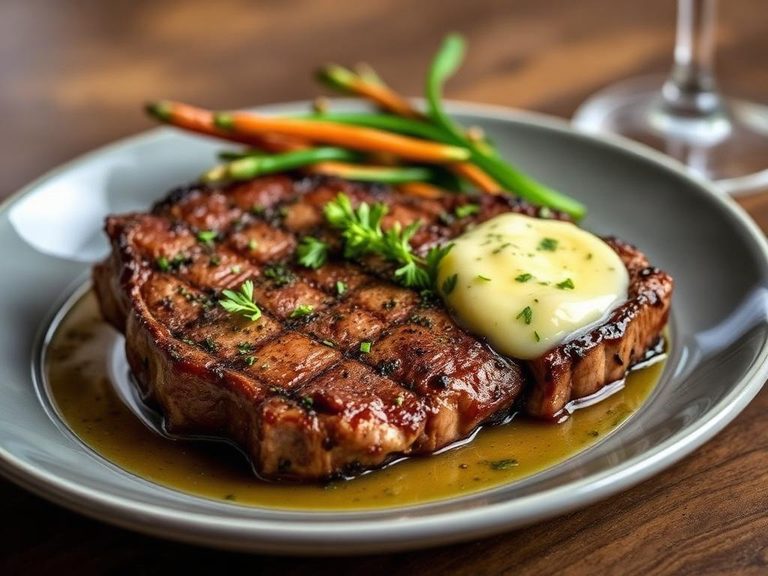
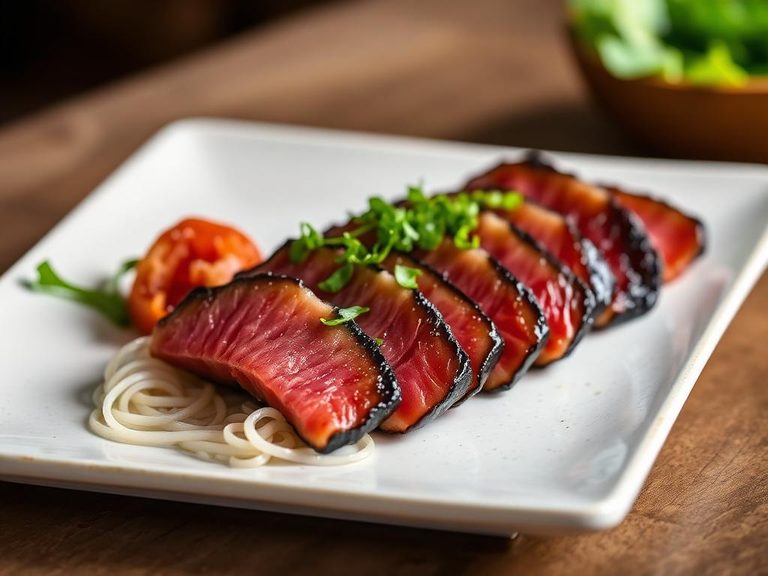
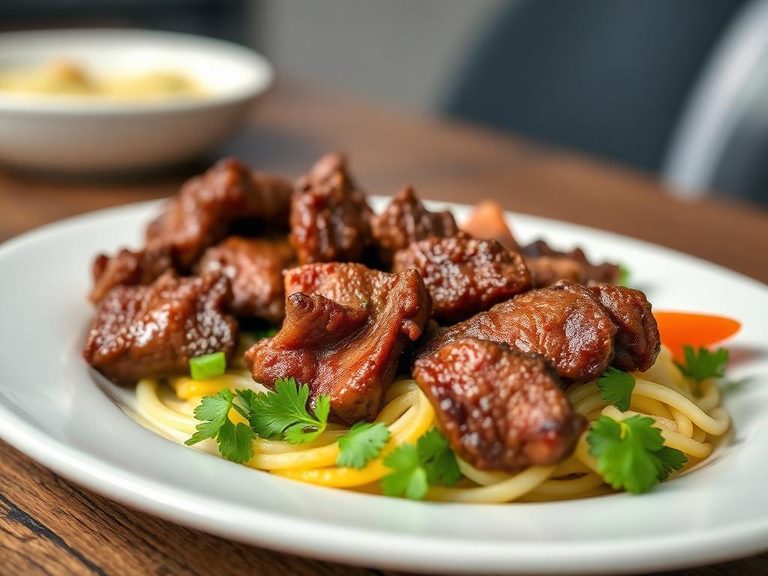

🌍 Where it's eaten
💡 Did you know?
The 'rib eye' name comes from the eye-shaped area of fat and meat that runs through the center of the rib primal cut, which is visible in cross-section slices.
Full nutrition (USDA data · scales with serving)
| Water | 69.9 g |
| Energy | 154 kcal |
| Energy | 645 kj |
| Protein | 21.9 g |
| Total lipid (fat) | 7.4 g |
| Ash | 0.98 g |
| Carbohydrate, by difference | 0.00 g |
| Fiber, total dietary | 0.00 g |
| Total Sugars | 0.00 g |
| Calcium, Ca | 6.0 mg |
| Iron, Fe | 1.9 mg |
| Magnesium, Mg | 23.0 mg |
| Phosphorus, P | 156 mg |
| Potassium, K | 276 mg |
| Sodium, Na | 56.0 mg |
| Zinc, Zn | 5.7 mg |
| Copper, Cu | 0.08 mg |
| Manganese, Mn | 0.07 mg |
| Selenium, Se | 27.3 ug |
| Vitamin C, total ascorbic acid | 0.00 mg |
| Thiamin | 0.12 mg |
| Riboflavin | 0.27 mg |
| Niacin | 5.6 mg |
| Pantothenic acid | 0.53 mg |
| Vitamin B-6 | 0.47 mg |
| Folate, total | 4.0 ug |
| Folic acid | 0.00 ug |
| Folate, food | 4.0 ug |
| Folate, DFE | 4.0 ug |
| Choline, total | 48.7 mg |
| Betaine | 13.9 mg |
| Vitamin B-12 | 1.9 ug |
| Vitamin B-12, added | 0.00 ug |
| Vitamin A, RAE | 2.0 ug |
| Retinol | 2.0 ug |
| Carotene, beta | 0.00 ug |
| Carotene, alpha | 0.00 ug |
| Cryptoxanthin, beta | 0.00 ug |
| Vitamin A, IU | 7.0 iu |
| Lycopene | 0.00 ug |
| Lutein + zeaxanthin | 0.00 ug |
| Vitamin E (alpha-tocopherol) | 0.15 mg |
| Vitamin E, added | 0.00 mg |
| Vitamin D (D2 + D3), International Units | 3.0 iu |
| Vitamin D (D2 + D3) | 0.10 ug |
| Vitamin D3 (cholecalciferol) | 0.10 ug |
| Vitamin K (phylloquinone) | 1.5 ug |
| Alcohol, ethyl | 0.00 g |
| Caffeine | 0.00 mg |
| Theobromine | 0.00 mg |
Fat & fatty acid profile (per 100g)
| Fatty acids, total saturated | 2.8 g |
| SFA 4:0 | 0.00 g |
| SFA 6:0 | 0.00 g |
| SFA 8:0 | 0.00 g |
| SFA 10:0 | 0.00 g |
| SFA 12:0 | 0.00 g |
| SFA 14:0 | 0.17 g |
| SFA 15:0 | 0.03 g |
| SFA 16:0 | 1.5 g |
| SFA 17:0 | 0.09 g |
| SFA 18:0 | 0.91 g |
| SFA 20:0 | 0.00 g |
| SFA 24:0 | 0.01 g |
| Fatty acids, total monounsaturated | 3.3 g |
| MUFA 14:1 | 0.04 g |
| MUFA 15:1 | 0.03 g |
| MUFA 16:1 | 0.20 g |
| MUFA 16:1 c | 0.19 g |
| MUFA 17:1 | 0.07 g |
| MUFA 18:1 | 2.9 g |
| MUFA 18:1 c | 2.6 g |
| MUFA 20:1 | 0.01 g |
| MUFA 22:1 | 0.00 g |
| Fatty acids, total polyunsaturated | 0.44 g |
| PUFA 18:2 | 0.35 g |
| PUFA 18:2 n-6 c,c | 0.33 g |
| PUFA 18:2 CLAs | 0.02 g |
| PUFA 18:3 | 0.01 g |
| PUFA 18:3 n-3 c,c,c (ALA) | 0.01 g |
| PUFA 18:4 | 0.00 g |
| PUFA 20:2 n-6 c,c | 0.00 g |
| PUFA 20:3 | 0.01 g |
| PUFA 20:3 n-6 | 0.01 g |
| PUFA 20:4 | 0.06 g |
| PUFA 20:5 n-3 (EPA) | 0.00 g |
| PUFA 22:5 n-3 (DPA) | 0.01 g |
| PUFA 22:6 n-3 (DHA) | 0.00 g |
| Fatty acids, total trans | 0.31 g |
| Fatty acids, total trans-monoenoic | 0.31 g |
| TFA 16:1 t | 0.01 g |
| TFA 18:1 t | 0.30 g |
| TFA 18:2 t not further defined | 0.00 g |
| Fatty acids, total trans-polyenoic | 0.00 g |
| Cholesterol | 66.0 mg |
Amino acid profile (per 100g)
| Tryptophan | 0.27 g |
| Threonine | 1.1 g |
| Isoleucine | 1.1 g |
| Leucine | 2.1 g |
| Lysine | 2.3 g |
| Methionine | 0.64 g |
| Cystine | 0.24 g |
| Phenylalanine | 0.96 g |
| Tyrosine | 0.90 g |
| Valine | 1.2 g |
| Arginine | 1.6 g |
| Histidine | 0.89 g |
| Alanine | 1.4 g |
| Aspartic acid | 2.3 g |
| Glutamic acid | 3.9 g |
| Glycine | 1.0 g |
| Proline | 1.0 g |
| Serine | 0.98 g |
| Hydroxyproline | 0.11 g |
FAQ
What's the difference between 'ribeye' and 'rib eye steak'?
They refer to the same cut of beef from the rib section. The spelling variation ('ribeye' as one word vs. 'rib eye' as two) is a matter of style, with 'ribeye' being very common in the U.S. meat industry.
Why is this cut called 'lip off' and 'trimmed to 0' fat?
This is a precise butchery specification. 'Lip off' means the large, fatty 'lip' or 'tail' on the side of the ribeye has been removed. 'Trimmed to 0' fat means all external, separable fat has been cut away, leaving only the intramuscular marbling within the lean meat itself.
Is this a good cut for a low-fat diet?
Compared to other steak cuts, this trimmed ribeye is a relatively lean choice, especially since it has no external fat. However, it still contains intramuscular fat (marbling), so it should be enjoyed in moderation as part of a balanced diet, not as a daily staple for strict low-fat regimens.
Nutrient density (calculated · NRF9.3)
Nutrient Rich Foods index: beneficial nutrients (protein, fiber, vitamins, minerals) minus saturated fat, added sugar & sodium, per 100 kcal.
NRF9.3 index — Fulgoni, Keast & Drewnowski, 2009. Computed from USDA nutrients.
Weight-loss friendliness (composite index)
Energy density 1.54 kcal/g · 57% calories from protein · 0.0 g fiber · 0.0 g sugar per 100 g.
Composite of energy density (Rolls et al., 1999), protein & fiber satiety, minus sugar. A calculated heuristic — ranks satiety-per-calorie, not a clinical measure.
Dietary load (calculated from USDA values)
Potential renal acid load. Positive = acid-forming, negative = alkaline-forming.
Sodium-to-potassium ratio: 0.20 (lower is better — aim for ≤ 1)
Sodium:potassium per WHO potassium guidance. Computed from USDA nutrients.