

Beef, chuck, shoulder clod, shoulder top and center steaks, separable lean and fat, trimmed to 0" fat, choice, cooked, grilled
Whole food · Beef Products

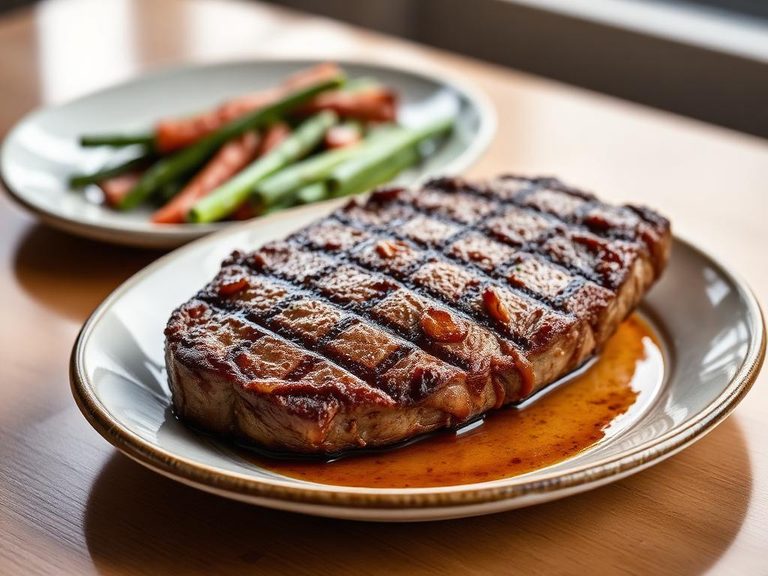
Photo: Wikipedia
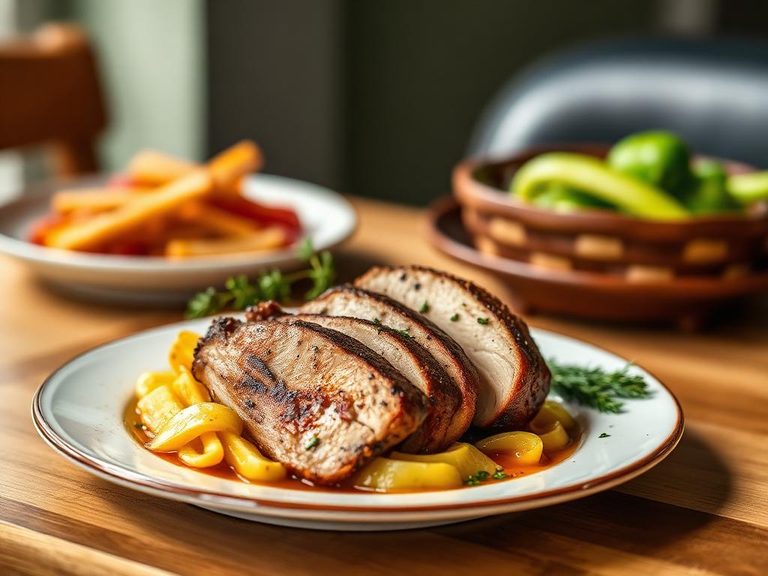
This cut is the lean, well-marbled heart of the beef shoulder, prized for its robust, beefy flavor and satisfyingly tender texture when grilled. It's a powerhouse of protein with minimal fat, offering a clean, meaty taste that's both hearty and refined. The grilling process enhances its natural savoriness, creating a slight char that complements the juicy interior.
Calorie split: 59% protein · 0% carbs · 41% fat
↓ Full nutrition💚 Why it's loved
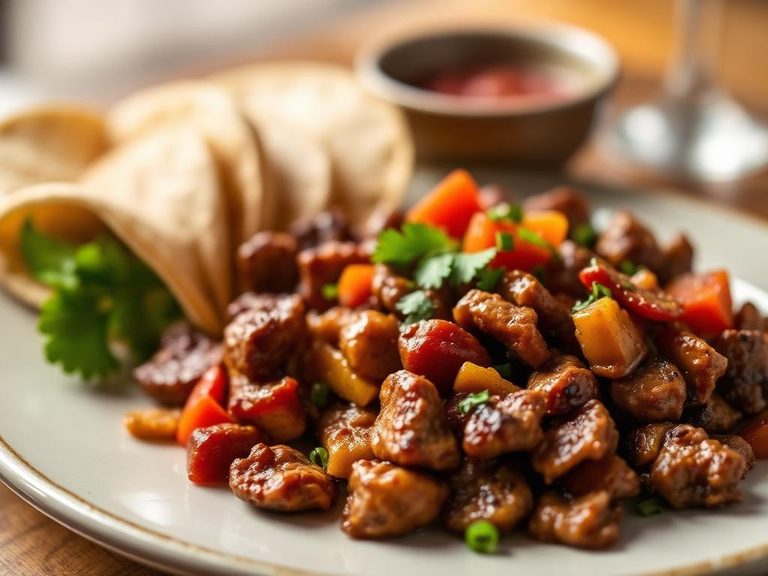
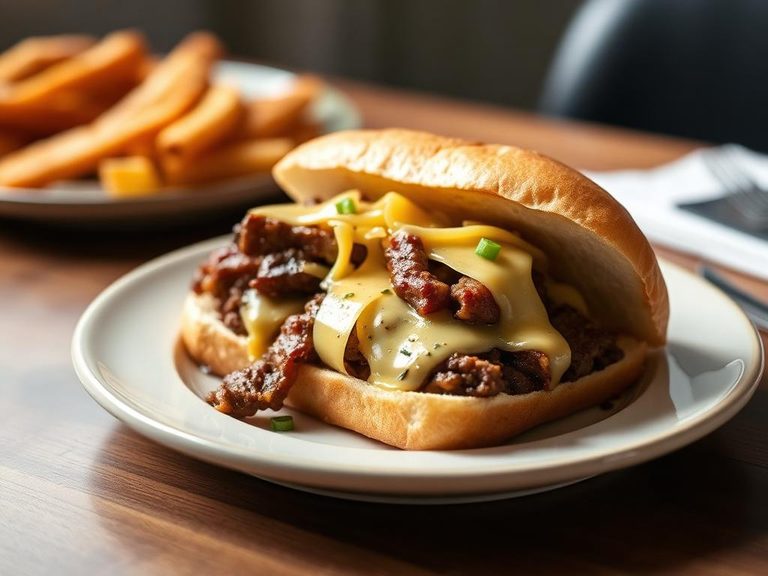
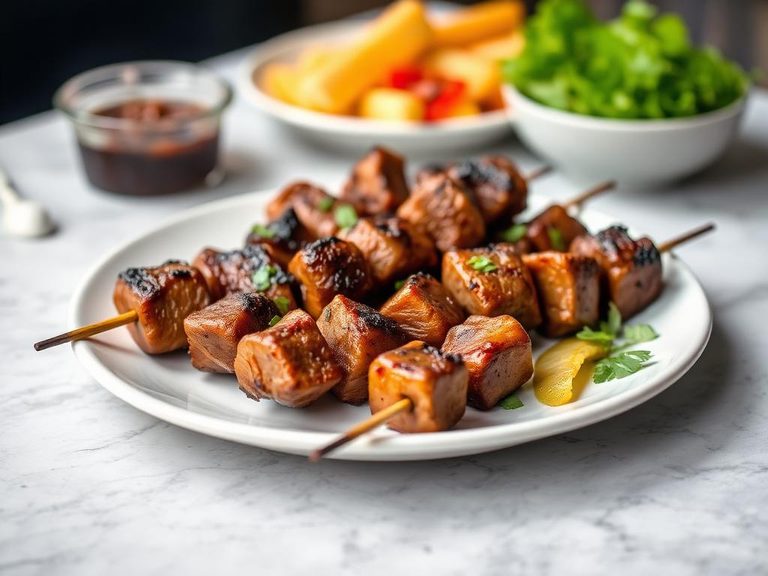
People love it for its deep, authentic beef flavor and the tender, juicy result from proper grilling, making it a steakhouse favorite. It's celebrated for its versatility, working equally well in simple grilled steaks or as the star in hearty sandwiches and salads.
⚠️ Watch-outs & how to enjoy it better
As a trimmed-to-zero-fat cut, it can become dry if overcooked, demanding careful temperature control. Those monitoring saturated fat intake should note it still contains animal fat; pairing with fiber-rich vegetables like roasted broccoli or a fresh salad can create a more balanced plate.
Key benefits
- Excellent source of complete, high-quality protein for muscle maintenance.
- Very low in carbohydrates and sugars, suitable for low-carb diets.
- Rich in essential nutrients like iron, zinc, and B vitamins (especially B12).
- Provides conjugated linoleic acid (CLA), a fatty acid studied for various health aspects.
- A versatile, flavorful cut that can be part of a balanced, nutrient-dense meal.
🍽️ Popular dishes
🌍 Where it's eaten
💡 Did you know?
The 'shoulder clod' is actually a group of several muscles, and the 'top and center' steaks are the most tender portions from within this complex, which is why they're often sold separately as premium grilling cuts.
Full nutrition (USDA data · scales with serving)
| Water | 65.0 g |
| Energy | 184 kcal |
| Energy | 772 kj |
| Protein | 26.1 g |
| Total lipid (fat) | 8.1 g |
| Ash | 1.0 g |
| Carbohydrate, by difference | 0.00 g |
| Fiber, total dietary | 0.00 g |
| Total Sugars | 0.00 g |
| Calcium, Ca | 5.0 mg |
| Iron, Fe | 2.6 mg |
| Magnesium, Mg | 24.0 mg |
| Phosphorus, P | 223 mg |
| Potassium, K | 342 mg |
| Sodium, Na | 59.0 mg |
| Zinc, Zn | 6.8 mg |
| Copper, Cu | 0.10 mg |
| Manganese, Mn | 0.01 mg |
| Selenium, Se | 40.1 ug |
| Vitamin C, total ascorbic acid | 0.00 mg |
| Thiamin | 0.07 mg |
| Riboflavin | 0.27 mg |
| Niacin | 5.2 mg |
| Pantothenic acid | 0.78 mg |
| Vitamin B-6 | 0.57 mg |
| Folate, total | 11.0 ug |
| Folic acid | 0.00 ug |
| Folate, food | 11.0 ug |
| Folate, DFE | 11.0 ug |
| Choline, total | 94.0 mg |
| Betaine | 15.5 mg |
| Vitamin B-12 | 4.6 ug |
| Vitamin B-12, added | 0.00 ug |
| Vitamin A, RAE | 0.00 ug |
| Retinol | 0.00 ug |
| Carotene, beta | 0.00 ug |
| Carotene, alpha | 0.00 ug |
| Cryptoxanthin, beta | 0.00 ug |
| Vitamin A, IU | 0.00 iu |
| Lycopene | 0.00 ug |
| Lutein + zeaxanthin | 0.00 ug |
| Vitamin E (alpha-tocopherol) | 0.18 mg |
| Vitamin E, added | 0.00 mg |
| Tocopherol, beta | 0.00 mg |
| Tocopherol, gamma | 0.02 mg |
| Tocopherol, delta | 0.01 mg |
| Tocotrienol, alpha | 0.00 mg |
| Tocotrienol, beta | 0.00 mg |
| Tocotrienol, gamma | 0.00 mg |
| Tocotrienol, delta | 0.00 mg |
| Vitamin K (phylloquinone) | 0.40 ug |
| Vitamin K (Dihydrophylloquinone) | 0.00 ug |
| Vitamin K (Menaquinone-4) | 1.8 ug |
| Alcohol, ethyl | 0.00 g |
| Caffeine | 0.00 mg |
| Theobromine | 0.00 mg |
Fat & fatty acid profile (per 100g)
| Fatty acids, total saturated | 3.0 g |
| SFA 4:0 | 0.00 g |
| SFA 6:0 | 0.00 g |
| SFA 8:0 | 0.00 g |
| SFA 10:0 | 0.00 g |
| SFA 12:0 | 0.00 g |
| SFA 14:0 | 0.22 g |
| SFA 15:0 | 0.03 g |
| SFA 16:0 | 1.9 g |
| SFA 17:0 | 0.07 g |
| SFA 18:0 | 0.85 g |
| SFA 20:0 | 0.00 g |
| SFA 22:0 | 0.00 g |
| Fatty acids, total monounsaturated | 3.4 g |
| MUFA 14:1 | 0.06 g |
| MUFA 15:1 | 0.00 g |
| MUFA 16:1 | 0.26 g |
| MUFA 17:1 | 0.00 g |
| MUFA 18:1 | 3.0 g |
| MUFA 18:1 c | 2.8 g |
| MUFA 20:1 | 0.01 g |
| Fatty acids, total polyunsaturated | 0.41 g |
| PUFA 18:2 | 0.34 g |
| PUFA 18:2 n-6 c,c | 0.28 g |
| PUFA 18:3 | 0.01 g |
| PUFA 18:3 n-3 c,c,c (ALA) | 0.01 g |
| PUFA 18:3 n-6 c,c,c | 0.00 g |
| PUFA 18:4 | 0.00 g |
| PUFA 20:2 n-6 c,c | 0.00 g |
| PUFA 20:3 | 0.00 g |
| PUFA 20:4 | 0.05 g |
| Fatty acids, total trans | 0.29 g |
| Fatty acids, total trans-monoenoic | 0.23 g |
| TFA 18:1 t | 0.23 g |
| TFA 18:2 t,t | 0.06 g |
| Fatty acids, total trans-polyenoic | 0.06 g |
| Cholesterol | 74.0 mg |
Amino acid profile (per 100g)
| Tryptophan | 0.17 g |
| Threonine | 1.0 g |
| Isoleucine | 1.2 g |
| Leucine | 2.1 g |
| Lysine | 2.2 g |
| Methionine | 0.68 g |
| Cystine | 0.34 g |
| Phenylalanine | 1.0 g |
| Tyrosine | 0.83 g |
| Valine | 1.3 g |
| Arginine | 1.7 g |
| Histidine | 0.83 g |
| Alanine | 1.6 g |
| Aspartic acid | 2.4 g |
| Glutamic acid | 3.9 g |
| Glycine | 1.6 g |
| Proline | 1.2 g |
| Serine | 1.0 g |
| Hydroxyproline | 0.27 g |
FAQ
What's the best way to cook it to keep it tender?
Grilling or broiling to medium-rare or medium (135-145°F internal temp) is ideal. Let it rest for 5-10 minutes after cooking to allow juices to redistribute. For tougher pieces from the clod, marinating or using a meat mallet can help.
Is this the same as 'chuck steak'?
It's a specific, premium part of the chuck (shoulder). 'Chuck steak' is a broader term that can include tougher, more connective tissue-rich parts of the shoulder, while the shoulder top and center steaks are the most tender selections from that area.
How does the nutrition compare to other steak cuts?
With 0g carbs and 8.11g fat per 100g, it's leaner than ribeye or New York strip but similar to sirloin. It's a high-protein, low-carb option, making it popular for keto and paleo-style diets.
Nutrient density (calculated · NRF9.3)
Nutrient Rich Foods index: beneficial nutrients (protein, fiber, vitamins, minerals) minus saturated fat, added sugar & sodium, per 100 kcal.
NRF9.3 index — Fulgoni, Keast & Drewnowski, 2009. Computed from USDA nutrients.
Weight-loss friendliness (composite index)
Energy density 1.84 kcal/g · 57% calories from protein · 0.0 g fiber · 0.0 g sugar per 100 g.
Composite of energy density (Rolls et al., 1999), protein & fiber satiety, minus sugar. A calculated heuristic — ranks satiety-per-calorie, not a clinical measure.
Dietary load (calculated from USDA values)
Potential renal acid load. Positive = acid-forming, negative = alkaline-forming.
Sodium-to-potassium ratio: 0.17 (lower is better — aim for ≤ 1)
Sodium:potassium per WHO potassium guidance. Computed from USDA nutrients.