

Sausage, smoked link sausage, pork
Whole food · Sausages and Luncheon Meats

Photo: Wikipedia
A dense, savory link of ground pork cured and smoked to a deep, caramelized exterior, delivering a juicy, coarse-textured bite with a rich, salty, and smoky flavor profile. It is a high-fat, high-protein staple with virtually no carbohydrates, making it a significant source of energy and flavor in many cuisines. The smoking process imparts a distinctive, robust aroma that defines its character.
Calorie split: 16% protein · 1% carbs · 83% fat
↓ Full nutrition💚 Why it's loved
People love it for its intensely savory, smoky flavor and satisfying, juicy texture that anchors a meal. Its versatility allows it to be grilled, fried, or simmered, making it a beloved component in breakfasts, stews, and street food across cultures.
⚠️ Watch-outs & how to enjoy it better
Its high saturated fat and sodium content can be a concern for heart health and blood pressure management. To mitigate this, pair it with high-fiber vegetables like sautéed greens or roasted Brussels sprouts, and practice strict portion control (e.g., one small link per meal).
Key benefits
- Excellent source of complete protein for muscle maintenance.
- Provides essential B vitamins, particularly B12 and niacin.
- Contains minerals like zinc and selenium.
- High in caloric density for quick energy.
- Adds profound depth of flavor to dishes with minimal quantity.
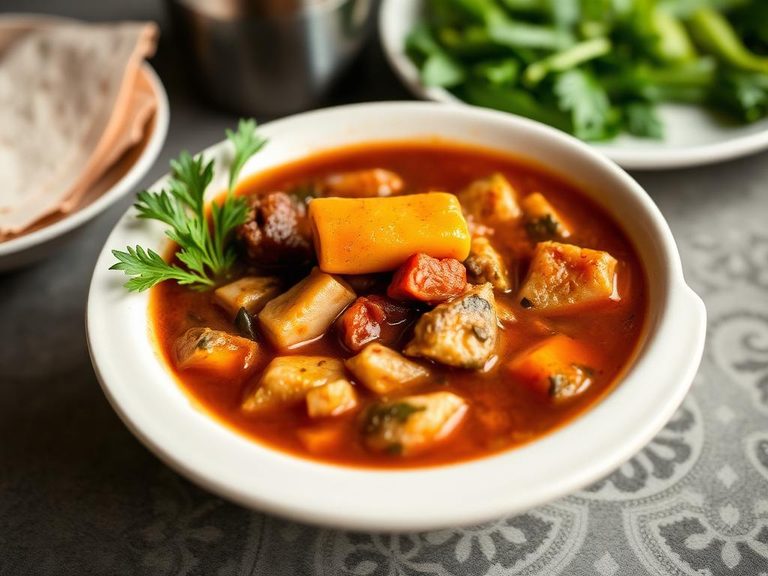
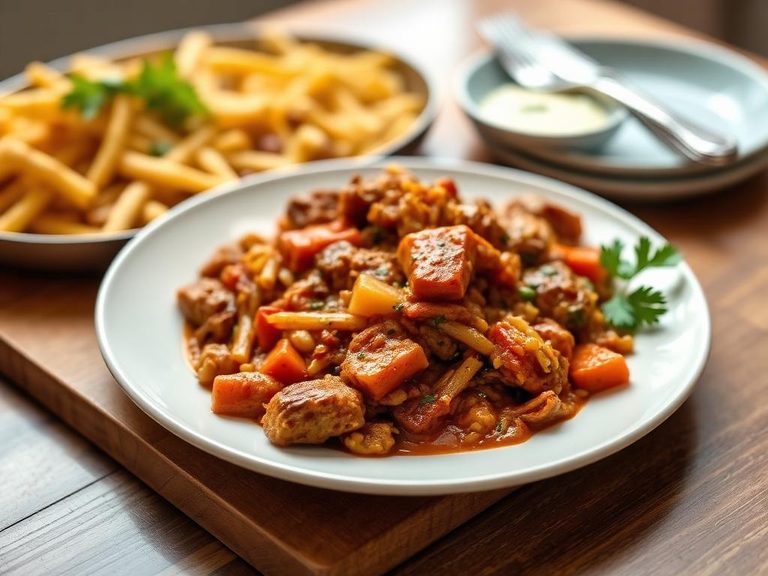
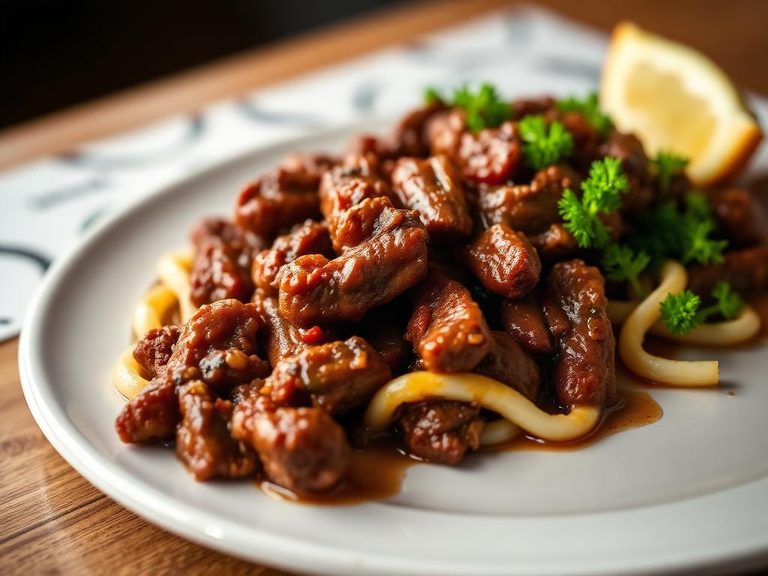
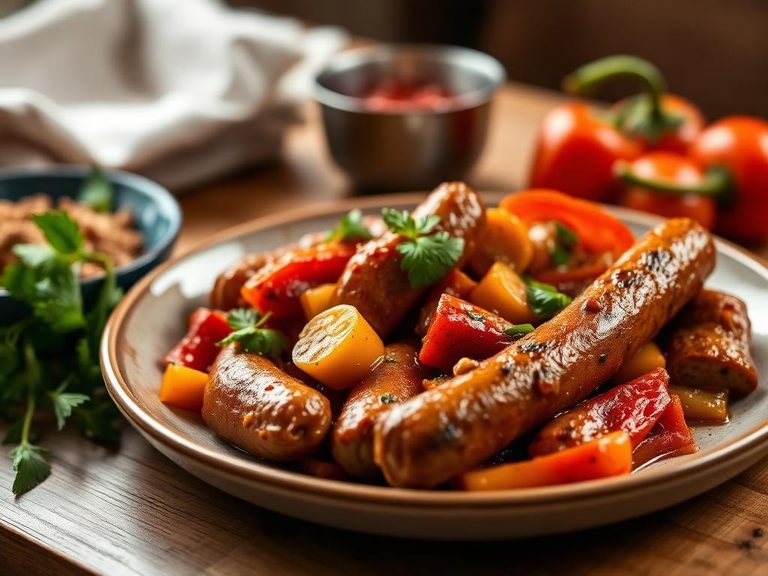
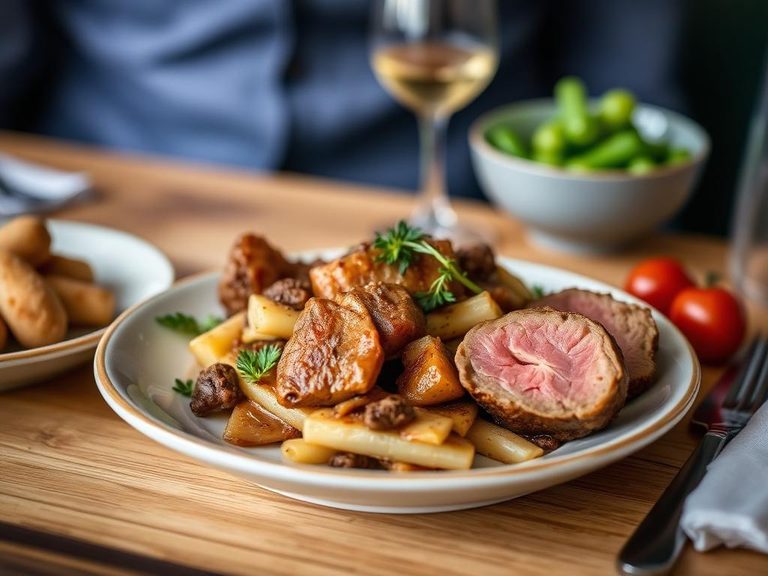
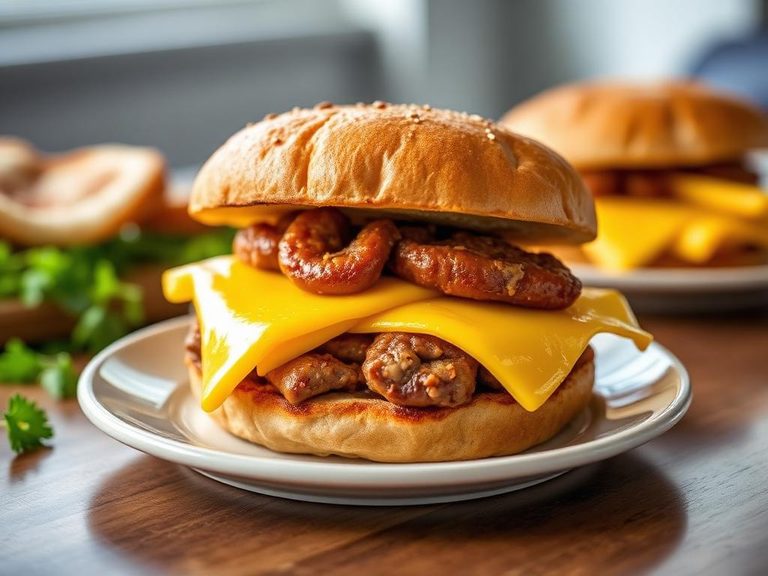
🍽️ Popular dishes
🌍 Where it's eaten
💡 Did you know?
The distinctive 'snap' of a well-made smoked sausage link comes from the natural casing, typically made from hog or sheep intestine, which is left on the sausage during the smoking process.
Full nutrition (USDA data · scales with serving)
| Water | 56.5 g |
| Energy | 309 kcal |
| Energy | 1295 kj |
| Protein | 12.0 g |
| Total lipid (fat) | 28.2 g |
| Ash | 3.1 g |
| Carbohydrate, by difference | 0.94 g |
| Fiber, total dietary | 0.00 g |
| Total Sugars | 0.94 g |
| Sucrose | 0.24 g |
| Glucose | 0.70 g |
| Fructose | 0.00 g |
| Lactose | 0.00 g |
| Maltose | 0.00 g |
| Galactose | 0.00 g |
| Calcium, Ca | 11.0 mg |
| Iron, Fe | 0.59 mg |
| Magnesium, Mg | 11.0 mg |
| Phosphorus, P | 157 mg |
| Potassium, K | 483 mg |
| Sodium, Na | 827 mg |
| Zinc, Zn | 1.3 mg |
| Copper, Cu | 0.18 mg |
| Manganese, Mn | 0.01 mg |
| Selenium, Se | 18.3 ug |
| Vitamin C, total ascorbic acid | 0.00 mg |
| Thiamin | 0.21 mg |
| Riboflavin | 0.18 mg |
| Niacin | 2.8 mg |
| Pantothenic acid | 0.54 mg |
| Vitamin B-6 | 0.18 mg |
| Folate, total | 1.0 ug |
| Folic acid | 0.00 ug |
| Folate, food | 1.0 ug |
| Folate, DFE | 1.0 ug |
| Choline, total | 61.1 mg |
| Betaine | 1.8 mg |
| Vitamin B-12 | 0.66 ug |
| Vitamin B-12, added | 0.00 ug |
| Vitamin A, RAE | 0.00 ug |
| Retinol | 0.00 ug |
| Carotene, beta | 0.00 ug |
| Carotene, alpha | 0.00 ug |
| Cryptoxanthin, beta | 0.00 ug |
| Vitamin A, IU | 0.00 iu |
| Lycopene | 0.00 ug |
| Lutein + zeaxanthin | 0.00 ug |
| Vitamin E (alpha-tocopherol) | 0.25 mg |
| Vitamin E, added | 0.00 mg |
| Vitamin D (D2 + D3), International Units | 43.0 iu |
| Vitamin D (D2 + D3) | 1.1 ug |
| Vitamin K (phylloquinone) | 0.00 ug |
| Vitamin K (Dihydrophylloquinone) | 0.00 ug |
| Vitamin K (Menaquinone-4) | 13.7 ug |
| Alcohol, ethyl | 0.00 g |
| Caffeine | 0.00 mg |
| Theobromine | 0.00 mg |
Fat & fatty acid profile (per 100g)
| Fatty acids, total saturated | 9.3 g |
| SFA 4:0 | 0.00 g |
| SFA 6:0 | 0.00 g |
| SFA 8:0 | 0.00 g |
| SFA 10:0 | 0.00 g |
| SFA 12:0 | 0.00 g |
| SFA 14:0 | 0.34 g |
| SFA 15:0 | 0.00 g |
| SFA 16:0 | 5.8 g |
| SFA 17:0 | 0.08 g |
| SFA 18:0 | 3.0 g |
| SFA 20:0 | 0.05 g |
| SFA 22:0 | 0.00 g |
| SFA 24:0 | 0.00 g |
| Fatty acids, total monounsaturated | 11.2 g |
| MUFA 14:1 | 0.00 g |
| MUFA 15:1 | 0.00 g |
| MUFA 16:1 | 0.56 g |
| MUFA 17:1 | 0.00 g |
| MUFA 18:1 | 10.5 g |
| MUFA 18:1 c | 10.3 g |
| MUFA 20:1 | 0.19 g |
| MUFA 22:1 | 0.00 g |
| MUFA 22:1 c | 0.00 g |
| Fatty acids, total polyunsaturated | 3.6 g |
| PUFA 18:2 | 3.3 g |
| PUFA 18:2 n-6 c,c | 3.2 g |
| PUFA 18:3 | 0.17 g |
| PUFA 18:3 n-3 c,c,c (ALA) | 0.17 g |
| PUFA 18:3 n-6 c,c,c | 0.00 g |
| PUFA 18:4 | 0.00 g |
| PUFA 20:2 n-6 c,c | 0.13 g |
| PUFA 20:3 | 0.00 g |
| PUFA 20:4 | 0.06 g |
| PUFA 20:5 n-3 (EPA) | 0.00 g |
| PUFA 22:5 n-3 (DPA) | 0.00 g |
| PUFA 22:6 n-3 (DHA) | 0.00 g |
| Fatty acids, total trans | 0.23 g |
| Fatty acids, total trans-monoenoic | 0.16 g |
| TFA 18:1 t | 0.16 g |
| TFA 18:2 t,t | 0.07 g |
| Fatty acids, total trans-polyenoic | 0.07 g |
| Cholesterol | 61.0 mg |
Amino acid profile (per 100g)
| Tryptophan | 0.22 g |
| Threonine | 0.93 g |
| Isoleucine | 0.95 g |
| Leucine | 1.7 g |
| Lysine | 1.7 g |
| Methionine | 0.60 g |
| Cystine | 0.25 g |
| Phenylalanine | 0.85 g |
| Tyrosine | 0.70 g |
| Valine | 1.1 g |
| Arginine | 1.5 g |
| Histidine | 0.70 g |
| Alanine | 1.4 g |
| Aspartic acid | 2.0 g |
| Glutamic acid | 3.3 g |
| Glycine | 1.6 g |
| Proline | 1.1 g |
| Serine | 0.92 g |
| Hydroxyproline | 0.21 g |
FAQ
What is the difference between smoked sausage and fresh sausage?
Smoked sausage is cured and smoked before being sold, giving it a longer shelf life and a distinct smoky flavor. Fresh sausage is raw and must be cooked before eating.
Can smoked sausage be eaten without cooking?
Most smoked sausage is pre-cooked during the smoking process and can be eaten cold, but it is typically reheated or cooked further to enhance flavor and texture.
How should smoked sausage be stored?
Unopened, it can be refrigerated for up to 2 weeks. Once opened, it should be consumed within 3-5 days or frozen for up to 2 months.
Is smoked sausage gluten-free?
It depends on the brand and recipe. Some contain fillers or binders with gluten, so always check the label for certified gluten-free options.
Nutrient density (calculated · NRF9.3)
Nutrient Rich Foods index: beneficial nutrients (protein, fiber, vitamins, minerals) minus saturated fat, added sugar & sodium, per 100 kcal.
NRF9.3 index — Fulgoni, Keast & Drewnowski, 2009. Computed from USDA nutrients.
Weight-loss friendliness (composite index)
Energy density 3.09 kcal/g · 16% calories from protein · 0.0 g fiber · 0.9 g sugar per 100 g.
Composite of energy density (Rolls et al., 1999), protein & fiber satiety, minus sugar. A calculated heuristic — ranks satiety-per-calorie, not a clinical measure.
Dietary load (calculated from USDA values)
Potential renal acid load. Positive = acid-forming, negative = alkaline-forming.
Sodium-to-potassium ratio: 1.71 (lower is better — aim for ≤ 1)
Sodium:potassium per WHO potassium guidance. Computed from USDA nutrients.