

Turkey, retail parts, breast, meat and skin, cooked, roasted
Whole food · Poultry Products

Photo: Wikipedia
Roasted turkey breast with skin is a lean, high-protein powerhouse with a tender, juicy texture and a subtly savory, roasted flavor. The skin adds a delightful crispness and a boost of healthy fats, making it a satisfying centerpiece for any meal. With nearly 30 grams of protein per 100 grams and minimal carbs, it’s a top-tier choice for muscle maintenance and satiety.
Calorie split: 71% protein · 0% carbs · 29% fat
↓ Full nutrition💚 Why it's loved
People love it for its mild, savory flavor that pairs perfectly with a wide range of seasonings and sides, from classic gravy to tangy cranberry sauce. It's a cultural staple for holidays like Thanksgiving and Christmas, symbolizing comfort and celebration.
⚠️ Watch-outs & how to enjoy it better
The skin can be high in saturated fat and sodium if heavily seasoned or basted, which may concern those managing heart health or blood pressure. To counteract, opt for herbs and spices instead of salt, and consider removing the skin or eating it in moderation. Pairing with fiber-rich vegetables can also help balance the meal.
Key benefits
- Excellent source of high-quality, complete protein
- Very low in carbohydrates and sugars
- Rich in B vitamins like niacin and B6 for energy metabolism
- Provides minerals like selenium and phosphorus
- Skin adds healthy monounsaturated fats and flavor
🍽️ Popular dishes
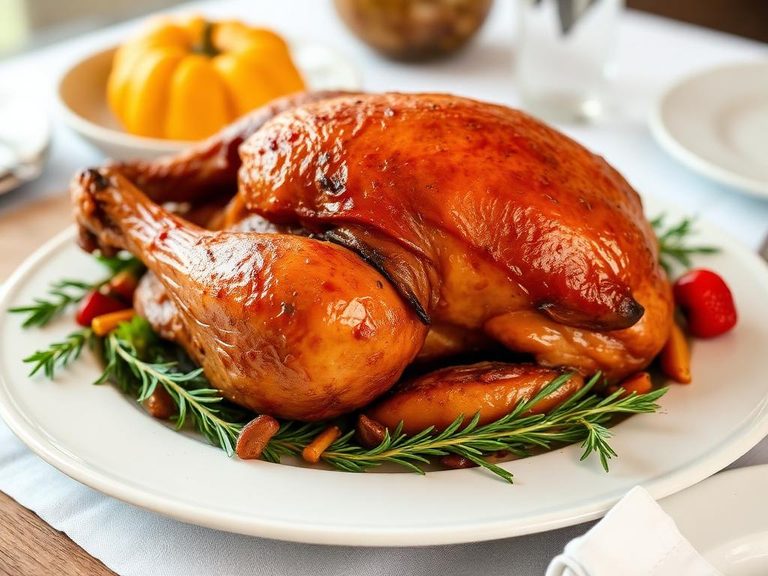


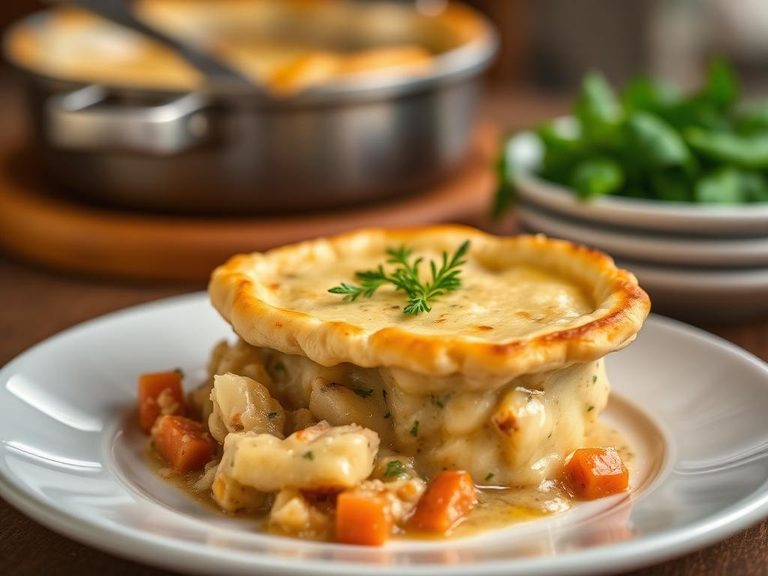
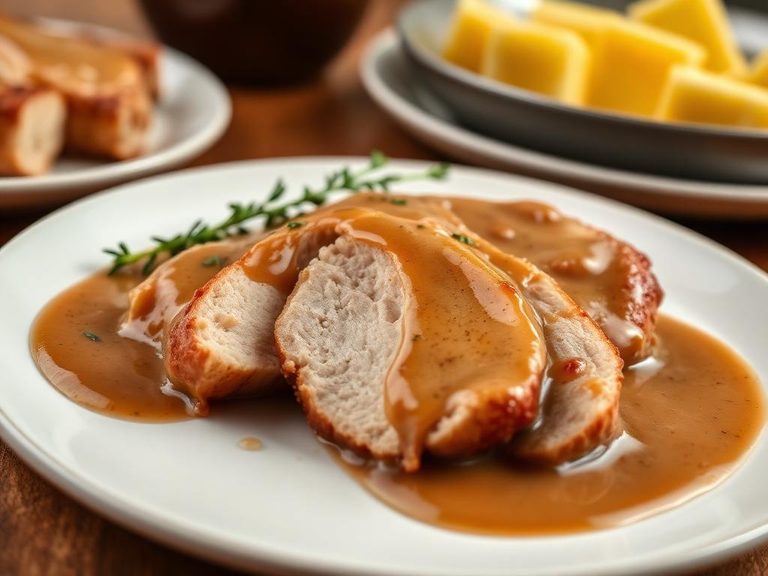
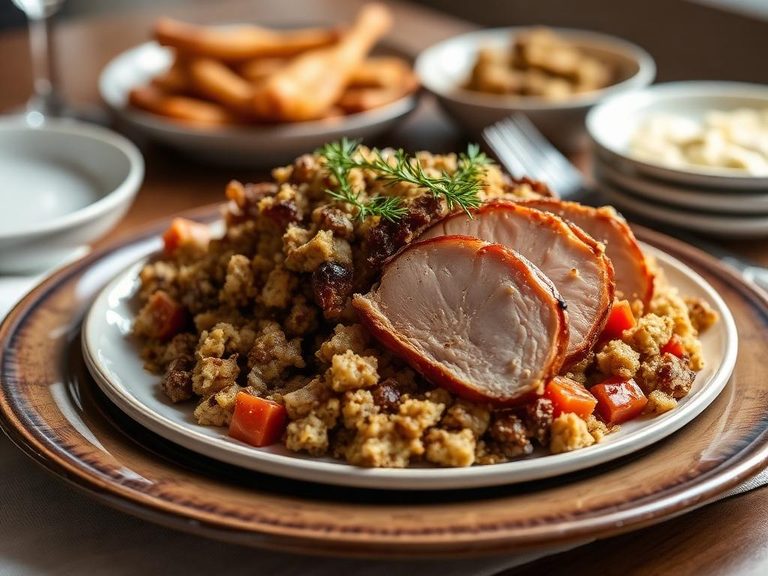
🌍 Where it's eaten
💡 Did you know?
Turkey breast meat is so lean that it can dry out quickly if overcooked; brining or basting is a common technique to lock in moisture and flavor.
Full nutrition (USDA data · scales with serving)
| Water | 64.6 g |
| Energy | 164 kcal |
| Energy | 687 kj |
| Protein | 29.0 g |
| Total lipid (fat) | 5.3 g |
| Ash | 1.3 g |
| Carbohydrate, by difference | 0.05 g |
| Fiber, total dietary | 0.00 g |
| Total Sugars | 0.00 g |
| Calcium, Ca | 15.0 mg |
| Iron, Fe | 1.0 mg |
| Magnesium, Mg | 29.0 mg |
| Phosphorus, P | 251 mg |
| Potassium, K | 292 mg |
| Sodium, Na | 114 mg |
| Zinc, Zn | 1.6 mg |
| Copper, Cu | 0.06 mg |
| Manganese, Mn | 0.01 mg |
| Selenium, Se | 29.8 ug |
| Vitamin C, total ascorbic acid | 0.00 mg |
| Thiamin | 0.04 mg |
| Riboflavin | 0.20 mg |
| Niacin | 11.6 mg |
| Pantothenic acid | 1.0 mg |
| Vitamin B-6 | 0.79 mg |
| Folate, total | 9.0 ug |
| Folic acid | 0.00 ug |
| Folate, food | 9.0 ug |
| Folate, DFE | 9.0 ug |
| Choline, total | 6.6 mg |
| Betaine | 0.30 mg |
| Vitamin B-12 | 1.8 ug |
| Vitamin B-12, added | 0.00 ug |
| Vitamin A, RAE | 10.0 ug |
| Retinol | 10.0 ug |
| Carotene, beta | 0.00 ug |
| Carotene, alpha | 0.00 ug |
| Cryptoxanthin, beta | 0.00 ug |
| Vitamin A, IU | 32.0 iu |
| Lycopene | 0.00 ug |
| Lutein + zeaxanthin | 6.0 ug |
| Vitamin E (alpha-tocopherol) | 0.07 mg |
| Vitamin E, added | 0.00 mg |
| Tocopherol, beta | 0.00 mg |
| Tocopherol, gamma | 0.01 mg |
| Tocopherol, delta | 0.00 mg |
| Tocotrienol, alpha | 0.00 mg |
| Tocotrienol, beta | 0.00 mg |
| Tocotrienol, gamma | 0.01 mg |
| Tocotrienol, delta | 0.00 mg |
| Vitamin D (D2 + D3), International Units | 14.0 iu |
| Vitamin D (D2 + D3) | 0.30 ug |
| Vitamin D3 (cholecalciferol) | 0.30 ug |
| Vitamin K (phylloquinone) | 0.00 ug |
| Alcohol, ethyl | 0.00 g |
| Caffeine | 0.00 mg |
| Theobromine | 0.00 mg |
Fat & fatty acid profile (per 100g)
| Fatty acids, total saturated | 1.7 g |
| SFA 4:0 | 0.00 g |
| SFA 6:0 | 0.00 g |
| SFA 8:0 | 0.00 g |
| SFA 10:0 | 0.00 g |
| SFA 12:0 | 0.01 g |
| SFA 14:0 | 0.06 g |
| SFA 15:0 | 0.01 g |
| SFA 16:0 | 1.1 g |
| SFA 17:0 | 0.02 g |
| SFA 18:0 | 0.45 g |
| SFA 20:0 | 0.01 g |
| SFA 22:0 | 0.01 g |
| SFA 24:0 | 0.00 g |
| Fatty acids, total monounsaturated | 2.0 g |
| MUFA 14:1 | 0.01 g |
| MUFA 15:1 | 0.00 g |
| MUFA 16:1 | 0.17 g |
| MUFA 17:1 | 0.01 g |
| MUFA 18:1 | 1.7 g |
| MUFA 20:1 | 0.03 g |
| MUFA 22:1 | 0.00 g |
| MUFA 24:1 c | 0.00 g |
| Fatty acids, total polyunsaturated | 1.7 g |
| PUFA 18:2 | 1.5 g |
| PUFA 18:3 | 0.10 g |
| PUFA 18:4 | 0.00 g |
| PUFA 20:2 n-6 c,c | 0.01 g |
| PUFA 20:3 | 0.01 g |
| PUFA 20:4 | 0.07 g |
| PUFA 20:5 n-3 (EPA) | 0.00 g |
| PUFA 22:4 | 0.02 g |
| PUFA 22:5 n-3 (DPA) | 0.01 g |
| PUFA 22:6 n-3 (DHA) | 0.01 g |
| Fatty acids, total trans | 0.08 g |
| Cholesterol | 79.0 mg |
Amino acid profile (per 100g)
| Tryptophan | 0.34 g |
| Threonine | 1.2 g |
| Isoleucine | 1.0 g |
| Leucine | 2.3 g |
| Lysine | 2.9 g |
| Methionine | 0.79 g |
| Cystine | 0.27 g |
| Phenylalanine | 1.0 g |
| Tyrosine | 0.96 g |
| Valine | 1.1 g |
| Arginine | 1.8 g |
| Histidine | 0.86 g |
| Alanine | 1.8 g |
| Aspartic acid | 2.7 g |
| Glutamic acid | 4.3 g |
| Glycine | 1.5 g |
| Proline | 1.5 g |
| Serine | 1.2 g |
FAQ
Is roasted turkey breast with skin healthy?
Yes, it's a lean protein source with minimal carbs, but the skin adds fat and calories, so moderation is key.
How should I store cooked turkey breast?
Refrigerate in an airtight container for up to 3-4 days, or freeze for up to 3 months.
Can I eat turkey breast with skin if I'm on a low-fat diet?
You can, but remove the skin to reduce fat content; the meat itself is very lean.
Nutrient density (calculated · NRF9.3)
Nutrient Rich Foods index: beneficial nutrients (protein, fiber, vitamins, minerals) minus saturated fat, added sugar & sodium, per 100 kcal.
NRF9.3 index — Fulgoni, Keast & Drewnowski, 2009. Computed from USDA nutrients.
Weight-loss friendliness (composite index)
Energy density 1.64 kcal/g · 71% calories from protein · 0.0 g fiber · 0.0 g sugar per 100 g.
Composite of energy density (Rolls et al., 1999), protein & fiber satiety, minus sugar. A calculated heuristic — ranks satiety-per-calorie, not a clinical measure.
Dietary load (calculated from USDA values)
Potential renal acid load. Positive = acid-forming, negative = alkaline-forming.
Sodium-to-potassium ratio: 0.39 (lower is better — aim for ≤ 1)
Sodium:potassium per WHO potassium guidance. Computed from USDA nutrients.