

Rice and vermicelli mix, chicken flavor, prepared with 80% margarine
Whole food · Meals, Entrees, and Side Dishes

Photo: Wikipedia
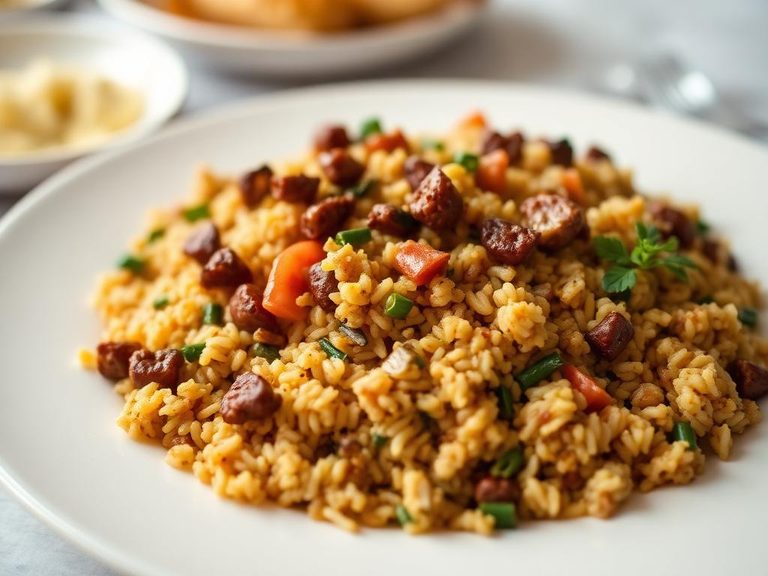
This is a classic, shelf-stable side dish of long-grain rice blended with thin rice vermicelli noodles, cooked with margarine to achieve a savory, chicken-flavored profile. The preparation yields a fluffy, slightly chewy texture where the delicate vermicelli strands offer a subtle contrast to the rice grains. Nutritionally, it's a low-calorie, high-carbohydrate base, providing quick energy with minimal fat and protein.
Calorie split: 8% protein · 69% carbs · 23% fat
↓ Full nutrition💚 Why it's loved
People love this mix for its comforting, savory depth and the satisfying textural play between the fluffy rice and the slightly springy vermicelli. It's a beloved staple in many cuisines, valued for its ability to be a simple, flavorful side or the foundation for a more elaborate one-pot meal.
⚠️ Watch-outs & how to enjoy it better
As a refined carbohydrate dish with a high glycemic index, it can cause rapid blood-sugar spikes, making it less ideal for those managing diabetes. The margarine base may also be high in sodium and contain trans fats. To counteract this, pair it with a lean protein (like grilled chicken or fish) and non-starchy vegetables to slow digestion, or opt for a smaller portion as part of a balanced plate.
Key benefits
- Excellent source of quick-release energy from complex carbohydrates.
- Low in fat and contains no cholesterol when prepared with margarine.
- Shelf-stable and requires minimal cooking, ideal for quick meal prep.
- Provides a neutral, savory base that pairs well with a wide variety of proteins and vegetables.
🍽️ Popular dishes
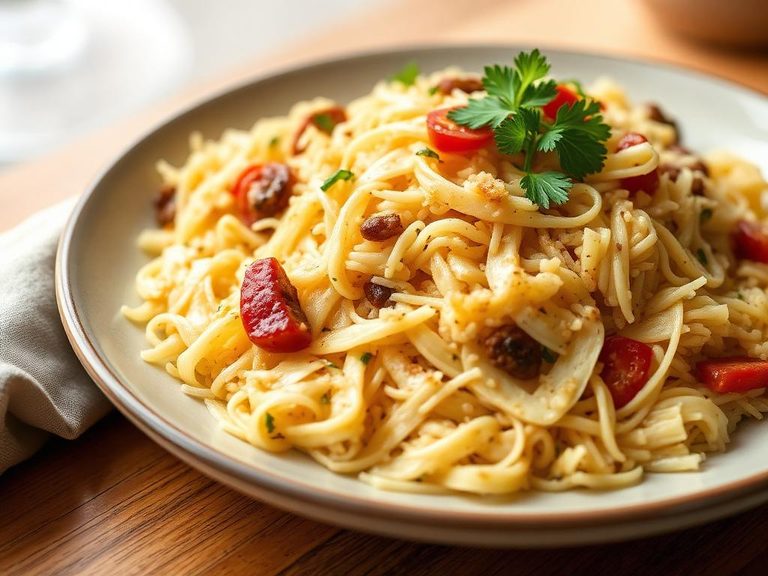
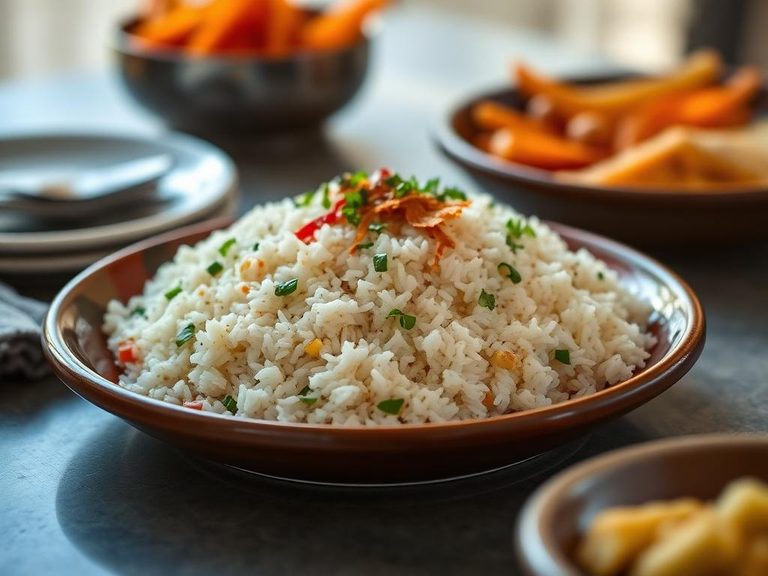
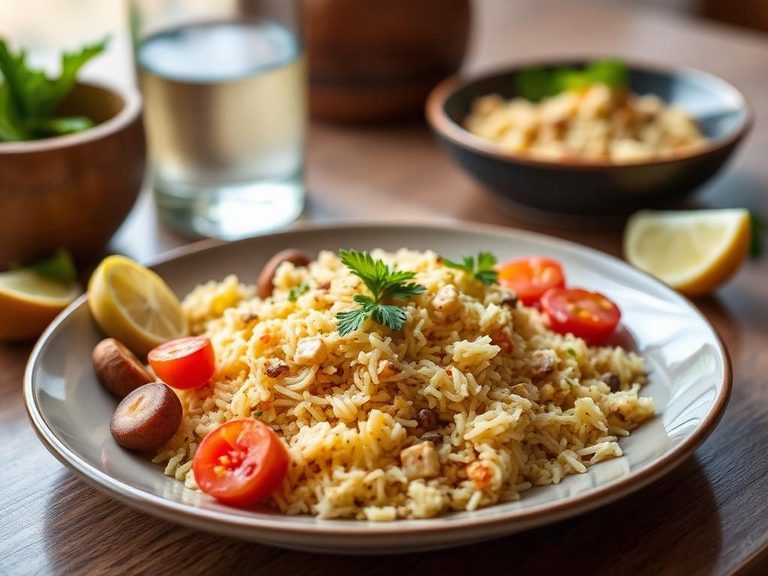
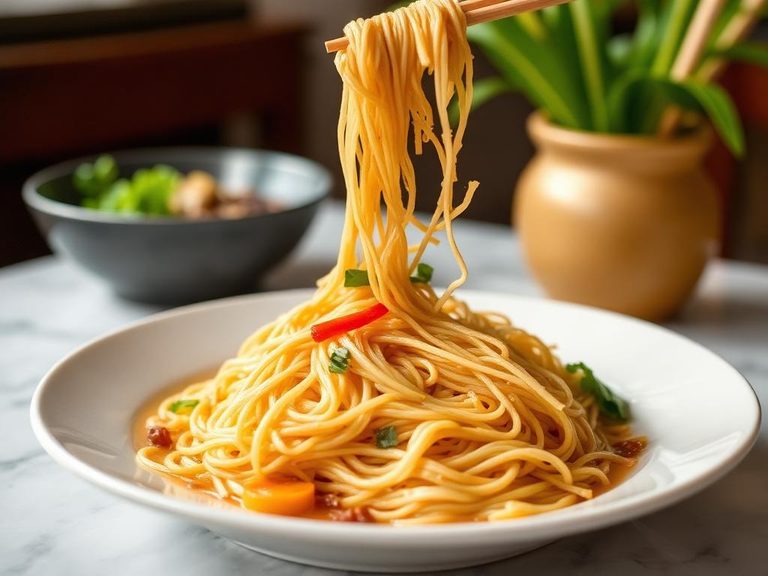
🌍 Where it's eaten
💡 Did you know?
The technique of toasting the dry vermicelli noodles in fat before adding the rice and liquid is a crucial step in many recipes; it deepens their color to a golden brown and imparts a distinctive nutty, toasted flavor that defines the dish.
Full nutrition (USDA data · scales with serving)
| Water | 69.3 g |
| Energy | 136 kcal |
| Energy | 568 kj |
| Protein | 2.6 g |
| Total lipid (fat) | 3.5 g |
| Ash | 1.0 g |
| Carbohydrate, by difference | 23.5 g |
| Fiber, total dietary | 0.70 g |
| Total Sugars | 0.64 g |
| Sucrose | 0.37 g |
| Glucose | 0.07 g |
| Fructose | 0.00 g |
| Lactose | 0.00 g |
| Maltose | 0.20 g |
| Galactose | 0.00 g |
| Starch | 20.4 g |
| Calcium, Ca | 7.0 mg |
| Iron, Fe | 0.95 mg |
| Magnesium, Mg | 10.0 mg |
| Phosphorus, P | 36.0 mg |
| Potassium, K | 58.0 mg |
| Sodium, Na | 377 mg |
| Zinc, Zn | 0.46 mg |
| Copper, Cu | 0.06 mg |
| Manganese, Mn | 0.32 mg |
| Selenium, Se | 9.5 ug |
| Thiamin | 0.15 mg |
| Riboflavin | 0.03 mg |
| Niacin | 1.4 mg |
| Pantothenic acid | 0.16 mg |
| Vitamin B-6 | 0.05 mg |
| Choline, total | 3.8 mg |
| Betaine | 7.9 mg |
| Vitamin A, RAE | 42.0 ug |
| Retinol | 42.0 ug |
| Vitamin A, IU | 139 iu |
| Vitamin E (alpha-tocopherol) | 0.27 mg |
| Tocopherol, beta | 0.06 mg |
| Tocopherol, gamma | 2.4 mg |
| Tocopherol, delta | 1.1 mg |
| Tocotrienol, alpha | 0.02 mg |
| Tocotrienol, beta | 0.06 mg |
| Tocotrienol, gamma | 0.07 mg |
| Tocotrienol, delta | 0.00 mg |
Fat & fatty acid profile (per 100g)
| Fatty acids, total saturated | 0.75 g |
| SFA 4:0 | 0.06 g |
| SFA 6:0 | 0.00 g |
| SFA 8:0 | 0.00 g |
| SFA 10:0 | 0.00 g |
| SFA 12:0 | 0.00 g |
| SFA 14:0 | 0.01 g |
| SFA 15:0 | 0.00 g |
| SFA 16:0 | 0.42 g |
| SFA 17:0 | 0.00 g |
| SFA 18:0 | 0.23 g |
| SFA 20:0 | 0.01 g |
| SFA 22:0 | 0.01 g |
| SFA 24:0 | 0.01 g |
| Fatty acids, total monounsaturated | 1.4 g |
| MUFA 14:1 | 0.00 g |
| MUFA 15:1 | 0.00 g |
| MUFA 16:1 | 0.00 g |
| MUFA 16:1 c | 0.00 g |
| MUFA 17:1 | 0.00 g |
| MUFA 18:1 | 1.4 g |
| MUFA 18:1 c | 0.93 g |
| MUFA 20:1 | 0.01 g |
| MUFA 22:1 | 0.00 g |
| MUFA 22:1 c | 0.00 g |
| MUFA 24:1 c | 0.00 g |
| Fatty acids, total polyunsaturated | 1.2 g |
| PUFA 18:2 | 1.0 g |
| PUFA 18:2 n-6 c,c | 1.0 g |
| PUFA 18:2 CLAs | 0.00 g |
| PUFA 18:3 | 0.13 g |
| PUFA 18:3 n-3 c,c,c (ALA) | 0.13 g |
| PUFA 18:3 n-6 c,c,c | 0.00 g |
| PUFA 18:4 | 0.00 g |
| PUFA 20:2 n-6 c,c | 0.00 g |
| PUFA 20:3 | 0.00 g |
| PUFA 20:3 n-3 | 0.00 g |
| PUFA 20:3 n-6 | 0.00 g |
| PUFA 20:4 | 0.00 g |
| PUFA 20:5 n-3 (EPA) | 0.00 g |
| PUFA 22:4 | 0.00 g |
| PUFA 22:5 n-3 (DPA) | 0.00 g |
| PUFA 22:6 n-3 (DHA) | 0.00 g |
| Fatty acids, total trans | 0.48 g |
| Fatty acids, total trans-monoenoic | 0.46 g |
| TFA 16:1 t | 0.00 g |
| TFA 18:1 t | 0.46 g |
| TFA 22:1 t | 0.00 g |
| TFA 18:2 t not further defined | 0.02 g |
| Fatty acids, total trans-polyenoic | 0.02 g |
Amino acid profile (per 100g)
Estimated from Rice and vermicelli mix, rice pilaf flavor, unprepared — USDA does not publish this profile for Rice and vermicelli mix.
| Tryptophan | 0.09 g |
| Threonine | 0.22 g |
| Isoleucine | 0.28 g |
| Leucine | 0.52 g |
| Lysine | 0.19 g |
| Methionine | 0.14 g |
| Cystine | 0.13 g |
| Phenylalanine | 0.32 g |
| Tyrosine | 0.18 g |
| Valine | 0.37 g |
| Arginine | 0.57 g |
| Histidine | 0.15 g |
| Alanine | 0.35 g |
| Aspartic acid | 0.64 g |
| Glutamic acid | 1.2 g |
| Glycine | 0.30 g |
| Proline | 0.39 g |
| Serine | 0.30 g |
| Hydroxyproline | 0.00 g |
FAQ
What is the difference between this and plain rice?
The key difference is the addition of toasted rice vermicelli noodles, which add a unique, slightly chewy texture and a nutty flavor from being browned in fat before cooking. This also makes the overall dish more visually interesting.
Can I make this without margarine?
Absolutely. You can use butter, ghee, olive oil, or any neutral cooking oil. The choice of fat will subtly alter the final flavor, with butter or ghee adding richness and oil providing a cleaner taste.
Why is my vermicelli mushy?
Vermicelli cooks much faster than rice. To prevent mushiness, ensure you toast it properly first, use the correct rice-to-vermicelli ratio (often 2:1 or 3:1), and consider adding the vermicelli to the pot a minute or two after the rice if you're concerned about overcooking.
Nutrient density (calculated · NRF9.3)
Nutrient Rich Foods index: beneficial nutrients (protein, fiber, vitamins, minerals) minus saturated fat, added sugar & sodium, per 100 kcal.
NRF9.3 index — Fulgoni, Keast & Drewnowski, 2009. Computed from USDA nutrients.
Weight-loss friendliness (composite index)
Energy density 1.36 kcal/g · 8% calories from protein · 0.7 g fiber · 0.6 g sugar per 100 g.
Composite of energy density (Rolls et al., 1999), protein & fiber satiety, minus sugar. A calculated heuristic — ranks satiety-per-calorie, not a clinical measure.
Dietary load (calculated from USDA values)
Potential renal acid load. Positive = acid-forming, negative = alkaline-forming.
Sodium-to-potassium ratio: 6.50 (lower is better — aim for ≤ 1)
Sodium:potassium per WHO potassium guidance. Computed from USDA nutrients.