

Rice and vermicelli mix, rice pilaf flavor, unprepared
Whole food · Meals, Entrees, and Side Dishes

Photo: Wikipedia
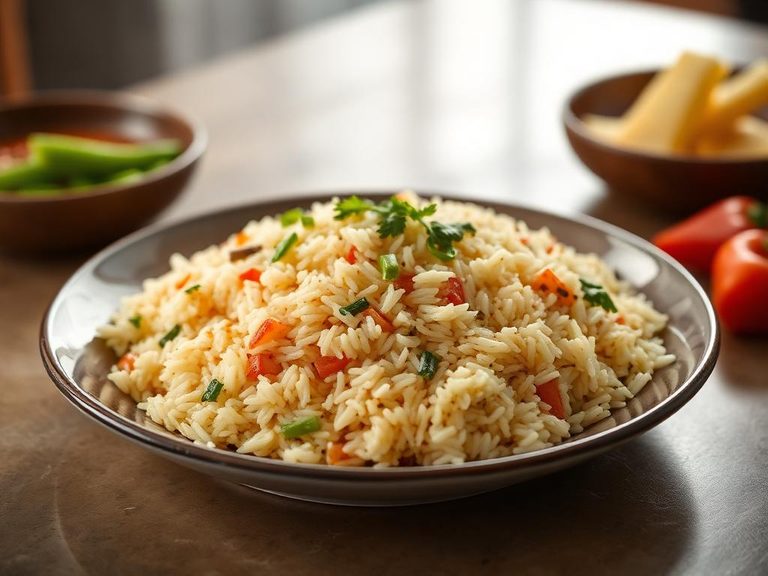
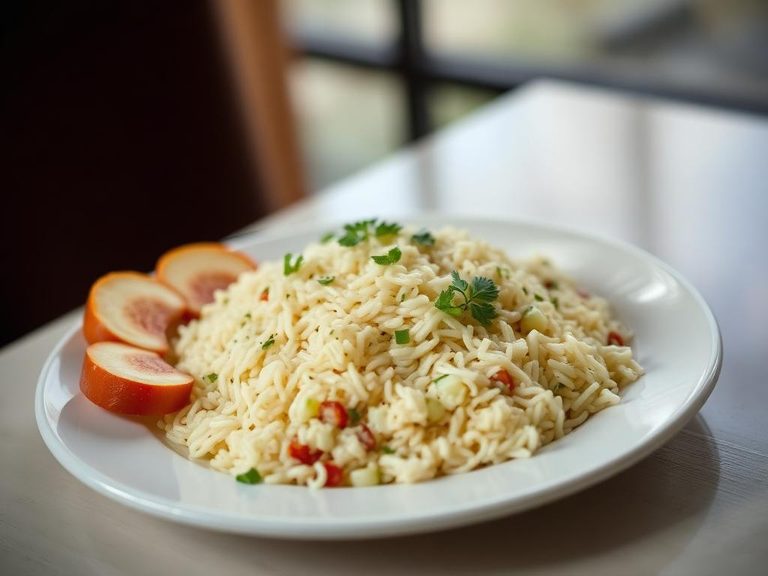
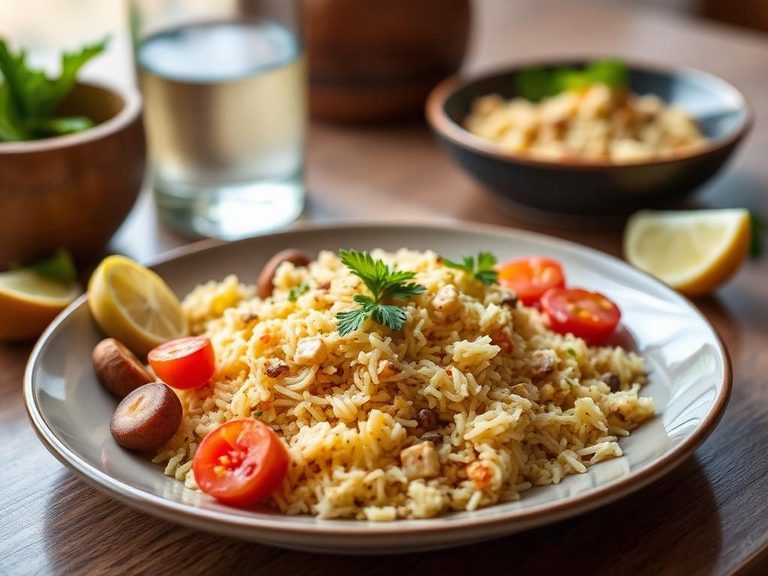
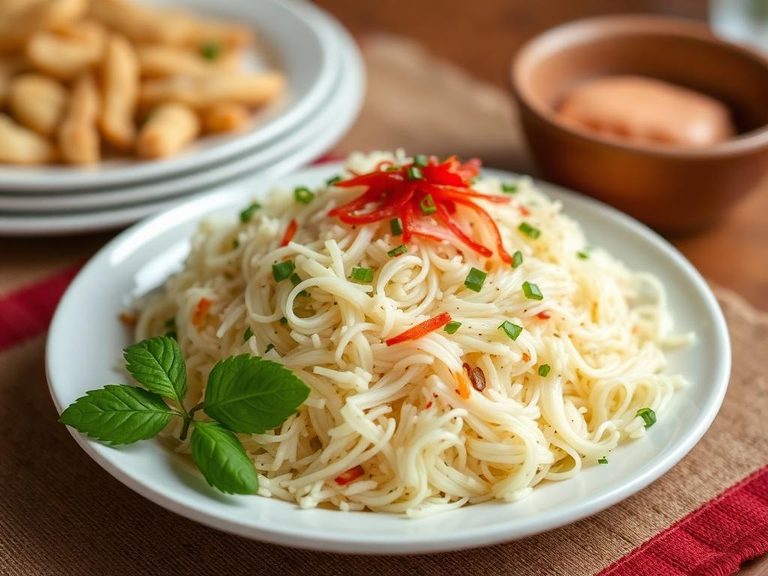
A classic pantry staple, this mix combines long-grain white rice with golden, toasted vermicelli pasta, creating a fragrant, nutty base for countless meals. When cooked, it yields a light, fluffy texture with a subtle buttery aroma and a satisfying, slightly chewy bite from the pasta strands. Nutritionally, it's a high-carbohydrate energy source with minimal fat, making it a quick, calorie-dense foundation for any meal.
Calorie split: 12% protein · 85% carbs · 3% fat
↓ Full nutrition💚 Why it's loved
People love it for its comforting, nutty flavor and the delightful textural contrast between the fluffy rice and the slightly firmer vermicelli. It's a beloved, versatile canvas that pairs beautifully with everything from stews and curries to grilled meats and vegetables, making it a staple in home kitchens worldwide.
⚠️ Watch-outs & how to enjoy it better
As a refined grain product, it can cause rapid blood sugar spikes, which is a concern for individuals managing diabetes or insulin resistance. To counteract this, pair it with a source of protein (like beans, lentils, or chicken) and healthy fat (like olive oil or avocado) to slow digestion and stabilize blood sugar levels. Portion control is also key; aim for a ½ cup cooked serving as a side.
Key benefits
- Provides quick, sustained energy from complex carbohydrates
- Low in fat and sugar, making it a lean base for meals
- Highly versatile, absorbing flavors from broths, spices, and seasonings
- Fast and convenient to prepare, often requiring minimal cooking time
- A culturally significant side dish in many global cuisines
🍽️ Popular dishes
🌍 Where it's eaten
💡 Did you know?
The vermicelli in the mix is traditionally toasted in butter or oil before the rice is added, which gives the final dish its characteristic golden color and deep, nutty aroma.
Full nutrition (USDA data · scales with serving)
| Water | 8.0 g |
| Energy | 359 kcal |
| Energy | 1503 kj |
| Protein | 10.4 g |
| Total lipid (fat) | 1.4 g |
| Ash | 3.9 g |
| Carbohydrate, by difference | 76.3 g |
| Fiber, total dietary | 1.2 g |
| Total Sugars | 1.5 g |
| Sucrose | 0.30 g |
| Glucose | 0.10 g |
| Fructose | 0.00 g |
| Lactose | 0.00 g |
| Maltose | 1.1 g |
| Galactose | 0.00 g |
| Starch | 71.2 g |
| Calcium, Ca | 83.0 mg |
| Iron, Fe | 2.4 mg |
| Magnesium, Mg | 32.0 mg |
| Phosphorus, P | 154 mg |
| Potassium, K | 188 mg |
| Sodium, Na | 1303 mg |
| Zinc, Zn | 1.0 mg |
| Copper, Cu | 0.17 mg |
| Manganese, Mn | 0.88 mg |
| Selenium, Se | 32.4 ug |
| Vitamin C, total ascorbic acid | 4.1 mg |
| Thiamin | 0.60 mg |
| Riboflavin | 0.09 mg |
| Niacin | 6.1 mg |
| Pantothenic acid | 0.71 mg |
| Vitamin B-6 | 0.40 mg |
| Folate, total | 212 ug |
| Folic acid | 192 ug |
| Folate, food | 20.0 ug |
| Folate, DFE | 347 ug |
| Choline, total | 17.5 mg |
| Vitamin B-12 | 0.02 ug |
| Vitamin B-12, added | 0.00 ug |
| Vitamin A, RAE | 4.0 ug |
| Retinol | 4.0 ug |
| Carotene, beta | 1.0 ug |
| Carotene, alpha | 0.00 ug |
| Cryptoxanthin, beta | 0.00 ug |
| Vitamin A, IU | 14.0 iu |
| Lycopene | 0.00 ug |
| Lutein + zeaxanthin | 28.0 ug |
| Vitamin E (alpha-tocopherol) | 0.04 mg |
| Vitamin E, added | 0.00 mg |
| Tocopherol, beta | 0.04 mg |
| Tocopherol, gamma | 0.05 mg |
| Tocopherol, delta | 0.00 mg |
| Tocotrienol, alpha | 0.03 mg |
| Tocotrienol, beta | 0.26 mg |
| Tocotrienol, gamma | 0.10 mg |
| Tocotrienol, delta | 0.00 mg |
| Vitamin D (D2 + D3), International Units | 0.00 iu |
| Vitamin D (D2 + D3) | 0.00 ug |
| Vitamin K (phylloquinone) | 0.50 ug |
| Alcohol, ethyl | 0.00 g |
| Caffeine | 0.00 mg |
| Theobromine | 0.00 mg |
Fat & fatty acid profile (per 100g)
| Fatty acids, total saturated | 0.31 g |
| SFA 4:0 | 0.00 g |
| SFA 6:0 | 0.00 g |
| SFA 8:0 | 0.00 g |
| SFA 10:0 | 0.00 g |
| SFA 12:0 | 0.00 g |
| SFA 13:0 | 0.00 g |
| SFA 14:0 | 0.00 g |
| SFA 15:0 | 0.00 g |
| SFA 16:0 | 0.27 g |
| SFA 17:0 | 0.00 g |
| SFA 18:0 | 0.04 g |
| SFA 20:0 | 0.00 g |
| SFA 22:0 | 0.00 g |
| SFA 24:0 | 0.00 g |
| Fatty acids, total monounsaturated | 0.37 g |
| MUFA 14:1 | 0.00 g |
| MUFA 15:1 | 0.00 g |
| MUFA 16:1 | 0.03 g |
| MUFA 17:1 | 0.00 g |
| MUFA 18:1 | 0.34 g |
| MUFA 20:1 | 0.01 g |
| MUFA 22:1 | 0.00 g |
| MUFA 24:1 c | 0.00 g |
| Fatty acids, total polyunsaturated | 0.38 g |
| PUFA 18:2 | 0.36 g |
| PUFA 18:3 | 0.01 g |
| PUFA 18:4 | 0.00 g |
| PUFA 20:2 n-6 c,c | 0.00 g |
| PUFA 20:3 | 0.00 g |
| PUFA 20:4 | 0.00 g |
| PUFA 20:5 n-3 (EPA) | 0.00 g |
| PUFA 22:5 n-3 (DPA) | 0.00 g |
| PUFA 22:6 n-3 (DHA) | 0.00 g |
| Fatty acids, total trans | 0.00 g |
| Cholesterol | 1.0 mg |
Amino acid profile (per 100g)
| Tryptophan | 0.09 g |
| Threonine | 0.22 g |
| Isoleucine | 0.28 g |
| Leucine | 0.52 g |
| Lysine | 0.19 g |
| Methionine | 0.14 g |
| Cystine | 0.13 g |
| Phenylalanine | 0.32 g |
| Tyrosine | 0.18 g |
| Valine | 0.37 g |
| Arginine | 0.57 g |
| Histidine | 0.15 g |
| Alanine | 0.35 g |
| Aspartic acid | 0.64 g |
| Glutamic acid | 1.2 g |
| Glycine | 0.30 g |
| Proline | 0.39 g |
| Serine | 0.30 g |
| Hydroxyproline | 0.00 g |
FAQ
What is the difference between rice pilaf and plain steamed rice?
Rice pilaf is typically cooked in broth or stock with aromatics like onions and spices, and often includes toasted vermicelli or other grains, giving it a richer flavor and fluffier texture compared to plain steamed rice.
Can I use this mix for fried rice?
Yes, it works well for fried rice, but it's best to cook it first, let it cool completely (preferably overnight in the fridge), and then stir-fry it to prevent it from becoming mushy.
Is this mix gluten-free?
No, the vermicelli pasta is made from wheat flour, so this mix contains gluten. For a gluten-free alternative, use plain rice or a gluten-free pasta blend.
Nutrient density (calculated · NRF9.3)
Nutrient Rich Foods index: beneficial nutrients (protein, fiber, vitamins, minerals) minus saturated fat, added sugar & sodium, per 100 kcal.
NRF9.3 index — Fulgoni, Keast & Drewnowski, 2009. Computed from USDA nutrients.
Weight-loss friendliness (composite index)
Energy density 3.59 kcal/g · 12% calories from protein · 1.2 g fiber · 1.5 g sugar per 100 g.
Composite of energy density (Rolls et al., 1999), protein & fiber satiety, minus sugar. A calculated heuristic — ranks satiety-per-calorie, not a clinical measure.
Dietary load (calculated from USDA values)
Potential renal acid load. Positive = acid-forming, negative = alkaline-forming.
Sodium-to-potassium ratio: 6.93 (lower is better — aim for ≤ 1)
Sodium:potassium per WHO potassium guidance. Computed from USDA nutrients.