

Pork, fresh, loin, country-style ribs, separable lean and fat, bone-in, cooked, broiled
Whole food · Pork Products

Photo: Wikipedia
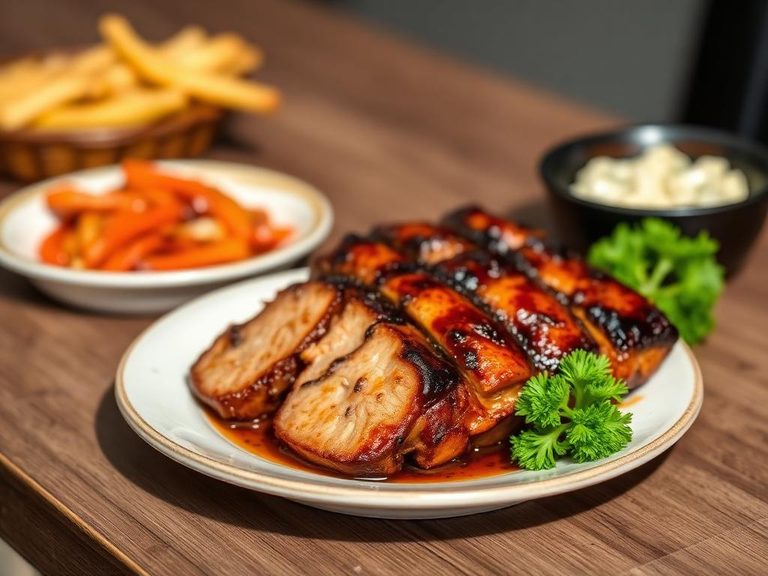
Country-style pork ribs are actually cut from the blade end of the loin, offering a meatier, more steak-like texture than traditional spare ribs. When broiled, the exterior fat renders into a savory, crispy crust while the interior remains succulent and rich in flavor. With 25.58g of protein and zero carbohydrates per 100g, they are a dense source of energy and satiety.
Calorie split: 39% protein · 0% carbs · 61% fat
↓ Full nutrition💚 Why it's loved
People love these ribs for their deep, savory flavor and tender texture, which intensifies when broiled or grilled. They are a staple in American barbecue culture, often served as a hearty, comforting meal that brings people together.
⚠️ Watch-outs & how to enjoy it better
The high fat content (17.56g per 100g) can be a concern for those monitoring calorie or fat intake. To counteract this, pair with fiber-rich vegetables like roasted broccoli or a fresh salad to balance the meal and aid digestion.
Key benefits
- High protein content supports muscle maintenance
- Zero carbohydrates make it suitable for keto diets
- Rich source of B vitamins and minerals like zinc
- Provides essential fatty acids from the fat content
- Versatile cut for various cooking methods
🍽️ Popular dishes
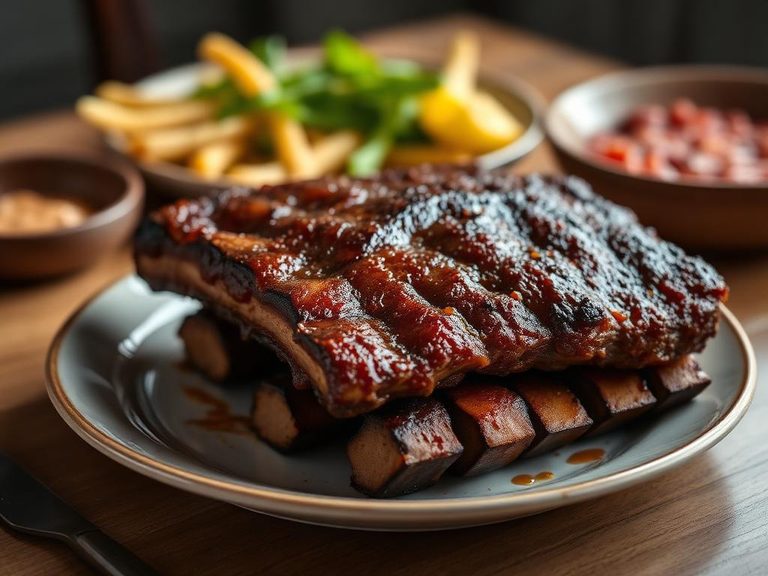
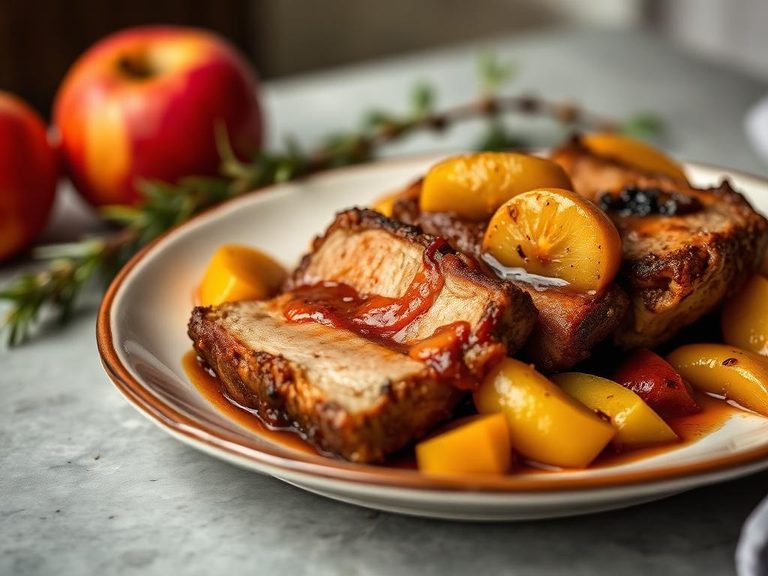
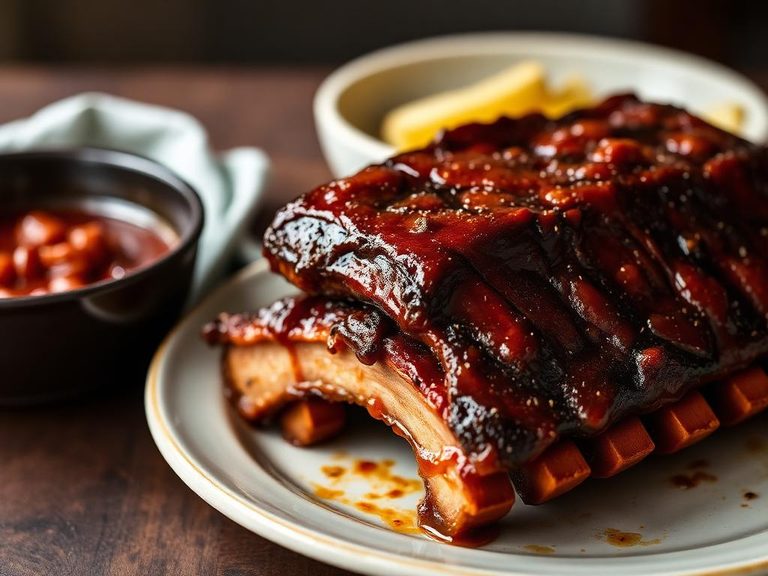
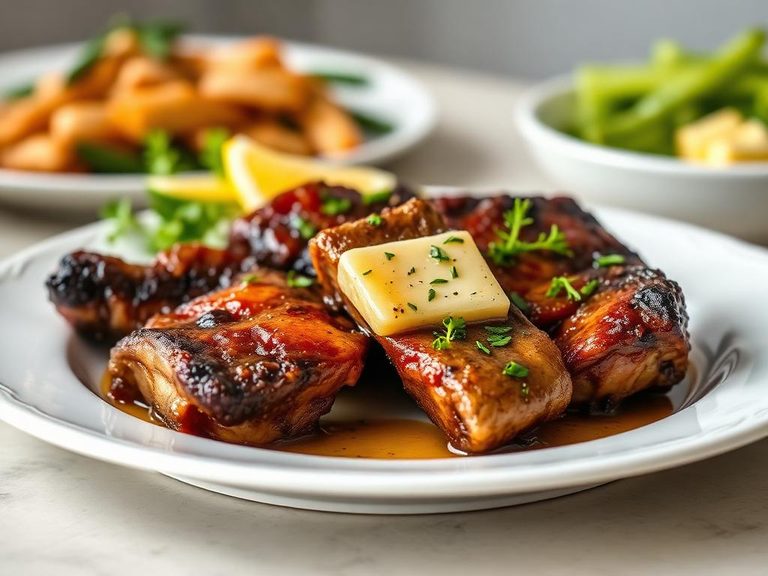
🌍 Where it's eaten
💡 Did you know?
Despite the name, country-style ribs are not actually ribs at all—they are cut from the pork shoulder (blade end of the loin) and contain no rib bones, making them meatier and easier to eat.
Full nutrition (USDA data · scales with serving)
| Water | 56.3 g |
| Energy | 260 kcal |
| Energy | 1089 kj |
| Protein | 25.6 g |
| Total lipid (fat) | 17.6 g |
| Ash | 1.0 g |
| Carbohydrate, by difference | 0.00 g |
| Fiber, total dietary | 0.00 g |
| Total Sugars | 0.00 g |
| Calcium, Ca | 57.0 mg |
| Iron, Fe | 0.96 mg |
| Magnesium, Mg | 22.0 mg |
| Phosphorus, P | 265 mg |
| Potassium, K | 344 mg |
| Sodium, Na | 81.0 mg |
| Zinc, Zn | 3.4 mg |
| Copper, Cu | 0.11 mg |
| Manganese, Mn | 0.01 mg |
| Selenium, Se | 39.5 ug |
| Vitamin C, total ascorbic acid | 0.00 mg |
| Thiamin | 0.53 mg |
| Riboflavin | 0.35 mg |
| Niacin | 8.5 mg |
| Pantothenic acid | 1.2 mg |
| Vitamin B-6 | 0.53 mg |
| Folate, total | 0.00 ug |
| Folic acid | 0.00 ug |
| Folate, food | 0.00 ug |
| Folate, DFE | 0.00 ug |
| Choline, total | 74.0 mg |
| Betaine | 2.8 mg |
| Vitamin B-12 | 0.71 ug |
| Vitamin B-12, added | 0.00 ug |
| Vitamin A, RAE | 5.0 ug |
| Retinol | 5.0 ug |
| Carotene, beta | 0.00 ug |
| Carotene, alpha | 0.00 ug |
| Cryptoxanthin, beta | 0.00 ug |
| Vitamin A, IU | 17.0 iu |
| Lycopene | 0.00 ug |
| Lutein + zeaxanthin | 0.00 ug |
| Vitamin E (alpha-tocopherol) | 0.23 mg |
| Vitamin E, added | 0.00 mg |
| Vitamin D (D2 + D3), International Units | 47.0 iu |
| Vitamin D (D2 + D3) | 1.2 ug |
| Vitamin D3 (cholecalciferol) | 1.2 ug |
| Vitamin K (phylloquinone) | 0.00 ug |
| Vitamin K (Dihydrophylloquinone) | 0.00 ug |
| Alcohol, ethyl | 0.00 g |
| Caffeine | 0.00 mg |
| Theobromine | 0.00 mg |
Fat & fatty acid profile (per 100g)
| Fatty acids, total saturated | 5.3 g |
| SFA 4:0 | 0.00 g |
| SFA 6:0 | 0.00 g |
| SFA 8:0 | 0.00 g |
| SFA 10:0 | 0.01 g |
| SFA 12:0 | 0.01 g |
| SFA 14:0 | 0.19 g |
| SFA 15:0 | 0.00 g |
| SFA 16:0 | 3.3 g |
| SFA 17:0 | 0.03 g |
| SFA 18:0 | 1.7 g |
| SFA 20:0 | 0.01 g |
| SFA 22:0 | 0.00 g |
| SFA 24:0 | 0.00 g |
| Fatty acids, total monounsaturated | 6.4 g |
| MUFA 14:1 | 0.00 g |
| MUFA 15:1 | 0.00 g |
| MUFA 16:1 | 0.34 g |
| MUFA 17:1 | 0.00 g |
| MUFA 18:1 | 5.9 g |
| MUFA 18:1 c | 2.9 g |
| MUFA 20:1 | 0.10 g |
| MUFA 22:1 | 0.00 g |
| MUFA 22:1 c | 0.00 g |
| Fatty acids, total polyunsaturated | 2.4 g |
| PUFA 18:2 | 2.1 g |
| PUFA 18:2 n-6 c,c | 1.1 g |
| PUFA 18:3 | 0.09 g |
| PUFA 18:3 n-3 c,c,c (ALA) | 0.04 g |
| PUFA 18:3 n-6 c,c,c | 0.00 g |
| PUFA 18:4 | 0.00 g |
| PUFA 20:2 n-6 c,c | 0.04 g |
| PUFA 20:3 | 0.01 g |
| PUFA 20:4 | 0.11 g |
| PUFA 20:5 n-3 (EPA) | 0.00 g |
| PUFA 22:5 n-3 (DPA) | 0.01 g |
| PUFA 22:6 n-3 (DHA) | 0.00 g |
| Fatty acids, total trans | 0.05 g |
| Fatty acids, total trans-monoenoic | 0.04 g |
| TFA 18:1 t | 0.04 g |
| TFA 18:2 t not further defined | 0.01 g |
| Fatty acids, total trans-polyenoic | 0.01 g |
| Cholesterol | 87.0 mg |
Amino acid profile (per 100g)
| Tryptophan | 0.30 g |
| Threonine | 1.1 g |
| Isoleucine | 1.2 g |
| Leucine | 2.1 g |
| Lysine | 2.3 g |
| Methionine | 0.70 g |
| Cystine | 0.29 g |
| Phenylalanine | 1.1 g |
| Tyrosine | 1.0 g |
| Valine | 1.3 g |
| Arginine | 1.6 g |
| Histidine | 1.0 g |
| Alanine | 1.5 g |
| Aspartic acid | 2.4 g |
| Glutamic acid | 3.9 g |
| Glycine | 1.2 g |
| Proline | 1.0 g |
| Serine | 1.1 g |
| Hydroxyproline | 0.09 g |
FAQ
What is the difference between country-style ribs and spare ribs?
Country-style ribs are cut from the pork shoulder and are meatier with no bones, while spare ribs come from the rib cage and have bones with less meat.
How should I cook country-style ribs for the best texture?
Broiling or grilling gives a crispy exterior, while slow-cooking or braising makes them tender and fall-off-the-bone.
Are country-style ribs a good source of protein?
Yes, they provide 25.58g of protein per 100g, making them an excellent choice for muscle-building and satiety.
Nutrient density (calculated · NRF9.3)
Nutrient Rich Foods index: beneficial nutrients (protein, fiber, vitamins, minerals) minus saturated fat, added sugar & sodium, per 100 kcal.
NRF9.3 index — Fulgoni, Keast & Drewnowski, 2009. Computed from USDA nutrients.
Weight-loss friendliness (composite index)
Energy density 2.60 kcal/g · 39% calories from protein · 0.0 g fiber · 0.0 g sugar per 100 g.
Composite of energy density (Rolls et al., 1999), protein & fiber satiety, minus sugar. A calculated heuristic — ranks satiety-per-calorie, not a clinical measure.
Dietary load (calculated from USDA values)
Potential renal acid load. Positive = acid-forming, negative = alkaline-forming.
Sodium-to-potassium ratio: 0.24 (lower is better — aim for ≤ 1)
Sodium:potassium per WHO potassium guidance. Computed from USDA nutrients.