

Pork, fresh, loin, center rib (chops), bone-in, separable lean and fat, cooked, pan-fried
Whole food · Pork Products

Photo: Wikipedia
A bone-in pork chop from the loin's center rib, pan-fried to a golden crust, offers a juicy, tender bite with a rich, savory flavor and a satisfying balance of lean meat and rendered fat. Its high protein content (26.81g per 100g) and complete absence of carbohydrates make it a powerhouse for muscle maintenance and low-carb diets.
Calorie split: 43% protein · 0% carbs · 57% fat
↓ Full nutrition💚 Why it's loved
People adore the satisfying sizzle and Maillard reaction crust that pan-frying creates, locking in juices for a succulent, meaty flavor. Its versatility allows it to be a simple weeknight staple or dressed up with sauces, making it a cultural comfort food in many Western cuisines.
⚠️ Watch-outs & how to enjoy it better
The 15.71g of fat per 100g, while flavorful, adds significant calories and saturated fat, which should be considered in moderation for heart-health-conscious individuals. To counteract this, trim visible fat before cooking, use a non-stick pan with minimal added oil, and pair the chop with large portions of non-starchy vegetables or a vinegar-based slaw to balance the meal.
Key benefits
- Excellent source of high-quality, complete protein.
- Rich in B vitamins, especially thiamine (B1) and niacin (B3), for energy metabolism.
- Provides essential minerals like selenium and phosphorus.
- Zero carbohydrates, ideal for ketogenic or low-carb dietary patterns.
- Bone-in cut can enhance flavor and moisture during cooking.
🍽️ Popular dishes
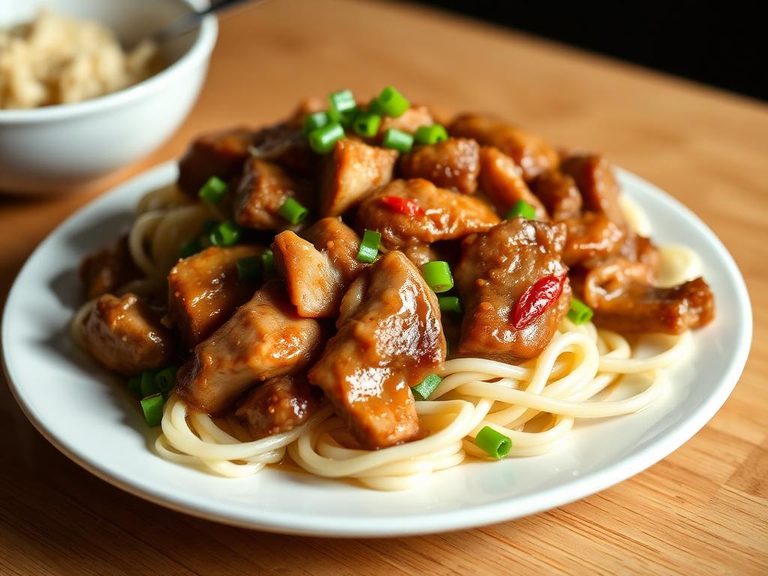
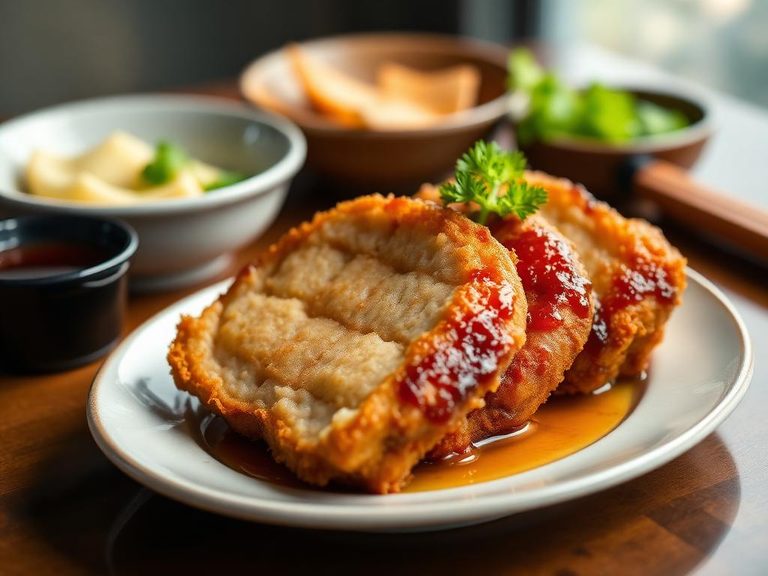


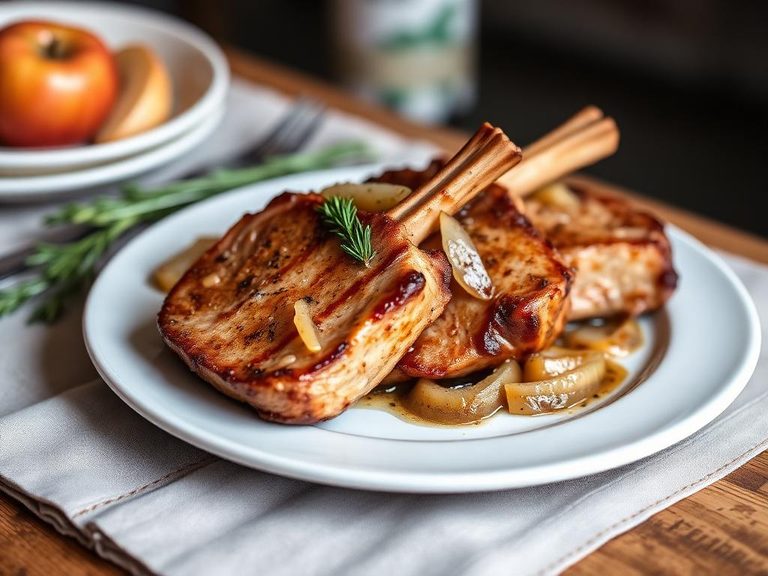

🌍 Where it's eaten
💡 Did you know?
The 'center rib' designation refers to the specific rib bones (typically the 4th through 7th) that are part of this cut, prized for their uniform size and ideal fat distribution.
Full nutrition (USDA data · scales with serving)
| Water | 57.1 g |
| Energy | 256 kcal |
| Energy | 1072 kj |
| Protein | 26.8 g |
| Total lipid (fat) | 15.7 g |
| Ash | 1.2 g |
| Carbohydrate, by difference | 0.00 g |
| Fiber, total dietary | 0.00 g |
| Total Sugars | 0.00 g |
| Calcium, Ca | 48.0 mg |
| Iron, Fe | 0.83 mg |
| Magnesium, Mg | 20.0 mg |
| Phosphorus, P | 222 mg |
| Potassium, K | 313 mg |
| Sodium, Na | 84.0 mg |
| Zinc, Zn | 2.8 mg |
| Copper, Cu | 0.11 mg |
| Manganese, Mn | 0.01 mg |
| Selenium, Se | 36.1 ug |
| Vitamin C, total ascorbic acid | 0.00 mg |
| Thiamin | 0.52 mg |
| Riboflavin | 0.36 mg |
| Niacin | 8.9 mg |
| Pantothenic acid | 1.3 mg |
| Vitamin B-6 | 0.51 mg |
| Folate, total | 0.00 ug |
| Folic acid | 0.00 ug |
| Folate, food | 0.00 ug |
| Folate, DFE | 0.00 ug |
| Choline, total | 89.3 mg |
| Betaine | 3.5 mg |
| Vitamin B-12 | 0.78 ug |
| Vitamin B-12, added | 0.00 ug |
| Vitamin A, RAE | 6.0 ug |
| Retinol | 6.0 ug |
| Carotene, beta | 0.00 ug |
| Carotene, alpha | 0.00 ug |
| Cryptoxanthin, beta | 0.00 ug |
| Vitamin A, IU | 18.0 iu |
| Lycopene | 0.00 ug |
| Lutein + zeaxanthin | 0.00 ug |
| Vitamin E (alpha-tocopherol) | 0.23 mg |
| Vitamin E, added | 0.00 mg |
| Vitamin D (D2 + D3), International Units | 26.0 iu |
| Vitamin D (D2 + D3) | 0.70 ug |
| Vitamin D3 (cholecalciferol) | 0.70 ug |
| Vitamin K (phylloquinone) | 0.00 ug |
| Vitamin K (Dihydrophylloquinone) | 0.00 ug |
| Alcohol, ethyl | 0.00 g |
| Caffeine | 0.00 mg |
| Theobromine | 0.00 mg |
Fat & fatty acid profile (per 100g)
| Fatty acids, total saturated | 5.1 g |
| SFA 4:0 | 0.00 g |
| SFA 6:0 | 0.00 g |
| SFA 8:0 | 0.00 g |
| SFA 10:0 | 0.01 g |
| SFA 12:0 | 0.01 g |
| SFA 14:0 | 0.18 g |
| SFA 15:0 | 0.01 g |
| SFA 16:0 | 3.1 g |
| SFA 17:0 | 0.04 g |
| SFA 18:0 | 1.7 g |
| SFA 20:0 | 0.02 g |
| SFA 22:0 | 0.00 g |
| SFA 24:0 | 0.00 g |
| Fatty acids, total monounsaturated | 5.7 g |
| MUFA 14:1 | 0.00 g |
| MUFA 15:1 | 0.00 g |
| MUFA 16:1 | 0.28 g |
| MUFA 17:1 | 0.00 g |
| MUFA 18:1 | 5.3 g |
| MUFA 18:1 c | 5.2 g |
| MUFA 20:1 | 0.09 g |
| MUFA 22:1 | 0.00 g |
| MUFA 22:1 c | 0.00 g |
| Fatty acids, total polyunsaturated | 2.2 g |
| PUFA 18:2 | 2.2 g |
| PUFA 18:2 n-6 c,c | 1.2 g |
| PUFA 18:3 | 0.09 g |
| PUFA 18:3 n-3 c,c,c (ALA) | 0.08 g |
| PUFA 18:3 n-6 c,c,c | 0.00 g |
| PUFA 18:3i | 0.01 g |
| PUFA 18:4 | 0.00 g |
| PUFA 20:2 n-6 c,c | 0.08 g |
| PUFA 20:3 | 0.01 g |
| PUFA 20:4 | 0.10 g |
| PUFA 20:5 n-3 (EPA) | 0.00 g |
| PUFA 22:5 n-3 (DPA) | 0.01 g |
| PUFA 22:6 n-3 (DHA) | 0.00 g |
| Fatty acids, total trans | 0.08 g |
| Fatty acids, total trans-monoenoic | 0.06 g |
| TFA 18:1 t | 0.06 g |
| TFA 18:2 t not further defined | 0.01 g |
| Fatty acids, total trans-polyenoic | 0.02 g |
| Cholesterol | 78.0 mg |
Amino acid profile (per 100g)
| Tryptophan | 0.32 g |
| Threonine | 1.2 g |
| Isoleucine | 1.3 g |
| Leucine | 2.2 g |
| Lysine | 2.4 g |
| Methionine | 0.73 g |
| Cystine | 0.30 g |
| Phenylalanine | 1.1 g |
| Tyrosine | 1.1 g |
| Valine | 1.4 g |
| Arginine | 1.7 g |
| Histidine | 1.1 g |
| Alanine | 1.5 g |
| Aspartic acid | 2.5 g |
| Glutamic acid | 4.1 g |
| Glycine | 1.2 g |
| Proline | 1.1 g |
| Serine | 1.1 g |
| Hydroxyproline | 0.09 g |
FAQ
How do I prevent a bone-in pork chop from drying out?
Use a two-stage cooking method: sear the chop in a hot pan to develop a crust, then finish cooking in a moderate oven (around 375°F/190°C) until the internal temperature reaches 145°F (63°C). Let it rest for 5-10 minutes before serving to allow juices to redistribute.
Is the bone-in cut better than boneless?
Many cooks prefer bone-in for flavor, as the bone can impart taste and help the chop cook more evenly. It also acts as a natural handle and can help prevent the meat from overcooking as quickly.
What's the best way to get a good sear?
Pat the chop completely dry with paper towels, season generously, and use a heavy-bottomed skillet (like cast iron) with a high-smoke-point oil over medium-high heat. Don't move the chop until it releases easily from the pan, about 3-4 minutes.
Nutrient density (calculated · NRF9.3)
Nutrient Rich Foods index: beneficial nutrients (protein, fiber, vitamins, minerals) minus saturated fat, added sugar & sodium, per 100 kcal.
NRF9.3 index — Fulgoni, Keast & Drewnowski, 2009. Computed from USDA nutrients.
Weight-loss friendliness (composite index)
Energy density 2.56 kcal/g · 42% calories from protein · 0.0 g fiber · 0.0 g sugar per 100 g.
Composite of energy density (Rolls et al., 1999), protein & fiber satiety, minus sugar. A calculated heuristic — ranks satiety-per-calorie, not a clinical measure.
Dietary load (calculated from USDA values)
Potential renal acid load. Positive = acid-forming, negative = alkaline-forming.
Sodium-to-potassium ratio: 0.27 (lower is better — aim for ≤ 1)
Sodium:potassium per WHO potassium guidance. Computed from USDA nutrients.