

Schnitzel

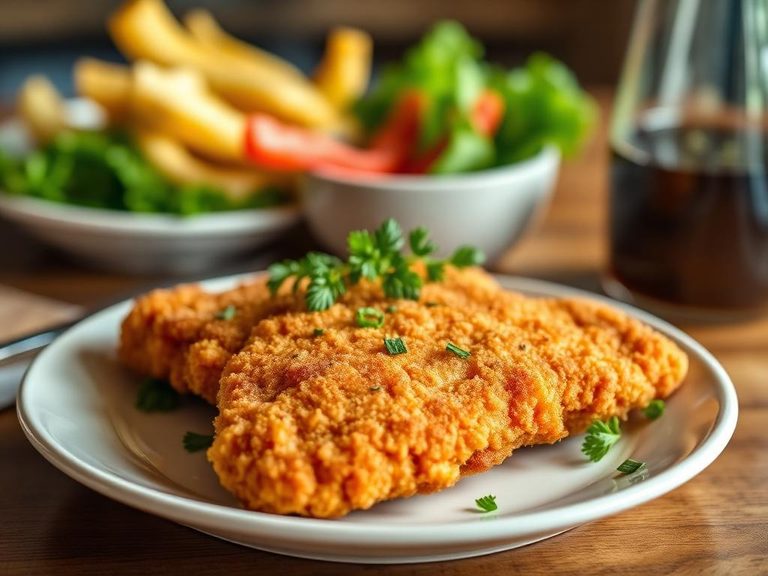
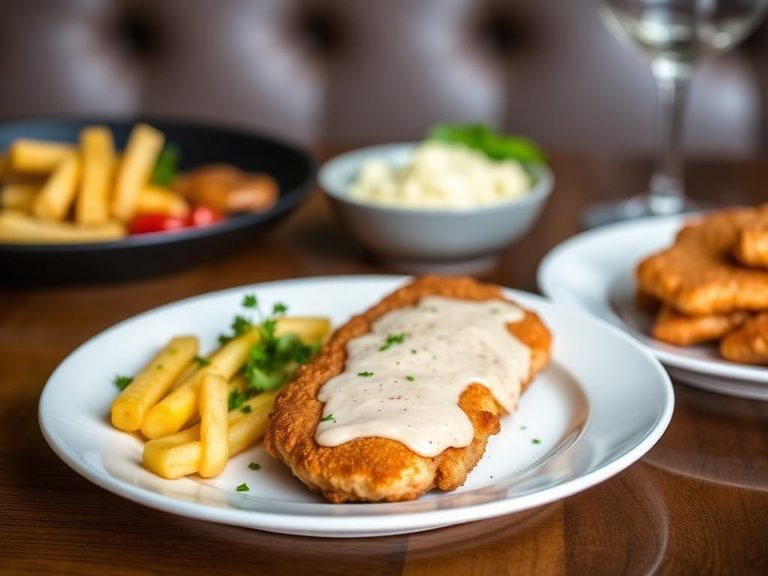
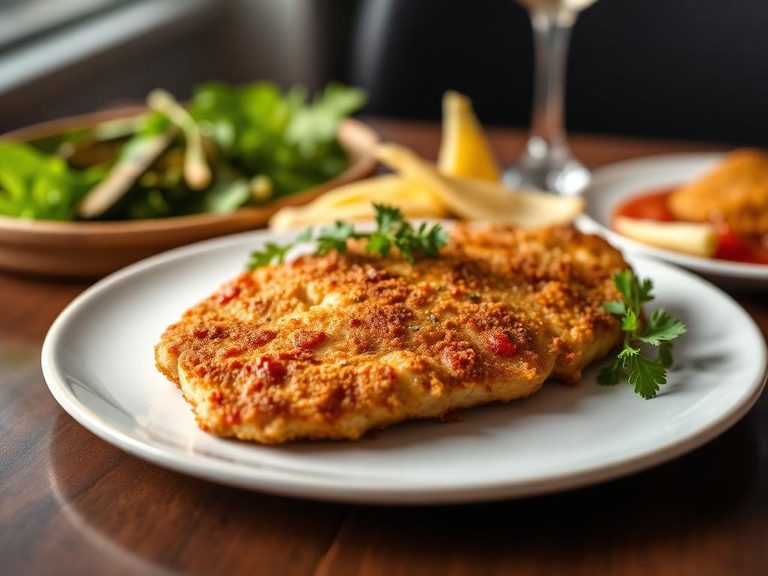
Schnitzel is a thin slice of meat, traditionally veal, that is breaded and fried to a golden crisp. It is a cornerstone of German and Austrian cuisine, though countless regional variations exist worldwide, from the Italian Cotoletta alla Milanese to the Japanese Tonkatsu.
🍳 View the full Schnitzel recipe →
🍽️ Nutrition at a glance
A typical serving is high in protein from the meat and fat from the frying process, with carbohydrates coming from the breading. It provides a good source of B vitamins and iron, with a rough calorie count ranging from 300 to 600 calories per serving depending on the meat and preparation.
Nutrition breakdown
| Calories | 380 kcal |
| Protein | 25 g |
| Carbs | 20 g |
| Fat | 22 g |
| Fiber | 1 g |
| Sugar | 1 g |
| Sodium | 450 mg |
| Iron | 2.5 mg |
| Phosphorus | 250 mg |
| Zinc | 3.5 mg |
| Vitamin B12 | 1.2 mcg |
| Niacin (B3) | 7 mg |
| Vitamin B6 | 0.4 mg |
| Selenium | 30 mcg |
| Cholesterol | 75 mg |
Per 1 piece (150 g) · estimated, varies by recipe
💡 What's interesting
The dish is a fascinating example of culinary migration, with its origins hotly debated between Austria and Italy. Its simple concept of a breaded, fried cutlet has proven so adaptable that it has become a beloved comfort food in dozens of cultures, each with its own unique twist.
🍽️ Related dishes




AI estimate may be inaccurate · Terms