

Pork, fresh, loin, center rib (chops), bone-in, separable lean and fat, cooked, braised
Whole food · Pork Products

Photo: Wikipedia
This is a succulent, bone-in pork chop cut from the center rib, braised low and slow until the meat is fork-tender and the fat melts into a rich, savory glaze. The cooking method transforms the lean muscle and marbling into a deeply flavorful, juicy texture that practically falls off the bone. With 26.66g of protein and 16.28g of fat per 100g, it's a hearty, energy-dense main course that delivers substantial satiety without any carbohydrates.
Calorie split: 42% protein · 0% carbs · 58% fat
↓ Full nutrition💚 Why it's loved
People adore this cut for its perfect balance of lean meat and flavorful fat, which becomes incredibly tender and juicy through braising. It's a classic comfort food that bridges home cooking and restaurant quality, offering deep, savory umami notes that pair beautifully with everything from mashed potatoes to roasted vegetables.
⚠️ Watch-outs & how to enjoy it better
The high fat content (16.28g per 100g) and 261 calories make it a calorie-dense choice, so portion control is key for those managing weight. To counteract this, pair it with large portions of non-starchy vegetables like steamed broccoli or a fresh green salad, and trim any visible excess fat before cooking if desired. Also, those watching sodium intake should be mindful of any added salt or marinades during the braising process.
Key benefits
- Excellent source of complete, high-quality protein for muscle maintenance
- Rich in B vitamins, especially thiamine (B1) and B6, for energy metabolism
- Provides essential minerals like selenium and phosphorus
- Braising breaks down collagen, making nutrients highly bioavailable
- Naturally zero-carb, fitting well into low-carb or ketogenic dietary patterns
🍽️ Popular dishes
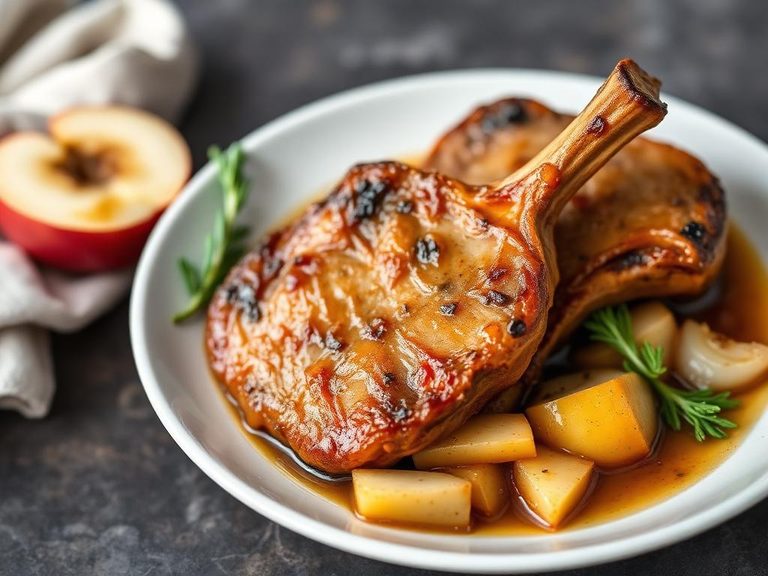
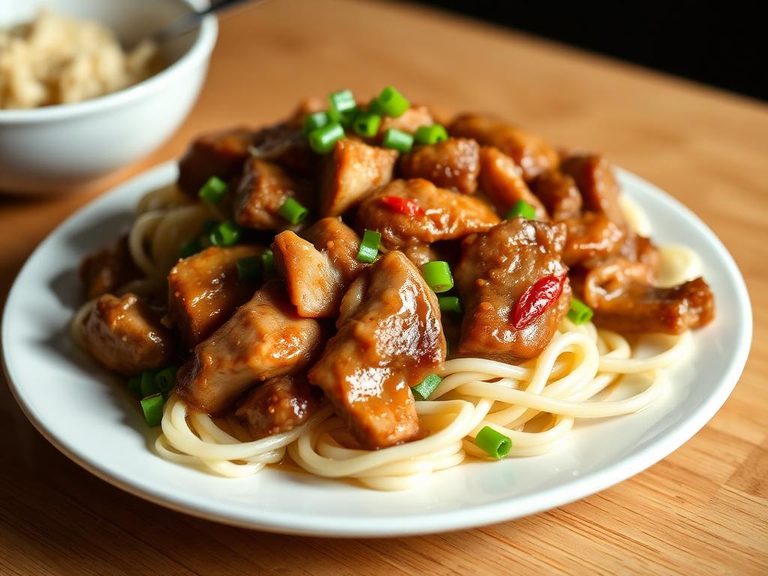
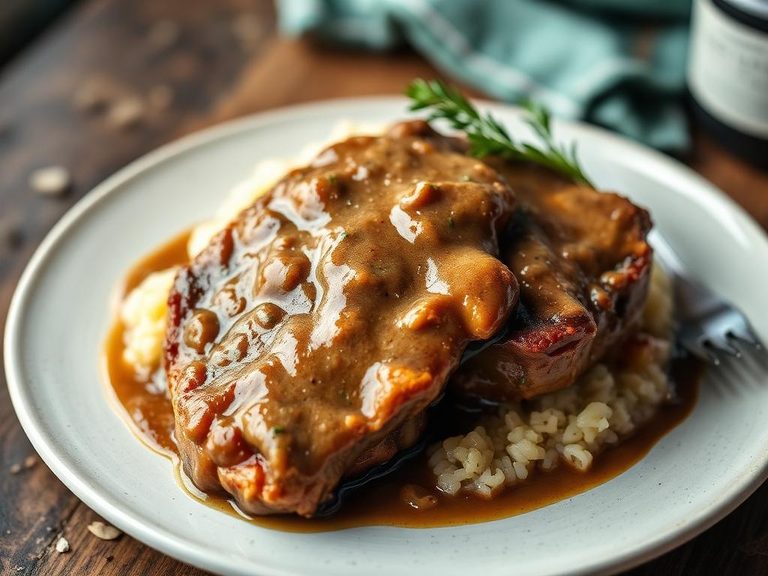
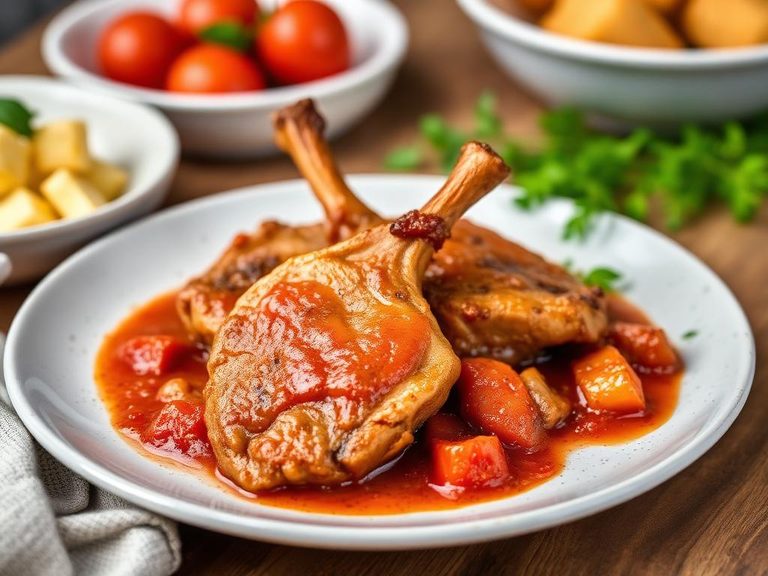
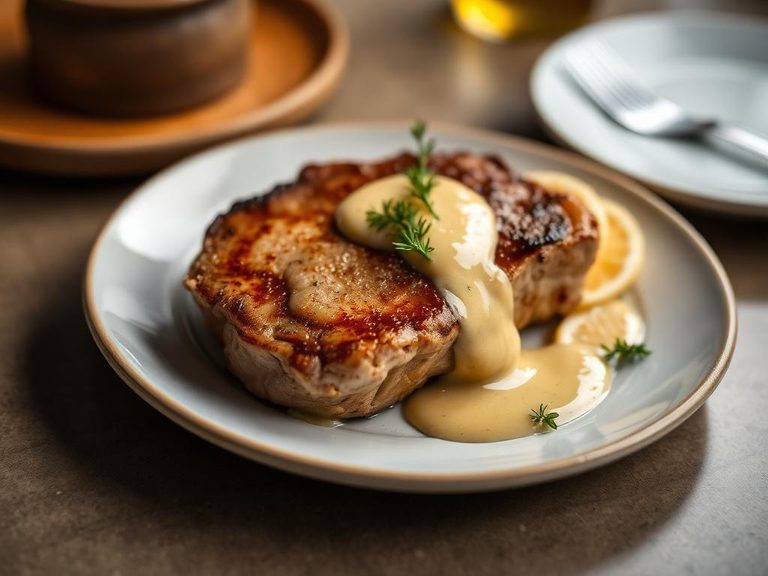
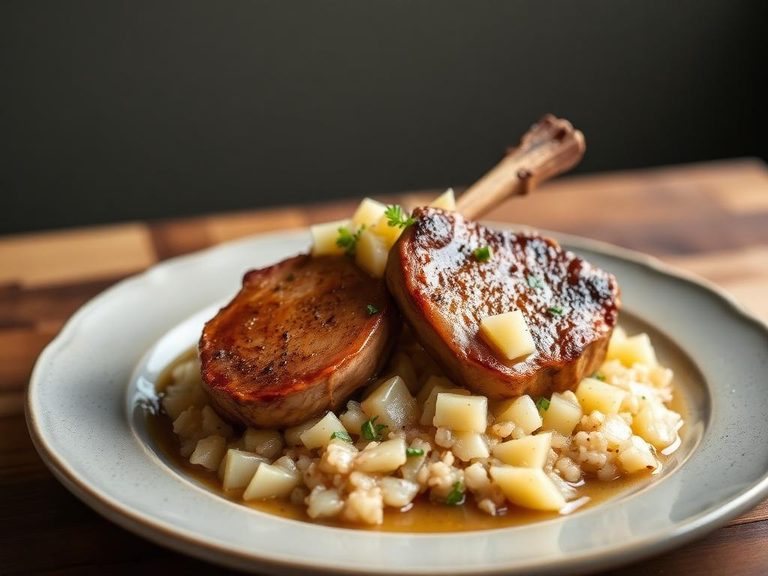
🌍 Where it's eaten
💡 Did you know?
Pork is the most consumed meat worldwide, and the center rib chop is considered one of the most premium cuts due to its ideal meat-to-fat ratio and tender texture when cooked properly.
Full nutrition (USDA data · scales with serving)
| Water | 56.9 g |
| Energy | 261 kcal |
| Energy | 1091 kj |
| Protein | 26.7 g |
| Total lipid (fat) | 16.3 g |
| Ash | 1.1 g |
| Carbohydrate, by difference | 0.00 g |
| Fiber, total dietary | 0.00 g |
| Total Sugars | 0.00 g |
| Calcium, Ca | 53.0 mg |
| Iron, Fe | 0.81 mg |
| Magnesium, Mg | 19.0 mg |
| Phosphorus, P | 213 mg |
| Potassium, K | 259 mg |
| Sodium, Na | 70.0 mg |
| Zinc, Zn | 3.1 mg |
| Copper, Cu | 0.10 mg |
| Manganese, Mn | 0.01 mg |
| Selenium, Se | 41.5 ug |
| Vitamin C, total ascorbic acid | 0.00 mg |
| Thiamin | 0.49 mg |
| Riboflavin | 0.32 mg |
| Niacin | 7.5 mg |
| Pantothenic acid | 0.96 mg |
| Vitamin B-6 | 0.49 mg |
| Folate, total | 0.00 ug |
| Folic acid | 0.00 ug |
| Folate, food | 0.00 ug |
| Folate, DFE | 0.00 ug |
| Choline, total | 91.0 mg |
| Betaine | 3.6 mg |
| Vitamin B-12 | 0.64 ug |
| Vitamin B-12, added | 0.00 ug |
| Vitamin A, RAE | 5.0 ug |
| Retinol | 5.0 ug |
| Carotene, beta | 0.00 ug |
| Carotene, alpha | 0.00 ug |
| Cryptoxanthin, beta | 0.00 ug |
| Vitamin A, IU | 16.0 iu |
| Lycopene | 0.00 ug |
| Lutein + zeaxanthin | 0.00 ug |
| Vitamin E (alpha-tocopherol) | 0.19 mg |
| Vitamin E, added | 0.00 mg |
| Vitamin D (D2 + D3), International Units | 37.0 iu |
| Vitamin D (D2 + D3) | 0.90 ug |
| Vitamin D3 (cholecalciferol) | 0.90 ug |
| Vitamin K (phylloquinone) | 0.00 ug |
| Vitamin K (Dihydrophylloquinone) | 0.00 ug |
| Alcohol, ethyl | 0.00 g |
| Caffeine | 0.00 mg |
| Theobromine | 0.00 mg |
Fat & fatty acid profile (per 100g)
| Fatty acids, total saturated | 5.4 g |
| SFA 4:0 | 0.00 g |
| SFA 6:0 | 0.00 g |
| SFA 8:0 | 0.00 g |
| SFA 10:0 | 0.01 g |
| SFA 12:0 | 0.01 g |
| SFA 14:0 | 0.19 g |
| SFA 15:0 | 0.01 g |
| SFA 16:0 | 3.3 g |
| SFA 17:0 | 0.05 g |
| SFA 18:0 | 1.8 g |
| SFA 20:0 | 0.03 g |
| SFA 22:0 | 0.00 g |
| SFA 24:0 | 0.00 g |
| Fatty acids, total monounsaturated | 6.1 g |
| MUFA 14:1 | 0.00 g |
| MUFA 15:1 | 0.00 g |
| MUFA 16:1 | 0.30 g |
| MUFA 17:1 | 0.00 g |
| MUFA 18:1 | 5.7 g |
| MUFA 18:1 c | 5.6 g |
| MUFA 20:1 | 0.10 g |
| MUFA 22:1 | 0.00 g |
| MUFA 22:1 c | 0.00 g |
| Fatty acids, total polyunsaturated | 2.4 g |
| PUFA 18:2 | 2.1 g |
| PUFA 18:2 n-6 c,c | 1.3 g |
| PUFA 18:3 | 0.09 g |
| PUFA 18:3 n-3 c,c,c (ALA) | 0.08 g |
| PUFA 18:3 n-6 c,c,c | 0.00 g |
| PUFA 18:3i | 0.01 g |
| PUFA 18:4 | 0.00 g |
| PUFA 20:2 n-6 c,c | 0.08 g |
| PUFA 20:3 | 0.01 g |
| PUFA 20:4 | 0.10 g |
| PUFA 20:5 n-3 (EPA) | 0.00 g |
| PUFA 22:5 n-3 (DPA) | 0.01 g |
| PUFA 22:6 n-3 (DHA) | 0.00 g |
| Fatty acids, total trans | 0.09 g |
| Fatty acids, total trans-monoenoic | 0.07 g |
| TFA 18:1 t | 0.07 g |
| TFA 18:2 t not further defined | 0.01 g |
| Fatty acids, total trans-polyenoic | 0.02 g |
| Cholesterol | 79.0 mg |
Amino acid profile (per 100g)
| Tryptophan | 0.32 g |
| Threonine | 1.2 g |
| Isoleucine | 1.3 g |
| Leucine | 2.2 g |
| Lysine | 2.4 g |
| Methionine | 0.73 g |
| Cystine | 0.30 g |
| Phenylalanine | 1.1 g |
| Tyrosine | 1.1 g |
| Valine | 1.3 g |
| Arginine | 1.7 g |
| Histidine | 1.1 g |
| Alanine | 1.5 g |
| Aspartic acid | 2.5 g |
| Glutamic acid | 4.1 g |
| Glycine | 1.2 g |
| Proline | 1.1 g |
| Serine | 1.1 g |
| Hydroxyproline | 0.09 g |
FAQ
What's the difference between braising and other cooking methods for pork chops?
Braising involves searing the meat first, then slowly cooking it in liquid (like broth, wine, or sauce) at low heat. This method is ideal for bone-in chops because it breaks down connective tissue, resulting in tender, juicy meat that falls off the bone, unlike grilling or pan-frying which can dry out the lean parts.
Is this cut suitable for a low-carb diet?
Yes, it's perfect. With 0g carbs, 0g sugar, and 0g fiber, it's a pure protein and fat source. Just be mindful of any added sauces or glazes that might contain sugar or starch.
How can I tell when braised pork chops are done?
They're done when the internal temperature reaches 145°F (63°C) for safety, but for braising, you often cook them longer until the meat is fork-tender and easily pulls away from the bone. The liquid should be reduced to a flavorful sauce.
Can I use this cut for grilling instead of braising?
You can, but it's not ideal. The center rib chop has enough fat to stay moist, but braising is the superior method for tenderness. If grilling, marinate first and cook to medium (145°F) to avoid drying out.
Nutrient density (calculated · NRF9.3)
Nutrient Rich Foods index: beneficial nutrients (protein, fiber, vitamins, minerals) minus saturated fat, added sugar & sodium, per 100 kcal.
NRF9.3 index — Fulgoni, Keast & Drewnowski, 2009. Computed from USDA nutrients.
Weight-loss friendliness (composite index)
Energy density 2.61 kcal/g · 41% calories from protein · 0.0 g fiber · 0.0 g sugar per 100 g.
Composite of energy density (Rolls et al., 1999), protein & fiber satiety, minus sugar. A calculated heuristic — ranks satiety-per-calorie, not a clinical measure.
Dietary load (calculated from USDA values)
Potential renal acid load. Positive = acid-forming, negative = alkaline-forming.
Sodium-to-potassium ratio: 0.27 (lower is better — aim for ≤ 1)
Sodium:potassium per WHO potassium guidance. Computed from USDA nutrients.