

Pork, fresh, loin, center loin (roasts), bone-in, separable lean and fat, cooked, roasted
Whole food · Pork Products

Photo: Wikipedia
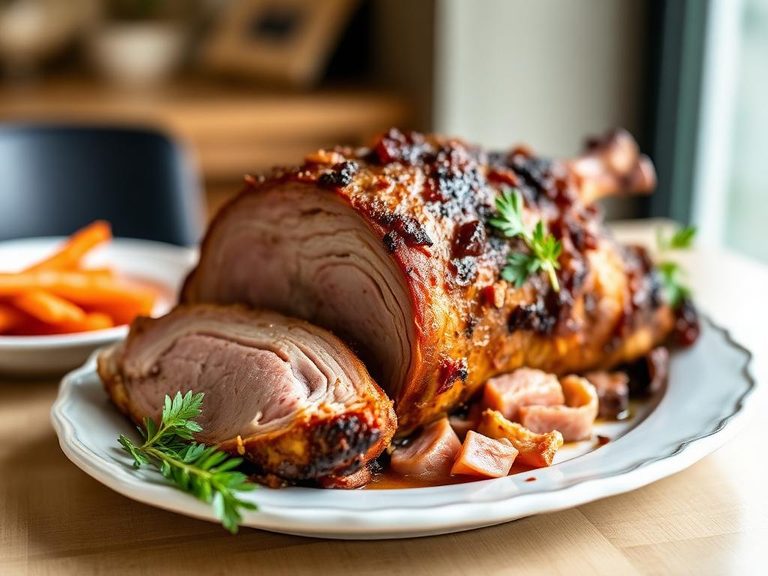
This is a roasted, bone-in cut from the center of the pork loin, prized for its tender, juicy meat and a flavorful cap of fat that bastes the roast as it cooks. The texture is lean and fine-grained, with a mild, savory flavor that readily absorbs marinades and rubs. Nutritionally, it's a powerhouse of high-quality protein with virtually no carbohydrates.
Calorie split: 48% protein · 0% carbs · 52% fat
↓ Full nutrition💚 Why it's loved
People love it for its satisfying, meaty flavor and the classic Sunday roast experience it provides. It's a versatile centerpiece that pairs beautifully with everything from roasted apples and potatoes to savory herb crusts.
⚠️ Watch-outs & how to enjoy it better
While lean, the separable fat can be high in saturated fat, so those monitoring their intake should be mindful of portion sizes. To counteract this, trim excess fat before cooking and pair the roast with fiber-rich vegetables like roasted Brussels sprouts or a crisp slaw to balance the meal. It's also important to cook it to a safe internal temperature to avoid any risk from undercooked pork.
Key benefits
- Excellent source of complete protein for muscle maintenance and repair.
- Rich in B vitamins, particularly thiamine (B1), niacin (B3), and B6, which support energy metabolism.
- Contains essential minerals like selenium and phosphorus.
- The bone-in cut often yields a more flavorful and moist roast due to the bone's insulating effect.
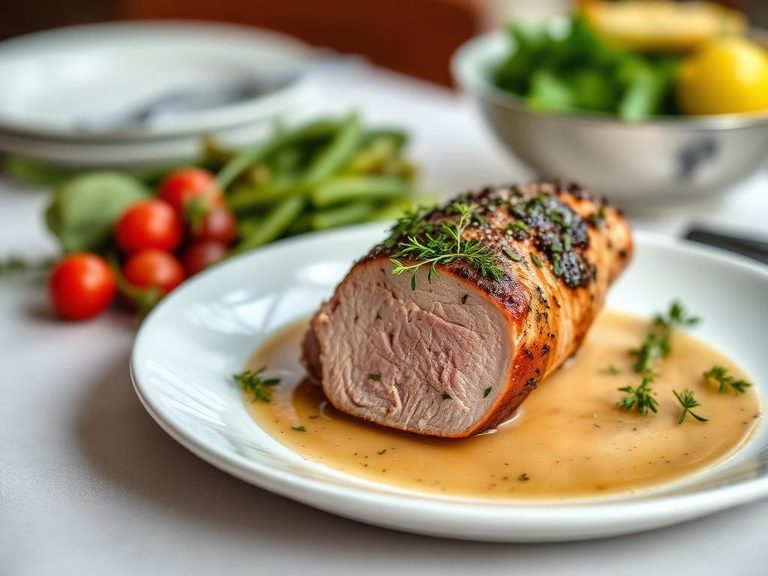
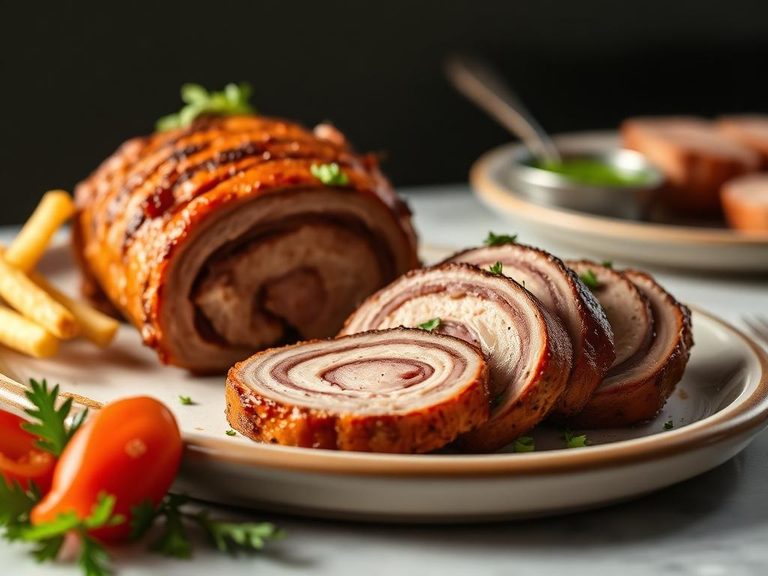
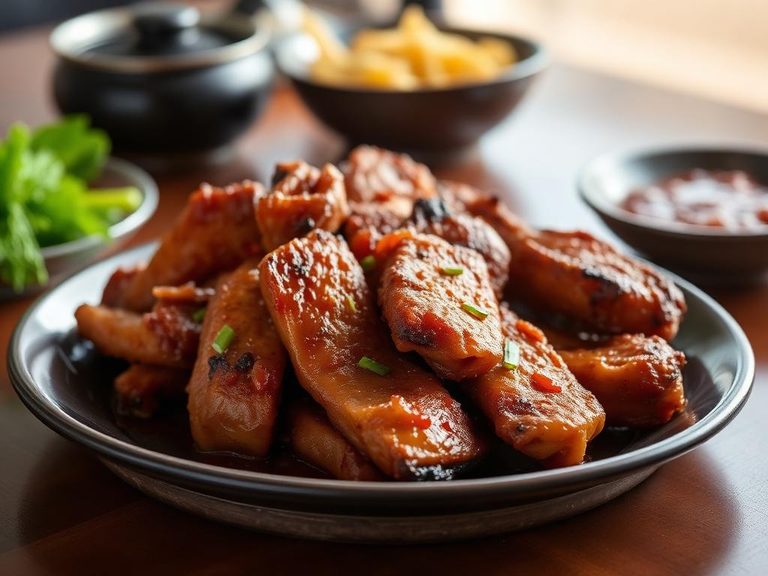
🍽️ Popular dishes
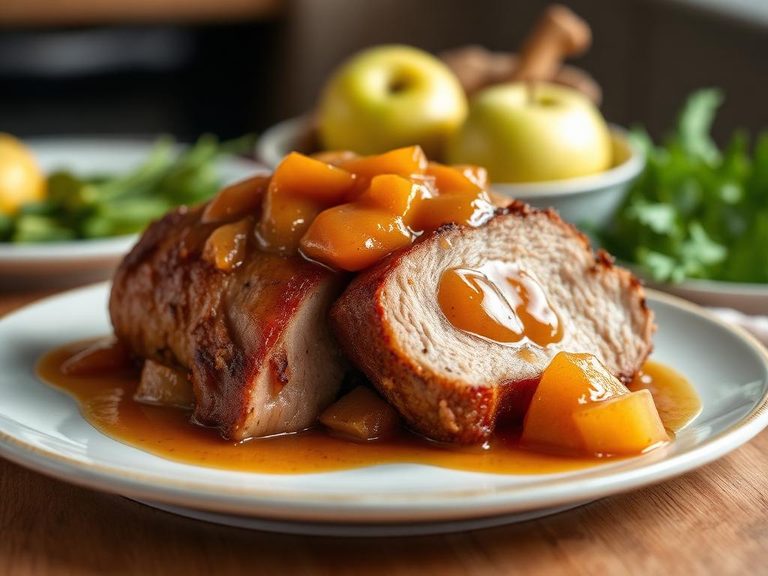
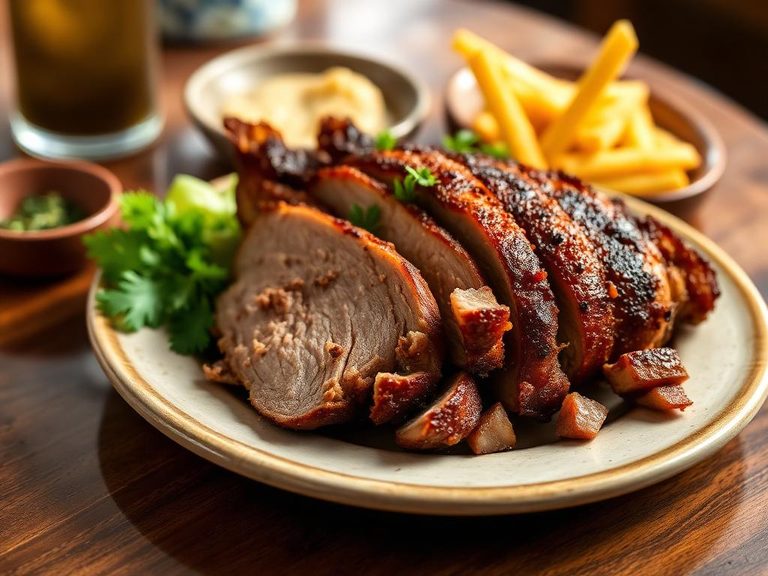
🌍 Where it's eaten
💡 Did you know?
The bone in a center loin roast isn't just for flavor; it acts as a natural heat conductor, helping the meat cook more evenly from the inside out, which is why bone-in roasts are often juicier than their boneless counterparts.
Full nutrition (USDA data · scales with serving)
| Water | 60.3 g |
| Energy | 231 kcal |
| Energy | 966 kj |
| Protein | 27.0 g |
| Total lipid (fat) | 12.8 g |
| Ash | 1.1 g |
| Carbohydrate, by difference | 0.00 g |
| Fiber, total dietary | 0.00 g |
| Total Sugars | 0.00 g |
| Calcium, Ca | 33.0 mg |
| Iron, Fe | 0.89 mg |
| Magnesium, Mg | 20.0 mg |
| Phosphorus, P | 213 mg |
| Potassium, K | 350 mg |
| Sodium, Na | 83.0 mg |
| Zinc, Zn | 3.5 mg |
| Copper, Cu | 0.10 mg |
| Manganese, Mn | 0.02 mg |
| Selenium, Se | 42.6 ug |
| Vitamin C, total ascorbic acid | 0.00 mg |
| Thiamin | 0.54 mg |
| Riboflavin | 0.42 mg |
| Niacin | 7.4 mg |
| Pantothenic acid | 1.5 mg |
| Vitamin B-6 | 0.48 mg |
| Folate, total | 0.00 ug |
| Folic acid | 0.00 ug |
| Folate, food | 0.00 ug |
| Folate, DFE | 0.00 ug |
| Choline, total | 92.4 mg |
| Betaine | 3.6 mg |
| Vitamin B-12 | 0.87 ug |
| Vitamin B-12, added | 0.00 ug |
| Vitamin A, RAE | 4.0 ug |
| Retinol | 4.0 ug |
| Carotene, beta | 0.00 ug |
| Carotene, alpha | 0.00 ug |
| Cryptoxanthin, beta | 0.00 ug |
| Vitamin A, IU | 15.0 iu |
| Lycopene | 0.00 ug |
| Lutein + zeaxanthin | 0.00 ug |
| Vitamin E (alpha-tocopherol) | 0.21 mg |
| Vitamin E, added | 0.00 mg |
| Vitamin D (D2 + D3), International Units | 25.0 iu |
| Vitamin D (D2 + D3) | 0.60 ug |
| Vitamin D3 (cholecalciferol) | 0.60 ug |
| Vitamin K (phylloquinone) | 0.00 ug |
| Vitamin K (Dihydrophylloquinone) | 0.00 ug |
| Alcohol, ethyl | 0.00 g |
| Caffeine | 0.00 mg |
| Theobromine | 0.00 mg |
Fat & fatty acid profile (per 100g)
| Fatty acids, total saturated | 4.9 g |
| SFA 4:0 | 0.00 g |
| SFA 6:0 | 0.00 g |
| SFA 8:0 | 0.00 g |
| SFA 10:0 | 0.01 g |
| SFA 12:0 | 0.01 g |
| SFA 14:0 | 0.17 g |
| SFA 15:0 | 0.00 g |
| SFA 16:0 | 3.0 g |
| SFA 17:0 | 0.04 g |
| SFA 18:0 | 1.6 g |
| SFA 20:0 | 0.02 g |
| SFA 22:0 | 0.00 g |
| SFA 24:0 | 0.00 g |
| Fatty acids, total monounsaturated | 5.5 g |
| MUFA 14:1 | 0.00 g |
| MUFA 15:1 | 0.00 g |
| MUFA 16:1 | 0.27 g |
| MUFA 17:1 | 0.00 g |
| MUFA 18:1 | 5.1 g |
| MUFA 18:1 c | 5.1 g |
| MUFA 20:1 | 0.09 g |
| MUFA 22:1 | 0.00 g |
| MUFA 22:1 c | 0.00 g |
| Fatty acids, total polyunsaturated | 2.1 g |
| PUFA 18:2 | 1.8 g |
| PUFA 18:2 n-6 c,c | 1.8 g |
| PUFA 18:3 | 0.08 g |
| PUFA 18:3 n-3 c,c,c (ALA) | 0.07 g |
| PUFA 18:3 n-6 c,c,c | 0.00 g |
| PUFA 18:3i | 0.01 g |
| PUFA 18:4 | 0.00 g |
| PUFA 20:2 n-6 c,c | 0.07 g |
| PUFA 20:3 | 0.00 g |
| PUFA 20:4 | 0.06 g |
| PUFA 20:5 n-3 (EPA) | 0.00 g |
| PUFA 22:5 n-3 (DPA) | 0.01 g |
| PUFA 22:6 n-3 (DHA) | 0.00 g |
| Fatty acids, total trans | 0.09 g |
| Fatty acids, total trans-monoenoic | 0.07 g |
| TFA 18:1 t | 0.07 g |
| TFA 18:2 t not further defined | 0.02 g |
| Fatty acids, total trans-polyenoic | 0.03 g |
| Cholesterol | 76.0 mg |
Amino acid profile (per 100g)
| Tryptophan | 0.32 g |
| Threonine | 1.2 g |
| Isoleucine | 1.3 g |
| Leucine | 2.2 g |
| Lysine | 2.4 g |
| Methionine | 0.74 g |
| Cystine | 0.30 g |
| Phenylalanine | 1.1 g |
| Tyrosine | 1.1 g |
| Valine | 1.4 g |
| Arginine | 1.7 g |
| Histidine | 1.1 g |
| Alanine | 1.5 g |
| Aspartic acid | 2.5 g |
| Glutamic acid | 4.1 g |
| Glycine | 1.2 g |
| Proline | 1.1 g |
| Serine | 1.1 g |
| Hydroxyproline | 0.09 g |
FAQ
How do I get the best crackling on the fat cap?
Pat the fat cap completely dry with paper towels, score it in a diamond pattern, rub with salt and a little oil, and roast at a high temperature (around 425°F/220°C) initially to blister the skin before lowering the heat.
Is bone-in better than boneless for roasting?
Yes, the bone helps insulate the meat, promoting even cooking and often resulting in a more flavorful, juicier roast. It also makes for a more impressive presentation.
How long should I let the roast rest after cooking?
Let it rest for at least 10-15 minutes, loosely tented with foil. This allows the juices to redistribute throughout the meat, ensuring a moist slice rather than a dry one.
Nutrient density (calculated · NRF9.3)
Nutrient Rich Foods index: beneficial nutrients (protein, fiber, vitamins, minerals) minus saturated fat, added sugar & sodium, per 100 kcal.
NRF9.3 index — Fulgoni, Keast & Drewnowski, 2009. Computed from USDA nutrients.
Weight-loss friendliness (composite index)
Energy density 2.31 kcal/g · 47% calories from protein · 0.0 g fiber · 0.0 g sugar per 100 g.
Composite of energy density (Rolls et al., 1999), protein & fiber satiety, minus sugar. A calculated heuristic — ranks satiety-per-calorie, not a clinical measure.
Dietary load (calculated from USDA values)
Potential renal acid load. Positive = acid-forming, negative = alkaline-forming.
Sodium-to-potassium ratio: 0.24 (lower is better — aim for ≤ 1)
Sodium:potassium per WHO potassium guidance. Computed from USDA nutrients.