

Pork, fresh, leg (ham), shank half, separable lean and fat, cooked, roasted
Whole food · Pork Products
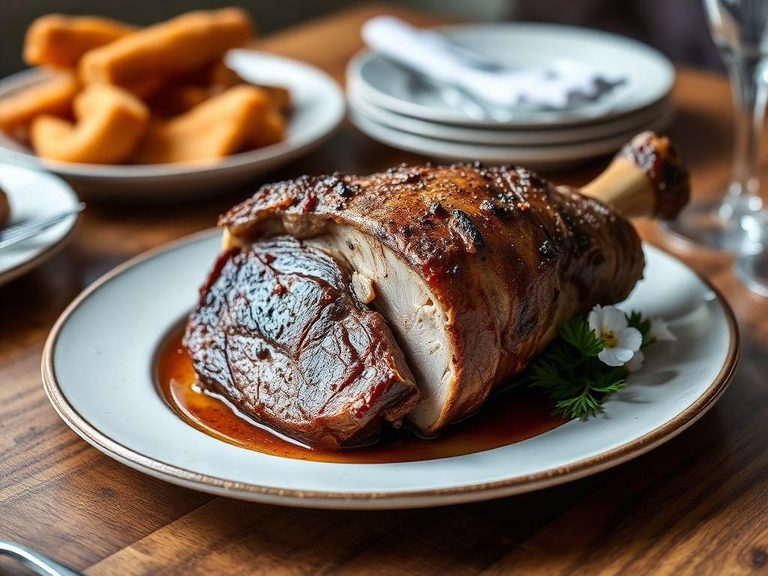
This cut comes from the lower part of the pork leg, specifically the shank half, offering a robust balance of lean meat and flavorful fat. When roasted, it develops a savory, slightly sweet crust while the interior remains tender and juicy with a satisfying, meaty chew. It's a high-protein, zero-carb option that delivers substantial energy from its protein and fat content.
Calorie split: 46% protein · 0% carbs · 54% fat
↓ Full nutrition💚 Why it's loved
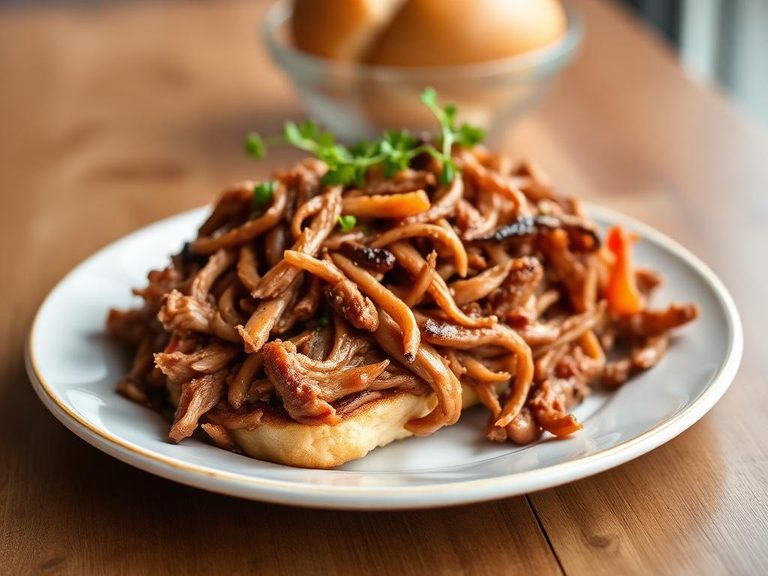
People adore its deep, savory pork flavor and the perfect contrast between the crispy, rendered fat cap and the succulent meat. Its versatility allows it to shine as a simple roasted centerpiece or be shredded into countless hearty dishes.
⚠️ Watch-outs & how to enjoy it better
The significant fat content, while flavorful, makes it a high-calorie choice that should be enjoyed in moderation, especially for those monitoring saturated fat intake. To counteract this, pair it with large portions of non-starchy vegetables (like roasted broccoli or a vinegar-based slaw) to add fiber and volume, and consider trimming excess external fat before cooking.
Key benefits
- Excellent source of complete protein for muscle maintenance.
- Provides essential B vitamins, especially thiamine (B1) and B6.
- Rich in minerals like zinc, selenium, and phosphorus.
- Contains heme iron, which is easily absorbed by the body.
- Offers a good source of monounsaturated fats.
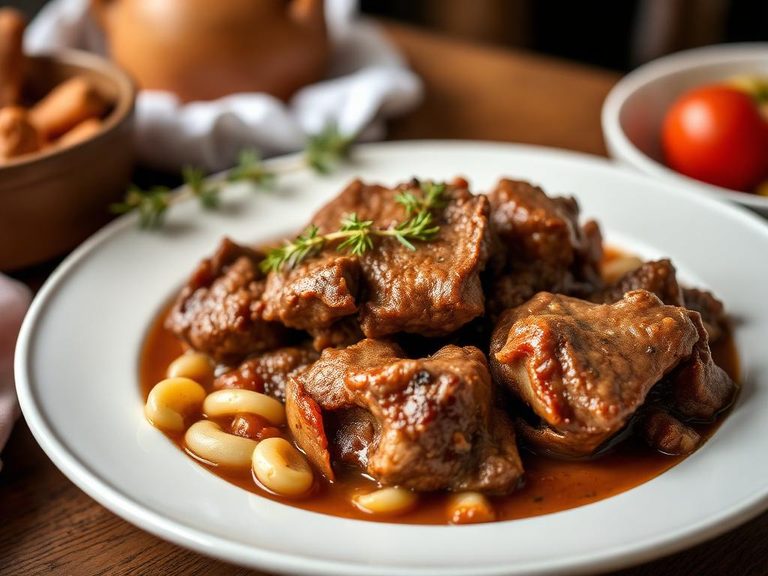
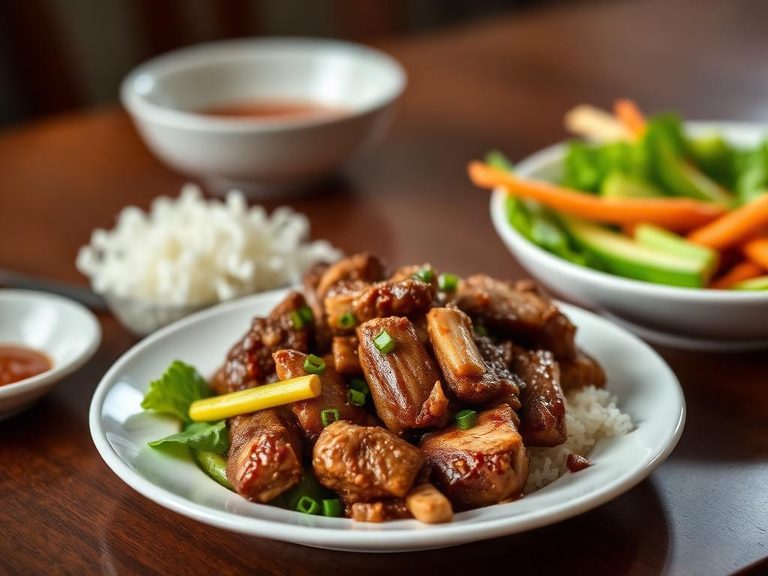
🍽️ Popular dishes

🌍 Where it's eaten
💡 Did you know?
The specific cut name 'shank half' refers to the portion of the leg containing the tibia bone, which is prized in cooking for the collagen it releases, adding rich body and silkiness to braising liquids.
Full nutrition (USDA data · scales with serving)
| Water | 60.4 g |
| Energy | 232 kcal |
| Energy | 970 kj |
| Protein | 26.0 g |
| Total lipid (fat) | 13.4 g |
| Ash | 1.1 g |
| Carbohydrate, by difference | 0.00 g |
| Fiber, total dietary | 0.00 g |
| Total Sugars | 0.00 g |
| Calcium, Ca | 15.0 mg |
| Iron, Fe | 0.87 mg |
| Magnesium, Mg | 22.0 mg |
| Phosphorus, P | 242 mg |
| Potassium, K | 345 mg |
| Sodium, Na | 81.0 mg |
| Zinc, Zn | 2.4 mg |
| Copper, Cu | 0.12 mg |
| Manganese, Mn | 0.02 mg |
| Selenium, Se | 26.4 ug |
| Vitamin C, total ascorbic acid | 0.00 mg |
| Thiamin | 0.41 mg |
| Riboflavin | 0.35 mg |
| Niacin | 7.5 mg |
| Pantothenic acid | 0.83 mg |
| Vitamin B-6 | 0.44 mg |
| Folate, total | 0.00 ug |
| Folic acid | 0.00 ug |
| Folate, food | 0.00 ug |
| Folate, DFE | 0.00 ug |
| Choline, total | 90.3 mg |
| Betaine | 3.6 mg |
| Vitamin B-12 | 0.50 ug |
| Vitamin B-12, added | 0.00 ug |
| Vitamin A, RAE | 4.0 ug |
| Retinol | 4.0 ug |
| Carotene, beta | 0.00 ug |
| Carotene, alpha | 0.00 ug |
| Cryptoxanthin, beta | 0.00 ug |
| Vitamin A, IU | 14.0 iu |
| Lycopene | 0.00 ug |
| Lutein + zeaxanthin | 0.00 ug |
| Vitamin E (alpha-tocopherol) | 0.23 mg |
| Vitamin E, added | 0.00 mg |
| Vitamin D (D2 + D3), International Units | 22.0 iu |
| Vitamin D (D2 + D3) | 0.60 ug |
| Vitamin D3 (cholecalciferol) | 0.60 ug |
| Vitamin K (phylloquinone) | 0.00 ug |
| Vitamin K (Dihydrophylloquinone) | 0.00 ug |
| Alcohol, ethyl | 0.00 g |
| Caffeine | 0.00 mg |
| Theobromine | 0.00 mg |
Fat & fatty acid profile (per 100g)
| Fatty acids, total saturated | 4.6 g |
| SFA 4:0 | 0.00 g |
| SFA 6:0 | 0.00 g |
| SFA 8:0 | 0.00 g |
| SFA 10:0 | 0.01 g |
| SFA 12:0 | 0.01 g |
| SFA 14:0 | 0.17 g |
| SFA 15:0 | 0.01 g |
| SFA 16:0 | 2.9 g |
| SFA 17:0 | 0.05 g |
| SFA 18:0 | 1.5 g |
| SFA 20:0 | 0.02 g |
| SFA 22:0 | 0.00 g |
| SFA 24:0 | 0.00 g |
| Fatty acids, total monounsaturated | 5.8 g |
| MUFA 14:1 | 0.00 g |
| MUFA 15:1 | 0.00 g |
| MUFA 16:1 | 0.28 g |
| MUFA 17:1 | 0.00 g |
| MUFA 18:1 | 5.4 g |
| MUFA 18:1 c | 5.4 g |
| MUFA 20:1 | 0.10 g |
| MUFA 22:1 | 0.00 g |
| MUFA 22:1 c | 0.00 g |
| Fatty acids, total polyunsaturated | 2.4 g |
| PUFA 18:2 | 2.2 g |
| PUFA 18:2 n-6 c,c | 2.1 g |
| PUFA 18:3 | 0.08 g |
| PUFA 18:3 n-3 c,c,c (ALA) | 0.08 g |
| PUFA 18:3 n-6 c,c,c | 0.00 g |
| PUFA 18:3i | 0.00 g |
| PUFA 18:4 | 0.00 g |
| PUFA 20:2 n-6 c,c | 0.08 g |
| PUFA 20:3 | 0.01 g |
| PUFA 20:4 | 0.09 g |
| PUFA 20:5 n-3 (EPA) | 0.00 g |
| PUFA 22:5 n-3 (DPA) | 0.01 g |
| PUFA 22:6 n-3 (DHA) | 0.00 g |
| Fatty acids, total trans | 0.09 g |
| Fatty acids, total trans-monoenoic | 0.08 g |
| TFA 18:1 t | 0.08 g |
| TFA 18:2 t not further defined | 0.01 g |
| Fatty acids, total trans-polyenoic | 0.01 g |
| Cholesterol | 91.0 mg |
Amino acid profile (per 100g)
| Tryptophan | 0.31 g |
| Threonine | 1.1 g |
| Isoleucine | 1.2 g |
| Leucine | 2.1 g |
| Lysine | 2.3 g |
| Methionine | 0.71 g |
| Cystine | 0.29 g |
| Phenylalanine | 1.1 g |
| Tyrosine | 1.0 g |
| Valine | 1.3 g |
| Arginine | 1.7 g |
| Histidine | 1.1 g |
| Alanine | 1.5 g |
| Aspartic acid | 2.4 g |
| Glutamic acid | 4.0 g |
| Glycine | 1.2 g |
| Proline | 1.1 g |
| Serine | 1.1 g |
| Hydroxyproline | 0.09 g |
FAQ
Is this the same as a pork shank?
Not exactly. This is a larger cut from the 'shank half' of the leg, which includes the shank but also more of the upper leg meat. A dedicated pork shank is a smaller, bone-in cut from just the lower leg.
How do I keep it from drying out when roasting?
Use a two-stage cooking method: start with high heat to brown and crisp the fat, then lower the oven temperature to finish cooking gently. A meat thermometer is key—pull it out when the internal temperature reaches 145°F (63°C) for medium, then let it rest.
What's the best way to use the leftovers?
Shred any leftover meat and mix it with its own juices or a barbecue sauce for sandwiches. It's also fantastic tossed into tacos, quesadillas, or a hearty pork fried rice.
Nutrient density (calculated · NRF9.3)
Nutrient Rich Foods index: beneficial nutrients (protein, fiber, vitamins, minerals) minus saturated fat, added sugar & sodium, per 100 kcal.
NRF9.3 index — Fulgoni, Keast & Drewnowski, 2009. Computed from USDA nutrients.
Weight-loss friendliness (composite index)
Energy density 2.32 kcal/g · 45% calories from protein · 0.0 g fiber · 0.0 g sugar per 100 g.
Composite of energy density (Rolls et al., 1999), protein & fiber satiety, minus sugar. A calculated heuristic — ranks satiety-per-calorie, not a clinical measure.
Dietary load (calculated from USDA values)
Potential renal acid load. Positive = acid-forming, negative = alkaline-forming.
Sodium-to-potassium ratio: 0.23 (lower is better — aim for ≤ 1)
Sodium:potassium per WHO potassium guidance. Computed from USDA nutrients.