

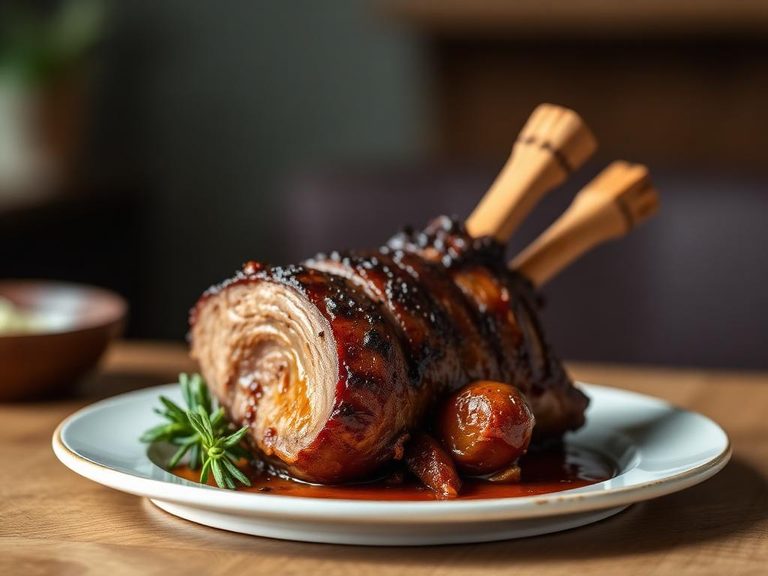
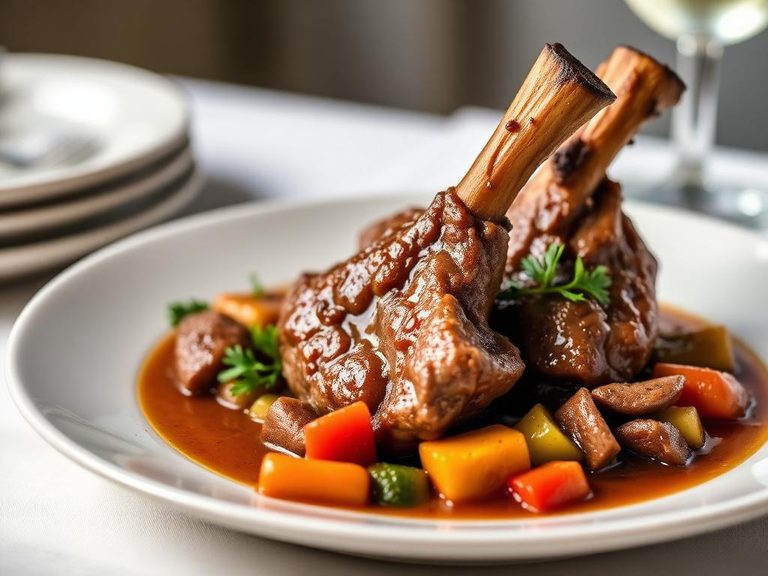
Roasted Pork Shank
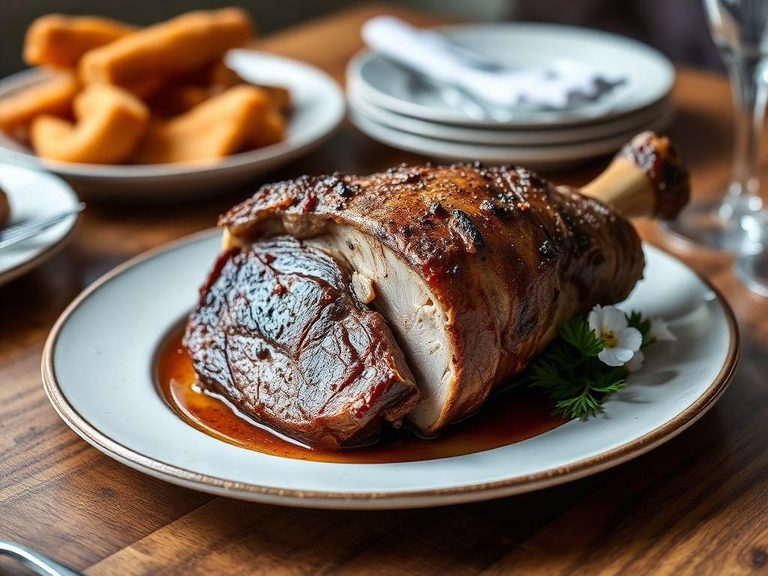
Schweinshaxe is a traditional German dish, particularly famous in Bavaria, consisting of a large pork shank that is typically roasted or braised until the meat is tender and the skin becomes a crispy, golden-brown crackling. The key ingredients are the pork shank itself, often seasoned with salt, pepper, caraway seeds, and garlic, and it's frequently served with hearty sides like potato dumplings (Klöße) and sauerkraut or braised red cabbage.
🍽️ Nutrition at a glance
This dish is high in protein and fat, with the crispy skin contributing significantly to the fat content. It provides a good source of B vitamins (especially B12 and niacin), zinc, and selenium, and a typical serving can range from 600 to 900 calories, depending on the size of the shank and preparation method.
Nutrition breakdown
| Calories | 1250 kcal |
| Protein | 85 g |
| Carbs | 15 g |
| Fat | 95 g |
| Fiber | 1 g |
| Sugar | 2 g |
| Sodium | 1800 mg |
| Iron | 6 mg |
| Zinc | 15 mg |
| Phosphorus | 650 mg |
| Potassium | 900 mg |
| Vitamin B1 (Thiamine) | 1.2 mg |
| Vitamin B6 | 1.5 mg |
| Vitamin B12 | 4.5 mcg |
| Niacin (B3) | 20 mg |
Per 1 shank (approx. 800-1000 g, edible portion ~500 g) · estimated, varies by recipe
💡 What's interesting
Culturally, Schweinshaxe is a centerpiece of Bavarian cuisine and beer hall culture, often enjoyed during festivals like Oktoberfest. Nutritionally, the slow-roasting method helps render out some of the fat, making the meat surprisingly tender, and the collagen in the shank breaks down into gelatin, which is beneficial for joint and gut health.
🍽️ Related dishes
AI estimate may be inaccurate · Terms