

Pork, fresh, backribs, separable lean and fat, cooked, roasted
Whole food · Pork Products

Photo: Wikipedia
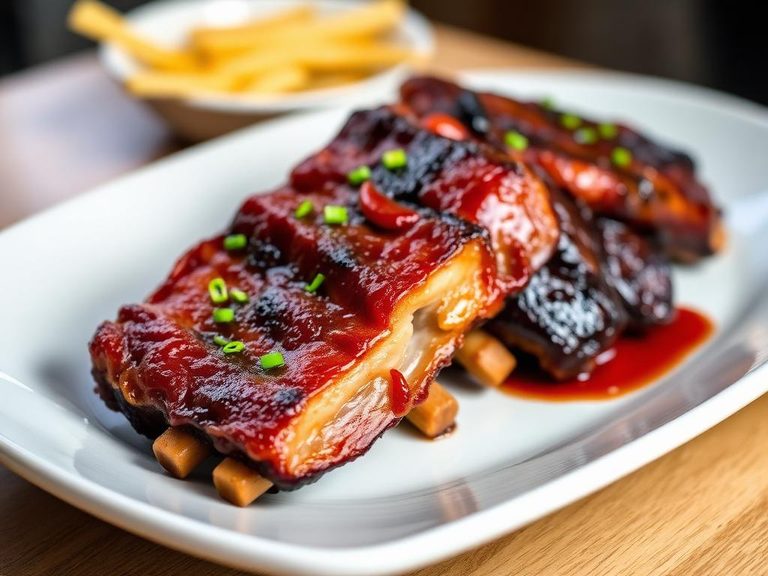
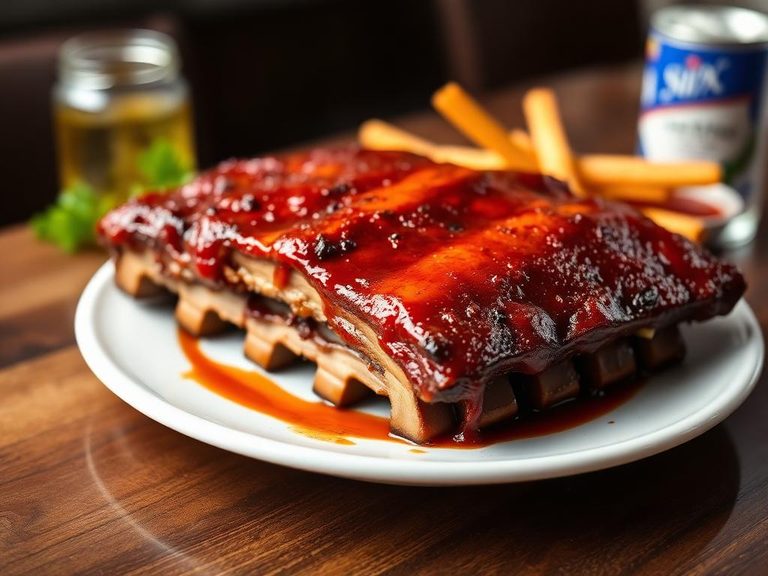
Roasted pork back ribs are a succulent cut where the lean meat and marbled fat render together during cooking, creating a tender, pull-apart texture with a rich, savory flavor. The high-heat roasting method caramelizes the exterior, often with a glaze or dry rub, while the interior remains juicy. Nutritionally, it's a dense source of high-quality protein and dietary fat, providing significant energy per serving.
Calorie split: 32% protein · 0% carbs · 68% fat
↓ Full nutrition💚 Why it's loved
People adore pork back ribs for their unparalleled flavor and satisfying, meaty texture, which becomes incredibly tender when roasted low and slow. They are a centerpiece of communal feasts and barbecue culture, symbolizing comfort and celebration across many cuisines.
⚠️ Watch-outs & how to enjoy it better
This cut is high in saturated fat and calories, making it a consideration for those managing heart health or caloric intake. To balance a meal, pair a modest portion with high-fiber, non-starchy vegetables like roasted broccoli or a vinegar-based slaw to add volume and nutrients without excessive calories.
Key benefits
- Excellent source of complete protein for muscle maintenance.
- Provides essential B vitamins, especially B12 and niacin.
- Rich in minerals like zinc, selenium, and phosphorus.
- Dietary fat aids in the absorption of fat-soluble vitamins.
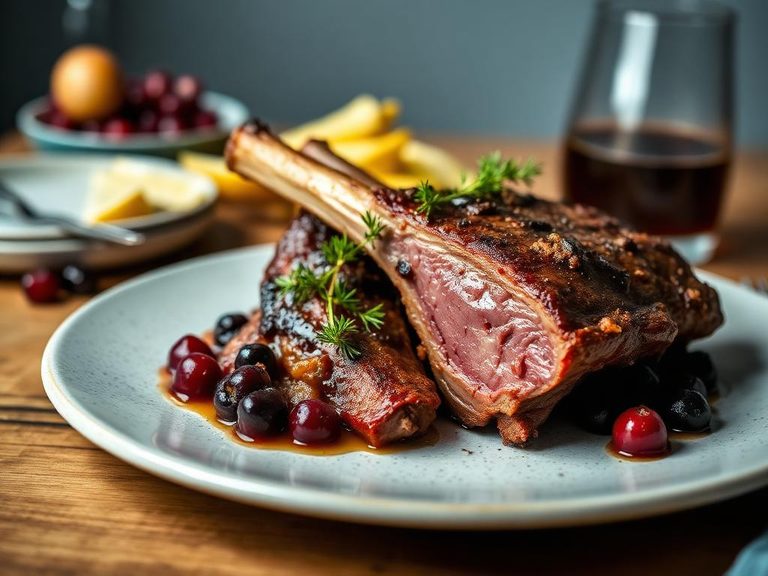
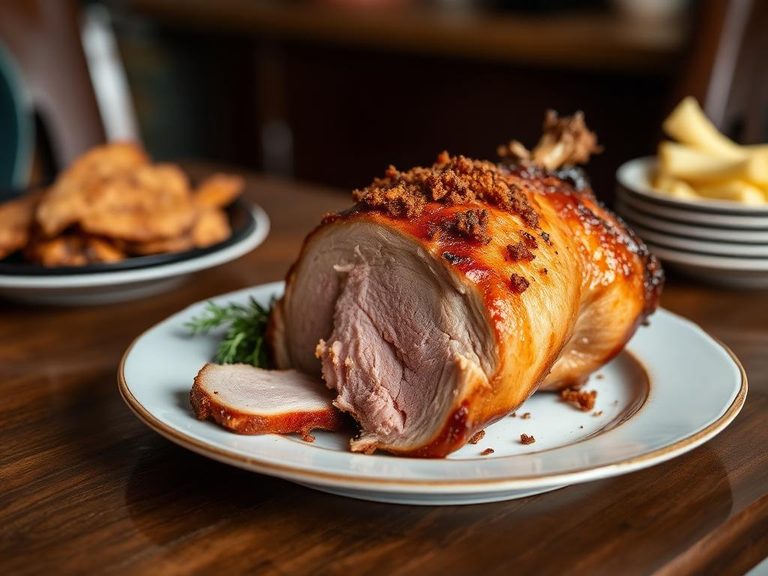
🍽️ Popular dishes
🌍 Where it's eaten
💡 Did you know?
The 'backribs' come from the upper part of the pig's rib cage near the spine, and they are anatomically connected to the loin muscle, which is why they have a slightly leaner profile than spare ribs from the belly.
Full nutrition (USDA data · scales with serving)
| Water | 54.8 g |
| Energy | 292 kcal |
| Energy | 1223 kj |
| Protein | 23.0 g |
| Total lipid (fat) | 21.5 g |
| Ash | 1.0 g |
| Carbohydrate, by difference | 0.00 g |
| Fiber, total dietary | 0.00 g |
| Total Sugars | 0.00 g |
| Calcium, Ca | 46.0 mg |
| Iron, Fe | 0.92 mg |
| Magnesium, Mg | 17.0 mg |
| Phosphorus, P | 165 mg |
| Potassium, K | 240 mg |
| Sodium, Na | 94.0 mg |
| Zinc, Zn | 3.1 mg |
| Copper, Cu | 0.11 mg |
| Manganese, Mn | 0.01 mg |
| Selenium, Se | 32.2 ug |
| Vitamin C, total ascorbic acid | 0.00 mg |
| Thiamin | 0.46 mg |
| Riboflavin | 0.33 mg |
| Niacin | 7.6 mg |
| Pantothenic acid | 1.3 mg |
| Vitamin B-6 | 0.41 mg |
| Folate, total | 0.00 ug |
| Folic acid | 0.00 ug |
| Folate, food | 0.00 ug |
| Folate, DFE | 0.00 ug |
| Choline, total | 78.6 mg |
| Betaine | 3.1 mg |
| Vitamin B-12 | 0.74 ug |
| Vitamin B-12, added | 0.00 ug |
| Vitamin A, RAE | 6.0 ug |
| Retinol | 6.0 ug |
| Carotene, beta | 0.00 ug |
| Carotene, alpha | 0.00 ug |
| Cryptoxanthin, beta | 0.00 ug |
| Vitamin A, IU | 20.0 iu |
| Lycopene | 0.00 ug |
| Lutein + zeaxanthin | 0.00 ug |
| Vitamin E (alpha-tocopherol) | 0.25 mg |
| Vitamin E, added | 0.00 mg |
| Vitamin D (D2 + D3), International Units | 48.0 iu |
| Vitamin D (D2 + D3) | 1.2 ug |
| Vitamin D3 (cholecalciferol) | 1.2 ug |
| Vitamin K (phylloquinone) | 0.00 ug |
| Vitamin K (Dihydrophylloquinone) | 0.00 ug |
| Alcohol, ethyl | 0.00 g |
| Caffeine | 0.00 mg |
| Theobromine | 0.00 mg |
Fat & fatty acid profile (per 100g)
| Fatty acids, total saturated | 7.8 g |
| SFA 4:0 | 0.00 g |
| SFA 6:0 | 0.00 g |
| SFA 8:0 | 0.00 g |
| SFA 10:0 | 0.02 g |
| SFA 12:0 | 0.02 g |
| SFA 14:0 | 0.28 g |
| SFA 15:0 | 0.01 g |
| SFA 16:0 | 4.8 g |
| SFA 17:0 | 0.07 g |
| SFA 18:0 | 2.6 g |
| SFA 20:0 | 0.04 g |
| SFA 22:0 | 0.00 g |
| SFA 24:0 | 0.00 g |
| Fatty acids, total monounsaturated | 9.3 g |
| MUFA 14:1 | 0.00 g |
| MUFA 15:1 | 0.00 g |
| MUFA 16:1 | 0.45 g |
| MUFA 17:1 | 0.00 g |
| MUFA 18:1 | 8.7 g |
| MUFA 18:1 c | 8.6 g |
| MUFA 20:1 | 0.15 g |
| MUFA 22:1 | 0.00 g |
| MUFA 22:1 c | 0.00 g |
| Fatty acids, total polyunsaturated | 3.5 g |
| PUFA 18:2 | 3.1 g |
| PUFA 18:2 n-6 c,c | 3.1 g |
| PUFA 18:3 | 0.15 g |
| PUFA 18:3 n-3 c,c,c (ALA) | 0.13 g |
| PUFA 18:3 n-6 c,c,c | 0.00 g |
| PUFA 18:3i | 0.02 g |
| PUFA 18:4 | 0.00 g |
| PUFA 20:2 n-6 c,c | 0.12 g |
| PUFA 20:3 | 0.01 g |
| PUFA 20:4 | 0.09 g |
| PUFA 20:5 n-3 (EPA) | 0.00 g |
| PUFA 22:5 n-3 (DPA) | 0.02 g |
| PUFA 22:6 n-3 (DHA) | 0.00 g |
| Fatty acids, total trans | 0.19 g |
| Fatty acids, total trans-monoenoic | 0.14 g |
| TFA 18:1 t | 0.14 g |
| TFA 18:2 t not further defined | 0.04 g |
| Fatty acids, total trans-polyenoic | 0.05 g |
| Cholesterol | 84.0 mg |
Amino acid profile (per 100g)
| Tryptophan | 0.27 g |
| Threonine | 1.0 g |
| Isoleucine | 1.1 g |
| Leucine | 1.9 g |
| Lysine | 2.0 g |
| Methionine | 0.63 g |
| Cystine | 0.26 g |
| Phenylalanine | 0.96 g |
| Tyrosine | 0.91 g |
| Valine | 1.2 g |
| Arginine | 1.5 g |
| Histidine | 0.94 g |
| Alanine | 1.3 g |
| Aspartic acid | 2.2 g |
| Glutamic acid | 3.5 g |
| Glycine | 1.0 g |
| Proline | 0.93 g |
| Serine | 0.96 g |
| Hydroxyproline | 0.08 g |
FAQ
What's the difference between back ribs and spare ribs?
Back ribs (or baby back ribs) are smaller, leaner, and come from near the pig's spine. Spare ribs are larger, meatier, and fattier, cut from the belly side. Back ribs cook faster and are often more tender.
How do I get a good glaze on roasted pork ribs?
Apply your sauce or glaze during the last 20-30 minutes of cooking. High sugar content in sauces can burn if added too early. For a sticky finish, brush on the glaze and return to the oven or increase heat briefly, watching carefully.
Are pork ribs a good source of iron?
While pork contains some heme iron (the more absorbable form), it is not considered a primary source like red meat or organ meats. It provides more zinc and B vitamins than iron.
Nutrient density (calculated · NRF9.3)
Nutrient Rich Foods index: beneficial nutrients (protein, fiber, vitamins, minerals) minus saturated fat, added sugar & sodium, per 100 kcal.
NRF9.3 index — Fulgoni, Keast & Drewnowski, 2009. Computed from USDA nutrients.
Weight-loss friendliness (composite index)
Energy density 2.92 kcal/g · 32% calories from protein · 0.0 g fiber · 0.0 g sugar per 100 g.
Composite of energy density (Rolls et al., 1999), protein & fiber satiety, minus sugar. A calculated heuristic — ranks satiety-per-calorie, not a clinical measure.
Dietary load (calculated from USDA values)
Potential renal acid load. Positive = acid-forming, negative = alkaline-forming.
Sodium-to-potassium ratio: 0.39 (lower is better — aim for ≤ 1)
Sodium:potassium per WHO potassium guidance. Computed from USDA nutrients.