Filipino Pork Adobo
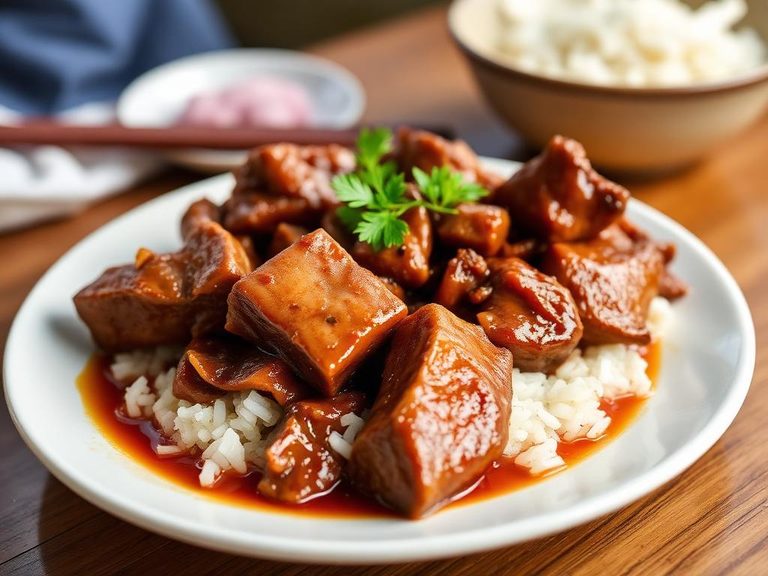
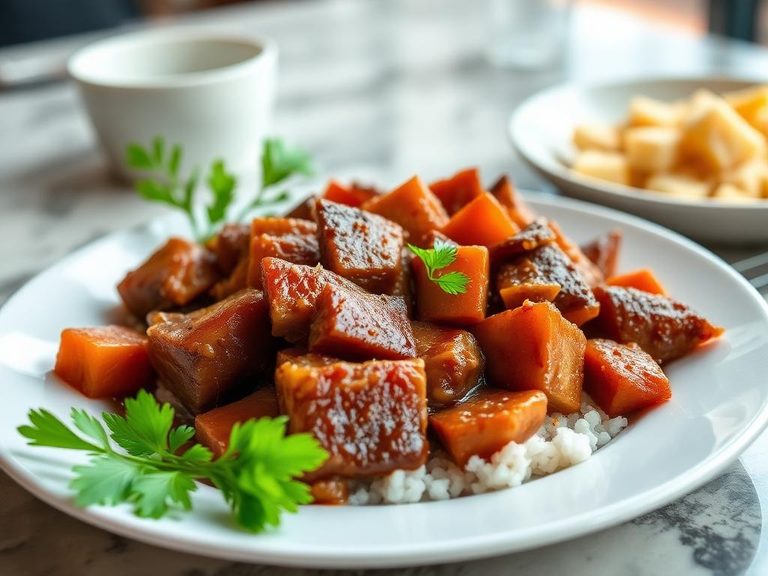
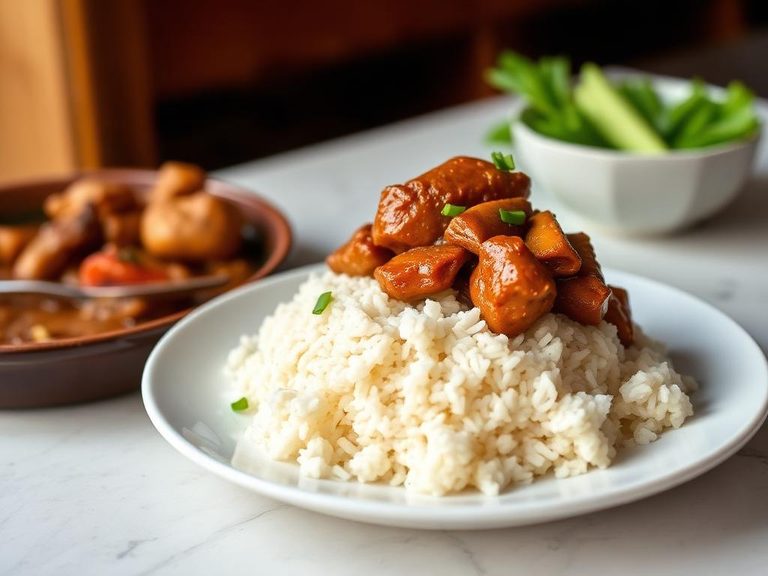
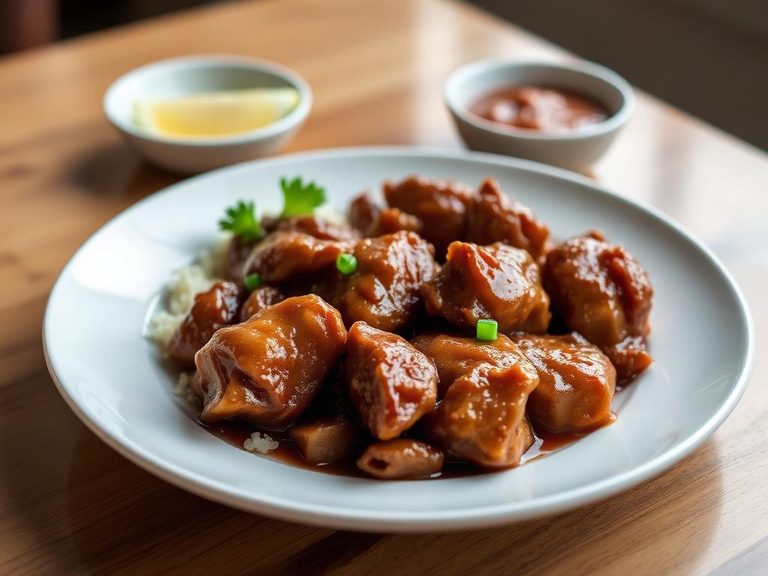
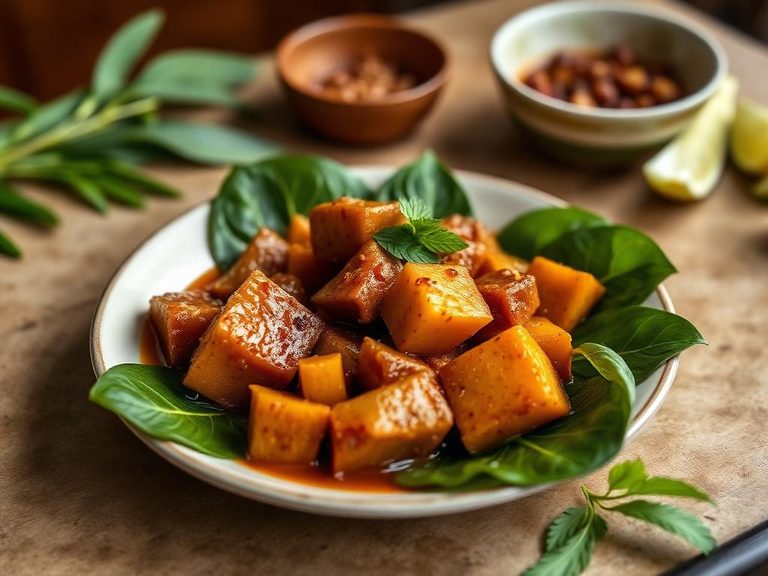
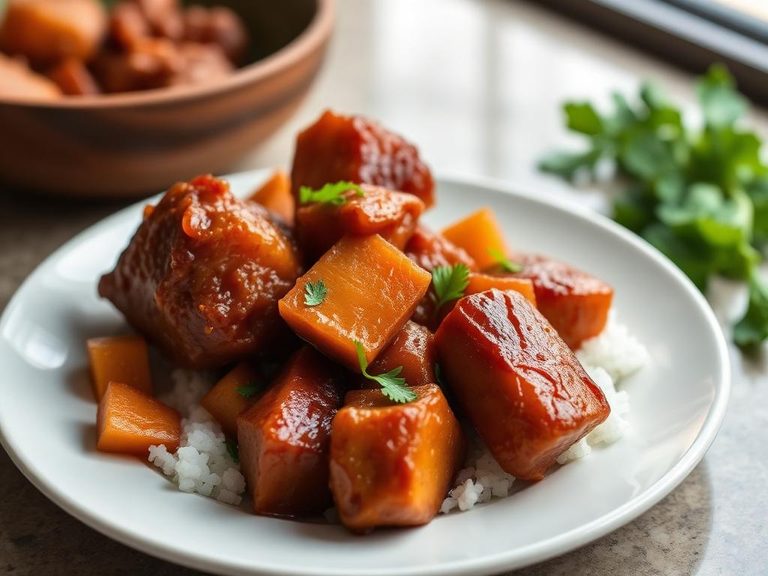
Filipino Pork Adobo is a savory and tangy stew featuring pork marinated and simmered in a mixture of vinegar, soy sauce, garlic, bay leaves, and black peppercorns. It is a cornerstone of Filipino cuisine, beloved for its rich, umami flavor and tender meat. The dish is known for its distinctive balance of salty and sour notes, often deepening in flavor when reheated.
🍽️ Nutrition at a glance
Pork Adobo is a high-protein, high-fat dish with a moderate calorie count, typically ranging from 400 to 600 calories per serving. It provides substantial protein from the pork, along with iron and B vitamins, though its sodium and fat content can be significant depending on the cut of meat and sauce preparation.
Nutrition breakdown
| Calories | 450 kcal |
| Protein | 30 g |
| Carbs | 10 g |
| Fat | 32 g |
| Fiber | 1 g |
| Sugar | 5 g |
| Sodium | 1200 mg |
| Iron | 2.5 mg |
| Potassium | 450 mg |
| Vitamin B12 | 1.2 mcg |
| Niacin (B3) | 8 mg |
| Zinc | 4.5 mg |
| Phosphorus | 280 mg |
| Selenium | 35 mcg |
| Vitamin B6 | 0.6 mg |
Per 1 cup (240 g) · estimated, varies by recipe
💡 What's interesting
Culturally, Adobo is often called the unofficial national dish of the Philippines and is a staple in Filipino households, with countless family variations passed down through generations. Nutritionally, the vinegar-based cooking method acts as a natural preservative, which historically allowed the dish to last longer in tropical climates without refrigeration.