Filipino Adobong Sitaw
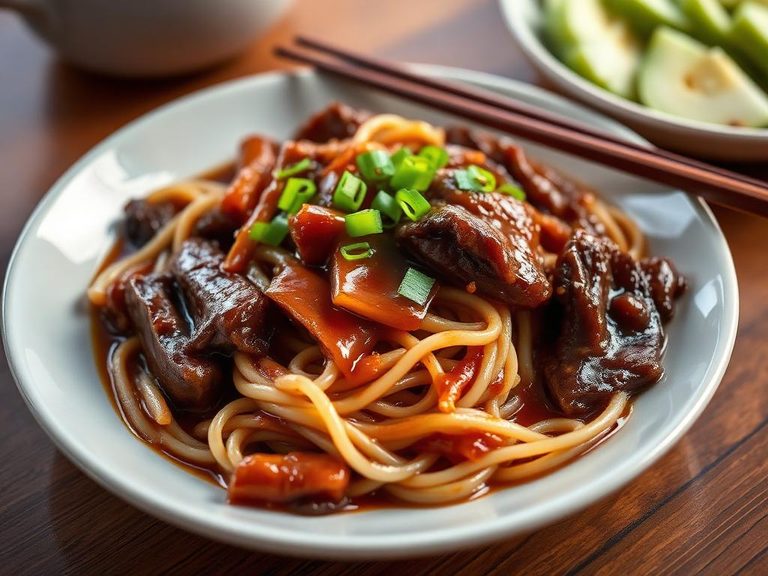
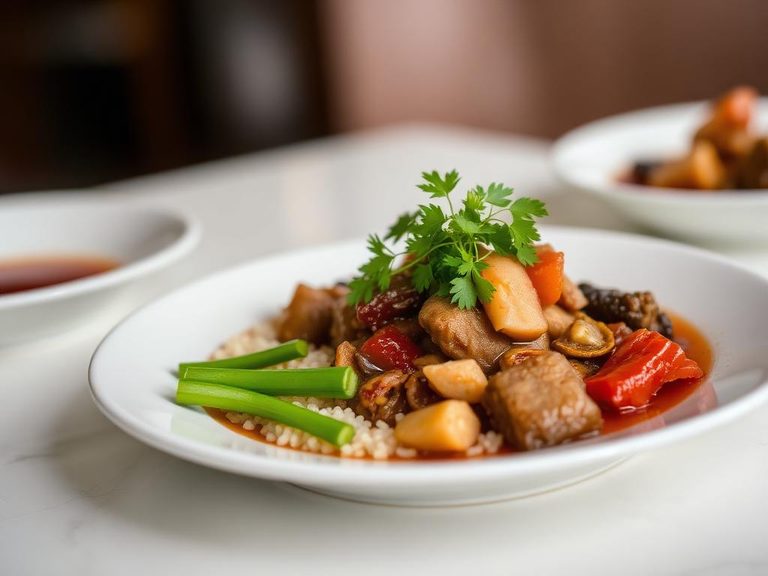
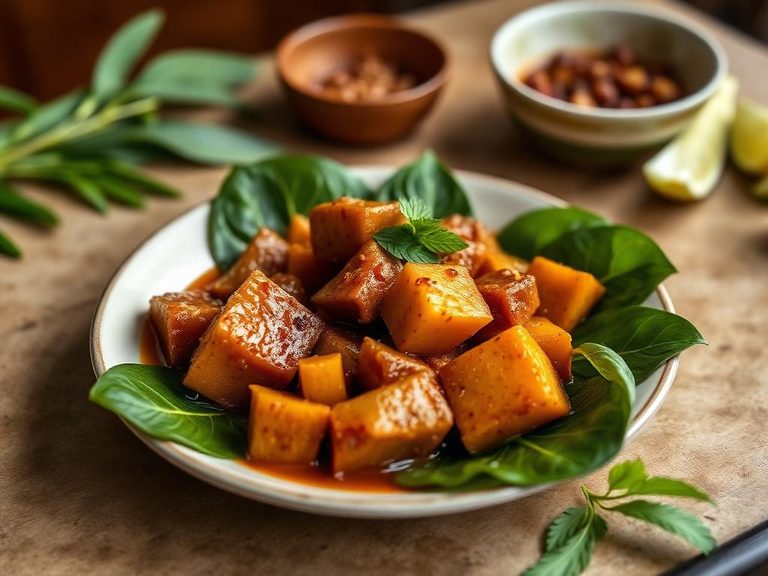
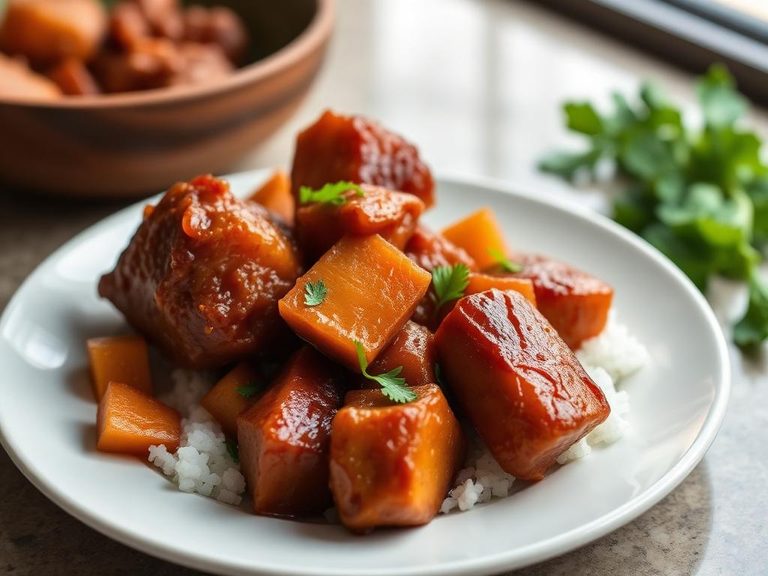
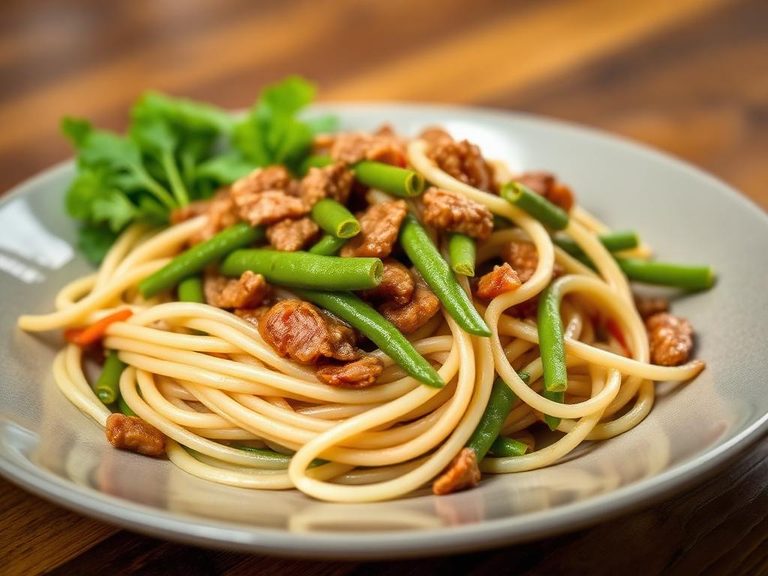
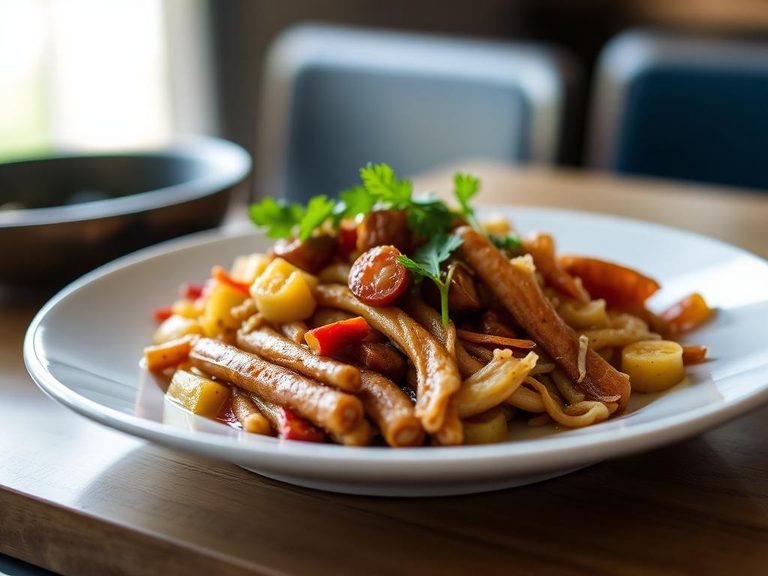
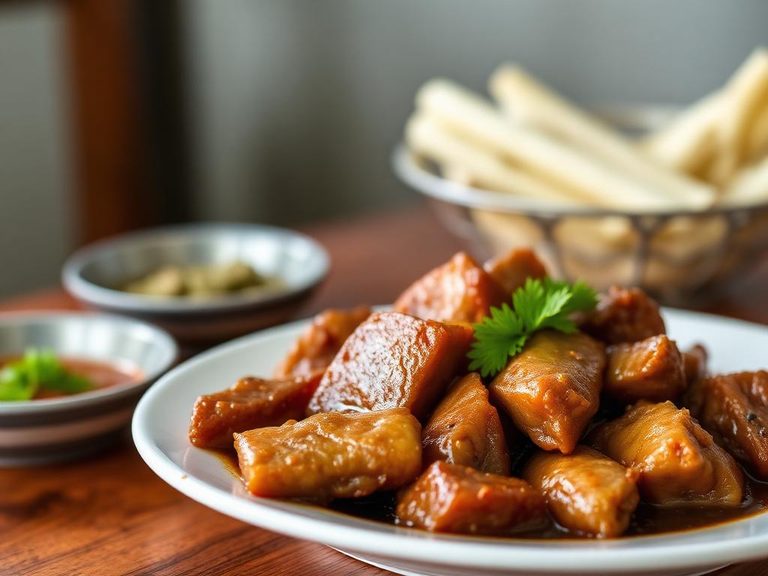
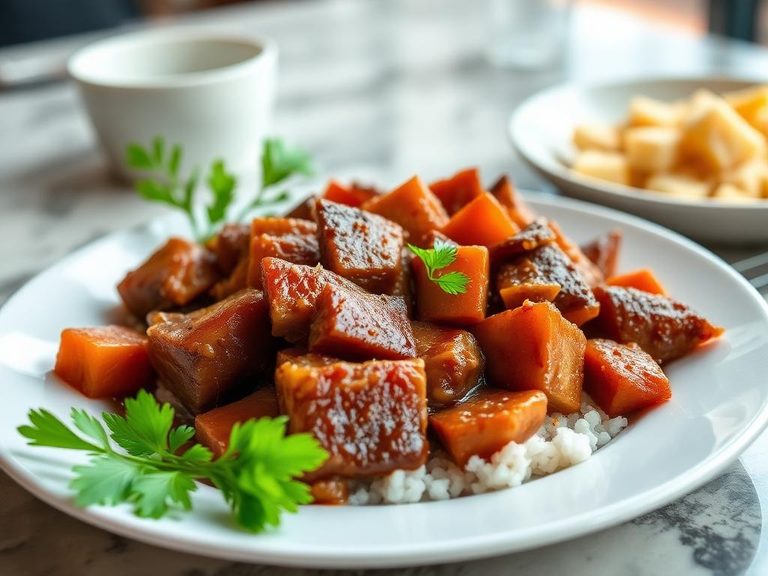
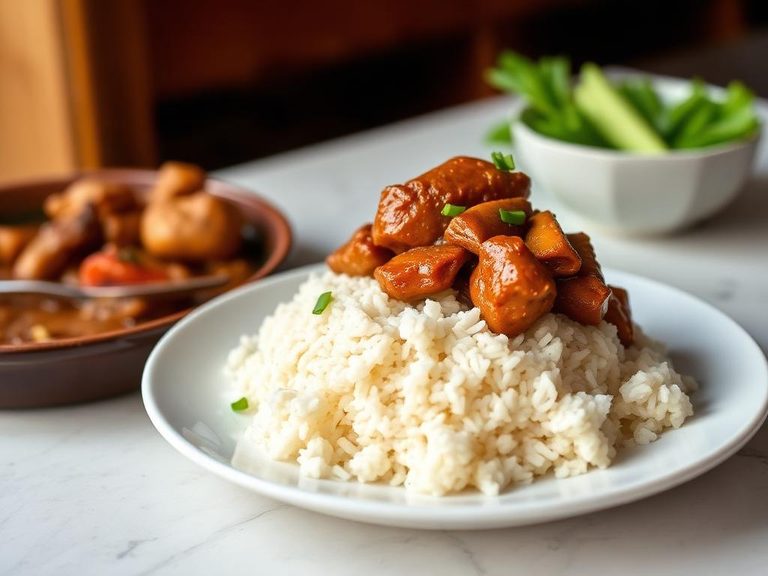
Adobong Sitaw is a classic Filipino vegetable dish featuring long beans (sitaw) braised in a savory and tangy sauce of vinegar and soy sauce, often with garlic, onions, and sometimes pork or shrimp for added depth. It's a staple in Filipino home cooking, showcasing the beloved 'adobo' cooking method applied to vegetables. The dish is commonly served as a side or main with steamed rice.
🍽️ Nutrition at a glance
This dish is relatively low in carbohydrates and moderate in fat, with protein content depending on whether meat is added. It provides fiber, vitamins A and C from the beans, and minerals like iron, with a typical serving ranging from 150 to 250 calories.
Nutrition breakdown
| Calories | 120 kcal |
| Protein | 4 g |
| Carbs | 10 g |
| Fat | 7 g |
| Fiber | 3 g |
| Sugar | 4 g |
| Sodium | 650 mg |
| Potassium | 380 mg |
| Vitamin C | 25 mg |
| Vitamin A | 300 IU |
| Iron | 1.5 mg |
| Calcium | 60 mg |
| Magnesium | 40 mg |
| Vitamin K | 20 mcg |
| Folate | 45 mcg |
Per 1 cup (240 g) · estimated, varies by recipe
💡 What's interesting
Culturally, Adobong Sitaw exemplifies the Filipino adaptation of the adobo technique—originally a Spanish preservation method—into a uniquely local flavor profile. Nutritionally, the vinegar in the sauce not only adds tang but may help in mineral absorption from the vegetables.