

Pork, cured, ham and water product, shank, bone-in, separable lean and fat, unheated
Whole food · Pork Products

Photo: Wikipedia
This is a moist, savory cut of cured pork from the leg, where the meat and fat are left attached to the bone for extra flavor and juiciness. It boasts a tender, slightly fibrous texture and a classic salty-sweet ham profile that is deeply satisfying. Nutritionally, it is a high-protein, low-carb powerhouse, though its 20g of fat per 100g makes it a rich, indulgent choice.
Calorie split: 24% protein · 2% carbs · 74% fat
↓ Full nutrition💚 Why it's loved
People adore this cut for its deep, smoky-sweet flavor and the way it stays incredibly juicy thanks to the marbling and bone. It's a versatile staple that can be served cold in sandwiches, glazed for a holiday centerpiece, or simmered into hearty soups.
⚠️ Watch-outs & how to enjoy it better
The high sodium content from the curing process can be a concern for those monitoring blood pressure, and its fat content is significant. To counteract this, pair it with potassium-rich vegetables like spinach or potatoes, use it in smaller portions as a flavoring agent, and choose a low-sodium variety if available.
Key benefits
- Excellent source of high-quality protein for muscle maintenance.
- Very low in carbohydrates, making it suitable for keto or low-carb diets.
- Rich in essential B vitamins like B1 (thiamine) and B6 for energy metabolism.
- The bone-in cut adds collagen and minerals to the cooking liquid.
🍽️ Popular dishes



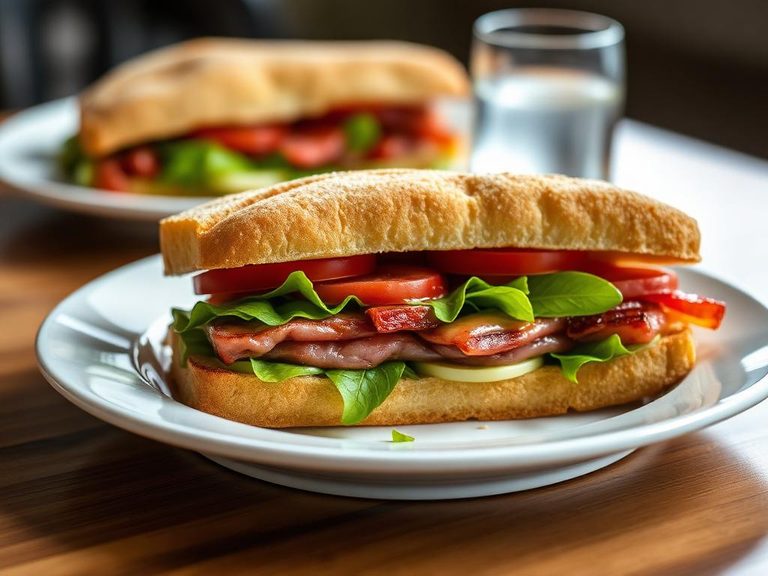
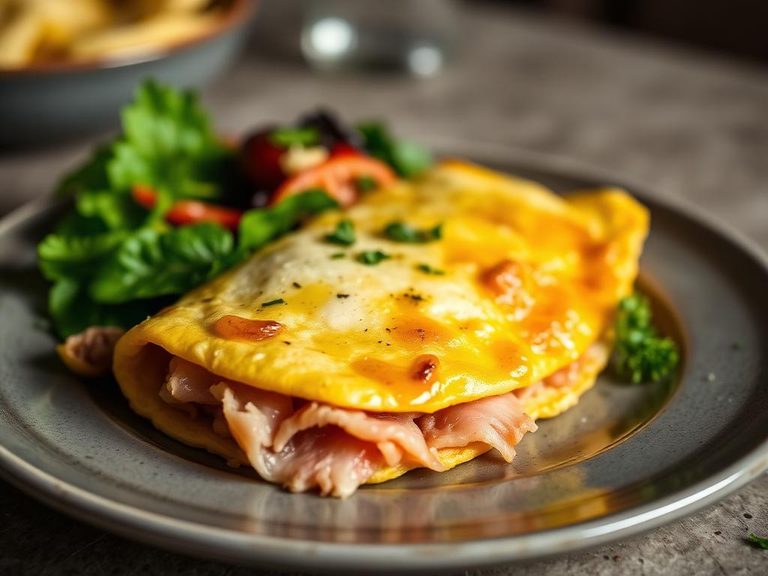
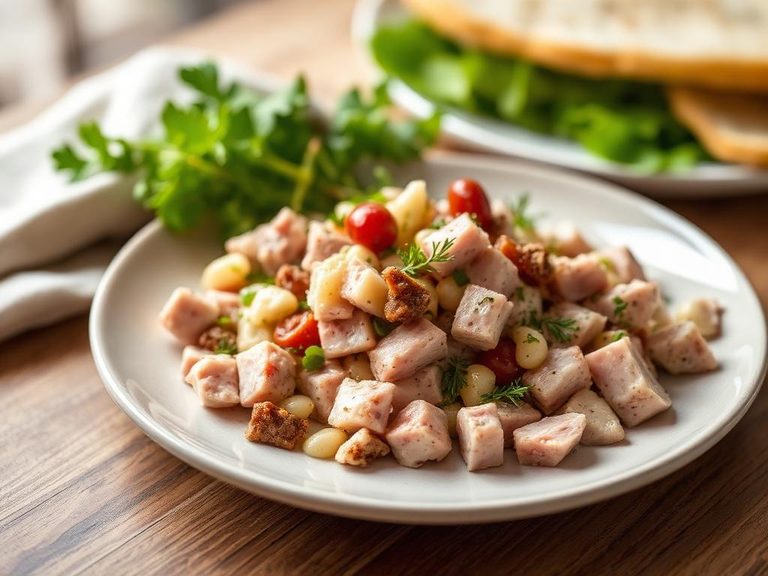
🌍 Where it's eaten
💡 Did you know?
The term 'ham' comes from the Old English 'hamm,' which originally referred to the hollow or bend of the knee, reflecting the anatomical location of the cut.
Full nutrition (USDA data · scales with serving)
| Water | 61.6 g |
| Energy | 243 kcal |
| Energy | 1016 kj |
| Protein | 14.3 g |
| Total lipid (fat) | 20.0 g |
| Ash | 2.7 g |
| Carbohydrate, by difference | 1.4 g |
| Fiber, total dietary | 0.00 g |
| Total Sugars | 0.86 g |
| Sucrose | 0.37 g |
| Glucose | 0.41 g |
| Fructose | 0.07 g |
| Lactose | 0.00 g |
| Maltose | 0.00 g |
| Galactose | 0.00 g |
| Calcium, Ca | 6.0 mg |
| Iron, Fe | 0.82 mg |
| Magnesium, Mg | 14.0 mg |
| Phosphorus, P | 188 mg |
| Potassium, K | 215 mg |
| Sodium, Na | 936 mg |
| Zinc, Zn | 1.9 mg |
| Copper, Cu | 0.12 mg |
| Manganese, Mn | 0.02 mg |
| Selenium, Se | 24.1 ug |
| Vitamin C, total ascorbic acid | 0.00 mg |
| Thiamin | 0.55 mg |
| Riboflavin | 0.16 mg |
| Niacin | 3.3 mg |
| Pantothenic acid | 0.54 mg |
| Vitamin B-6 | 0.24 mg |
| Folate, total | 1.0 ug |
| Folic acid | 0.00 ug |
| Folate, food | 1.0 ug |
| Folate, DFE | 1.0 ug |
| Choline, total | 67.9 mg |
| Betaine | 3.6 mg |
| Vitamin B-12 | 0.47 ug |
| Vitamin B-12, added | 0.00 ug |
| Vitamin A, RAE | 11.0 ug |
| Retinol | 11.0 ug |
| Carotene, beta | 0.00 ug |
| Carotene, alpha | 0.00 ug |
| Cryptoxanthin, beta | 0.00 ug |
| Vitamin A, IU | 36.0 iu |
| Lycopene | 0.00 ug |
| Lutein + zeaxanthin | 0.00 ug |
| Vitamin E (alpha-tocopherol) | 0.41 mg |
| Vitamin E, added | 0.00 mg |
| Tocopherol, beta | 0.00 mg |
| Tocopherol, gamma | 0.10 mg |
| Tocopherol, delta | 0.00 mg |
| Tocotrienol, alpha | 0.06 mg |
| Tocotrienol, beta | 0.00 mg |
| Tocotrienol, gamma | 0.04 mg |
| Tocotrienol, delta | 0.00 mg |
| Vitamin K (phylloquinone) | 0.00 ug |
| Vitamin K (Dihydrophylloquinone) | 0.00 ug |
| Vitamin K (Menaquinone-4) | 0.00 ug |
| Alcohol, ethyl | 0.00 g |
| Caffeine | 0.00 mg |
| Theobromine | 0.00 mg |
Fat & fatty acid profile (per 100g)
| Fatty acids, total saturated | 6.6 g |
| SFA 4:0 | 0.00 g |
| SFA 6:0 | 0.00 g |
| SFA 8:0 | 0.00 g |
| SFA 10:0 | 0.00 g |
| SFA 12:0 | 0.00 g |
| SFA 14:0 | 0.23 g |
| SFA 15:0 | 0.00 g |
| SFA 16:0 | 4.2 g |
| SFA 17:0 | 0.06 g |
| SFA 18:0 | 2.1 g |
| SFA 20:0 | 0.03 g |
| SFA 22:0 | 0.02 g |
| Fatty acids, total monounsaturated | 9.0 g |
| MUFA 14:1 | 0.00 g |
| MUFA 15:1 | 0.00 g |
| MUFA 16:1 | 0.44 g |
| MUFA 17:1 | 0.00 g |
| MUFA 18:1 | 8.4 g |
| MUFA 20:1 | 0.14 g |
| MUFA 22:1 | 0.00 g |
| Fatty acids, total polyunsaturated | 2.7 g |
| PUFA 18:2 | 2.4 g |
| PUFA 18:3 | 0.10 g |
| PUFA 18:4 | 0.00 g |
| PUFA 20:2 n-6 c,c | 0.10 g |
| PUFA 20:3 | 0.00 g |
| PUFA 20:4 | 0.09 g |
| PUFA 20:5 n-3 (EPA) | 0.00 g |
| PUFA 22:5 n-3 (DPA) | 0.00 g |
| PUFA 22:6 n-3 (DHA) | 0.00 g |
| Fatty acids, total trans | 0.16 g |
| Cholesterol | 55.0 mg |
Amino acid profile (per 100g)
| Tryptophan | 0.13 g |
| Threonine | 0.63 g |
| Isoleucine | 0.63 g |
| Leucine | 1.1 g |
| Lysine | 1.2 g |
| Methionine | 0.33 g |
| Cystine | 0.16 g |
| Phenylalanine | 0.56 g |
| Tyrosine | 0.45 g |
| Valine | 0.71 g |
| Arginine | 0.91 g |
| Histidine | 0.62 g |
| Alanine | 0.85 g |
| Aspartic acid | 1.2 g |
| Glutamic acid | 2.0 g |
| Glycine | 0.81 g |
| Proline | 0.63 g |
| Serine | 0.56 g |
| Hydroxyproline | 0.13 g |
FAQ
What is the difference between 'ham' and 'ham and water product'?
A 'ham and water product' contains added water and other ingredients (like sweeteners or flavorings) to increase moisture and yield, making it less dense and often milder in flavor than a traditional 'ham' which is mostly pork and curing agents.
Is this cut suitable for a low-sodium diet?
Not ideally. The curing process makes it high in sodium. For a low-sodium diet, look for 'uncured' or 'low-sodium' versions, and limit portion sizes while increasing intake of potassium-rich foods like bananas or sweet potatoes.
How should I store leftover cooked ham?
Store leftovers in an airtight container in the refrigerator for up to 5 days, or freeze for up to 2 months. For best results, slice or cube the ham before freezing to make it easier to use in future meals.
Nutrient density (calculated · NRF9.3)
Nutrient Rich Foods index: beneficial nutrients (protein, fiber, vitamins, minerals) minus saturated fat, added sugar & sodium, per 100 kcal.
NRF9.3 index — Fulgoni, Keast & Drewnowski, 2009. Computed from USDA nutrients.
Weight-loss friendliness (composite index)
Energy density 2.43 kcal/g · 24% calories from protein · 0.0 g fiber · 0.9 g sugar per 100 g.
Composite of energy density (Rolls et al., 1999), protein & fiber satiety, minus sugar. A calculated heuristic — ranks satiety-per-calorie, not a clinical measure.
Dietary load (calculated from USDA values)
Potential renal acid load. Positive = acid-forming, negative = alkaline-forming.
Sodium-to-potassium ratio: 4.35 (lower is better — aim for ≤ 1)
Sodium:potassium per WHO potassium guidance. Computed from USDA nutrients.