

Lamb, New Zealand, imported, rack - partly frenched, separable lean only, cooked, fast roasted
Whole food · Lamb, Veal, and Game Products

Photo: Wikipedia
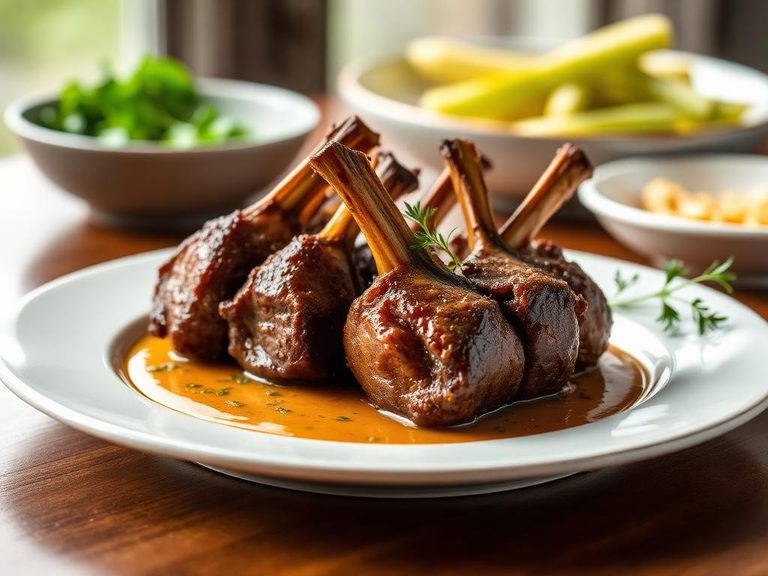
This is a premium cut of New Zealand lamb, the rib section with a thin layer of fat and bone exposed for presentation. When fast-roasted, the lean meat develops a tender, succulent texture with a delicate, slightly sweet flavor that is less gamey than older lamb. It is a high-protein, zero-carb food, making it a cornerstone for ketogenic and carnivore-style diets.
Calorie split: 51% protein · 0% carbs · 49% fat
↓ Full nutrition💚 Why it's loved
People adore this cut for its elegant presentation and refined flavor, which is milder and more tender than mature mutton. It's a celebratory centerpiece that cooks quickly, making it ideal for both special occasions and impressive weeknight meals.
⚠️ Watch-outs & how to enjoy it better
As a red meat, it is high in saturated fat and cholesterol, which should be considered in moderation for heart health. Those monitoring sodium intake should be aware that restaurant or pre-marinated versions can be high in salt. To balance the meal, pair it with a large portion of non-starchy vegetables like roasted asparagus or a fresh salad to add fiber and volume.
Key benefits
- Excellent source of high-quality complete protein.
- Rich in bioavailable heme iron and zinc.
- Provides conjugated linoleic acid (CLA), a naturally occurring fatty acid.
- Naturally carbohydrate-free, supporting blood sugar stability.
🍽️ Popular dishes
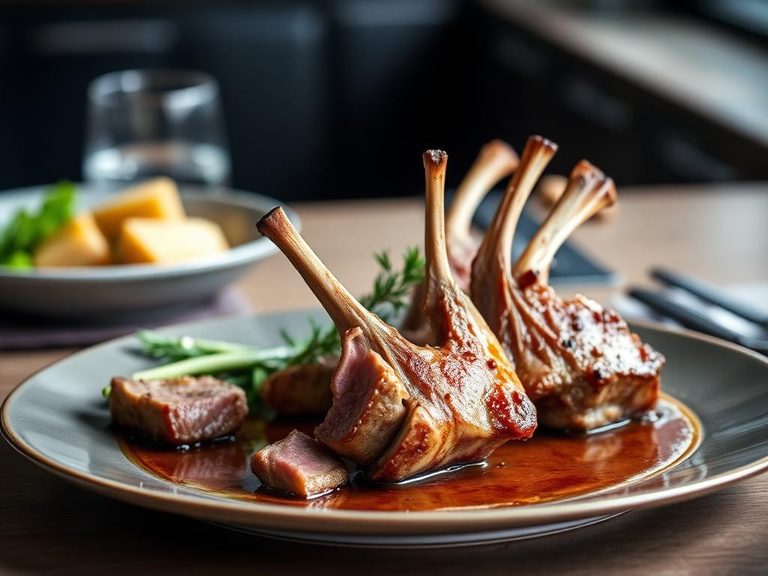
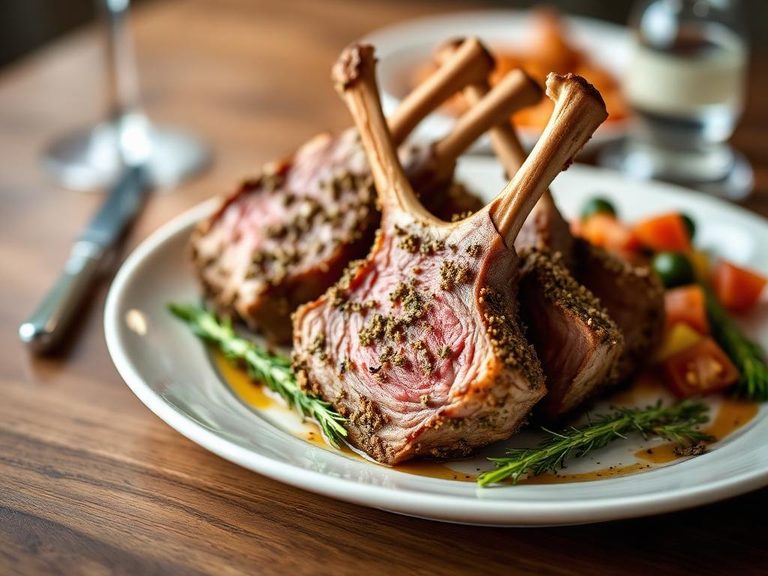
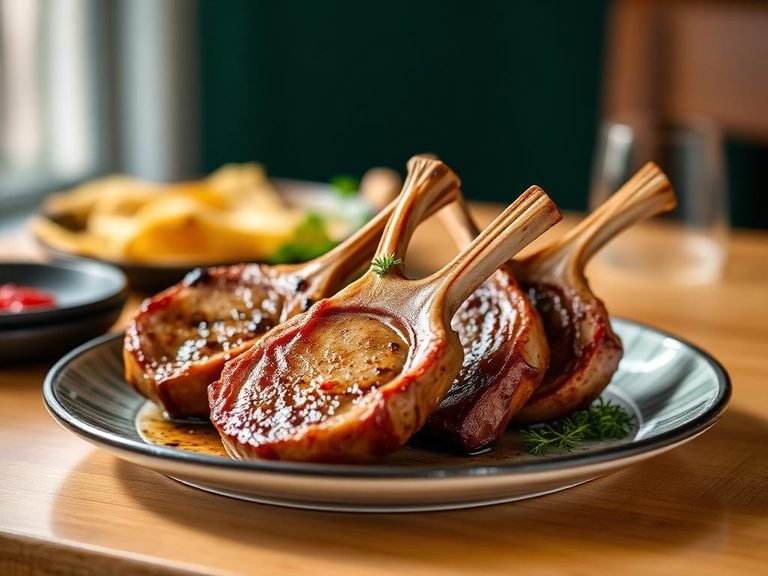
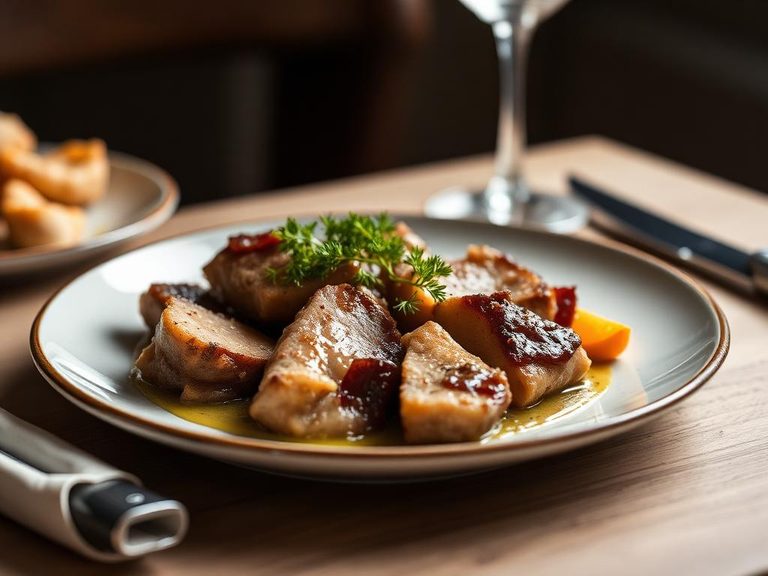
🌍 Where it's eaten
💡 Did you know?
The 'frenched' preparation, where meat and fat are scraped from the rib bones, is named after the French chefs who popularized it for its elegant, clean presentation.
Full nutrition (USDA data · scales with serving)
| Water | 65.0 g |
| Energy | 193 kcal |
| Energy | 809 kj |
| Protein | 24.4 g |
| Total lipid (fat) | 10.6 g |
| Ash | 1.1 g |
| Carbohydrate, by difference | 0.00 g |
| Fiber, total dietary | 0.00 g |
| Total Sugars | 0.00 g |
| Calcium, Ca | 22.0 mg |
| Iron, Fe | 1.6 mg |
| Magnesium, Mg | 24.0 mg |
| Phosphorus, P | 209 mg |
| Potassium, K | 323 mg |
| Sodium, Na | 72.0 mg |
| Zinc, Zn | 2.9 mg |
| Copper, Cu | 0.12 mg |
| Manganese, Mn | 0.01 mg |
| Selenium, Se | 4.3 ug |
| Vitamin C, total ascorbic acid | 0.00 mg |
| Thiamin | 0.06 mg |
| Riboflavin | 0.20 mg |
| Niacin | 6.7 mg |
| Pantothenic acid | 0.39 mg |
| Vitamin B-6 | 0.17 mg |
| Folate, total | 0.00 ug |
| Folic acid | 0.00 ug |
| Folate, food | 0.00 ug |
| Folate, DFE | 0.00 ug |
| Choline, total | 94.4 mg |
| Betaine | 12.4 mg |
| Vitamin B-12 | 1.2 ug |
| Vitamin B-12, added | 0.00 ug |
| Vitamin A, RAE | 4.0 ug |
| Retinol | 4.0 ug |
| Carotene, beta | 0.00 ug |
| Carotene, alpha | 0.00 ug |
| Cryptoxanthin, beta | 0.00 ug |
| Vitamin A, IU | 14.0 iu |
| Lycopene | 0.00 ug |
| Lutein + zeaxanthin | 0.00 ug |
| Vitamin E (alpha-tocopherol) | 0.37 mg |
| Vitamin E, added | 0.00 mg |
| Vitamin D (D2 + D3), International Units | 1.0 iu |
| Vitamin D (D2 + D3) | 0.00 ug |
| Vitamin D3 (cholecalciferol) | 0.00 ug |
| Vitamin K (phylloquinone) | 3.5 ug |
| Vitamin K (Dihydrophylloquinone) | 0.00 ug |
| Alcohol, ethyl | 0.00 g |
| Caffeine | 0.00 mg |
| Theobromine | 0.00 mg |
Fat & fatty acid profile (per 100g)
| Fatty acids, total saturated | 3.7 g |
| SFA 4:0 | 0.00 g |
| SFA 6:0 | 0.00 g |
| SFA 8:0 | 0.00 g |
| SFA 10:0 | 0.02 g |
| SFA 12:0 | 0.02 g |
| SFA 14:0 | 0.22 g |
| SFA 16:0 | 1.6 g |
| SFA 17:0 | 0.14 g |
| SFA 18:0 | 1.7 g |
| SFA 20:0 | 0.01 g |
| SFA 22:0 | 0.00 g |
| SFA 24:0 | 0.00 g |
| Fatty acids, total monounsaturated | 2.6 g |
| MUFA 14:1 | 0.01 g |
| MUFA 15:1 | 0.00 g |
| MUFA 16:1 | 0.10 g |
| MUFA 16:1 c | 0.08 g |
| MUFA 17:1 | 0.00 g |
| MUFA 18:1 | 2.5 g |
| MUFA 18:1 c | 2.1 g |
| MUFA 20:1 | 0.00 g |
| MUFA 22:1 | 0.00 g |
| MUFA 22:1 c | 0.00 g |
| MUFA 24:1 c | 0.00 g |
| Fatty acids, total polyunsaturated | 0.50 g |
| PUFA 18:2 | 0.31 g |
| PUFA 18:2 n-6 c,c | 0.15 g |
| PUFA 18:2 CLAs | 0.16 g |
| PUFA 18:3 | 0.13 g |
| PUFA 18:3 n-3 c,c,c (ALA) | 0.13 g |
| PUFA 18:3 n-6 c,c,c | 0.00 g |
| PUFA 18:4 | 0.00 g |
| PUFA 20:2 n-6 c,c | 0.00 g |
| PUFA 20:3 | 0.00 g |
| PUFA 20:3 n-3 | 0.00 g |
| PUFA 20:3 n-6 | 0.00 g |
| PUFA 20:4 | 0.03 g |
| PUFA 20:4 n-6 | 0.03 g |
| PUFA 20:5 n-3 (EPA) | 0.02 g |
| PUFA 22:5 n-3 (DPA) | 0.02 g |
| PUFA 22:6 n-3 (DHA) | 0.00 g |
| Fatty acids, total trans | 0.42 g |
| Fatty acids, total trans-monoenoic | 0.42 g |
| TFA 16:1 t | 0.01 g |
| TFA 18:1 t | 0.41 g |
| TFA 18:2 t,t | 0.00 g |
| Fatty acids, total trans-polyenoic | 0.00 g |
| Cholesterol | 76.0 mg |
Amino acid profile (per 100g)
| Tryptophan | 0.27 g |
| Threonine | 1.2 g |
| Isoleucine | 1.1 g |
| Leucine | 1.9 g |
| Lysine | 2.1 g |
| Methionine | 0.80 g |
| Cystine | 0.32 g |
| Phenylalanine | 0.96 g |
| Tyrosine | 0.85 g |
| Valine | 1.2 g |
| Arginine | 1.6 g |
| Histidine | 0.52 g |
| Alanine | 1.2 g |
| Glutamic acid | 3.4 g |
| Glycine | 1.0 g |
| Proline | 0.78 g |
| Serine | 0.83 g |
FAQ
What does 'partly frenched' mean?
It means the butcher has cleaned the top portion of the rib bones of meat and fat for a neater appearance, but the lower part near the eye of the meat is left intact.
How is 'fast roasted' different from regular roasting?
Fast roasting uses higher heat (around 400-425°F or 200-220°C) for a shorter time to quickly brown the exterior while keeping the interior pink and juicy, ideal for lean cuts.
Why is it 'separable lean only'?
This is a USDA database term specifying the nutritional data is for the meat that can be easily separated from the visible fat and bone, giving a precise profile for the lean portion.
Nutrient density (calculated · NRF9.3)
Nutrient Rich Foods index: beneficial nutrients (protein, fiber, vitamins, minerals) minus saturated fat, added sugar & sodium, per 100 kcal.
NRF9.3 index — Fulgoni, Keast & Drewnowski, 2009. Computed from USDA nutrients.
Weight-loss friendliness (composite index)
Energy density 1.93 kcal/g · 51% calories from protein · 0.0 g fiber · 0.0 g sugar per 100 g.
Composite of energy density (Rolls et al., 1999), protein & fiber satiety, minus sugar. A calculated heuristic — ranks satiety-per-calorie, not a clinical measure.
Dietary load (calculated from USDA values)
Potential renal acid load. Positive = acid-forming, negative = alkaline-forming.
Sodium-to-potassium ratio: 0.22 (lower is better — aim for ≤ 1)
Sodium:potassium per WHO potassium guidance. Computed from USDA nutrients.