

Lamb, loin, separable lean and fat, trimmed to 1/8" fat, choice, cooked, roasted
Whole food · Lamb, Veal, and Game Products

Photo: Wikipedia
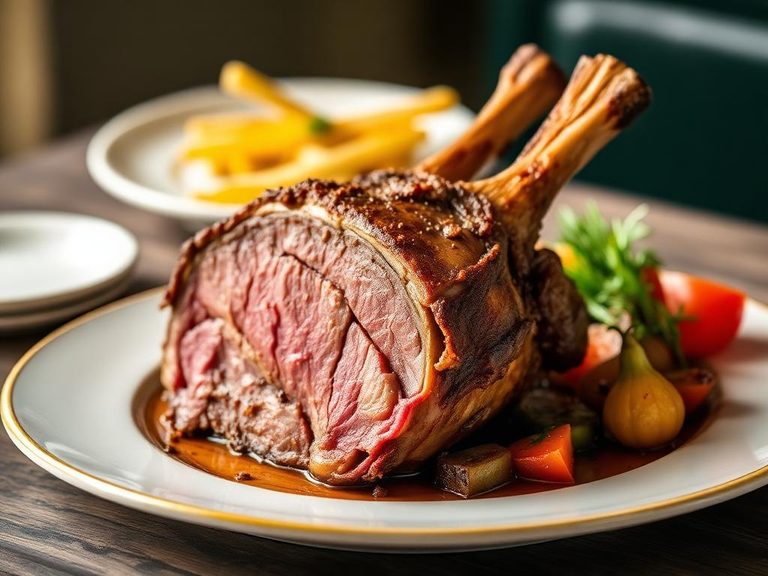
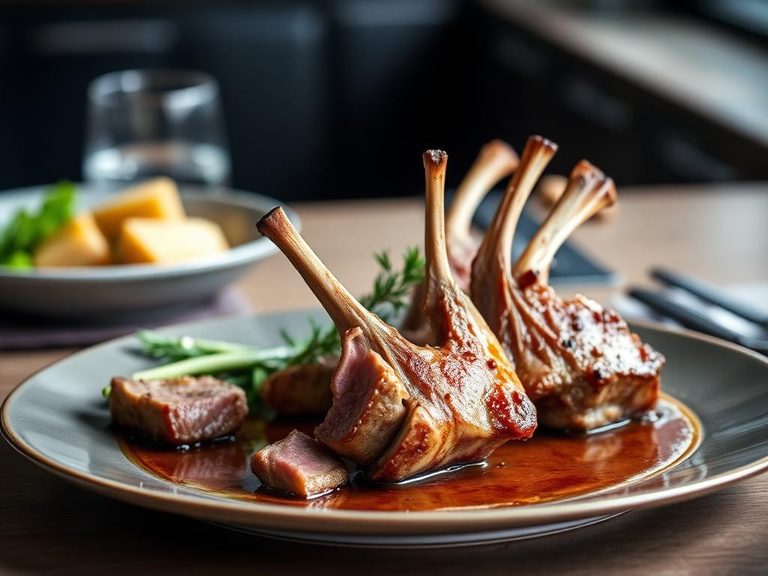
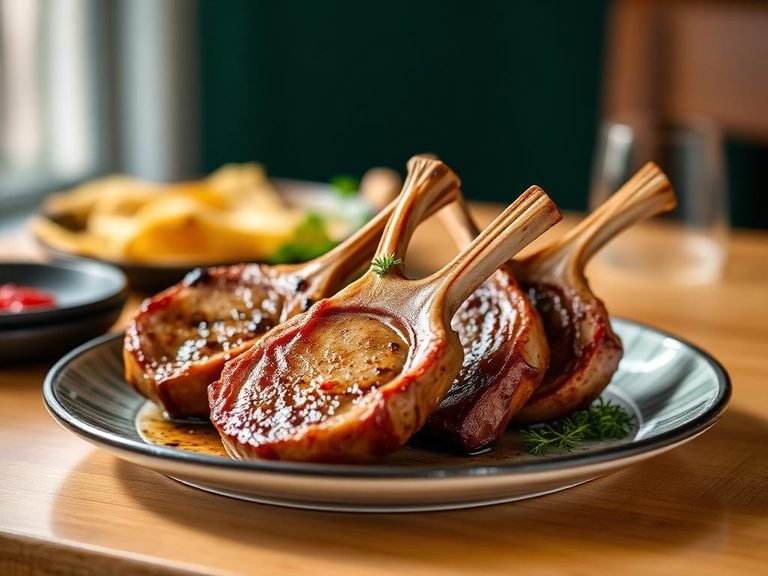
This is a succulent cut of roasted lamb loin, where the meat and a thin layer of fat have been cooked to a tender, flavorful finish. It boasts a rich, savory taste with a slightly gamey undertone and a satisfying, juicy texture. Nutritionally, it's a powerhouse of protein and provides substantial energy from its healthy fat content.
Calorie split: 33% protein · 0% carbs · 67% fat
↓ Full nutrition💚 Why it's loved
People love it for its deep, robust flavor that stands up well to roasting, creating a beautiful crust while keeping the inside tender. It's a centerpiece of celebratory meals and is prized for its versatility in both simple and elaborate preparations.
⚠️ Watch-outs & how to enjoy it better
The high fat content makes it a calorie-dense choice, which may be a concern for those monitoring energy intake. To counteract this, practice portion control and pair it with a large serving of non-starchy vegetables like roasted broccoli or a fresh salad to add volume and fiber without excess calories.
Key benefits
- Excellent source of high-quality, complete protein for muscle maintenance and growth.
- Rich in essential vitamins like B12 and minerals such as zinc and iron.
- Provides a dense source of energy from its fat content, ideal for satiety.
- Contains conjugated linoleic acid (CLA), a type of fatty acid studied for its potential health benefits.
🍽️ Popular dishes
🌍 Where it's eaten
💡 Did you know?
Lamb loin is sometimes called the 'saddle' of the lamb, and a whole saddle is a prized cut that includes the loin from both sides of the animal.
Full nutrition (USDA data · scales with serving)
| Water | 54.3 g |
| Energy | 290 kcal |
| Energy | 1213 kj |
| Protein | 23.3 g |
| Total lipid (fat) | 21.1 g |
| Ash | 1.2 g |
| Carbohydrate, by difference | 0.00 g |
| Fiber, total dietary | 0.00 g |
| Calcium, Ca | 18.0 mg |
| Iron, Fe | 2.2 mg |
| Magnesium, Mg | 24.0 mg |
| Phosphorus, P | 185 mg |
| Potassium, K | 250 mg |
| Sodium, Na | 64.0 mg |
| Zinc, Zn | 3.5 mg |
| Copper, Cu | 0.12 mg |
| Manganese, Mn | 0.02 mg |
| Selenium, Se | 25.2 ug |
| Vitamin C, total ascorbic acid | 0.00 mg |
| Thiamin | 0.10 mg |
| Riboflavin | 0.24 mg |
| Niacin | 7.0 mg |
| Pantothenic acid | 0.66 mg |
| Vitamin B-6 | 0.13 mg |
| Folate, total | 20.0 ug |
| Folic acid | 0.00 ug |
| Folate, food | 20.0 ug |
| Folate, DFE | 20.0 ug |
| Vitamin B-12 | 2.2 ug |
| Vitamin A, RAE | 0.00 ug |
| Retinol | 0.00 ug |
| Vitamin A, IU | 0.00 iu |
Fat & fatty acid profile (per 100g)
| Fatty acids, total saturated | 9.1 g |
| SFA 10:0 | 0.05 g |
| SFA 12:0 | 0.09 g |
| SFA 14:0 | 0.82 g |
| SFA 16:0 | 4.6 g |
| SFA 18:0 | 2.9 g |
| Fatty acids, total monounsaturated | 8.7 g |
| MUFA 16:1 | 0.62 g |
| MUFA 18:1 | 7.8 g |
| MUFA 20:1 | 0.00 g |
| Fatty acids, total polyunsaturated | 1.7 g |
| PUFA 18:2 | 1.2 g |
| PUFA 18:3 | 0.37 g |
| PUFA 20:4 | 0.08 g |
| Cholesterol | 93.0 mg |
Amino acid profile (per 100g)
| Tryptophan | 0.27 g |
| Threonine | 1.00 g |
| Isoleucine | 1.1 g |
| Leucine | 1.8 g |
| Lysine | 2.1 g |
| Methionine | 0.60 g |
| Cystine | 0.28 g |
| Phenylalanine | 0.95 g |
| Tyrosine | 0.78 g |
| Valine | 1.3 g |
| Arginine | 1.4 g |
| Histidine | 0.74 g |
| Alanine | 1.4 g |
| Aspartic acid | 2.0 g |
| Glutamic acid | 3.4 g |
| Glycine | 1.1 g |
| Proline | 0.98 g |
| Serine | 0.86 g |
FAQ
What is the difference between lamb loin and lamb leg?
The loin is a smaller, more tender cut from the back, while the leg is a larger, more muscular cut from the hindquarters. Loin is often quicker to cook and is prized for its tenderness, while leg is great for roasting and can be more economical.
How should I cook lamb loin for the best results?
For the best flavor and texture, roast it at a high temperature (around 400°F/200°C) to get a good sear, then reduce the heat to finish cooking. Use a meat thermometer to ensure it reaches your desired doneness (145°F/63°C for medium-rare is recommended).
Is lamb loin a good source of iron?
Yes, lamb is a good source of heme iron, which is the type of iron most easily absorbed by the body. This makes it particularly beneficial for individuals at risk of iron deficiency.
Nutrient density (calculated · NRF9.3)
Nutrient Rich Foods index: beneficial nutrients (protein, fiber, vitamins, minerals) minus saturated fat, added sugar & sodium, per 100 kcal.
NRF9.3 index — Fulgoni, Keast & Drewnowski, 2009. Computed from USDA nutrients.
Weight-loss friendliness (composite index)
Energy density 2.90 kcal/g · 32% calories from protein · 0.0 g fiber · 0.0 g sugar per 100 g.
Composite of energy density (Rolls et al., 1999), protein & fiber satiety, minus sugar. A calculated heuristic — ranks satiety-per-calorie, not a clinical measure.
Dietary load (calculated from USDA values)
Potential renal acid load. Positive = acid-forming, negative = alkaline-forming.
Sodium-to-potassium ratio: 0.26 (lower is better — aim for ≤ 1)
Sodium:potassium per WHO potassium guidance. Computed from USDA nutrients.