

Fish, salmon, king, with skin, kippered, (Alaska Native)
Whole food · American Indian/Alaska Native Foods

Photo: Wikipedia
Kippered king salmon is a rich, deeply flavored preserved fish, traditionally smoked and dried by Alaska Native peoples. Its texture is firm, flaky, and slightly oily, with a concentrated, savory-sweet taste from the curing and smoking process. Nutritionally, it is a powerhouse of high-quality protein and heart-healthy fats, with virtually no carbohydrates.
Calorie split: 44% protein · 0% carbs · 56% fat
↓ Full nutrition💚 Why it's loved
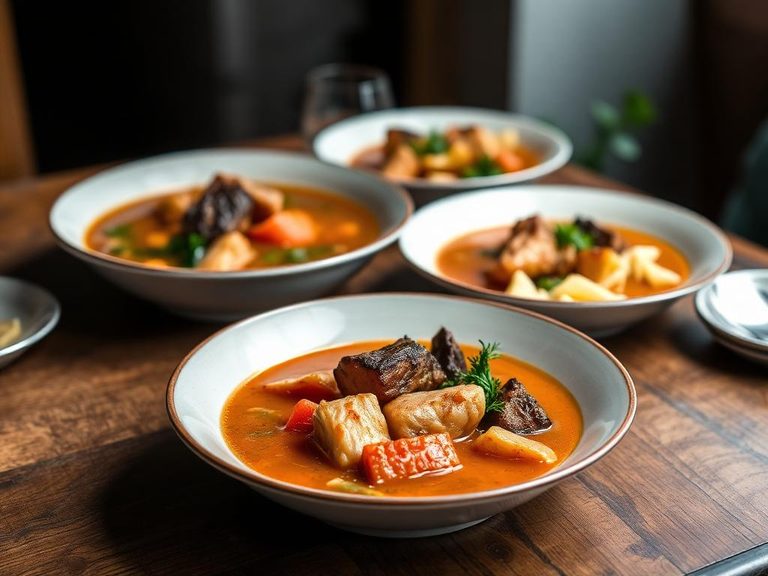
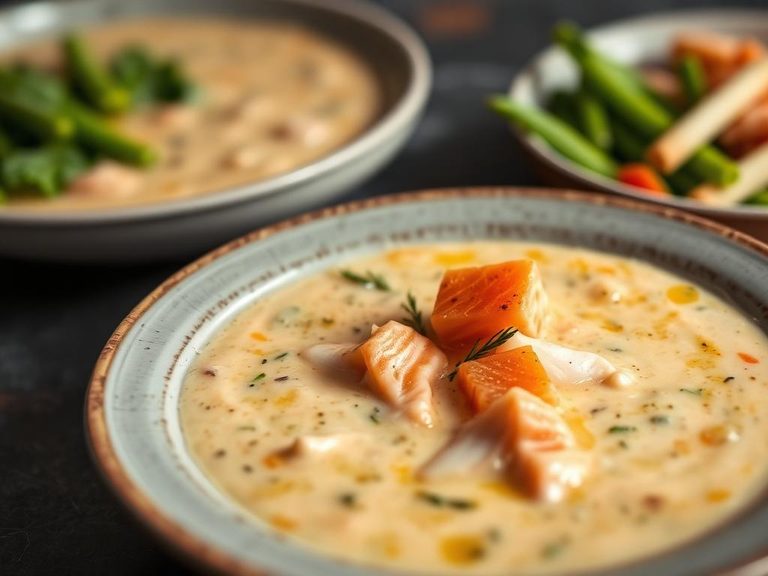
People love it for its intense, smoky umami flavor that's both rustic and luxurious, and its remarkable versatility—it can be a standalone snack, a salad topping, or a hearty addition to stews and chowders.
⚠️ Watch-outs & how to enjoy it better
As a preserved fish, it can be high in sodium, which is a consideration for those monitoring salt intake. To counteract this, rinse slices briefly before use or pair it with potassium-rich foods like fresh vegetables or avocado. It is also a common fish allergen.
Key benefits
- Excellent source of complete protein for muscle maintenance
- Rich in omega-3 fatty acids (EPA & DHA) for heart and brain health
- Provides significant vitamin D and B12
- Naturally low in carbohydrates
- Traditional preservation method extends shelf life
🍽️ Popular dishes
🌍 Where it's eaten
💡 Did you know?
The term 'kippered' historically refers to fish that have been gutted, cleaned, and preserved through salting and smoking, a method perfected for long sea voyages and winter sustenance.
Full nutrition (USDA data · scales with serving)
| Water | 61.5 g |
| Energy | 209 kcal |
| Energy | 876 kj |
| Protein | 23.2 g |
| Total lipid (fat) | 12.9 g |
| Ash | 3.2 g |
| Carbohydrate, by difference | 0.00 g |
| Fiber, total dietary | 0.00 g |
| Total Sugars | 0.00 g |
| Sucrose | 0.00 g |
| Glucose | 0.00 g |
| Fructose | 0.00 g |
| Lactose | 0.00 g |
| Maltose | 0.00 g |
| Galactose | 0.00 g |
| Starch | 0.00 g |
| Calcium, Ca | 55.0 mg |
| Iron, Fe | 0.55 mg |
| Magnesium, Mg | 29.0 mg |
| Phosphorus, P | 270 mg |
| Potassium, K | 390 mg |
| Sodium, Na | 870 mg |
| Zinc, Zn | 0.77 mg |
| Copper, Cu | 0.15 mg |
| Manganese, Mn | 0.04 mg |
| Selenium, Se | 30.5 ug |
| Vitamin C, total ascorbic acid | 0.00 mg |
| Thiamin | 0.04 mg |
| Riboflavin | 0.20 mg |
| Niacin | 8.6 mg |
| Pantothenic acid | 0.82 mg |
| Vitamin B-6 | 0.38 mg |
| Folate, total | 3.0 ug |
| Folic acid | 0.00 ug |
| Folate, food | 3.0 ug |
| Folate, DFE | 3.0 ug |
| Choline, total | 98.9 mg |
| Betaine | 3.6 mg |
| Vitamin B-12 | 3.6 ug |
| Vitamin A, RAE | 12.0 ug |
| Carotene, beta | 0.00 ug |
| Carotene, alpha | 0.00 ug |
| Cryptoxanthin, beta | 0.00 ug |
| Vitamin A, IU | 41.0 iu |
| Lycopene | 0.00 ug |
| Lutein + zeaxanthin | 0.00 ug |
| Vitamin E (alpha-tocopherol) | 0.42 mg |
| Vitamin E, added | 0.00 mg |
| Tocopherol, beta | 0.00 mg |
| Tocopherol, gamma | 0.00 mg |
| Tocopherol, delta | 0.00 mg |
| Tocotrienol, alpha | 0.00 mg |
| Tocotrienol, beta | 0.00 mg |
| Tocotrienol, gamma | 0.00 mg |
| Tocotrienol, delta | 0.00 mg |
| Vitamin D (D2 + D3), International Units | 46.0 iu |
| Vitamin D (D2 + D3) | 1.2 ug |
| Vitamin K (phylloquinone) | 0.00 ug |
| Vitamin K (Dihydrophylloquinone) | 0.00 ug |
| Vitamin K (Menaquinone-4) | 1.8 ug |
| Alcohol, ethyl | 0.00 g |
| Caffeine | 0.00 mg |
| Theobromine | 0.00 mg |
Fat & fatty acid profile (per 100g)
| Fatty acids, total saturated | 2.4 g |
| SFA 8:0 | 0.00 g |
| SFA 10:0 | 0.00 g |
| SFA 12:0 | 0.00 g |
| SFA 14:0 | 0.49 g |
| SFA 15:0 | 0.04 g |
| SFA 16:0 | 1.5 g |
| SFA 17:0 | 0.06 g |
| SFA 18:0 | 0.33 g |
| SFA 20:0 | 0.00 g |
| SFA 22:0 | 0.00 g |
| SFA 24:0 | 0.00 g |
| Fatty acids, total monounsaturated | 5.9 g |
| MUFA 14:1 | 0.00 g |
| MUFA 15:1 | 0.00 g |
| MUFA 16:1 | 0.68 g |
| MUFA 17:1 | 0.00 g |
| MUFA 18:1 | 2.4 g |
| MUFA 20:1 | 1.5 g |
| MUFA 22:1 | 1.1 g |
| MUFA 24:1 c | 0.11 g |
| Fatty acids, total polyunsaturated | 2.1 g |
| PUFA 18:2 | 0.16 g |
| PUFA 18:3 | 0.17 g |
| PUFA 18:4 | 0.16 g |
| PUFA 20:2 n-6 c,c | 0.03 g |
| PUFA 20:3 | 0.03 g |
| PUFA 20:4 | 0.14 g |
| PUFA 20:5 n-3 (EPA) | 0.46 g |
| PUFA 21:5 | 0.02 g |
| PUFA 22:4 | 0.02 g |
| PUFA 22:5 n-3 (DPA) | 0.11 g |
| PUFA 22:6 n-3 (DHA) | 0.79 g |
| Cholesterol | 67.0 mg |
Amino acid profile (per 100g)
| Tryptophan | 0.26 g |
| Threonine | 1.0 g |
| Isoleucine | 0.91 g |
| Leucine | 1.7 g |
| Lysine | 1.9 g |
| Methionine | 0.63 g |
| Cystine | 0.20 g |
| Phenylalanine | 0.90 g |
| Tyrosine | 0.76 g |
| Valine | 1.1 g |
| Arginine | 1.4 g |
| Histidine | 0.55 g |
| Alanine | 1.5 g |
| Aspartic acid | 2.2 g |
| Glutamic acid | 3.0 g |
| Glycine | 1.2 g |
| Proline | 1.1 g |
| Serine | 0.91 g |
FAQ
What is the difference between kippered salmon and regular smoked salmon?
Kippered salmon is typically smoked and dried more thoroughly than cold-smoked salmon (like lox), resulting in a firmer, drier, and more shelf-stable product with a more concentrated flavor.
How should I store opened kippered salmon?
Once opened, it should be tightly wrapped and refrigerated, where it will keep for several days. For longer storage, freezing is recommended.
Is it safe to eat kippered salmon straight from the package?
Yes, as a preserved food, it is fully cooked and ready to eat, though many people enjoy warming it slightly or incorporating it into cooked dishes.
Nutrient density (calculated · NRF9.3)
Nutrient Rich Foods index: beneficial nutrients (protein, fiber, vitamins, minerals) minus saturated fat, added sugar & sodium, per 100 kcal.
NRF9.3 index — Fulgoni, Keast & Drewnowski, 2009. Computed from USDA nutrients.
Weight-loss friendliness (composite index)
Energy density 2.09 kcal/g · 44% calories from protein · 0.0 g fiber · 0.0 g sugar per 100 g.
Composite of energy density (Rolls et al., 1999), protein & fiber satiety, minus sugar. A calculated heuristic — ranks satiety-per-calorie, not a clinical measure.
Dietary load (calculated from USDA values)
Potential renal acid load. Positive = acid-forming, negative = alkaline-forming.
Sodium-to-potassium ratio: 2.23 (lower is better — aim for ≤ 1)
Sodium:potassium per WHO potassium guidance. Computed from USDA nutrients.