

Chicken, dark meat, thigh, meat and skin, with added solution, cooked, roasted
Whole food · Poultry Products

Photo: Wikipedia
This is a succulent, roasted chicken thigh with its skin on, cooked in a flavorful solution that locks in moisture. The meat is tender and juicy with a rich, savory depth, while the skin crisps up to a golden, fatty crunch. Nutritionally, it's a powerhouse of protein and healthy fats, with virtually no carbohydrates.
Calorie split: 43% protein · 0% carbs · 57% fat
↓ Full nutrition💚 Why it's loved
People adore it for its deep, savory flavor and forgiving texture that stays moist even with aggressive cooking. Its versatility makes it a star in everything from simple weeknight roasts to complex global stews and curries.
⚠️ Watch-outs & how to enjoy it better
The added solution can significantly increase sodium content, which is a concern for those monitoring blood pressure. The skin, while delicious, adds considerable saturated fat and calories. To counteract, rinse the chicken before cooking to reduce surface sodium, and consider removing the skin after roasting if you wish to reduce fat intake while still enjoying the moist meat.
Key benefits
- Excellent source of high-quality protein for muscle maintenance.
- Rich in iron and zinc, essential minerals for energy and immunity.
- Contains B vitamins, particularly niacin and B6, for metabolic health.
- The skin provides a good source of collagen and healthy monounsaturated fats.
- A satiating, low-carb option that helps with fullness and blood sugar stability.
🍽️ Popular dishes

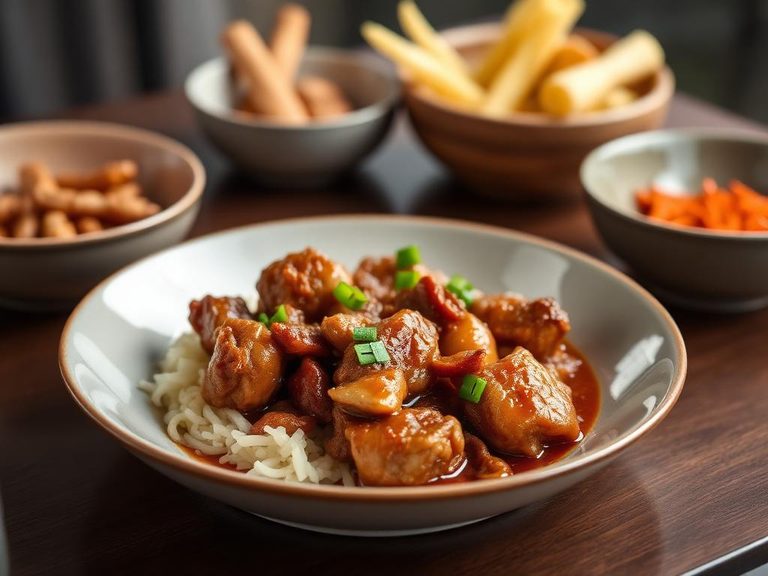

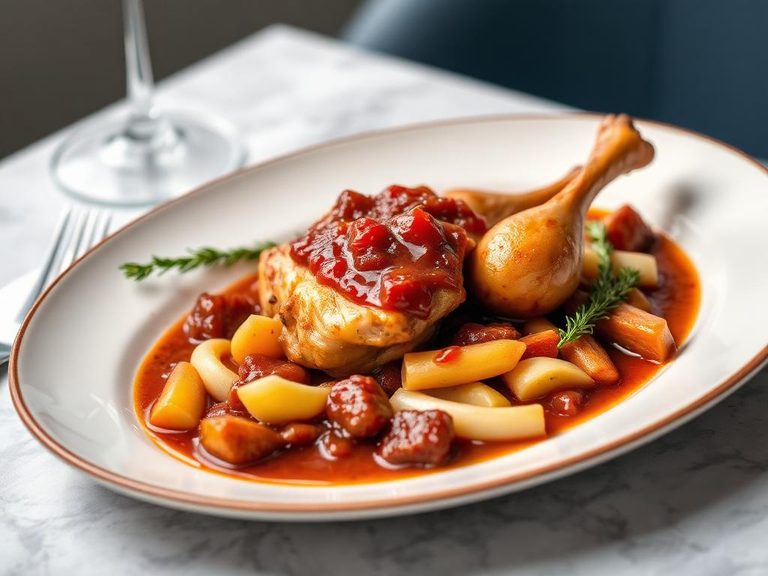
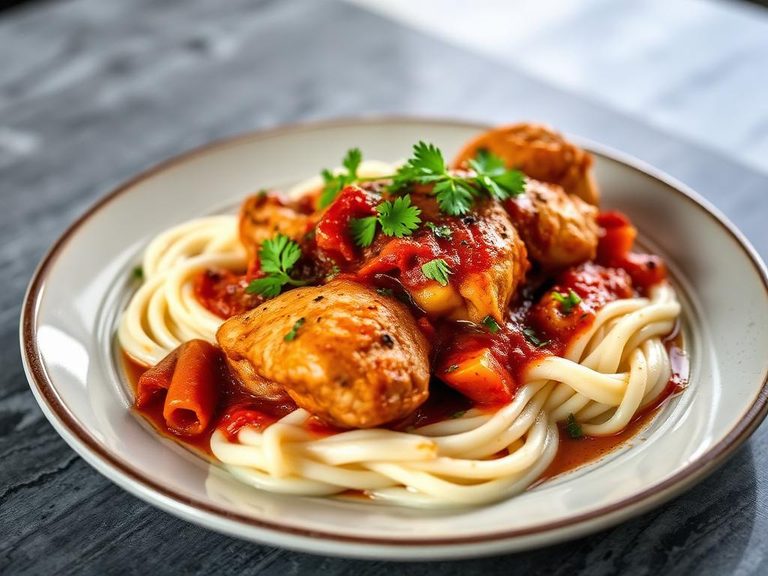

🌍 Where it's eaten
💡 Did you know?
Chicken thighs have more myoglobin (the oxygen-storing protein that gives meat its red color) than breasts, which is why they are darker and can withstand higher cooking temperatures without drying out.
Full nutrition (USDA data · scales with serving)
| Water | 62.6 g |
| Energy | 214 kcal |
| Energy | 896 kj |
| Protein | 23.5 g |
| Total lipid (fat) | 13.8 g |
| Ash | 1.1 g |
| Carbohydrate, by difference | 0.09 g |
| Fiber, total dietary | 0.00 g |
| Total Sugars | 0.00 g |
| Calcium, Ca | 11.0 mg |
| Iron, Fe | 1.0 mg |
| Magnesium, Mg | 23.0 mg |
| Phosphorus, P | 197 mg |
| Potassium, K | 254 mg |
| Sodium, Na | 174 mg |
| Zinc, Zn | 1.8 mg |
| Copper, Cu | 0.07 mg |
| Manganese, Mn | 0.01 mg |
| Selenium, Se | 31.1 ug |
| Vitamin C, total ascorbic acid | 0.00 mg |
| Thiamin | 0.08 mg |
| Riboflavin | 0.24 mg |
| Niacin | 5.9 mg |
| Pantothenic acid | 1.1 mg |
| Vitamin B-6 | 0.39 mg |
| Folate, total | 4.0 ug |
| Folic acid | 0.00 ug |
| Folate, food | 4.0 ug |
| Folate, DFE | 4.0 ug |
| Choline, total | 93.6 mg |
| Betaine | 15.3 mg |
| Vitamin B-12 | 0.41 ug |
| Vitamin B-12, added | 0.00 ug |
| Vitamin A, RAE | 17.0 ug |
| Retinol | 17.0 ug |
| Carotene, beta | 0.00 ug |
| Carotene, alpha | 0.00 ug |
| Cryptoxanthin, beta | 0.00 ug |
| Vitamin A, IU | 56.0 iu |
| Lycopene | 0.00 ug |
| Lutein + zeaxanthin | 74.0 ug |
| Vitamin E (alpha-tocopherol) | 0.38 mg |
| Vitamin E, added | 0.00 mg |
| Tocopherol, beta | 0.00 mg |
| Tocopherol, gamma | 0.17 mg |
| Tocopherol, delta | 0.00 mg |
| Tocotrienol, alpha | 0.01 mg |
| Tocotrienol, beta | 0.00 mg |
| Tocotrienol, gamma | 0.08 mg |
| Tocotrienol, delta | 0.00 mg |
| Vitamin D (D2 + D3), International Units | 14.0 iu |
| Vitamin D (D2 + D3) | 0.30 ug |
| Vitamin D3 (cholecalciferol) | 0.30 ug |
| Vitamin K (phylloquinone) | 0.00 ug |
| Vitamin K (Dihydrophylloquinone) | 0.00 ug |
| Vitamin K (Menaquinone-4) | 13.1 ug |
| Alcohol, ethyl | 0.00 g |
| Caffeine | 0.00 mg |
| Theobromine | 0.00 mg |
Fat & fatty acid profile (per 100g)
| Fatty acids, total saturated | 4.1 g |
| SFA 4:0 | 0.00 g |
| SFA 6:0 | 0.00 g |
| SFA 8:0 | 0.00 g |
| SFA 10:0 | 0.01 g |
| SFA 12:0 | 0.01 g |
| SFA 14:0 | 0.09 g |
| SFA 15:0 | 0.01 g |
| SFA 16:0 | 3.2 g |
| SFA 17:0 | 0.02 g |
| SFA 18:0 | 0.80 g |
| SFA 20:0 | 0.01 g |
| SFA 22:0 | 0.01 g |
| SFA 24:0 | 0.00 g |
| Fatty acids, total monounsaturated | 6.4 g |
| MUFA 14:1 | 0.03 g |
| MUFA 15:1 | 0.00 g |
| MUFA 16:1 | 0.94 g |
| MUFA 17:1 | 0.01 g |
| MUFA 18:1 | 5.3 g |
| MUFA 20:1 | 0.09 g |
| MUFA 22:1 | 0.00 g |
| MUFA 24:1 c | 0.00 g |
| Fatty acids, total polyunsaturated | 3.3 g |
| PUFA 18:2 | 2.9 g |
| PUFA 18:3 | 0.15 g |
| PUFA 18:4 | 0.00 g |
| PUFA 20:2 n-6 c,c | 0.02 g |
| PUFA 20:3 | 0.04 g |
| PUFA 20:4 | 0.11 g |
| PUFA 20:5 n-3 (EPA) | 0.01 g |
| PUFA 22:4 | 0.03 g |
| PUFA 22:5 n-3 (DPA) | 0.01 g |
| PUFA 22:6 n-3 (DHA) | 0.01 g |
| Fatty acids, total trans | 0.09 g |
| Cholesterol | 128 mg |
Amino acid profile (per 100g)
| Tryptophan | 0.22 g |
| Threonine | 0.91 g |
| Isoleucine | 0.92 g |
| Leucine | 1.6 g |
| Lysine | 1.8 g |
| Methionine | 0.55 g |
| Cystine | 0.22 g |
| Phenylalanine | 0.77 g |
| Tyrosine | 0.72 g |
| Valine | 0.93 g |
| Arginine | 1.3 g |
| Histidine | 0.57 g |
| Alanine | 1.1 g |
| Aspartic acid | 1.9 g |
| Glutamic acid | 3.1 g |
| Glycine | 0.88 g |
| Proline | 0.77 g |
| Serine | 0.80 g |
FAQ
Is the 'added solution' just salt water?
It's typically a mixture of water, salt, sodium phosphates (to retain moisture), and sometimes flavorings or broth. The exact ingredients are listed on the package.
How does this compare nutritionally to a skinless chicken thigh?
With skin, it has about 50% more fat and calories. The protein content is similar, but the skin adds significant saturated fat and a boost of collagen.
What's the best way to reheat roasted chicken thigh without making it soggy?
Reheat in a 375°F (190°C) oven for 10-15 minutes, or in a skillet over medium heat. This helps re-crisp the skin and warms the meat evenly, unlike a microwave which can make it rubbery.
Nutrient density (calculated · NRF9.3)
Nutrient Rich Foods index: beneficial nutrients (protein, fiber, vitamins, minerals) minus saturated fat, added sugar & sodium, per 100 kcal.
NRF9.3 index — Fulgoni, Keast & Drewnowski, 2009. Computed from USDA nutrients.
Weight-loss friendliness (composite index)
Energy density 2.14 kcal/g · 44% calories from protein · 0.0 g fiber · 0.0 g sugar per 100 g.
Composite of energy density (Rolls et al., 1999), protein & fiber satiety, minus sugar. A calculated heuristic — ranks satiety-per-calorie, not a clinical measure.
Dietary load (calculated from USDA values)
Potential renal acid load. Positive = acid-forming, negative = alkaline-forming.
Sodium-to-potassium ratio: 0.69 (lower is better — aim for ≤ 1)
Sodium:potassium per WHO potassium guidance. Computed from USDA nutrients.