

Chicken, broiler, rotisserie, BBQ, breast, meat and skin
Whole food · Poultry Products

Photo: Wikipedia
This is the juicy, flavorful breast meat from a rotisserie chicken, cooked with its skin on and glazed with a smoky, sweet BBQ sauce. The texture is tender and succulent, with the skin offering a slightly crisp, caramelized layer that contrasts with the lean, moist meat underneath. It's a high-protein, low-carb powerhouse, delivering over 26 grams of protein per 100 grams with virtually no sugar or carbohydrates.
Calorie split: 60% protein · 0% carbs · 39% fat
↓ Full nutrition💚 Why it's loved
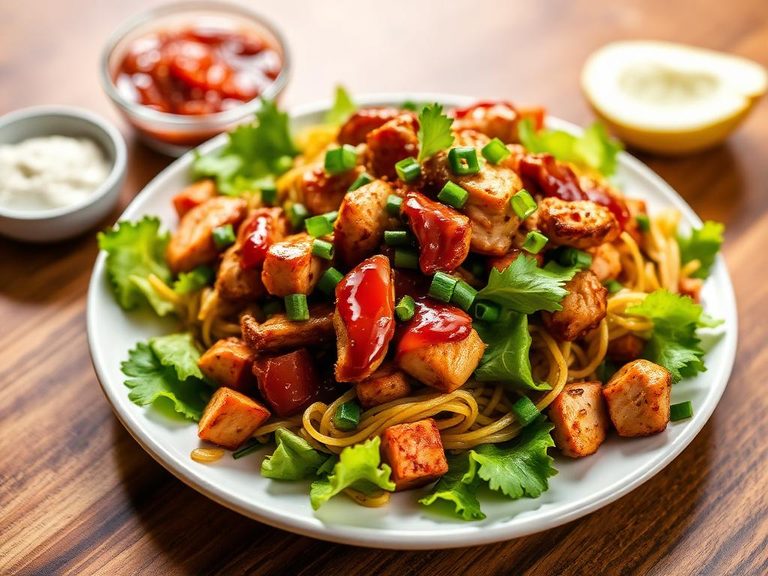
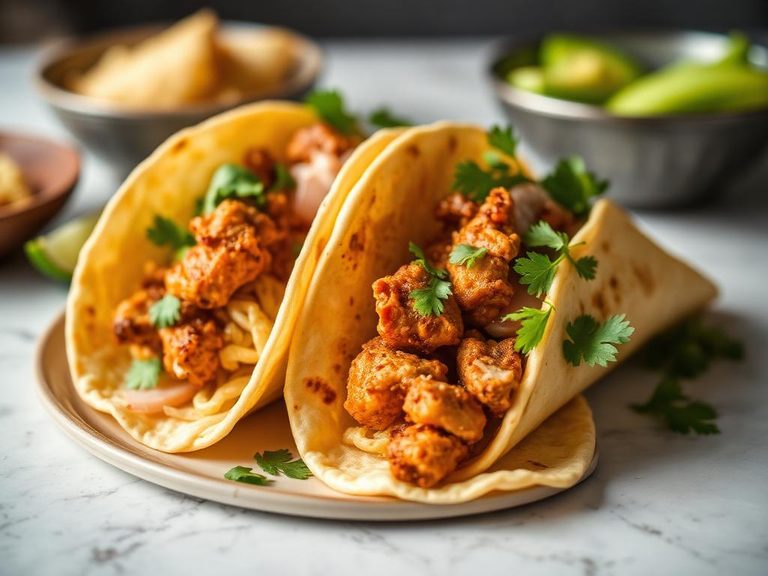
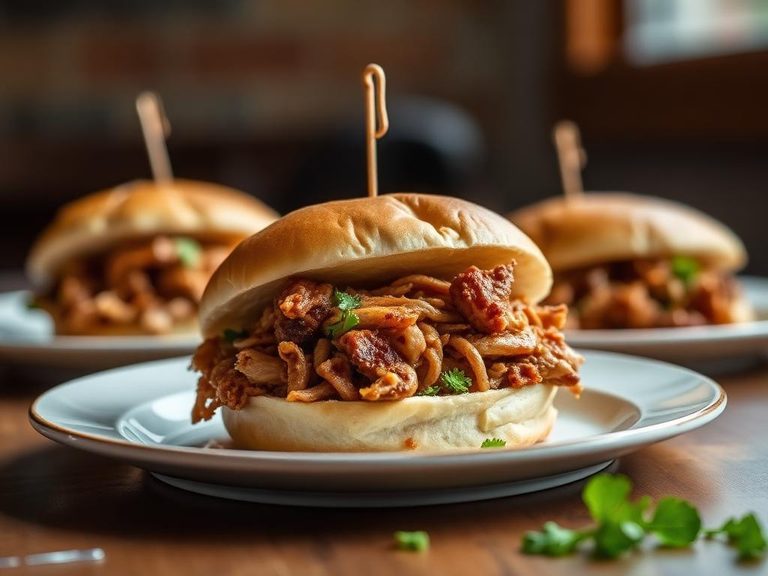
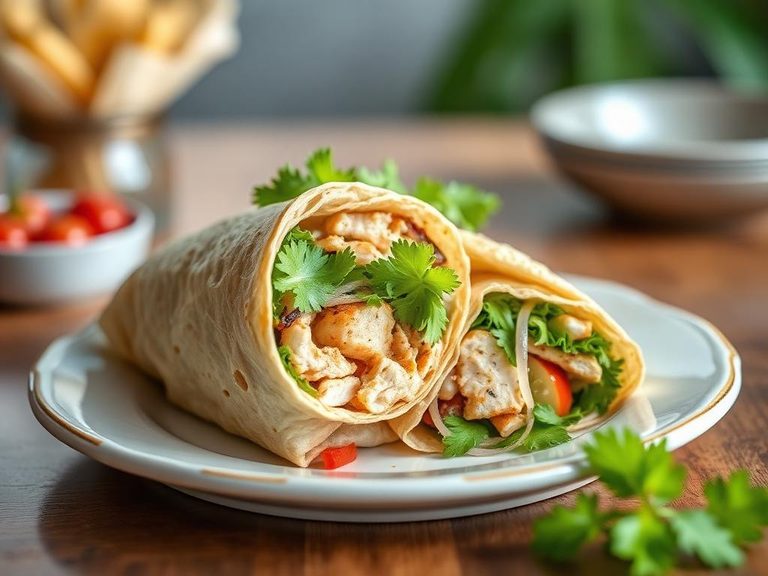
People adore it for the perfect marriage of smoky, savory, and subtly sweet BBQ flavors with the inherent juiciness of rotisserie cooking. Its versatility is unmatched—it's a ready-to-eat protein that can be shredded for tacos, sliced for salads, or eaten straight from the container as a satisfying snack or meal.
⚠️ Watch-outs & how to enjoy it better
The skin and BBQ glaze significantly increase the sodium and sugar content compared to plain chicken, which can be a concern for those monitoring blood pressure or blood sugar. To mitigate this, you can easily remove the skin before eating and pair the meat with fiber-rich vegetables or a side salad to blunt any glycemic impact. Those watching saturated fat intake should also be mindful of the skin.
Key benefits
- Excellent source of complete protein for muscle maintenance and satiety.
- Very low in carbohydrates, making it suitable for low-carb and ketogenic diets.
- Contains B vitamins like niacin and B6, essential for energy metabolism.
- Provides minerals such as selenium and phosphorus, important for immune and bone health.
- Convenient, pre-cooked protein source for quick meal assembly.
🍽️ Popular dishes
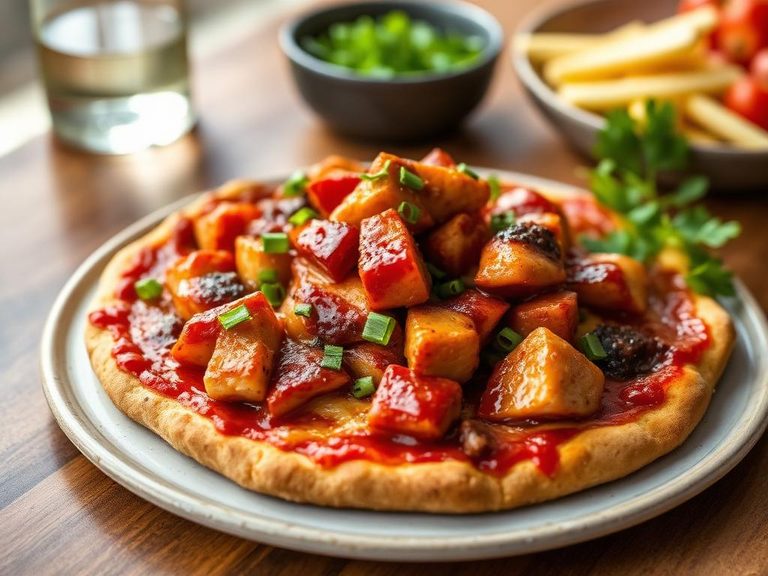
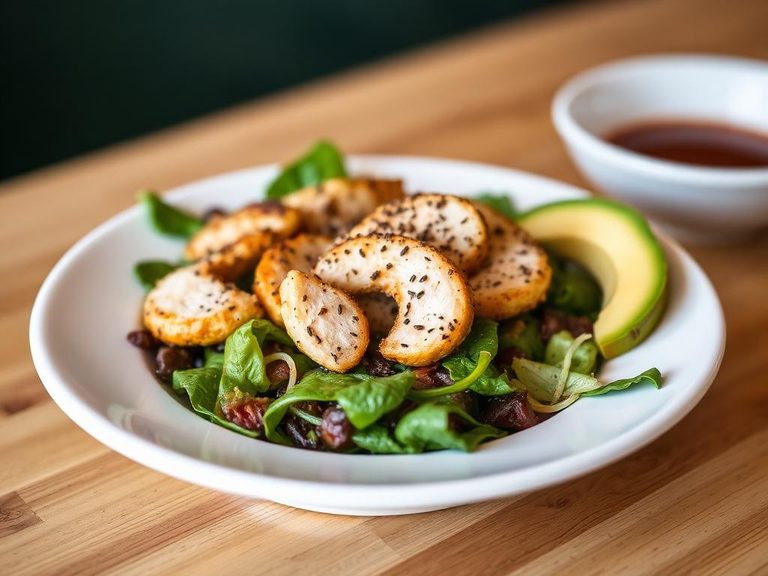
🌍 Where it's eaten
💡 Did you know?
The 'rotisserie' method, where meat is skewered and slowly turned over heat, is one of the oldest known cooking techniques, with evidence of its use dating back to the Byzantine Empire.
Full nutrition (USDA data · scales with serving)
| Water | 65.2 g |
| Energy | 175 kcal |
| Energy | 731 kj |
| Protein | 26.4 g |
| Total lipid (fat) | 7.7 g |
| Ash | 1.4 g |
| Carbohydrate, by difference | 0.09 g |
| Fiber, total dietary | 0.00 g |
| Total Sugars | 0.09 g |
| Sucrose | 0.03 g |
| Glucose | 0.03 g |
| Fructose | 0.03 g |
| Lactose | 0.00 g |
| Maltose | 0.00 g |
| Galactose | 0.00 g |
| Starch | 0.00 g |
| Calcium, Ca | 16.0 mg |
| Iron, Fe | 0.51 mg |
| Magnesium, Mg | 25.0 mg |
| Phosphorus, P | 244 mg |
| Potassium, K | 276 mg |
| Sodium, Na | 329 mg |
| Zinc, Zn | 0.86 mg |
| Copper, Cu | 0.04 mg |
| Manganese, Mn | 0.00 mg |
| Selenium, Se | 22.3 ug |
| Vitamin C, total ascorbic acid | 0.00 mg |
| Thiamin | 0.08 mg |
| Riboflavin | 0.14 mg |
| Niacin | 9.3 mg |
| Pantothenic acid | 0.11 mg |
| Vitamin B-6 | 0.31 mg |
| Folate, total | 11.0 ug |
| Folic acid | 0.00 ug |
| Folate, food | 8.0 ug |
| Folate, DFE | 8.0 ug |
| Choline, total | 57.1 mg |
| Betaine | 7.0 mg |
| Vitamin B-12 | 0.30 ug |
| Vitamin B-12, added | 0.00 ug |
| Vitamin A, RAE | 11.0 ug |
| Retinol | 11.0 ug |
| Carotene, beta | 0.00 ug |
| Carotene, alpha | 0.00 ug |
| Cryptoxanthin, beta | 0.00 ug |
| Vitamin A, IU | 37.0 iu |
| Lycopene | 0.00 ug |
| Lutein + zeaxanthin | 0.00 ug |
| Vitamin E (alpha-tocopherol) | 0.33 mg |
| Vitamin E, added | 0.00 mg |
| Tocopherol, beta | 0.00 mg |
| Tocopherol, gamma | 0.06 mg |
| Tocopherol, delta | 0.00 mg |
| Tocotrienol, alpha | 0.02 mg |
| Tocotrienol, beta | 0.00 mg |
| Tocotrienol, gamma | 0.00 mg |
| Tocotrienol, delta | 0.00 mg |
| Vitamin D (D2 + D3), International Units | 0.00 iu |
| Vitamin D (D2 + D3) | 0.00 ug |
| Vitamin K (phylloquinone) | 0.00 ug |
| Alcohol, ethyl | 0.00 g |
| Caffeine | 0.00 mg |
| Theobromine | 0.00 mg |
Fat & fatty acid profile (per 100g)
| Fatty acids, total saturated | 2.0 g |
| SFA 4:0 | 0.00 g |
| SFA 6:0 | 0.00 g |
| SFA 8:0 | 0.00 g |
| SFA 10:0 | 0.00 g |
| SFA 12:0 | 0.00 g |
| SFA 14:0 | 0.04 g |
| SFA 15:0 | 0.00 g |
| SFA 16:0 | 1.6 g |
| SFA 17:0 | 0.00 g |
| SFA 18:0 | 0.34 g |
| SFA 20:0 | 0.00 g |
| SFA 22:0 | 0.00 g |
| SFA 24:0 | 0.00 g |
| Fatty acids, total monounsaturated | 3.1 g |
| MUFA 14:1 | 0.01 g |
| MUFA 15:1 | 0.00 g |
| MUFA 16:1 | 0.50 g |
| MUFA 17:1 | 0.00 g |
| MUFA 18:1 | 2.6 g |
| MUFA 20:1 | 0.02 g |
| MUFA 22:1 | 0.00 g |
| Fatty acids, total polyunsaturated | 0.94 g |
| PUFA 18:2 | 0.88 g |
| PUFA 18:3 | 0.05 g |
| PUFA 18:4 | 0.00 g |
| PUFA 20:2 n-6 c,c | 0.01 g |
| PUFA 20:3 | 0.00 g |
| PUFA 20:4 | 0.01 g |
| PUFA 20:5 n-3 (EPA) | 0.00 g |
| PUFA 22:5 n-3 (DPA) | 0.00 g |
| PUFA 22:6 n-3 (DHA) | 0.00 g |
| Fatty acids, total trans | 0.06 g |
| Cholesterol | 90.0 mg |
Amino acid profile (per 100g)
| Tryptophan | 0.27 g |
| Threonine | 0.63 g |
| Isoleucine | 1.1 g |
| Leucine | 2.1 g |
| Lysine | 2.5 g |
| Methionine | 0.77 g |
| Cystine | 0.28 g |
| Phenylalanine | 1.0 g |
| Tyrosine | 0.86 g |
| Valine | 1.2 g |
| Arginine | 1.6 g |
| Histidine | 0.95 g |
| Alanine | 1.3 g |
| Aspartic acid | 1.6 g |
| Glutamic acid | 2.9 g |
| Glycine | 1.2 g |
| Proline | 1.0 g |
| Serine | 0.86 g |
| Hydroxyproline | 0.06 g |
FAQ
How does the nutrition differ from plain roasted chicken breast?
The primary differences are in the skin and the glaze. The skin adds significant fat (especially saturated fat) and calories. The BBQ glaze adds sugar, sodium, and additional calories. Plain roasted breast would have less fat, fewer calories, and minimal sugar and sodium.
Is the skin nutritious?
The skin is a concentrated source of fat and calories. While it does contain some collagen and nutrients, it's also high in saturated fat. For a leaner option, removing the skin is recommended. If you enjoy it, consider it an occasional treat and account for the extra calories and fat.
Can I use this in meal prep?
Absolutely. Its pre-cooked nature makes it ideal for meal prep. Shred or slice it and portion it into containers with grains, legumes, and vegetables for balanced lunches or dinners throughout the week. Store in the refrigerator for up to 3-4 days.
Nutrient density (calculated · NRF9.3)
Nutrient Rich Foods index: beneficial nutrients (protein, fiber, vitamins, minerals) minus saturated fat, added sugar & sodium, per 100 kcal.
NRF9.3 index — Fulgoni, Keast & Drewnowski, 2009. Computed from USDA nutrients.
Weight-loss friendliness (composite index)
Energy density 1.75 kcal/g · 60% calories from protein · 0.0 g fiber · 0.1 g sugar per 100 g.
Composite of energy density (Rolls et al., 1999), protein & fiber satiety, minus sugar. A calculated heuristic — ranks satiety-per-calorie, not a clinical measure.
Dietary load (calculated from USDA values)
Potential renal acid load. Positive = acid-forming, negative = alkaline-forming.
Sodium-to-potassium ratio: 1.19 (lower is better — aim for ≤ 1)
Sodium:potassium per WHO potassium guidance. Computed from USDA nutrients.