

Cereals, QUAKER, corn grits, instant, plain, dry
Whole food · Breakfast Cereals

Photo: Wikipedia
Instant corn grits are a dehydrated, quick-cooking porridge made from ground dried corn kernels. When prepared, they transform into a smooth, creamy, and comforting hot cereal with a mild, subtly sweet corn flavor. Nutritionally, they are a concentrated source of energy-dense carbohydrates, providing over 78g per 100g of dry mix.
Calorie split: 8% protein · 87% carbs · 5% fat
↓ Full nutrition💚 Why it's loved
People love instant corn grits for their unparalleled convenience, transforming from dry granules to a hot, comforting bowl in minutes. Their mild, versatile flavor serves as a perfect canvas for both sweet toppings like brown sugar and butter or savory additions like cheese and hot sauce.
⚠️ Watch-outs & how to enjoy it better
As a refined carbohydrate, instant grits can cause rapid blood sugar spikes, making portion control important for those managing glucose levels. To counteract this, pair them with a source of protein (like an egg) or healthy fat (like avocado) to slow digestion. Some brands also contain significant sodium, so choosing low-sodium versions or adjusting added salt is advisable.
Key benefits
- Excellent source of quick-release energy from complex carbohydrates.
- Low in fat, containing less than 2.5g per 100g.
- Provides a modest amount of plant-based protein (7.31g per 100g).
- Contains dietary fiber (4.2g per 100g) for digestive health.
- Fortified with essential vitamins and minerals in many commercial brands.
🍽️ Popular dishes
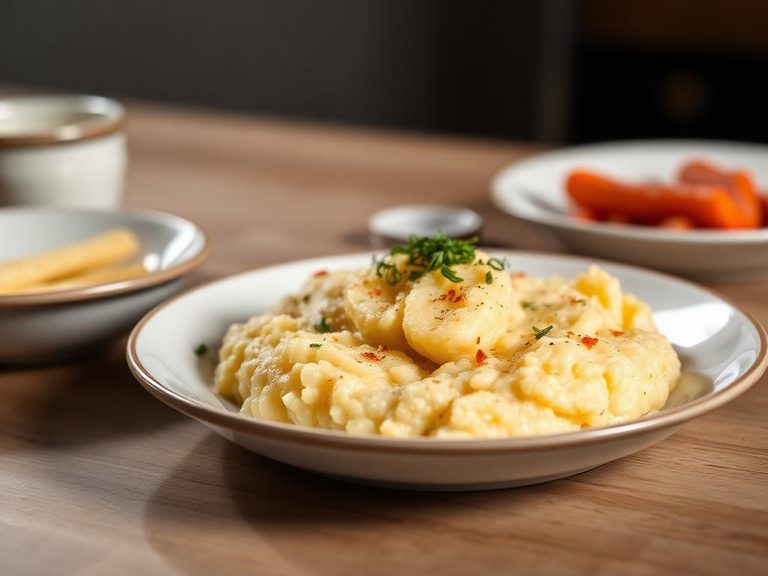
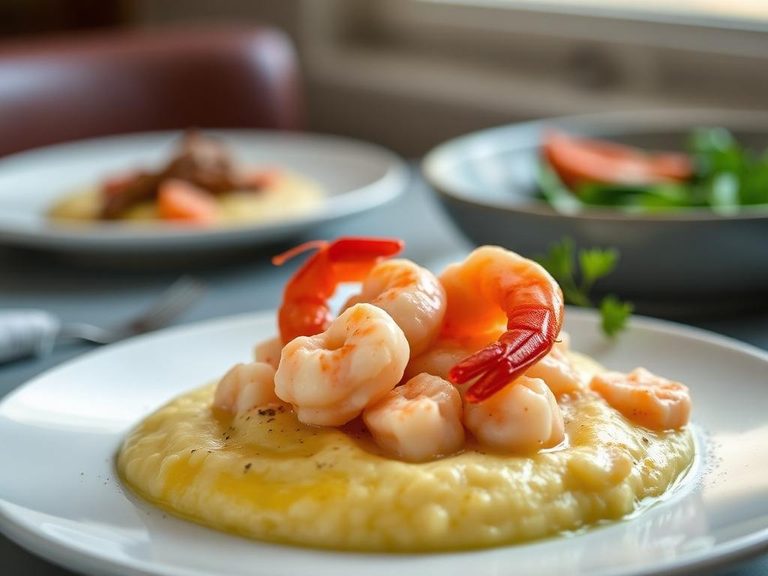
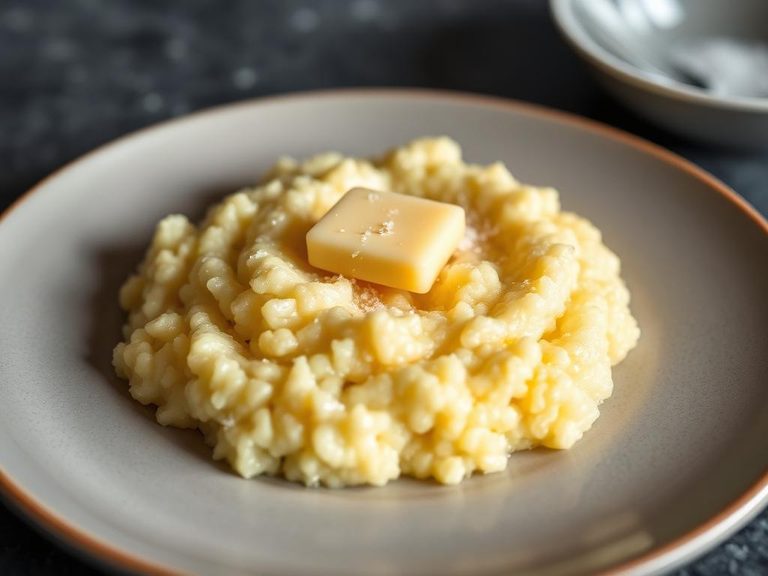

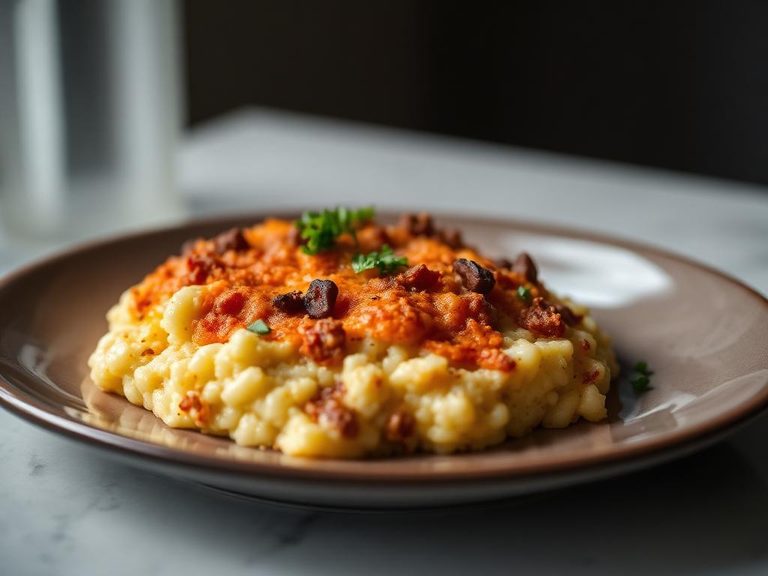
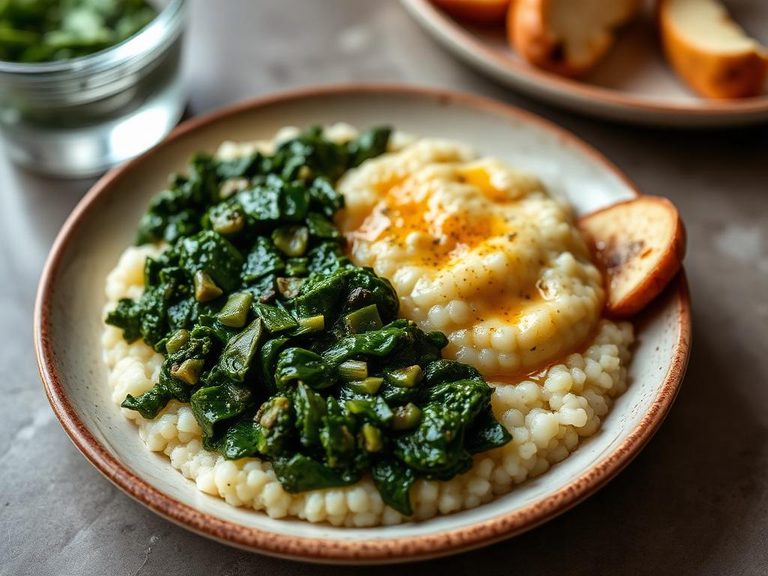
🌍 Where it's eaten
💡 Did you know?
The name 'grits' derives from the Old English word 'grytt,' meaning coarse meal, and the dish has been a staple in the American South since the colonial era, often called 'the caviar of the South' for its humble yet beloved status.
Full nutrition (USDA data · scales with serving)
| Water | 7.2 g |
| Energy | 343 kcal |
| Energy | 1436 kj |
| Protein | 7.3 g |
| Total lipid (fat) | 2.1 g |
| Ash | 4.5 g |
| Carbohydrate, by difference | 78.4 g |
| Fiber, total dietary | 4.2 g |
| Total Sugars | 1.5 g |
| Sucrose | 1.5 g |
| Glucose | 0.00 g |
| Fructose | 0.00 g |
| Lactose | 0.00 g |
| Maltose | 0.00 g |
| Galactose | 0.00 g |
| Starch | 67.1 g |
| Calcium, Ca | 378 mg |
| Iron, Fe | 38.8 mg |
| Magnesium, Mg | 28.0 mg |
| Phosphorus, P | 72.0 mg |
| Potassium, K | 135 mg |
| Sodium, Na | 1121 mg |
| Zinc, Zn | 0.41 mg |
| Copper, Cu | 0.03 mg |
| Manganese, Mn | 0.20 mg |
| Selenium, Se | 17.1 ug |
| Vitamin C, total ascorbic acid | 0.00 mg |
| Thiamin | 1.9 mg |
| Riboflavin | 0.70 mg |
| Niacin | 9.0 mg |
| Pantothenic acid | 0.24 mg |
| Vitamin B-6 | 0.14 mg |
| Folate, total | 176 ug |
| Folic acid | 134 ug |
| Folate, food | 42.0 ug |
| Folate, DFE | 270 ug |
| Choline, total | 14.4 mg |
| Betaine | 1.1 mg |
| Vitamin B-12 | 0.00 ug |
| Vitamin B-12, added | 0.00 ug |
| Vitamin A, RAE | 0.00 ug |
| Retinol | 0.00 ug |
| Carotene, beta | 1.0 ug |
| Carotene, alpha | 0.00 ug |
| Cryptoxanthin, beta | 1.0 ug |
| Vitamin A, IU | 3.0 iu |
| Lycopene | 0.00 ug |
| Lutein + zeaxanthin | 5.0 ug |
| Vitamin E (alpha-tocopherol) | 0.05 mg |
| Vitamin E, added | 0.00 mg |
| Tocopherol, beta | 0.00 mg |
| Tocopherol, gamma | 0.24 mg |
| Tocopherol, delta | 0.02 mg |
| Tocotrienol, alpha | 0.12 mg |
| Tocotrienol, beta | 0.00 mg |
| Tocotrienol, gamma | 0.47 mg |
| Tocotrienol, delta | 0.00 mg |
| Vitamin D (D2 + D3), International Units | 0.00 iu |
| Vitamin D (D2 + D3) | 0.00 ug |
| Vitamin K (phylloquinone) | 0.00 ug |
| Vitamin K (Dihydrophylloquinone) | 0.00 ug |
| Vitamin K (Menaquinone-4) | 0.00 ug |
| Alcohol, ethyl | 0.00 g |
| Caffeine | 0.00 mg |
| Theobromine | 0.00 mg |
Fat & fatty acid profile (per 100g)
| Fatty acids, total saturated | 0.36 g |
| SFA 4:0 | 0.00 g |
| SFA 6:0 | 0.00 g |
| SFA 8:0 | 0.00 g |
| SFA 10:0 | 0.00 g |
| SFA 12:0 | 0.00 g |
| SFA 14:0 | 0.00 g |
| SFA 15:0 | 0.00 g |
| SFA 16:0 | 0.32 g |
| SFA 17:0 | 0.00 g |
| SFA 18:0 | 0.04 g |
| SFA 20:0 | 0.00 g |
| SFA 22:0 | 0.00 g |
| SFA 24:0 | 0.00 g |
| Fatty acids, total monounsaturated | 0.40 g |
| MUFA 14:1 | 0.00 g |
| MUFA 15:1 | 0.00 g |
| MUFA 16:1 | 0.00 g |
| MUFA 17:1 | 0.00 g |
| MUFA 18:1 | 0.40 g |
| MUFA 20:1 | 0.00 g |
| MUFA 22:1 | 0.00 g |
| MUFA 24:1 c | 0.00 g |
| Fatty acids, total polyunsaturated | 0.97 g |
| PUFA 18:2 | 0.94 g |
| PUFA 18:3 | 0.03 g |
| PUFA 18:4 | 0.00 g |
| PUFA 20:2 n-6 c,c | 0.00 g |
| PUFA 20:3 | 0.00 g |
| PUFA 20:4 | 0.00 g |
| PUFA 20:5 n-3 (EPA) | 0.00 g |
| PUFA 22:5 n-3 (DPA) | 0.00 g |
| PUFA 22:6 n-3 (DHA) | 0.00 g |
| Cholesterol | 0.00 mg |
Amino acid profile (per 100g)
Estimated from Cereals ready-to-eat, POST, HONEY BUNCHES OF OATS, honey roasted — USDA does not publish this profile for Cereals.
| Tryptophan | 0.09 g |
| Threonine | 0.24 g |
| Isoleucine | 0.26 g |
| Leucine | 0.80 g |
| Lysine | 0.12 g |
| Methionine | 0.10 g |
| Cystine | 0.11 g |
| Phenylalanine | 0.39 g |
| Tyrosine | 0.21 g |
| Valine | 0.34 g |
| Arginine | 0.24 g |
| Histidine | 0.18 g |
| Alanine | 0.46 g |
| Aspartic acid | 0.48 g |
| Glutamic acid | 1.9 g |
| Glycine | 0.27 g |
| Proline | 0.49 g |
| Serine | 0.38 g |
FAQ
What is the difference between instant and regular grits?
Instant grits are pre-cooked and then dehydrated, allowing them to cook in 1-5 minutes with just boiling water. Regular or stone-ground grits are raw, coarser cornmeal that require 15-45 minutes of simmering to become tender, offering a more textured, robust corn flavor.
Are corn grits gluten-free?
Pure corn grits are naturally gluten-free. However, cross-contamination can occur during processing, so individuals with celiac disease or severe gluten sensitivity should look for certified gluten-free labels.
How can I make instant grits creamier?
For a richer, creamier texture, prepare them with a mixture of milk and water instead of just water. Stirring in a pat of butter, a spoonful of cream cheese, or a handful of shredded cheddar at the end also adds significant creaminess and flavor.
Nutrient density (calculated · NRF9.3)
Nutrient Rich Foods index: beneficial nutrients (protein, fiber, vitamins, minerals) minus saturated fat, added sugar & sodium, per 100 kcal.
NRF9.3 index — Fulgoni, Keast & Drewnowski, 2009. Computed from USDA nutrients.
Weight-loss friendliness (composite index)
Energy density 3.43 kcal/g · 9% calories from protein · 4.2 g fiber · 1.5 g sugar per 100 g.
Composite of energy density (Rolls et al., 1999), protein & fiber satiety, minus sugar. A calculated heuristic — ranks satiety-per-calorie, not a clinical measure.
Dietary load (calculated from USDA values)
Potential renal acid load. Positive = acid-forming, negative = alkaline-forming.
Sodium-to-potassium ratio: 8.30 (lower is better — aim for ≤ 1)
Sodium:potassium per WHO potassium guidance. Computed from USDA nutrients.