

Bread, naan, plain, commercially prepared, refrigerated
Whole food · Baked Products

Photo: Wikipedia
This is a soft, pillowy flatbread made from refined flour, yeast, and yogurt, known for its signature chewy texture and subtle tang. Commercially prepared and refrigerated versions offer convenience, typically delivering a high-carbohydrate energy boost with a modest protein content. Its slightly blistered surface and buttery aroma make it a staple accompaniment to rich, saucy dishes.
Calorie split: 13% protein · 69% carbs · 17% fat
↓ Full nutrition💚 Why it's loved
People love naan for its soft, chewy texture and ability to soak up flavorful sauces, making it the perfect vehicle for curries and stews. Its cultural significance in South Asian cuisine, often baked in a tandoor, adds a layer of authenticity and comfort to any meal.
⚠️ Watch-outs & how to enjoy it better
Commercial naan can be high in sodium and refined carbohydrates, potentially causing blood-sugar spikes, and often contains common allergens like wheat and dairy. To counteract this, pair it with protein-rich dishes like lentils or chicken, practice portion control, and opt for whole-wheat varieties when available.
Key benefits
- Provides a quick source of energy from complex carbohydrates
- Contains a moderate amount of protein for a flatbread
- Convenient and ready to heat, saving preparation time
- Versatile base for wraps, pizzas, or dipping
🍽️ Popular dishes

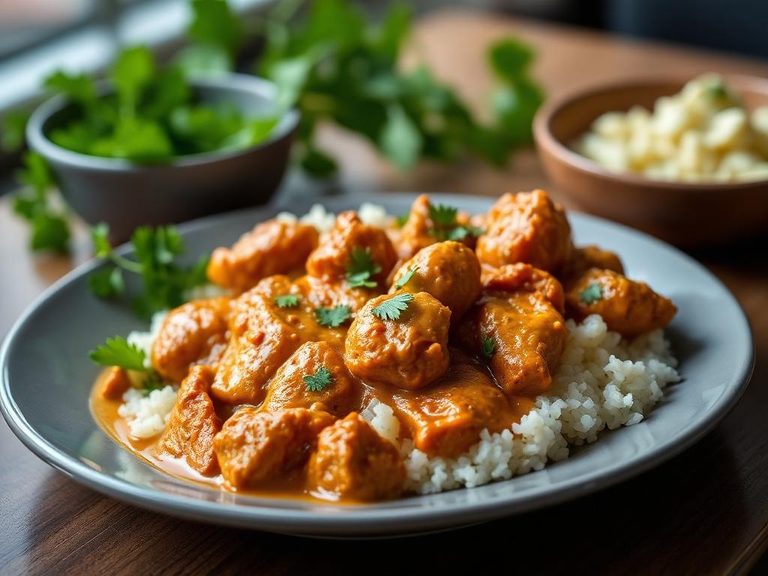
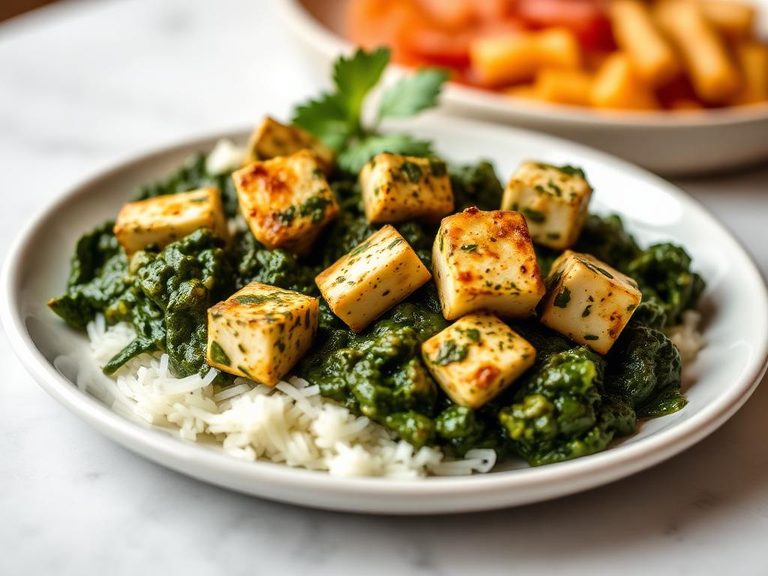
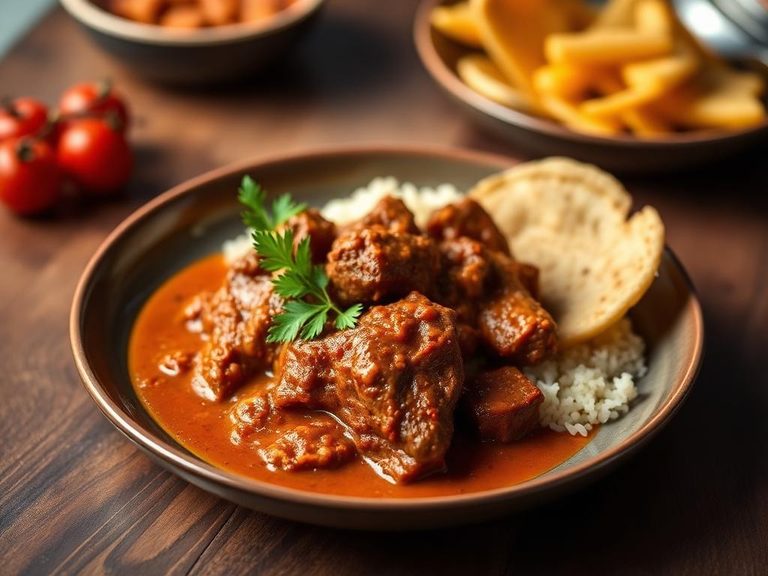
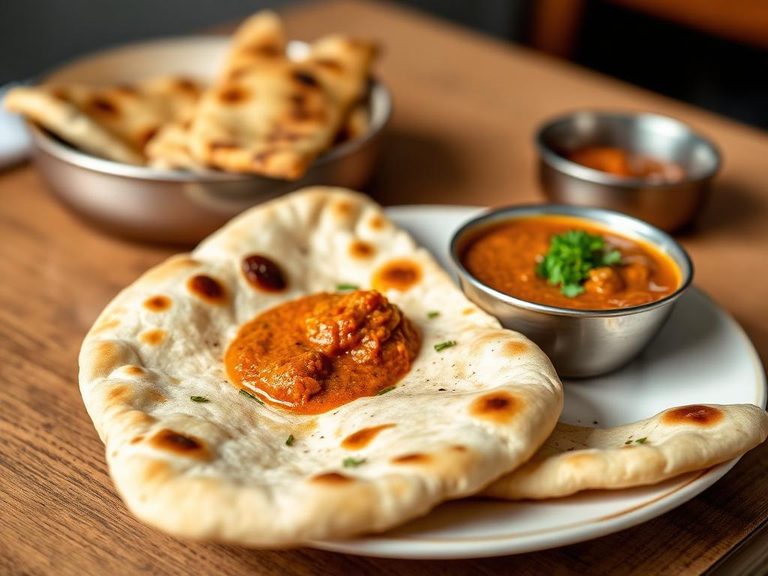

🌍 Where it's eaten
💡 Did you know?
Naan is believed to have been introduced to the Indian subcontinent by the Mughal Empire in the 16th century, and the word 'naan' itself comes from the Persian word for bread.
Full nutrition (USDA data · scales with serving)
| Water | 32.6 g |
| Energy | 291 kcal |
| Energy | 1218 kj |
| Protein | 9.6 g |
| Total lipid (fat) | 5.7 g |
| Ash | 1.7 g |
| Carbohydrate, by difference | 50.4 g |
| Fiber, total dietary | 2.2 g |
| Total Sugars | 3.5 g |
| Sucrose | 0.00 g |
| Glucose | 0.65 g |
| Fructose | 0.85 g |
| Lactose | 0.25 g |
| Maltose | 1.8 g |
| Galactose | 0.00 g |
| Starch | 42.8 g |
| Calcium, Ca | 84.0 mg |
| Iron, Fe | 3.3 mg |
| Magnesium, Mg | 27.0 mg |
| Phosphorus, P | 100 mg |
| Potassium, K | 125 mg |
| Sodium, Na | 465 mg |
| Zinc, Zn | 0.81 mg |
| Copper, Cu | 0.13 mg |
| Manganese, Mn | 0.51 mg |
| Selenium, Se | 27.9 ug |
| Thiamin | 0.78 mg |
| Riboflavin | 0.51 mg |
| Niacin | 5.8 mg |
| Pantothenic acid | 0.45 mg |
| Vitamin B-6 | 0.10 mg |
| Folate, total | 102 ug |
| Folate, food | 102 ug |
| Vitamin E (alpha-tocopherol) | 0.79 mg |
| Tocopherol, beta | 0.13 mg |
| Tocopherol, gamma | 1.4 mg |
| Tocopherol, delta | 0.42 mg |
| Tocotrienol, alpha | 0.11 mg |
| Tocotrienol, beta | 0.69 mg |
| Tocotrienol, gamma | 0.12 mg |
| Tocotrienol, delta | 0.00 mg |
Fat & fatty acid profile (per 100g)
| Fatty acids, total saturated | 1.4 g |
| SFA 4:0 | 0.01 g |
| SFA 6:0 | 0.01 g |
| SFA 8:0 | 0.01 g |
| SFA 10:0 | 0.02 g |
| SFA 12:0 | 0.02 g |
| SFA 14:0 | 0.06 g |
| SFA 15:0 | 0.01 g |
| SFA 16:0 | 0.93 g |
| SFA 17:0 | 0.01 g |
| SFA 18:0 | 0.27 g |
| SFA 20:0 | 0.02 g |
| SFA 22:0 | 0.01 g |
| SFA 24:0 | 0.01 g |
| Fatty acids, total monounsaturated | 1.8 g |
| MUFA 14:1 | 0.01 g |
| MUFA 15:1 | 0.00 g |
| MUFA 16:1 | 0.02 g |
| MUFA 16:1 c | 0.01 g |
| MUFA 17:1 | 0.00 g |
| MUFA 18:1 | 1.7 g |
| MUFA 18:1 c | 1.7 g |
| MUFA 20:1 | 0.03 g |
| MUFA 22:1 | 0.00 g |
| MUFA 22:1 c | 0.00 g |
| MUFA 24:1 c | 0.00 g |
| Fatty acids, total polyunsaturated | 2.1 g |
| PUFA 18:2 | 1.8 g |
| PUFA 18:2 n-6 c,c | 1.8 g |
| PUFA 18:2 CLAs | 0.01 g |
| PUFA 18:3 | 0.29 g |
| PUFA 18:3 n-3 c,c,c (ALA) | 0.28 g |
| PUFA 18:3 n-6 c,c,c | 0.01 g |
| PUFA 18:3i | 0.00 g |
| PUFA 18:4 | 0.00 g |
| PUFA 20:2 n-6 c,c | 0.00 g |
| PUFA 20:3 | 0.00 g |
| PUFA 20:3 n-3 | 0.00 g |
| PUFA 20:3 n-6 | 0.00 g |
| PUFA 20:4 | 0.00 g |
| PUFA 20:5 n-3 (EPA) | 0.00 g |
| PUFA 22:4 | 0.00 g |
| PUFA 22:5 n-3 (DPA) | 0.00 g |
| PUFA 22:6 n-3 (DHA) | 0.00 g |
| Fatty acids, total trans | 0.04 g |
| Fatty acids, total trans-monoenoic | 0.03 g |
| TFA 16:1 t | 0.00 g |
| TFA 18:1 t | 0.03 g |
| TFA 22:1 t | 0.00 g |
| TFA 18:2 t not further defined | 0.01 g |
| Fatty acids, total trans-polyenoic | 0.01 g |
Amino acid profile (per 100g)
Estimated from Bread, salvadoran sweet cheese (quesadilla salvadorena) — USDA does not publish this profile for Bread.
| Tryptophan | 0.07 g |
| Threonine | 0.21 g |
| Isoleucine | 0.30 g |
| Leucine | 0.65 g |
| Lysine | 0.50 g |
| Methionine | 0.28 g |
| Cystine | 0.06 g |
| Phenylalanine | 0.37 g |
| Tyrosine | 0.23 g |
| Valine | 0.43 g |
| Arginine | 0.25 g |
| Histidine | 0.15 g |
| Alanine | 0.36 g |
| Aspartic acid | 0.59 g |
| Glutamic acid | 1.3 g |
| Glycine | 0.20 g |
| Proline | 0.83 g |
| Serine | 0.45 g |
| Hydroxyproline | 0.00 g |
FAQ
Is naan gluten-free?
No, traditional naan is made with wheat flour and contains gluten, making it unsuitable for those with celiac disease or gluten sensitivity.
How should I store refrigerated naan?
Keep it in its original packaging or an airtight container in the refrigerator for up to 5 days. For longer storage, freeze it for up to 3 months.
Can I reheat naan without it becoming tough?
Yes, wrap it in a damp paper towel and microwave for 20-30 seconds, or warm it in a dry skillet over medium heat for a minute per side to restore softness.
Nutrient density (calculated · NRF9.3)
Nutrient Rich Foods index: beneficial nutrients (protein, fiber, vitamins, minerals) minus saturated fat, added sugar & sodium, per 100 kcal.
NRF9.3 index — Fulgoni, Keast & Drewnowski, 2009. Computed from USDA nutrients.
Weight-loss friendliness (composite index)
Energy density 2.91 kcal/g · 13% calories from protein · 2.2 g fiber · 3.5 g sugar per 100 g.
Composite of energy density (Rolls et al., 1999), protein & fiber satiety, minus sugar. A calculated heuristic — ranks satiety-per-calorie, not a clinical measure.
Dietary load (calculated from USDA values)
Potential renal acid load. Positive = acid-forming, negative = alkaline-forming.
Sodium-to-potassium ratio: 3.72 (lower is better — aim for ≤ 1)
Sodium:potassium per WHO potassium guidance. Computed from USDA nutrients.