

Bread, multi-grain (includes whole-grain)
Whole food · Baked Products
Multi-grain bread is a hearty, textured loaf made from a blend of different grains like wheat, oats, rye, and barley, offering a complex, nutty flavor and a satisfying chew. Nutritionally, it's a standout for its substantial protein content (13.36g per 100g) and significant dietary fiber (7.4g per 100g), making it a more filling and nutrient-dense choice than many white breads. Its robust profile provides a steady release of energy, thanks to its balanced carbohydrate and fiber composition.
Calorie split: 20% protein · 65% carbs · 14% fat
↓ Full nutrition💚 Why it's loved
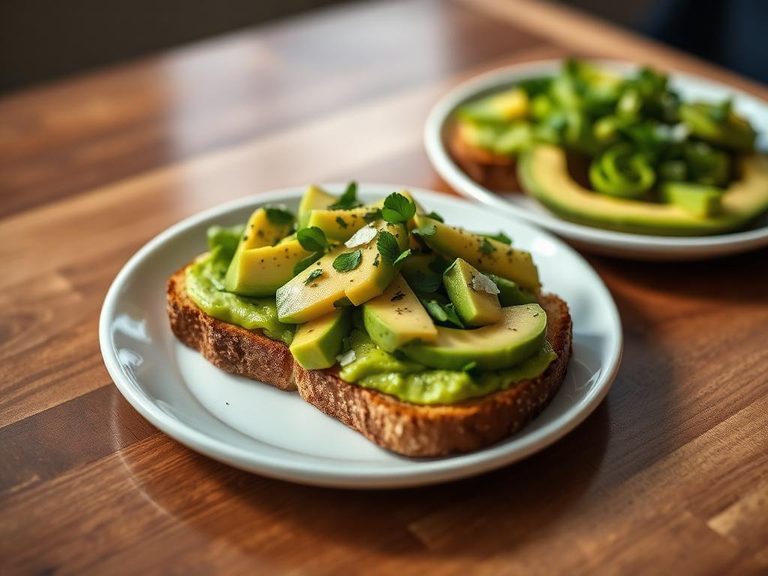
People love multi-grain bread for its deep, earthy flavor and satisfying texture, which adds substance to sandwiches and toast. Its versatility makes it a staple for everything from a simple avocado toast to a hearty turkey club, bridging the gap between health and comfort.
⚠️ Watch-outs & how to enjoy it better
The dense texture and high fiber content can be challenging for those with sensitive digestion or conditions like IBS. For individuals monitoring blood sugar, the carbohydrate content (43.34g per 100g) still requires mindful portioning; pairing it with protein (like eggs) or healthy fat (like avocado) can help blunt any glycemic response. It's also a common source of gluten, so it's unsuitable for those with celiac disease or gluten sensitivity.
Key benefits
- High in dietary fiber for digestive health and satiety
- Provides a substantial amount of plant-based protein
- Contains a complex blend of grains for diverse micronutrients
- Offers a more sustained energy release than refined breads
- Lower in sugar compared to many sweetened breads
🍽️ Popular dishes



🌍 Where it's eaten
💡 Did you know?
The term 'multi-grain' is not regulated by the FDA, meaning a bread can be labeled as such even if it contains only a small amount of whole grains alongside refined flours, making it crucial to check the ingredient list for whole grains like whole wheat, oats, or rye as the first ingredient.
Full nutrition (USDA data · scales with serving)
| Water | 36.9 g |
| Energy | 265 kcal |
| Energy | 1108 kj |
| Protein | 13.4 g |
| Total lipid (fat) | 4.2 g |
| Ash | 2.1 g |
| Carbohydrate, by difference | 43.3 g |
| Fiber, total dietary | 7.4 g |
| Total Sugars | 6.4 g |
| Sucrose | 0.00 g |
| Glucose | 1.7 g |
| Fructose | 2.5 g |
| Lactose | 0.57 g |
| Maltose | 1.7 g |
| Starch | 25.7 g |
| Calcium, Ca | 103 mg |
| Iron, Fe | 2.5 mg |
| Magnesium, Mg | 78.0 mg |
| Phosphorus, P | 228 mg |
| Potassium, K | 230 mg |
| Sodium, Na | 381 mg |
| Zinc, Zn | 1.7 mg |
| Copper, Cu | 0.28 mg |
| Manganese, Mn | 2.0 mg |
| Selenium, Se | 32.9 ug |
| Vitamin C, total ascorbic acid | 0.10 mg |
| Thiamin | 0.28 mg |
| Riboflavin | 0.13 mg |
| Niacin | 4.0 mg |
| Pantothenic acid | 0.34 mg |
| Vitamin B-6 | 0.26 mg |
| Folate, total | 75.0 ug |
| Folic acid | 0.00 ug |
| Folate, food | 75.0 ug |
| Folate, DFE | 75.0 ug |
| Choline, total | 22.0 mg |
| Vitamin B-12 | 0.00 ug |
| Vitamin B-12, added | 0.00 ug |
| Vitamin A, RAE | 0.00 ug |
| Retinol | 0.00 ug |
| Carotene, beta | 1.0 ug |
| Carotene, alpha | 0.00 ug |
| Cryptoxanthin, beta | 0.00 ug |
| Vitamin A, IU | 0.00 iu |
| Lycopene | 0.00 ug |
| Lutein + zeaxanthin | 94.0 ug |
| Vitamin E (alpha-tocopherol) | 0.37 mg |
| Vitamin E, added | 0.00 mg |
| Tocopherol, beta | 0.09 mg |
| Tocopherol, gamma | 1.5 mg |
| Tocopherol, delta | 0.54 mg |
| Tocotrienol, alpha | 0.10 mg |
| Tocotrienol, beta | 0.00 mg |
| Tocotrienol, gamma | 0.02 mg |
| Tocotrienol, delta | 0.00 mg |
| Vitamin D (D2 + D3), International Units | 0.00 iu |
| Vitamin D (D2 + D3) | 0.00 ug |
| Vitamin K (phylloquinone) | 1.4 ug |
| Alcohol, ethyl | 0.00 g |
| Caffeine | 0.00 mg |
| Theobromine | 0.00 mg |
Fat & fatty acid profile (per 100g)
| Fatty acids, total saturated | 0.87 g |
| SFA 4:0 | 0.00 g |
| SFA 6:0 | 0.00 g |
| SFA 8:0 | 0.00 g |
| SFA 10:0 | 0.00 g |
| SFA 12:0 | 0.00 g |
| SFA 14:0 | 0.00 g |
| SFA 15:0 | 0.00 g |
| SFA 16:0 | 0.51 g |
| SFA 17:0 | 0.00 g |
| SFA 18:0 | 0.35 g |
| SFA 20:0 | 0.00 g |
| SFA 22:0 | 0.01 g |
| SFA 24:0 | 0.00 g |
| Fatty acids, total monounsaturated | 0.76 g |
| MUFA 14:1 | 0.00 g |
| MUFA 15:1 | 0.00 g |
| MUFA 16:1 | 0.02 g |
| MUFA 17:1 | 0.00 g |
| MUFA 18:1 | 0.73 g |
| MUFA 20:1 | 0.01 g |
| MUFA 22:1 | 0.00 g |
| MUFA 24:1 c | 0.00 g |
| Fatty acids, total polyunsaturated | 1.9 g |
| PUFA 18:2 | 1.7 g |
| PUFA 18:3 | 0.20 g |
| PUFA 18:4 | 0.00 g |
| PUFA 20:2 n-6 c,c | 0.00 g |
| PUFA 20:3 | 0.00 g |
| PUFA 20:4 | 0.00 g |
| PUFA 20:5 n-3 (EPA) | 0.00 g |
| PUFA 21:5 | 0.00 g |
| PUFA 22:4 | 0.00 g |
| PUFA 22:5 n-3 (DPA) | 0.00 g |
| PUFA 22:6 n-3 (DHA) | 0.00 g |
| Fatty acids, total trans | 0.00 g |
| Cholesterol | 0.00 mg |
Amino acid profile (per 100g)
| Tryptophan | 0.12 g |
| Threonine | 0.27 g |
| Isoleucine | 0.32 g |
| Leucine | 0.56 g |
| Lysine | 0.29 g |
| Methionine | 0.14 g |
| Cystine | 0.18 g |
| Phenylalanine | 0.39 g |
| Tyrosine | 0.24 g |
| Valine | 0.40 g |
| Arginine | 0.48 g |
| Histidine | 0.20 g |
| Alanine | 0.34 g |
| Aspartic acid | 0.55 g |
| Glutamic acid | 2.2 g |
| Glycine | 0.37 g |
| Proline | 0.71 g |
| Serine | 0.38 g |
FAQ
Is multi-grain bread the same as whole-grain bread?
Not necessarily. Multi-grain means the bread contains multiple types of grains, which could include refined grains. Whole-grain means the entire grain kernel (bran, germ, endosperm) is used. Always look for '100% whole grain' on the label for the most nutritional benefit.
How does the protein content compare to white bread?
Multi-grain bread typically has significantly more protein—around 13.36g per 100g—compared to white bread, which often has about 8-9g per 100g. This makes it a better choice for muscle repair and prolonged fullness.
Can I freeze multi-grain bread to extend its shelf life?
Yes, it freezes very well. Slice it first, then store in a freezer-safe bag for up to 3 months. Toast slices directly from the freezer for a quick, fresh-tasting meal.
Nutrient density (calculated · NRF9.3)
Nutrient Rich Foods index: beneficial nutrients (protein, fiber, vitamins, minerals) minus saturated fat, added sugar & sodium, per 100 kcal.
NRF9.3 index — Fulgoni, Keast & Drewnowski, 2009. Computed from USDA nutrients.
Weight-loss friendliness (composite index)
Energy density 2.65 kcal/g · 20% calories from protein · 7.4 g fiber · 6.4 g sugar per 100 g.
Composite of energy density (Rolls et al., 1999), protein & fiber satiety, minus sugar. A calculated heuristic — ranks satiety-per-calorie, not a clinical measure.
Dietary load (calculated from USDA values)
Potential renal acid load. Positive = acid-forming, negative = alkaline-forming.
Sodium-to-potassium ratio: 1.66 (lower is better — aim for ≤ 1)
Sodium:potassium per WHO potassium guidance. Computed from USDA nutrients.