

Beef, rib eye steak/roast, boneless, lip-on, separable lean only, trimmed to 1/8" fat, all grades, raw
Whole food · Beef Products
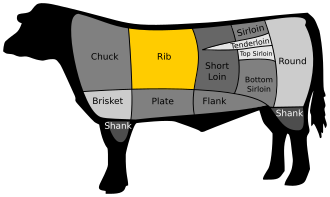
Photo: Wikipedia
This is a premium, lean cut from the rib primal, prized for its rich, beefy flavor and tender, fine-grained texture. With a high protein-to-fat ratio, it delivers a satisfying, meaty bite without excessive calories. Its 'lip-on' designation means a small strip of fat remains on the edge, adding flavor during cooking while the separable lean stays lean.
Calorie split: 56% protein · 0% carbs · 44% fat
↓ Full nutrition💚 Why it's loved
People adore it for its robust, classic steakhouse flavor and reliable tenderness, which holds up beautifully to high-heat searing. It's a versatile centerpiece that can be simply seasoned with salt and pepper or elevated with complex marinades and sauces.
⚠️ Watch-outs & how to enjoy it better
As a red meat, it is high in saturated fat and cholesterol, so those monitoring heart health should practice portion control. To counteract this, pair it with fiber-rich vegetables like roasted broccoli or a fresh salad, and consider trimming any external fat before cooking. It can also be high in sodium if heavily seasoned or marinated; opt for dry rubs with herbs and spices.
Key benefits
- Excellent source of complete, high-quality protein for muscle maintenance.
- Rich in bioavailable iron and zinc, essential minerals for energy and immunity.
- Contains B vitamins like B12 and niacin, crucial for nerve function and metabolism.
- Zero carbohydrates, making it suitable for low-carb and ketogenic diets.
- Provides conjugated linoleic acid (CLA), a naturally occurring fatty acid.
🍽️ Popular dishes
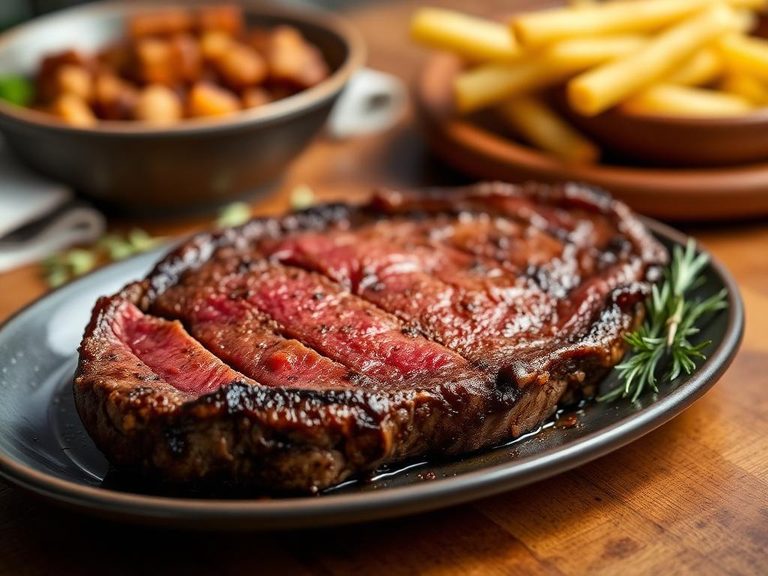
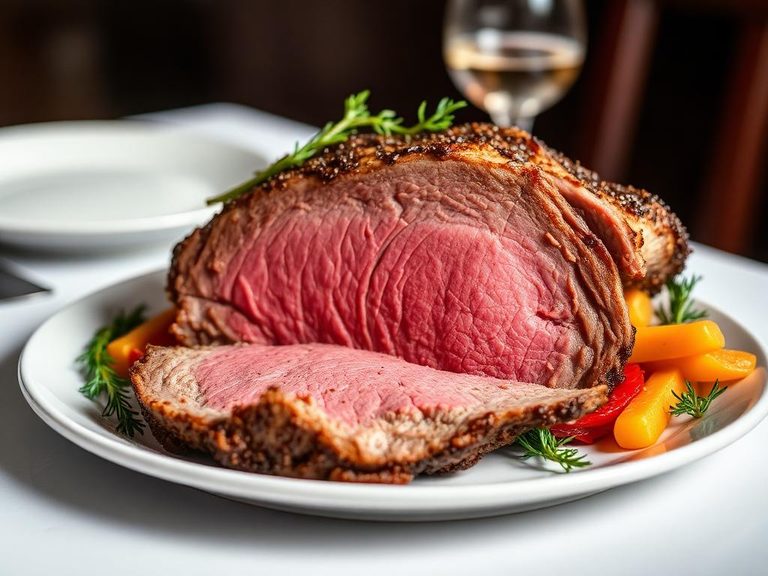
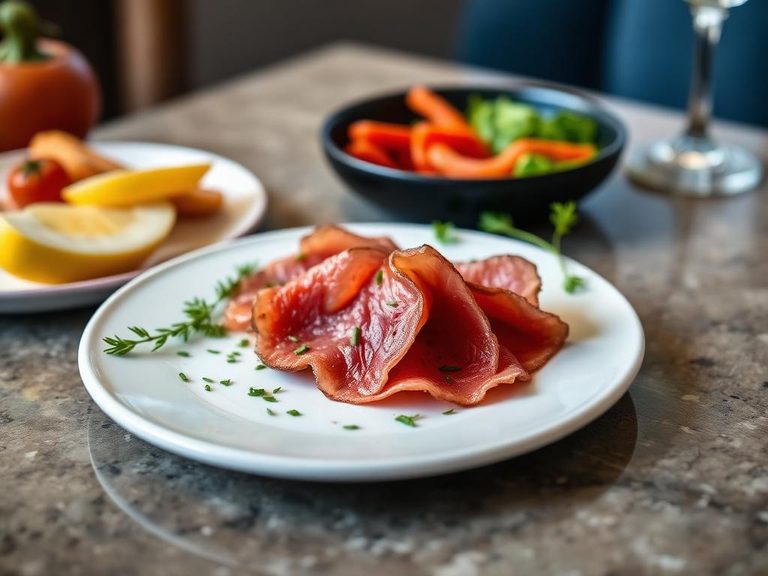
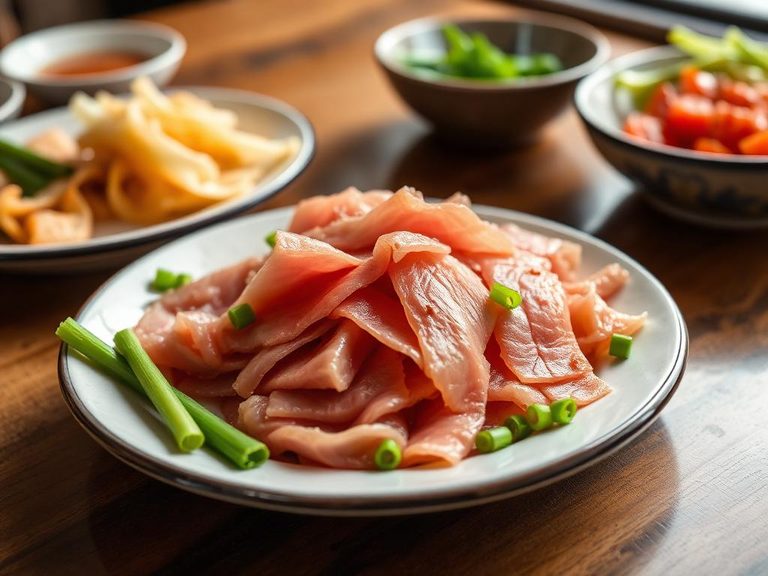

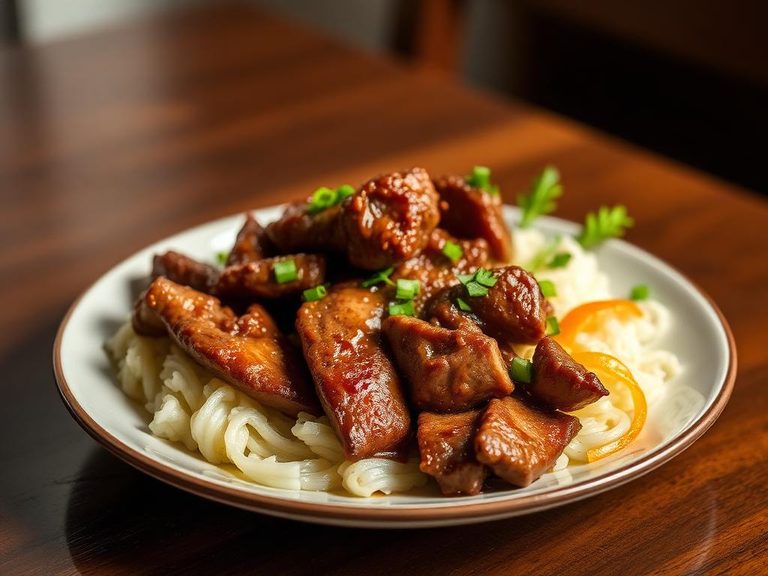
🌍 Where it's eaten
💡 Did you know?
The 'eye' in ribeye refers to the longissimus dorsi muscle, which is the large, central muscle that remains intact when the steak is cut from the rib, giving it its characteristic round shape.
Full nutrition (USDA data · scales with serving)
| Water | 70.1 g |
| Energy | 156 kcal |
| Energy | 652 kj |
| Protein | 22.0 g |
| Total lipid (fat) | 7.5 g |
| Ash | 1.0 g |
| Carbohydrate, by difference | 0.00 g |
| Fiber, total dietary | 0.00 g |
| Total Sugars | 0.00 g |
| Calcium, Ca | 6.0 mg |
| Iron, Fe | 1.9 mg |
| Magnesium, Mg | 23.0 mg |
| Phosphorus, P | 156 mg |
| Potassium, K | 276 mg |
| Sodium, Na | 56.0 mg |
| Zinc, Zn | 5.7 mg |
| Copper, Cu | 0.08 mg |
| Manganese, Mn | 0.07 mg |
| Selenium, Se | 27.3 ug |
| Vitamin C, total ascorbic acid | 0.00 mg |
| Thiamin | 0.12 mg |
| Riboflavin | 0.27 mg |
| Niacin | 5.6 mg |
| Pantothenic acid | 0.53 mg |
| Vitamin B-6 | 0.47 mg |
| Folate, total | 4.0 ug |
| Folic acid | 0.00 ug |
| Folate, food | 4.0 ug |
| Folate, DFE | 4.0 ug |
| Choline, total | 48.7 mg |
| Betaine | 13.9 mg |
| Vitamin B-12 | 1.9 ug |
| Vitamin B-12, added | 0.00 ug |
| Vitamin A, RAE | 2.0 ug |
| Retinol | 2.0 ug |
| Carotene, beta | 0.00 ug |
| Carotene, alpha | 0.00 ug |
| Cryptoxanthin, beta | 0.00 ug |
| Vitamin A, IU | 7.0 iu |
| Lycopene | 0.00 ug |
| Lutein + zeaxanthin | 0.00 ug |
| Vitamin E (alpha-tocopherol) | 0.15 mg |
| Vitamin E, added | 0.00 mg |
| Vitamin D (D2 + D3), International Units | 3.0 iu |
| Vitamin D (D2 + D3) | 0.10 ug |
| Vitamin D3 (cholecalciferol) | 0.10 ug |
| Vitamin K (phylloquinone) | 1.5 ug |
| Alcohol, ethyl | 0.00 g |
| Caffeine | 0.00 mg |
| Theobromine | 0.00 mg |
Fat & fatty acid profile (per 100g)
| Fatty acids, total saturated | 2.8 g |
| SFA 4:0 | 0.00 g |
| SFA 6:0 | 0.00 g |
| SFA 8:0 | 0.00 g |
| SFA 10:0 | 0.00 g |
| SFA 12:0 | 0.00 g |
| SFA 14:0 | 0.17 g |
| SFA 15:0 | 0.03 g |
| SFA 16:0 | 1.5 g |
| SFA 17:0 | 0.09 g |
| SFA 18:0 | 0.91 g |
| SFA 20:0 | 0.00 g |
| SFA 24:0 | 0.01 g |
| Fatty acids, total monounsaturated | 3.3 g |
| MUFA 14:1 | 0.04 g |
| MUFA 15:1 | 0.03 g |
| MUFA 16:1 | 0.20 g |
| MUFA 16:1 c | 0.19 g |
| MUFA 17:1 | 0.07 g |
| MUFA 18:1 | 2.9 g |
| MUFA 18:1 c | 2.6 g |
| MUFA 20:1 | 0.01 g |
| MUFA 22:1 | 0.00 g |
| Fatty acids, total polyunsaturated | 0.44 g |
| PUFA 18:2 | 0.35 g |
| PUFA 18:2 n-6 c,c | 0.33 g |
| PUFA 18:2 CLAs | 0.02 g |
| PUFA 18:3 | 0.01 g |
| PUFA 18:3 n-3 c,c,c (ALA) | 0.01 g |
| PUFA 18:4 | 0.00 g |
| PUFA 20:2 n-6 c,c | 0.00 g |
| PUFA 20:3 | 0.01 g |
| PUFA 20:3 n-6 | 0.01 g |
| PUFA 20:4 | 0.06 g |
| PUFA 20:5 n-3 (EPA) | 0.00 g |
| PUFA 22:5 n-3 (DPA) | 0.01 g |
| PUFA 22:6 n-3 (DHA) | 0.00 g |
| Fatty acids, total trans | 0.31 g |
| Fatty acids, total trans-monoenoic | 0.31 g |
| TFA 16:1 t | 0.01 g |
| TFA 18:1 t | 0.30 g |
| TFA 18:2 t not further defined | 0.00 g |
| Fatty acids, total trans-polyenoic | 0.00 g |
| Cholesterol | 66.0 mg |
Amino acid profile (per 100g)
| Tryptophan | 0.27 g |
| Threonine | 1.1 g |
| Isoleucine | 1.1 g |
| Leucine | 2.1 g |
| Lysine | 2.3 g |
| Methionine | 0.64 g |
| Cystine | 0.24 g |
| Phenylalanine | 0.96 g |
| Tyrosine | 0.90 g |
| Valine | 1.2 g |
| Arginine | 1.6 g |
| Histidine | 0.89 g |
| Alanine | 1.4 g |
| Aspartic acid | 2.3 g |
| Glutamic acid | 3.9 g |
| Glycine | 1.0 g |
| Proline | 1.0 g |
| Serine | 0.98 g |
| Hydroxyproline | 0.11 g |
FAQ
What's the difference between a ribeye and a New York strip?
A ribeye comes from the rib section and is known for its marbling and rich flavor, while a New York strip comes from the short loin and is leaner with a firmer texture and a distinct strip of fat along one edge.
How should I cook this lean ribeye cut for best results?
Given its leanness, high-heat, fast cooking methods like grilling, pan-searing, or broiling are ideal to develop a flavorful crust without drying it out. Let it rest after cooking to retain juices.
Is 'boneless, lip-on' a good choice for a roast?
Yes, it's excellent. The boneless form is easy to carve, and the 'lip-on' fat cap bastes the meat during roasting, adding flavor and moisture to the lean interior.
Nutrient density (calculated · NRF9.3)
Nutrient Rich Foods index: beneficial nutrients (protein, fiber, vitamins, minerals) minus saturated fat, added sugar & sodium, per 100 kcal.
NRF9.3 index — Fulgoni, Keast & Drewnowski, 2009. Computed from USDA nutrients.
Weight-loss friendliness (composite index)
Energy density 1.56 kcal/g · 56% calories from protein · 0.0 g fiber · 0.0 g sugar per 100 g.
Composite of energy density (Rolls et al., 1999), protein & fiber satiety, minus sugar. A calculated heuristic — ranks satiety-per-calorie, not a clinical measure.
Dietary load (calculated from USDA values)
Potential renal acid load. Positive = acid-forming, negative = alkaline-forming.
Sodium-to-potassium ratio: 0.20 (lower is better — aim for ≤ 1)
Sodium:potassium per WHO potassium guidance. Computed from USDA nutrients.