

Beef, rib eye steak, boneless, lip off, separable lean only, trimmed to 0" fat, all grades, cooked, grilled
Whole food · Beef Products

Photo: Wikipedia
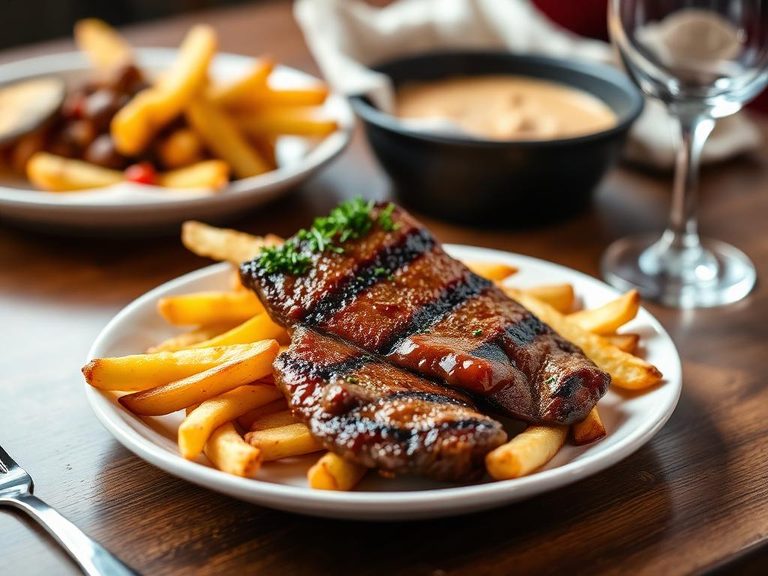
This is a lean, boneless cut from the rib section, prized for its deep beefy flavor and tender, yet firm texture. With zero carbohydrates and a significant protein punch, it's a cornerstone of high-protein, low-carb diets. Grilling renders it juicy with a characteristic char, highlighting its natural, savory taste.
Calorie split: 55% protein · 0% carbs · 45% fat
↓ Full nutrition💚 Why it's loved
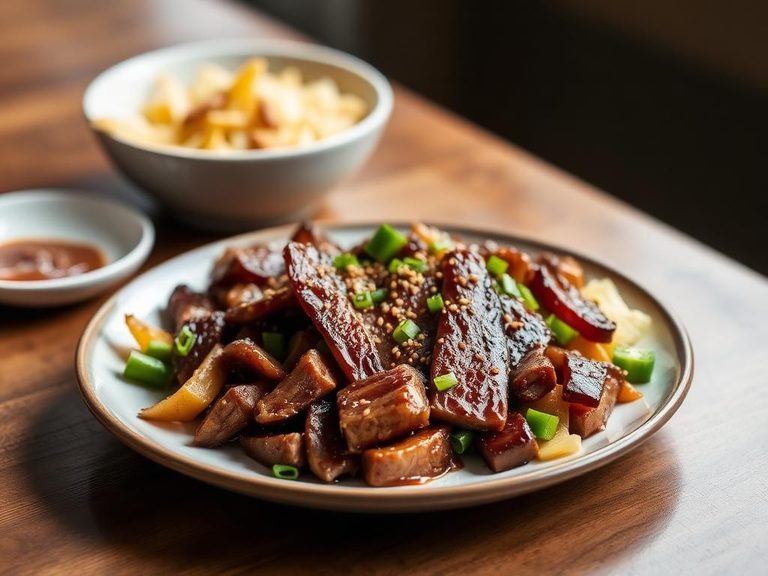
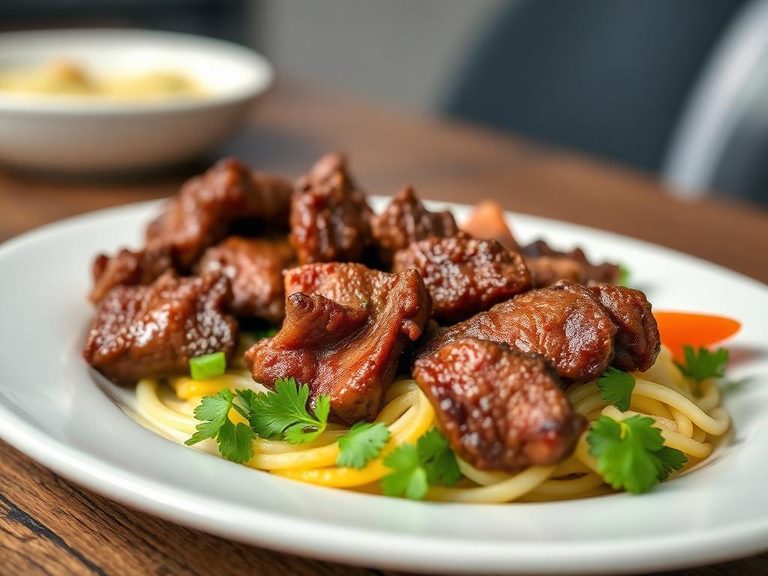
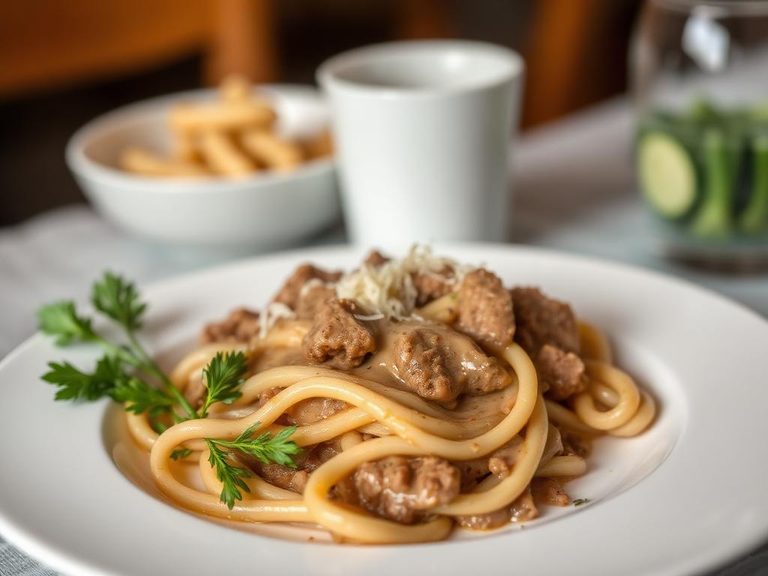
People adore the robust, umami-rich flavor that intensifies with a good sear or grill mark. Its versatility allows it to shine as a simple seasoned steak or as the star in hearty dishes, making it a celebratory and comforting food across cultures.
⚠️ Watch-outs & how to enjoy it better
While lean, it's still a red meat, which some may limit for health or ethical reasons. To counteract potential heaviness, pair it with a fiber-rich vegetable like grilled asparagus or a fresh salad. For those watching cholesterol, practicing portion control (e.g., a 118g serving) and balancing with plant-based proteins throughout the week is wise.
Key benefits
- Excellent source of complete protein (28g per 100g)
- Naturally zero carbohydrates and sugar
- Rich in essential minerals like iron and zinc
- Provides B vitamins, especially B12 and niacin
- A satisfying, satiating food that supports muscle maintenance
🍽️ Popular dishes

🌍 Where it's eaten
💡 Did you know?
The 'rib eye' gets its name from the longissimus dorsi muscle that runs along the rib bone, which is marbled with fat and appears as a distinct 'eye' of meat when the steak is cut crosswise.
Full nutrition (USDA data · scales with serving)
| Water | 60.9 g |
| Energy | 206 kcal |
| Energy | 861 kj |
| Protein | 28.1 g |
| Total lipid (fat) | 10.4 g |
| Ash | 1.1 g |
| Carbohydrate, by difference | 0.00 g |
| Fiber, total dietary | 0.00 g |
| Total Sugars | 0.00 g |
| Calcium, Ca | 7.0 mg |
| Iron, Fe | 2.5 mg |
| Magnesium, Mg | 25.0 mg |
| Phosphorus, P | 177 mg |
| Potassium, K | 296 mg |
| Sodium, Na | 59.0 mg |
| Zinc, Zn | 7.0 mg |
| Copper, Cu | 0.09 mg |
| Manganese, Mn | 0.09 mg |
| Selenium, Se | 35.6 ug |
| Vitamin C, total ascorbic acid | 0.00 mg |
| Thiamin | 0.08 mg |
| Riboflavin | 0.32 mg |
| Niacin | 5.8 mg |
| Pantothenic acid | 0.59 mg |
| Vitamin B-6 | 0.56 mg |
| Folate, total | 7.0 ug |
| Folic acid | 0.00 ug |
| Folate, food | 7.0 ug |
| Folate, DFE | 7.0 ug |
| Choline, total | 57.0 mg |
| Betaine | 13.5 mg |
| Vitamin B-12 | 2.3 ug |
| Vitamin B-12, added | 0.00 ug |
| Vitamin A, RAE | 2.0 ug |
| Retinol | 2.0 ug |
| Carotene, beta | 0.00 ug |
| Carotene, alpha | 0.00 ug |
| Cryptoxanthin, beta | 0.00 ug |
| Vitamin A, IU | 6.0 iu |
| Lycopene | 0.00 ug |
| Lutein + zeaxanthin | 0.00 ug |
| Vitamin E (alpha-tocopherol) | 0.10 mg |
| Vitamin E, added | 0.00 mg |
| Vitamin D (D2 + D3), International Units | 4.0 iu |
| Vitamin D (D2 + D3) | 0.10 ug |
| Vitamin D3 (cholecalciferol) | 0.10 ug |
| Vitamin K (phylloquinone) | 1.6 ug |
| Alcohol, ethyl | 0.00 g |
| Caffeine | 0.00 mg |
| Theobromine | 0.00 mg |
Fat & fatty acid profile (per 100g)
| Fatty acids, total saturated | 4.2 g |
| SFA 4:0 | 0.00 g |
| SFA 6:0 | 0.00 g |
| SFA 8:0 | 0.00 g |
| SFA 10:0 | 0.01 g |
| SFA 12:0 | 0.01 g |
| SFA 14:0 | 0.27 g |
| SFA 15:0 | 0.06 g |
| SFA 16:0 | 2.3 g |
| SFA 17:0 | 0.14 g |
| SFA 18:0 | 1.4 g |
| SFA 20:0 | 0.00 g |
| SFA 24:0 | 0.01 g |
| Fatty acids, total monounsaturated | 4.9 g |
| MUFA 14:1 | 0.06 g |
| MUFA 15:1 | 0.05 g |
| MUFA 16:1 | 0.33 g |
| MUFA 16:1 c | 0.32 g |
| MUFA 17:1 | 0.10 g |
| MUFA 18:1 | 4.3 g |
| MUFA 18:1 c | 3.8 g |
| MUFA 20:1 | 0.01 g |
| MUFA 22:1 | 0.00 g |
| Fatty acids, total polyunsaturated | 0.55 g |
| PUFA 18:2 | 0.44 g |
| PUFA 18:2 n-6 c,c | 0.40 g |
| PUFA 18:2 CLAs | 0.03 g |
| PUFA 18:3 | 0.02 g |
| PUFA 18:3 n-3 c,c,c (ALA) | 0.02 g |
| PUFA 18:4 | 0.00 g |
| PUFA 20:2 n-6 c,c | 0.00 g |
| PUFA 20:3 | 0.02 g |
| PUFA 20:3 n-6 | 0.02 g |
| PUFA 20:4 | 0.06 g |
| PUFA 20:5 n-3 (EPA) | 0.00 g |
| PUFA 22:5 n-3 (DPA) | 0.01 g |
| PUFA 22:6 n-3 (DHA) | 0.00 g |
| Fatty acids, total trans | 0.52 g |
| Fatty acids, total trans-monoenoic | 0.51 g |
| TFA 16:1 t | 0.01 g |
| TFA 18:1 t | 0.50 g |
| TFA 18:2 t not further defined | 0.01 g |
| Fatty acids, total trans-polyenoic | 0.01 g |
| Cholesterol | 79.0 mg |
Amino acid profile (per 100g)
| Tryptophan | 0.34 g |
| Threonine | 1.4 g |
| Isoleucine | 1.4 g |
| Leucine | 2.6 g |
| Lysine | 3.0 g |
| Methionine | 0.82 g |
| Cystine | 0.31 g |
| Phenylalanine | 1.2 g |
| Tyrosine | 1.1 g |
| Valine | 1.5 g |
| Arginine | 2.1 g |
| Histidine | 1.1 g |
| Alanine | 1.8 g |
| Aspartic acid | 3.0 g |
| Glutamic acid | 5.0 g |
| Glycine | 1.3 g |
| Proline | 1.3 g |
| Serine | 1.2 g |
| Hydroxyproline | 0.14 g |
FAQ
What does 'lip off' and 'separable lean only' mean?
'Lip off' means the outer fat cap has been removed. 'Separable lean only' means all visible fat has been trimmed away, leaving just the lean muscle tissue for a very lean cut.
How is this different from a regular ribeye steak?
A standard ribeye typically has a thick cap of fat (the 'lip') and more internal marbling. This specific cut is meticulously trimmed to be almost pure lean meat, resulting in a lower fat and calorie count.
What's the best way to cook this lean cut without drying it out?
High-heat, quick cooking methods like grilling or pan-searing are ideal. Use a meat thermometer to avoid overcooking—aim for 130-135°F (54-57°C) for medium-rare. Letting it rest for 5-10 minutes after cooking is crucial to retain juices.
Nutrient density (calculated · NRF9.3)
Nutrient Rich Foods index: beneficial nutrients (protein, fiber, vitamins, minerals) minus saturated fat, added sugar & sodium, per 100 kcal.
NRF9.3 index — Fulgoni, Keast & Drewnowski, 2009. Computed from USDA nutrients.
Weight-loss friendliness (composite index)
Energy density 2.06 kcal/g · 55% calories from protein · 0.0 g fiber · 0.0 g sugar per 100 g.
Composite of energy density (Rolls et al., 1999), protein & fiber satiety, minus sugar. A calculated heuristic — ranks satiety-per-calorie, not a clinical measure.
Dietary load (calculated from USDA values)
Potential renal acid load. Positive = acid-forming, negative = alkaline-forming.
Sodium-to-potassium ratio: 0.20 (lower is better — aim for ≤ 1)
Sodium:potassium per WHO potassium guidance. Computed from USDA nutrients.