

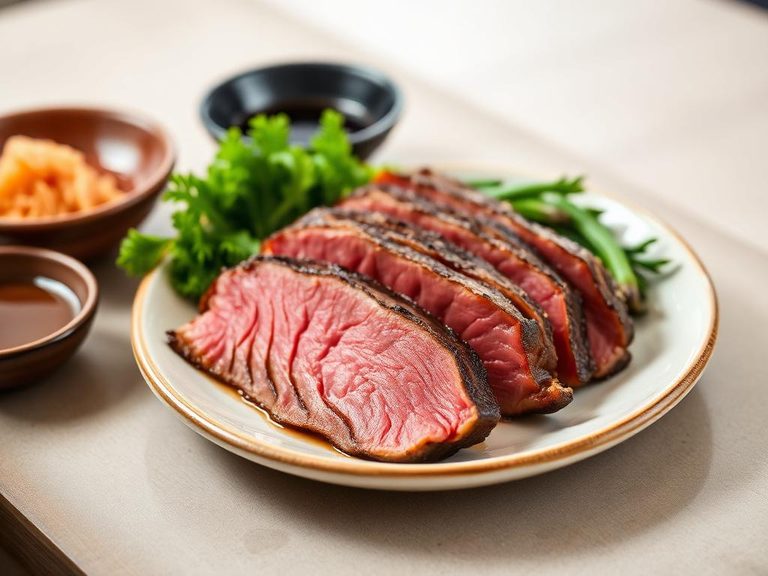
Beef, rib eye roast, boneless, lip-on, separable lean only, trimmed to 1/8" fat, all grades, cooked, roasted
Whole food · Beef Products

Photo: Wikipedia
This is a premium cut of beef, the boneless ribeye roast with its flavorful lip of fat left on, trimmed to a precise 1/8 inch. When roasted, it develops a deeply savory, buttery flavor with a tender, juicy texture and a rich, beefy aroma. Nutritionally, it's a powerhouse of high-quality protein with zero carbs, making it a centerpiece for low-carb and high-protein diets.
Calorie split: 52% protein · 0% carbs · 48% fat
↓ Full nutrition💚 Why it's loved
People adore the ribeye for its exceptional marbling, which melts during cooking to baste the meat from within, creating an unrivaled depth of beefy flavor and succulence. It's a celebratory centerpiece, perfect for Sunday roasts or holiday feasts, symbolizing comfort and indulgence across many culinary traditions.
⚠️ Watch-outs & how to enjoy it better
The significant fat content, while flavorful, makes it a high-calorie choice. Individuals monitoring saturated fat intake or following strict heart-healthy diets should practice portion control. To counteract, serve a smaller portion (3-4 oz) alongside large volumes of roasted non-starchy vegetables (like broccoli or asparagus) and a fiber-rich side like a small salad to promote satiety without excess calories.
Key benefits
- Excellent source of complete, high-quality protein
- Rich in bioavailable heme iron and zinc
- Contains conjugated linoleic acid (CLA) from grass-fed sources
- Provides B vitamins, especially B12 and niacin
- Zero carbohydrates, suitable for ketogenic diets
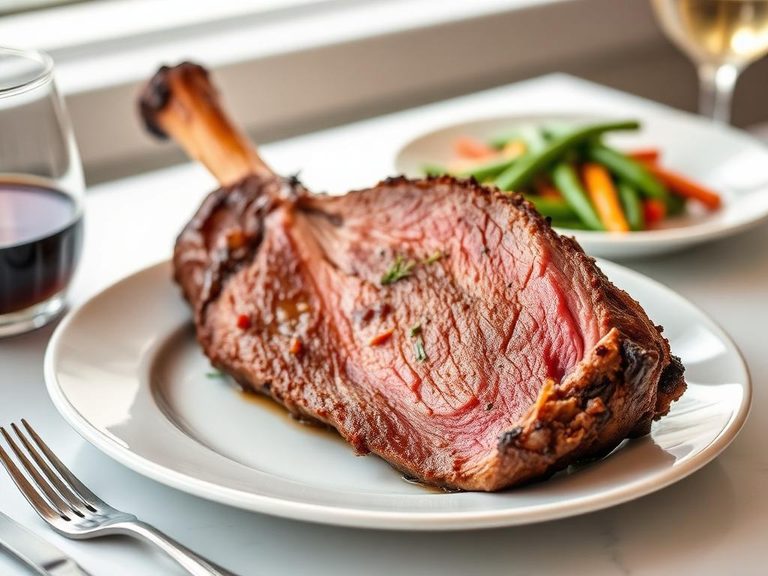
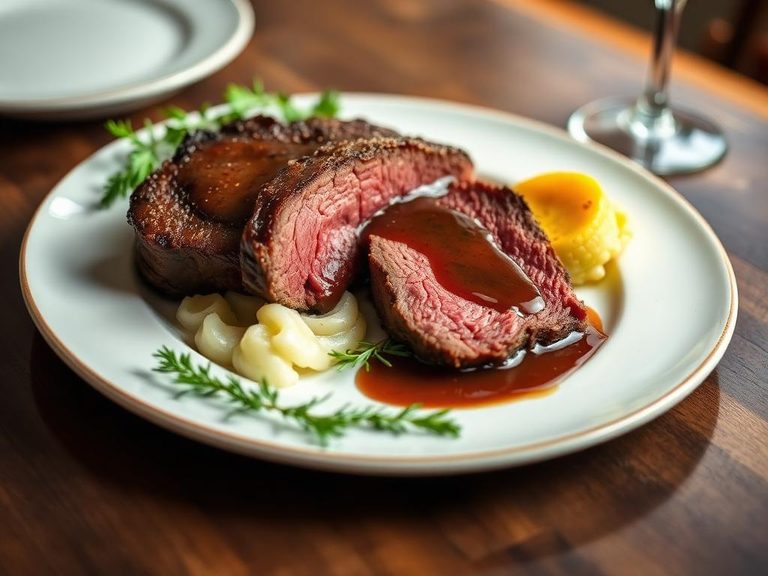
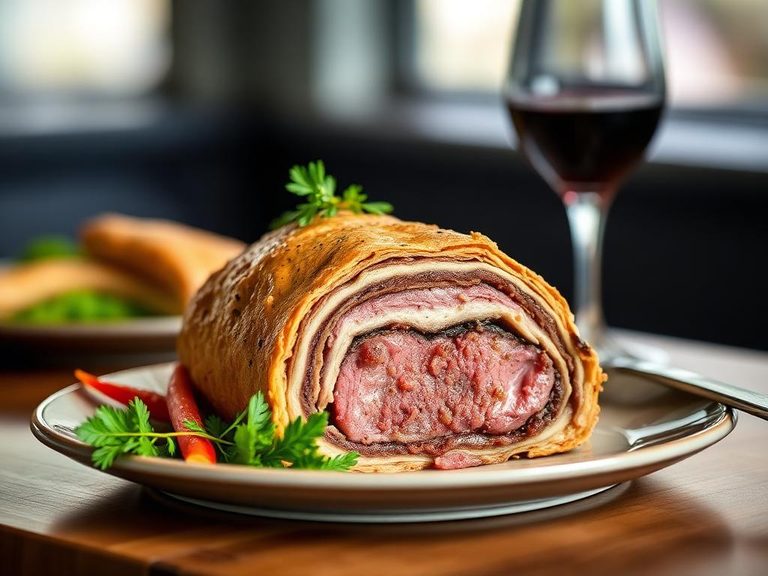
🍽️ Popular dishes
🌍 Where it's eaten
💡 Did you know?
The 'ribeye' gets its name from the 'eye' of meat running through the center of the rib section, and the prized marbling within it is scientifically proven to contain higher levels of oleic acid—the same heart-healthy monounsaturated fat found in olive oil—than many other cuts.
Full nutrition (USDA data · scales with serving)
| Water | 59.5 g |
| Energy | 218 kcal |
| Energy | 912 kj |
| Protein | 28.2 g |
| Total lipid (fat) | 11.7 g |
| Ash | 1.1 g |
| Carbohydrate, by difference | 0.00 g |
| Fiber, total dietary | 0.00 g |
| Total Sugars | 0.00 g |
| Calcium, Ca | 8.0 mg |
| Iron, Fe | 2.1 mg |
| Magnesium, Mg | 24.0 mg |
| Phosphorus, P | 178 mg |
| Potassium, K | 326 mg |
| Sodium, Na | 56.0 mg |
| Zinc, Zn | 7.1 mg |
| Copper, Cu | 0.09 mg |
| Manganese, Mn | 0.09 mg |
| Selenium, Se | 35.5 ug |
| Vitamin C, total ascorbic acid | 0.00 mg |
| Thiamin | 0.09 mg |
| Riboflavin | 0.29 mg |
| Niacin | 5.8 mg |
| Pantothenic acid | 0.65 mg |
| Vitamin B-6 | 0.54 mg |
| Folate, total | 7.0 ug |
| Folic acid | 0.00 ug |
| Folate, food | 7.0 ug |
| Folate, DFE | 7.0 ug |
| Choline, total | 55.9 mg |
| Betaine | 13.3 mg |
| Vitamin B-12 | 2.3 ug |
| Vitamin B-12, added | 0.00 ug |
| Vitamin A, RAE | 2.0 ug |
| Retinol | 2.0 ug |
| Carotene, beta | 0.00 ug |
| Carotene, alpha | 0.00 ug |
| Cryptoxanthin, beta | 0.00 ug |
| Vitamin A, IU | 6.0 iu |
| Lycopene | 0.00 ug |
| Lutein + zeaxanthin | 0.00 ug |
| Vitamin E (alpha-tocopherol) | 0.10 mg |
| Vitamin E, added | 0.00 mg |
| Vitamin D (D2 + D3), International Units | 4.0 iu |
| Vitamin D (D2 + D3) | 0.10 ug |
| Vitamin D3 (cholecalciferol) | 0.10 ug |
| Vitamin K (phylloquinone) | 1.6 ug |
| Alcohol, ethyl | 0.00 g |
| Caffeine | 0.00 mg |
| Theobromine | 0.00 mg |
Fat & fatty acid profile (per 100g)
| Fatty acids, total saturated | 4.5 g |
| SFA 4:0 | 0.00 g |
| SFA 6:0 | 0.00 g |
| SFA 8:0 | 0.00 g |
| SFA 10:0 | 0.01 g |
| SFA 12:0 | 0.01 g |
| SFA 14:0 | 0.28 g |
| SFA 15:0 | 0.06 g |
| SFA 16:0 | 2.5 g |
| SFA 17:0 | 0.15 g |
| SFA 18:0 | 1.5 g |
| SFA 20:0 | 0.00 g |
| SFA 24:0 | 0.01 g |
| Fatty acids, total monounsaturated | 5.3 g |
| MUFA 14:1 | 0.06 g |
| MUFA 15:1 | 0.05 g |
| MUFA 16:1 | 0.34 g |
| MUFA 16:1 c | 0.34 g |
| MUFA 17:1 | 0.11 g |
| MUFA 18:1 | 4.7 g |
| MUFA 18:1 c | 4.1 g |
| MUFA 20:1 | 0.01 g |
| MUFA 22:1 | 0.00 g |
| Fatty acids, total polyunsaturated | 0.70 g |
| PUFA 18:2 | 0.55 g |
| PUFA 18:2 n-6 c,c | 0.50 g |
| PUFA 18:2 CLAs | 0.04 g |
| PUFA 18:3 | 0.02 g |
| PUFA 18:3 n-3 c,c,c (ALA) | 0.02 g |
| PUFA 18:4 | 0.00 g |
| PUFA 20:2 n-6 c,c | 0.00 g |
| PUFA 20:3 | 0.02 g |
| PUFA 20:3 n-6 | 0.02 g |
| PUFA 20:4 | 0.09 g |
| PUFA 20:5 n-3 (EPA) | 0.01 g |
| PUFA 22:5 n-3 (DPA) | 0.01 g |
| PUFA 22:6 n-3 (DHA) | 0.00 g |
| Fatty acids, total trans | 0.58 g |
| Fatty acids, total trans-monoenoic | 0.57 g |
| TFA 16:1 t | 0.01 g |
| TFA 18:1 t | 0.57 g |
| TFA 18:2 t not further defined | 0.01 g |
| Fatty acids, total trans-polyenoic | 0.01 g |
| Cholesterol | 80.0 mg |
Amino acid profile (per 100g)
| Tryptophan | 0.35 g |
| Threonine | 1.4 g |
| Isoleucine | 1.4 g |
| Leucine | 2.7 g |
| Lysine | 3.0 g |
| Methionine | 0.82 g |
| Cystine | 0.31 g |
| Phenylalanine | 1.2 g |
| Tyrosine | 1.2 g |
| Valine | 1.5 g |
| Arginine | 2.1 g |
| Histidine | 1.1 g |
| Alanine | 1.8 g |
| Aspartic acid | 3.0 g |
| Glutamic acid | 5.0 g |
| Glycine | 1.3 g |
| Proline | 1.3 g |
| Serine | 1.3 g |
| Hydroxyproline | 0.14 g |
FAQ
What's the difference between a ribeye roast and a prime rib roast?
They are essentially the same cut from the rib section. 'Prime Rib' often refers to the roast cooked on the bone, while 'ribeye roast' is typically boneless. 'Prime' can also refer to the highest USDA beef grade, not just the cut.
Why is the 'lip-on' important?
The 'lip' is a layer of fat and meat on the outer edge of the roast. Leaving it on provides extra flavor and moisture during the long roasting process, as the fat renders and bastes the lean meat.
How do I ensure it's juicy and not overcooked?
Use a meat thermometer! Pull the roast from the oven when it reaches 5-10°F below your desired final temperature (e.g., 125°F for medium-rare), then let it rest for 20-30 minutes. This allows carryover cooking and lets the juices redistribute throughout the meat.
Nutrient density (calculated · NRF9.3)
Nutrient Rich Foods index: beneficial nutrients (protein, fiber, vitamins, minerals) minus saturated fat, added sugar & sodium, per 100 kcal.
NRF9.3 index — Fulgoni, Keast & Drewnowski, 2009. Computed from USDA nutrients.
Weight-loss friendliness (composite index)
Energy density 2.18 kcal/g · 52% calories from protein · 0.0 g fiber · 0.0 g sugar per 100 g.
Composite of energy density (Rolls et al., 1999), protein & fiber satiety, minus sugar. A calculated heuristic — ranks satiety-per-calorie, not a clinical measure.
Dietary load (calculated from USDA values)
Potential renal acid load. Positive = acid-forming, negative = alkaline-forming.
Sodium-to-potassium ratio: 0.17 (lower is better — aim for ≤ 1)
Sodium:potassium per WHO potassium guidance. Computed from USDA nutrients.