

Carpaccio
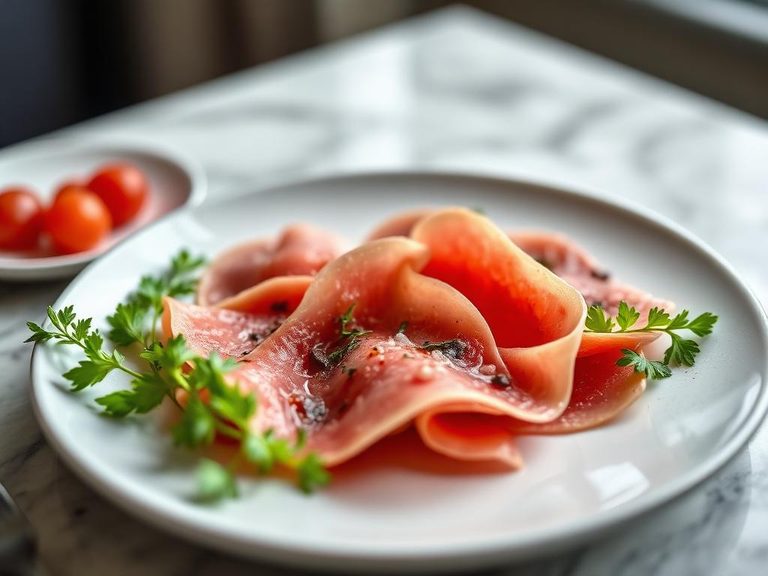
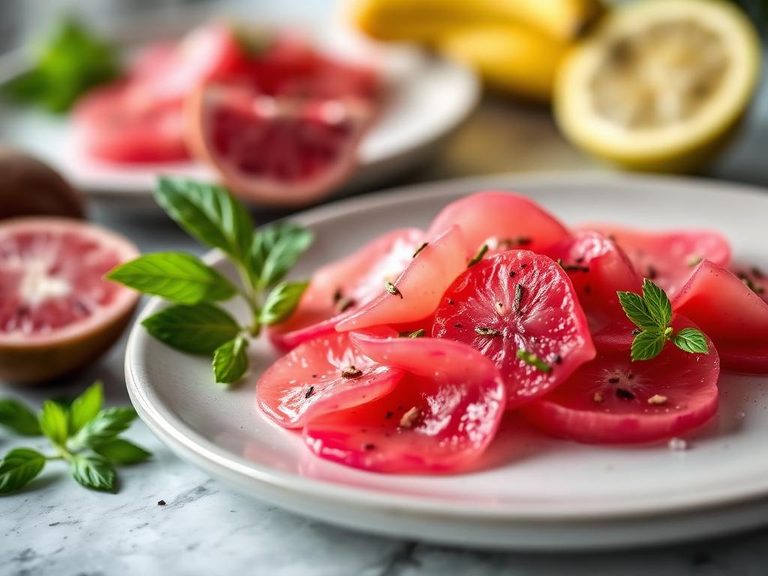
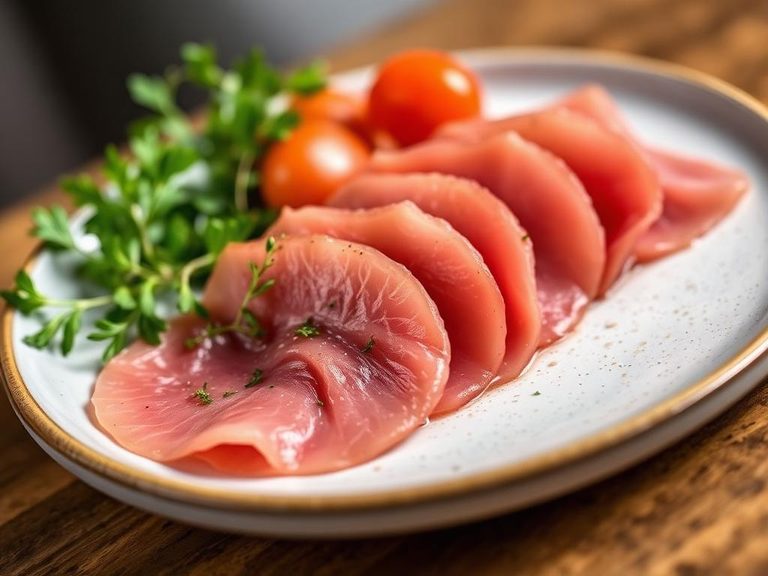
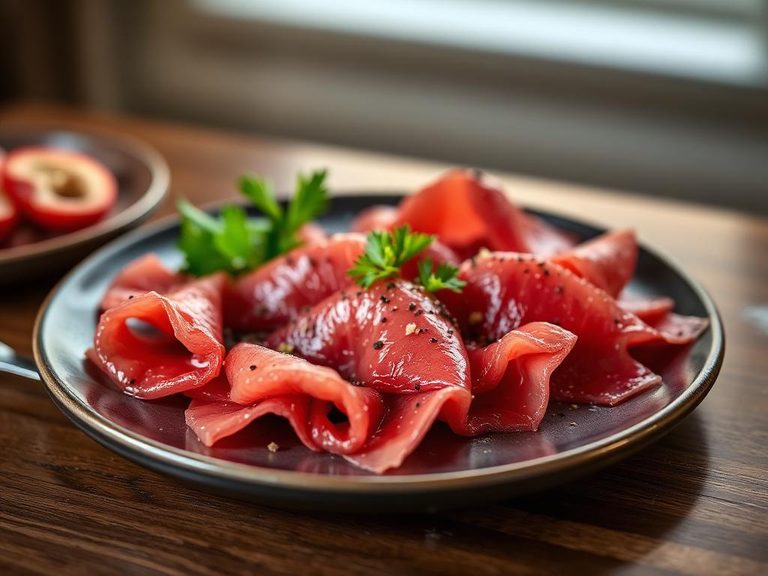
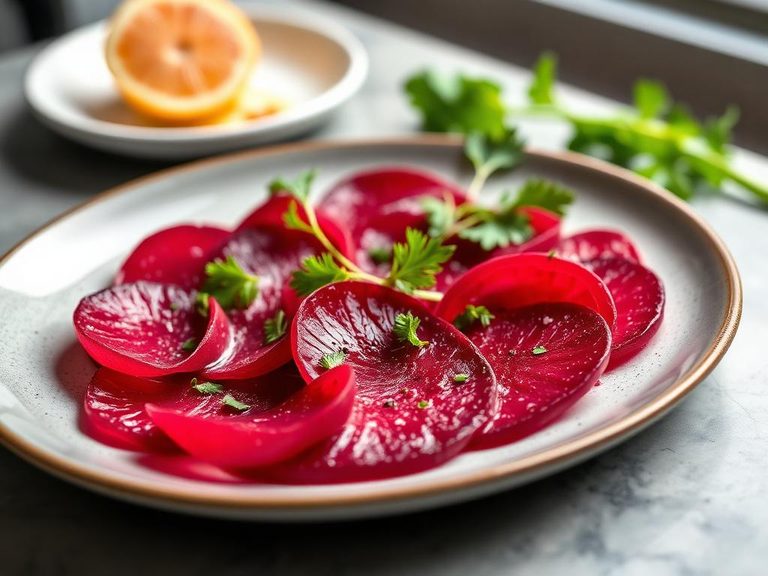
Carpaccio is a classic Italian dish of thinly sliced raw meat or fish, traditionally served with a drizzle of olive oil, lemon juice, and capers. Originating in Venice, it was named after the Venetian painter Vittore Carpaccio, whose use of red and white tones inspired the dish's appearance.
🍳 View the full Carpaccio recipe →
🍽️ Nutrition at a glance
Carpaccio is typically high in protein and healthy fats, with minimal carbohydrates, making it a low-calorie option around 150-250 calories per serving. It provides essential nutrients like iron, omega-3 fatty acids (if using fish), and vitamins from accompanying greens or dressings.
Nutrition breakdown
| Calories | 180 kcal |
| Protein | 12 g |
| Carbs | 1 g |
| Fat | 14 g |
| Fiber | 0 g |
| Sugar | 0 g |
| Sodium | 350 mg |
| Iron | 2 mg |
| Vitamin B12 | 1.5 mcg |
| Zinc | 2 mg |
| Phosphorus | 150 mg |
| Selenium | 15 mcg |
| Niacin (B3) | 3 mg |
| Vitamin B6 | 0.2 mg |
| Monounsaturated Fat | 6 g |
Per 1 plate (120 g) · estimated, varies by recipe
💡 What's interesting
Culturally, Carpaccio reflects Italy's emphasis on fresh, high-quality ingredients and has evolved to include variations like salmon or vegetable versions. Nutritionally, it's unique for preserving the natural nutrients of raw ingredients, offering a light yet flavorful meal that aligns with modern health-conscious eating trends.
🍽️ Related dishes
AI estimate may be inaccurate · Terms