

Greens, fresh, cooked, fat added
Common food
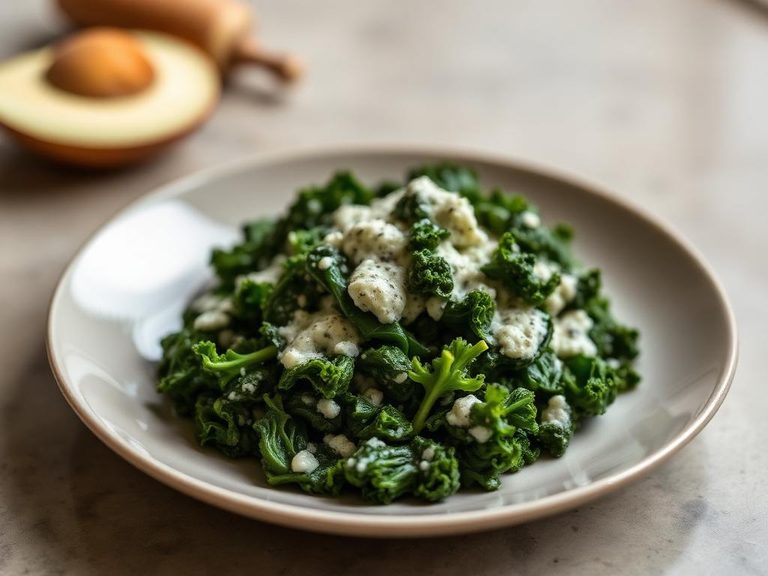
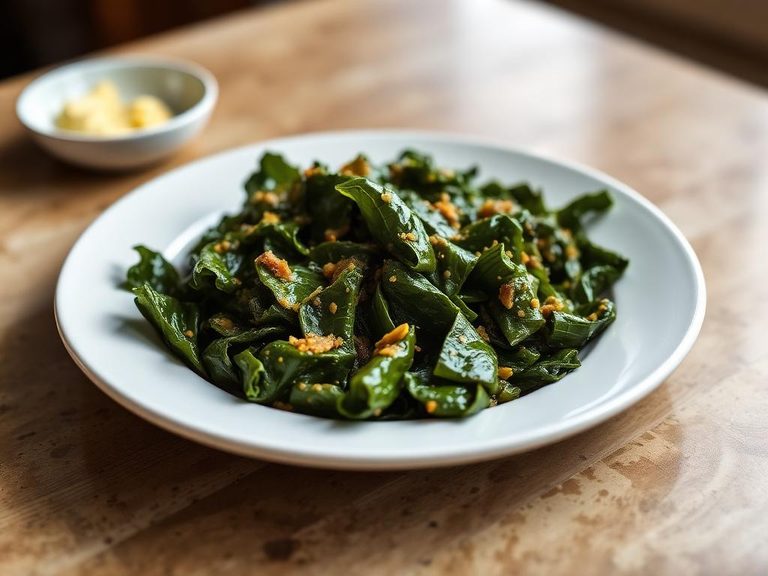
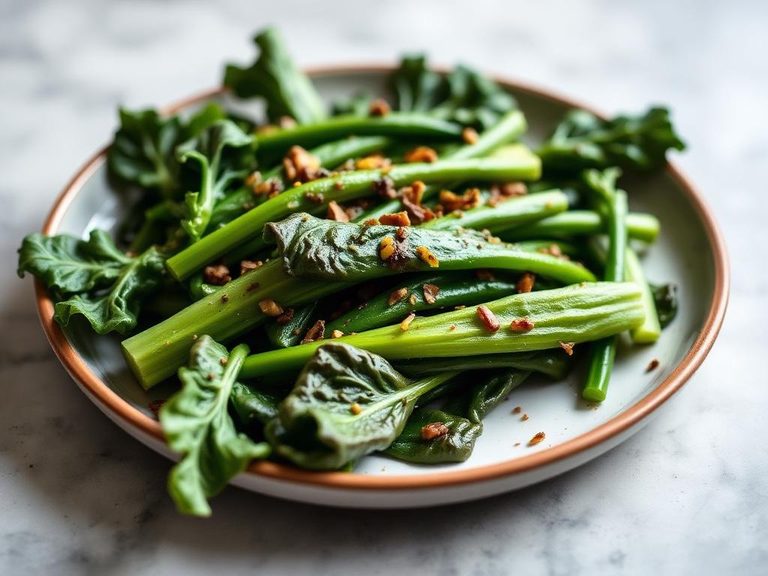
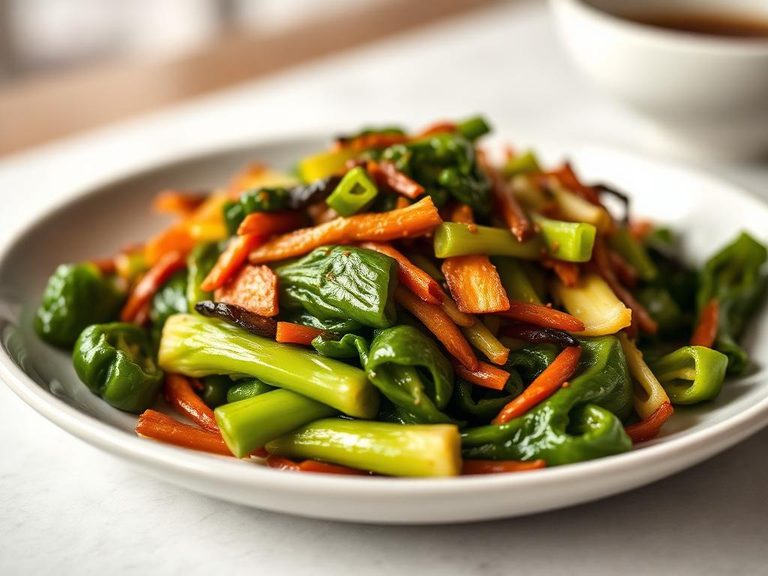
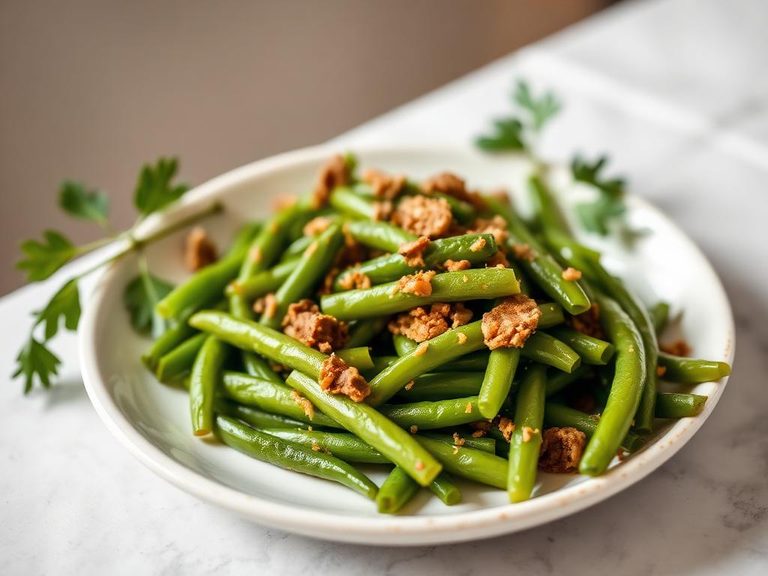
This is a broad category of leafy greens—like spinach, kale, or chard—that have been sautéed, steamed, or stir-fried with a small amount of fat. The cooking process wilts the leaves, concentrating their earthy, mineral-rich flavor and creating a tender, silky texture. Nutritionally, it's a low-calorie powerhouse, with the added fat significantly boosting the absorption of fat-soluble vitamins like A and K.
Calorie split: 19% protein · 32% carbs · 49% fat
↓ Full nutrition💚 Why it's loved
People love cooked greens for their deep, savory flavor and satisfying, tender-crisp texture that pairs perfectly with garlic, onions, or a squeeze of lemon. They are incredibly versatile, serving as a simple side dish, a bed for proteins, or a hearty addition to pastas and grain bowls.
⚠️ Watch-outs & how to enjoy it better
Some greens, like spinach, are high in oxalates, which can contribute to kidney stones in susceptible individuals and may slightly inhibit mineral absorption. To counteract this, you can boil the greens briefly and discard the water, or pair them with calcium-rich foods like cheese or yogurt. Additionally, the added fat, while beneficial for nutrients, increases the calorie count, so mindful portioning is key for those monitoring energy intake.
Key benefits
- Excellent source of vitamins A, C, and K
- Rich in minerals like iron and calcium
- High in dietary fiber for digestive health
- Adding fat enhances nutrient absorption
- Low calorie, nutrient-dense food
🍽️ Popular dishes

🌍 Where it's eaten
💡 Did you know?
Cooking spinach can reduce its volume by up to 90%, meaning a huge pile of raw leaves wilts down to just a small, nutrient-packed serving.
Full nutrition (USDA data · scales with serving)
| Water | 86.9 g |
| Energy | 58.0 kcal |
| Protein | 2.9 g |
| Total lipid (fat) | 3.4 g |
| Carbohydrate, by difference | 5.0 g |
| Fiber, total dietary | 4.1 g |
| Total Sugars | 0.72 g |
| Calcium, Ca | 228 mg |
| Iron, Fe | 1.1 mg |
| Magnesium, Mg | 31.0 mg |
| Phosphorus, P | 42.0 mg |
| Potassium, K | 294 mg |
| Sodium, Na | 163 mg |
| Zinc, Zn | 0.29 mg |
| Copper, Cu | 0.08 mg |
| Selenium, Se | 1.1 ug |
| Vitamin C, total ascorbic acid | 45.3 mg |
| Thiamin | 0.07 mg |
| Riboflavin | 0.21 mg |
| Niacin | 0.88 mg |
| Vitamin B-6 | 0.17 mg |
| Folate, total | 72.0 ug |
| Folic acid | 0.00 ug |
| Folate, food | 72.0 ug |
| Folate, DFE | 72.0 ug |
| Choline, total | 10.2 mg |
| Vitamin B-12 | 0.00 ug |
| Vitamin B-12, added | 0.00 ug |
| Vitamin A, RAE | 259 ug |
| Retinol | 11.0 ug |
| Carotene, beta | 2956 ug |
| Carotene, alpha | 7.0 ug |
| Cryptoxanthin, beta | 26.0 ug |
| Lycopene | 0.00 ug |
| Lutein + zeaxanthin | 5396 ug |
| Vitamin E (alpha-tocopherol) | 2.0 mg |
| Vitamin E, added | 0.00 mg |
| Vitamin D (D2 + D3) | 0.00 ug |
| Vitamin K (phylloquinone) | 410 ug |
| Alcohol, ethyl | 0.00 g |
| Caffeine | 0.00 mg |
| Theobromine | 0.00 mg |
Fat & fatty acid profile (per 100g)
| Fatty acids, total saturated | 0.75 g |
| SFA 4:0 | 0.02 g |
| SFA 6:0 | 0.01 g |
| SFA 8:0 | 0.01 g |
| SFA 10:0 | 0.02 g |
| SFA 12:0 | 0.02 g |
| SFA 14:0 | 0.07 g |
| SFA 16:0 | 0.44 g |
| SFA 18:0 | 0.14 g |
| Fatty acids, total monounsaturated | 0.94 g |
| MUFA 16:1 | 0.01 g |
| MUFA 18:1 | 0.90 g |
| MUFA 20:1 | 0.01 g |
| MUFA 22:1 | 0.01 g |
| Fatty acids, total polyunsaturated | 1.1 g |
| PUFA 18:2 | 0.79 g |
| PUFA 18:3 | 0.29 g |
| PUFA 18:4 | 0.00 g |
| PUFA 20:4 | 0.00 g |
| PUFA 20:5 n-3 (EPA) | 0.00 g |
| PUFA 22:5 n-3 (DPA) | 0.00 g |
| PUFA 22:6 n-3 (DHA) | 0.00 g |
| Cholesterol | 2.0 mg |
Amino acid profile (per 100g)
Estimated from Beet greens, cooked, boiled, drained, with salt — USDA does not publish this profile for Greens.
| Tryptophan | 0.04 g |
| Threonine | 0.08 g |
| Isoleucine | 0.05 g |
| Leucine | 0.12 g |
| Lysine | 0.07 g |
| Methionine | 0.02 g |
| Cystine | 0.02 g |
| Phenylalanine | 0.07 g |
| Tyrosine | 0.06 g |
| Valine | 0.08 g |
| Arginine | 0.07 g |
| Histidine | 0.04 g |
| Alanine | 0.10 g |
| Aspartic acid | 0.15 g |
| Glutamic acid | 0.31 g |
| Glycine | 0.09 g |
| Proline | 0.06 g |
| Serine | 0.08 g |
FAQ
Why do my cooked greens turn bitter?
Bitterness can come from overcooking, especially with mature kale or collards. To minimize this, cook them quickly until just tender, or balance the flavor with a splash of acid (like lemon juice) or a pinch of sugar.
Is the cooking liquid nutritious?
Yes, it contains leached vitamins and minerals. If you didn't boil them extensively, consider using the flavorful liquid as a base for soups or sauces to retain those nutrients.
Can I reheat cooked greens?
Yes, they reheat well in a skillet or microwave. For best texture, reheat gently just until warm to avoid making them mushy.
Nutrient density (calculated · NRF9.3)
Nutrient Rich Foods index: beneficial nutrients (protein, fiber, vitamins, minerals) minus saturated fat, added sugar & sodium, per 100 kcal.
NRF9.3 index — Fulgoni, Keast & Drewnowski, 2009. Computed from USDA nutrients.
Weight-loss friendliness (composite index)
Energy density 0.58 kcal/g · 20% calories from protein · 4.1 g fiber · 0.7 g sugar per 100 g.
Composite of energy density (Rolls et al., 1999), protein & fiber satiety, minus sugar. A calculated heuristic — ranks satiety-per-calorie, not a clinical measure.
Dietary load (calculated from USDA values)
Potential renal acid load. Positive = acid-forming, negative = alkaline-forming.
Sodium-to-potassium ratio: 0.55 (lower is better — aim for ≤ 1)
Sodium:potassium per WHO potassium guidance. Computed from USDA nutrients.