

Mustard greens, fresh, cooked, fat added
Common food

Photo: Wikipedia
Cooked mustard greens are tender, dark leafy greens with a distinctive peppery bite that mellows into a savory, slightly bitter depth when simmered. The addition of fat, like bacon drippings or oil, transforms their texture into something silky and rich, while amplifying their earthy flavor. Per 100g, they deliver a solid 3.3g of fiber and nearly 3g of protein for just 53 calories, making them a nutrient-dense side dish.
Calorie split: 20% protein · 32% carbs · 48% fat
↓ Full nutrition💚 Why it's loved
People love cooked mustard greens for their bold, assertive flavor that stands up beautifully to rich ingredients like smoked meat, garlic, and vinegar. They are a cornerstone of soul food and Southern U.S. cuisine, where slow-cooking with a ham hock or bacon is a beloved tradition that turns them into a deeply comforting, savory dish.
⚠️ Watch-outs & how to enjoy it better
The natural bitterness and peppery kick can be overwhelming for some palates, especially those new to bitter greens. They are also high in oxalates, which can contribute to kidney stone formation in susceptible individuals. To counteract bitterness, cook them with a sweet element like a pinch of sugar or a splash of vinegar at the end. To reduce oxalates, blanch the greens in a large pot of boiling water for a minute before sautéing or braising, and discard the water.
Key benefits
- Excellent source of vitamin K, crucial for bone health and blood clotting.
- Rich in vitamin A and beta-carotene, supporting eye and immune health.
- Provides a good amount of vitamin C, an antioxidant that aids iron absorption.
- High in dietary fiber, promoting digestive health and satiety.
- Contains glucosinolates, sulfur-containing compounds studied for their potential health benefits.
🍽️ Popular dishes
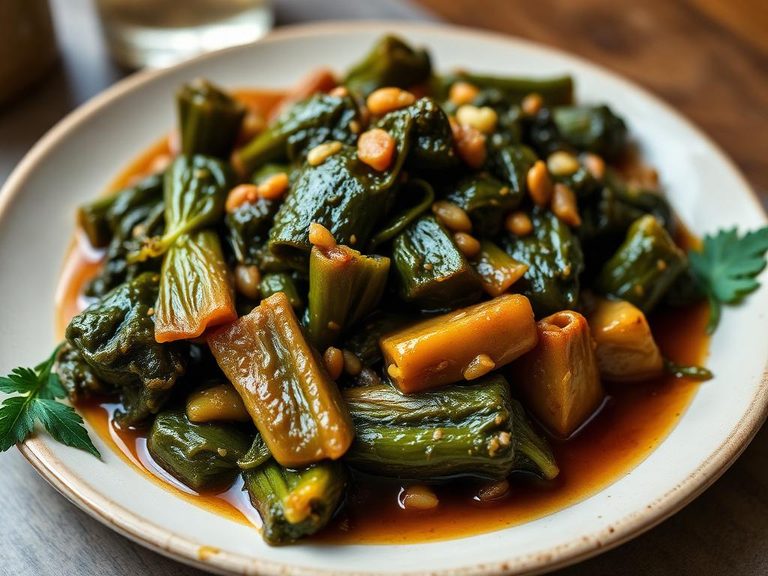
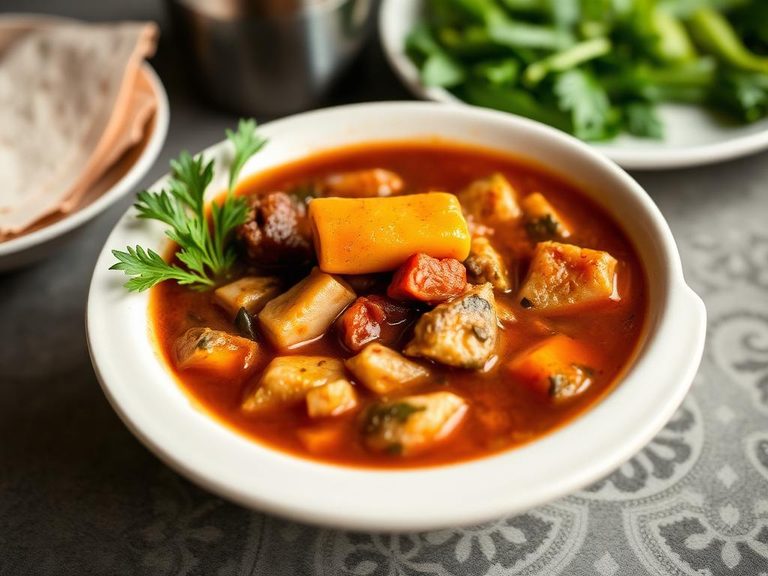
🌍 Where it's eaten
💡 Did you know?
The peppery bite of mustard greens comes from the same class of compounds (isothiocyanates) that give wasabi and horseradish their sinus-clearing kick.
Full nutrition (USDA data · scales with serving)
| Water | 87.2 g |
| Energy | 53.0 kcal |
| Protein | 3.0 g |
| Total lipid (fat) | 3.2 g |
| Carbohydrate, by difference | 4.9 g |
| Fiber, total dietary | 3.3 g |
| Total Sugars | 1.4 g |
| Calcium, Ca | 120 mg |
| Iron, Fe | 1.7 mg |
| Magnesium, Mg | 33.0 mg |
| Phosphorus, P | 61.0 mg |
| Potassium, K | 400 mg |
| Sodium, Na | 151 mg |
| Zinc, Zn | 0.26 mg |
| Copper, Cu | 0.17 mg |
| Selenium, Se | 0.90 ug |
| Vitamin C, total ascorbic acid | 51.0 mg |
| Thiamin | 0.07 mg |
| Riboflavin | 0.11 mg |
| Niacin | 0.79 mg |
| Vitamin B-6 | 0.20 mg |
| Folate, total | 9.0 ug |
| Folic acid | 0.00 ug |
| Folate, food | 9.0 ug |
| Folate, DFE | 9.0 ug |
| Choline, total | 0.80 mg |
| Vitamin B-12 | 0.00 ug |
| Vitamin B-12, added | 0.00 ug |
| Vitamin A, RAE | 162 ug |
| Retinol | 12.0 ug |
| Carotene, beta | 1775 ug |
| Carotene, alpha | 10.0 ug |
| Cryptoxanthin, beta | 40.0 ug |
| Lycopene | 0.00 ug |
| Lutein + zeaxanthin | 3688 ug |
| Vitamin E (alpha-tocopherol) | 2.5 mg |
| Vitamin E, added | 0.00 mg |
| Vitamin D (D2 + D3) | 0.00 ug |
| Vitamin K (phylloquinone) | 270 ug |
| Alcohol, ethyl | 0.00 g |
| Caffeine | 0.00 mg |
| Theobromine | 0.00 mg |
Fat & fatty acid profile (per 100g)
| Fatty acids, total saturated | 0.73 g |
| SFA 4:0 | 0.02 g |
| SFA 6:0 | 0.01 g |
| SFA 8:0 | 0.01 g |
| SFA 10:0 | 0.02 g |
| SFA 12:0 | 0.02 g |
| SFA 14:0 | 0.07 g |
| SFA 16:0 | 0.40 g |
| SFA 18:0 | 0.15 g |
| Fatty acids, total monounsaturated | 1.1 g |
| MUFA 16:1 | 0.01 g |
| MUFA 18:1 | 0.95 g |
| MUFA 20:1 | 0.03 g |
| MUFA 22:1 | 0.06 g |
| Fatty acids, total polyunsaturated | 0.82 g |
| PUFA 18:2 | 0.72 g |
| PUFA 18:3 | 0.11 g |
| PUFA 18:4 | 0.00 g |
| PUFA 20:4 | 0.00 g |
| PUFA 20:5 n-3 (EPA) | 0.00 g |
| PUFA 22:5 n-3 (DPA) | 0.00 g |
| PUFA 22:6 n-3 (DHA) | 0.00 g |
| Cholesterol | 2.0 mg |
Amino acid profile (per 100g)
Estimated from Mustard greens, frozen, unprepared — USDA does not publish this profile for Mustard greens.
| Tryptophan | 0.03 g |
| Threonine | 0.07 g |
| Isoleucine | 0.09 g |
| Leucine | 0.08 g |
| Lysine | 0.11 g |
| Methionine | 0.02 g |
| Cystine | 0.04 g |
| Phenylalanine | 0.07 g |
| Tyrosine | 0.13 g |
| Valine | 0.10 g |
| Arginine | 0.18 g |
| Histidine | 0.04 g |
FAQ
How do I reduce the bitterness of cooked mustard greens?
Blanching them first in boiling water for 1-2 minutes and then shocking in ice water can mellow the flavor. Cooking them with a sweet component like a diced apple, a pinch of sugar, or a splash of apple cider vinegar towards the end of cooking also balances the bitterness.
What is 'pot liquor' and why is it important for mustard greens?
Pot liquor (or potlikker) is the savory, nutrient-rich broth left over from cooking greens with smoked meats or aromatics. It's highly prized for its deep flavor and is often sopped up with cornbread, as it contains vitamins and minerals leached from the greens during cooking.
Are mustard greens the same as collard greens?
No, they are different plants in the same Brassica family. Mustard greens have a more pronounced peppery, zesty flavor and thinner leaves, while collards have a milder, earthier taste and tougher, thicker leaves that require longer cooking.
Nutrient density (calculated · NRF9.3)
Nutrient Rich Foods index: beneficial nutrients (protein, fiber, vitamins, minerals) minus saturated fat, added sugar & sodium, per 100 kcal.
NRF9.3 index — Fulgoni, Keast & Drewnowski, 2009. Computed from USDA nutrients.
Weight-loss friendliness (composite index)
Energy density 0.53 kcal/g · 23% calories from protein · 3.3 g fiber · 1.4 g sugar per 100 g.
Composite of energy density (Rolls et al., 1999), protein & fiber satiety, minus sugar. A calculated heuristic — ranks satiety-per-calorie, not a clinical measure.
Dietary load (calculated from USDA values)
Potential renal acid load. Positive = acid-forming, negative = alkaline-forming.
Sodium-to-potassium ratio: 0.38 (lower is better — aim for ≤ 1)
Sodium:potassium per WHO potassium guidance. Computed from USDA nutrients.